
Belgium Luxury Hotels Replace Spas with Clinical Longevity Labs and Bio-Adaptive Sleep Suites in 2026
Belgium is redefining luxury travel by replacing traditional hotel spas with clinical longevity labs and bio-adaptive sleep suites in Brussels, Antwerp, and Ghent.
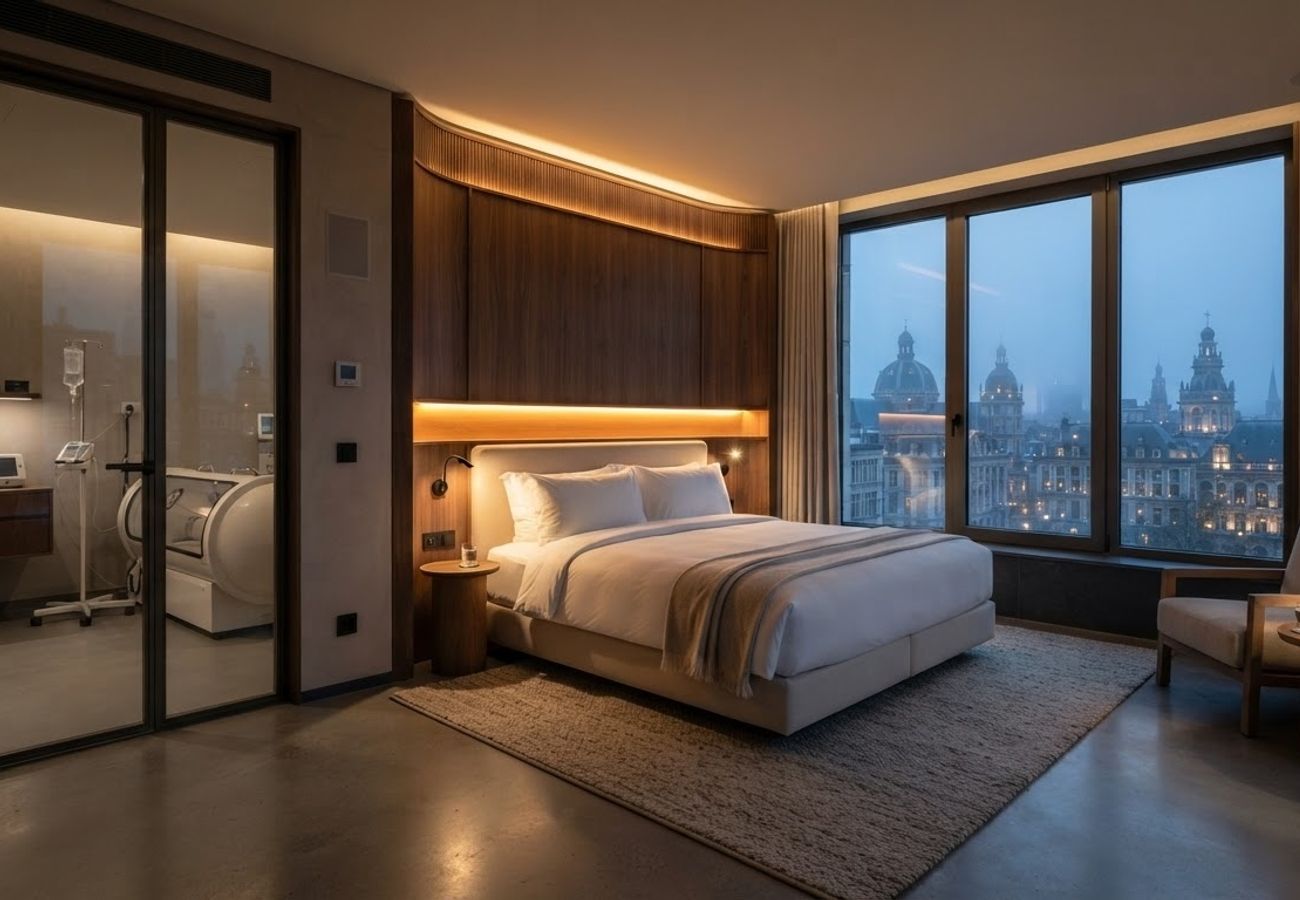
Image generated by AI
Travelers are abandoning passive pampering for measurable biological optimization, as luxury hotels in Brussels, Antwerp, and Ghent replace traditional spas with clinical-grade longevity labs.
The Shift Toward Biological Optimization
The era of the "quick robe and oil" massage is fading. In Belgium's primary urban hubs, a structural transition is occurring within the high-end hospitality sector. High-net-worth guests and executive travelers are no longer satisfied with surface-level relaxation; they are demanding environments that actively mitigate systemic inflammation, cellular aging, and the cognitive drain of international travel.
This evolution has seen the phase-out of standard saunas and facials in favor of medicalized infrastructure. Leading developers are now integrating "longevity labs"—spaces where clinical staff administer data-driven treatments designed to extend healthspan and optimize human performance.
Engineering the Perfect Sleep Cycle
Urban noise pollution in Brussels and Antwerp—characterized by streetcar traffic and emergency sirens—often triggers micro-arousals that disrupt Slow-Wave Sleep (SWS) and REM phases. To combat this, Belgian hoteliers are implementing "box-in-box" acoustic isolation.
These suites utilize floating floor slabs, double-studded acoustic walls with elastomeric decoupling channels, and triple-paned laminated glazing with a Sound Transmission Class (STC) rating of 55–60. To further synchronize the brain's delta waves, custom speaker networks emit dynamic pink noise that decreases in power density by 3 decibels per octave. Temperature control is equally precise, with HVAC systems operating below 20 dBA and automatically dropping room temperatures to 16°C–18°C during the early night to facilitate the core body temperature reduction necessary for deep sleep.
Circadian Lighting and Mitochondrial Recovery
In Ghent, standard dimmer switches are being replaced by spectral management systems. These systems target the intrinsically photosensitive retinal ganglion cells (ipRGCs) in the eye, specifically the photopigment melanopsin, which reacts to blue light wavelengths near 480 nanometers.
The lighting arrays automatically shift based on the time of day:
- Morning: High melanopic lux suppresses melatonin and boosts cortisol for alertness.
- Evening: Blue light is eliminated, shifting to amber and red tones above 620–670 nanometers to protect endogenous melatonin production.
- Recovery: Integrated Photobiomodulation (PBM) panels emit 660-nanometer red light and 850-nanometer near-infrared light to stimulate mitochondrial cytochrome c oxidase, increasing ATP production to fight travel fatigue.
From Massages to Cellular Recovery
The most radical change is the replacement of manual therapy with non-invasive cellular recovery. Luxury properties are now offering clinical modalities that target the body at a molecular level.
| In-Room Longevity Modality | Operational Mechanics & Physiological Benefits |
|---|---|
| Soft-Tissue mHBOT | Operates at 1.3–1.5 ATA to increase plasma oxygen saturation and trigger stem cell mobilization. |
| IV NAD+ & Micronutrients | Direct intravenous administration for cellular energy (ATP) synthesis and SIRT1 enzyme activation. |
| Whole-Body Cryotherapy | Exposes the body to -85°C to -110°C to induce sympathetic reset and raise heart rate variability. |
Beyond these, intravenous stations provide glutathione and vital micronutrients under medical supervision, bypassing the digestive tract to restore NAD+ pools and activate sirtuin enzymes.
Data-Driven Validation in Antwerp
To move beyond subjective "feeling rested," hotels in Antwerp have partnered with regional sleep research centers and diagnostics labs. Guests now utilize wearable polysomnography and under-mattress ballistocardiography pads to track their Respiratory Disturbance Index (RDI) and heart rate variability.
For the ultimate optimization, some packages include pre-arrival biological kits to measure DNA methylation patterns and diurnal cortisol curves. This allows the hotel to pre-program the suite's environment to the guest's specific epigenetic needs before they even check in.
Visitor Insider Tips
- Booking Window: To access the most advanced longevity suites in Ghent and Brussels, book at least three months in advance, as these specialized rooms are fewer in number than standard luxury suites.
- Medical Prep: If opting for IV NAD+ or mHBOT therapies, ensure you provide your medical history via the hotel's secure portal 72 hours prior to arrival to streamline clinical clearance.
- Local Etiquette: While these labs are high-tech, Belgian hospitality remains discreet. Expect a "quiet luxury" approach—clinical staff are highly professional and unobtrusive.
- Off-Peak Visit: Visit Antwerp's longevity hubs during the shoulder seasons (late September or April) to avoid the executive rush and secure more comprehensive consultation time with functional health specialists.
Tourism Outlook
The pivot toward clinical longevity suggests a long-term shift in the European luxury market. By integrating medical science with hospitality, Belgium is positioning itself as a leader in "Health-Span Tourism." This move not only attracts high-spending visitors but also fosters local partnerships between the hospitality sector and medical technology firms, creating a sustainable ecosystem of wellness innovation.
The future of the hotel stay is no longer about escaping life, but about biologically upgrading it.
Related Travel Guides
Disclaimer
This article is for informational and educational purposes only. It does not constitute legal, financial, or professional advice. While we strive to provide accurate and up-to-date information, travel policies, regulations, and conditions change rapidly. Always verify information with official sources before making travel decisions. Nomad Lawyer makes no representations about the accuracy, reliability, completeness, or suitability of the information provided. Readers should consult qualified professionals for advice specific to their circumstances. The views expressed in this article are those of the author and do not necessarily reflect the views of Nomad Lawyer.