
China Travel Chaos: Over 50 Massive Flight Cancellations Paralyze Beijing Capital Airport as Vital Routes to Shanghai and Tokyo Collapse
As severe operational bottlenecks paralyze Chinese aviation networks, Beijing Capital International Airport plunges into terrifying travel chaos with over 50 massive flight cancellations severing vital domestic and international corridors.

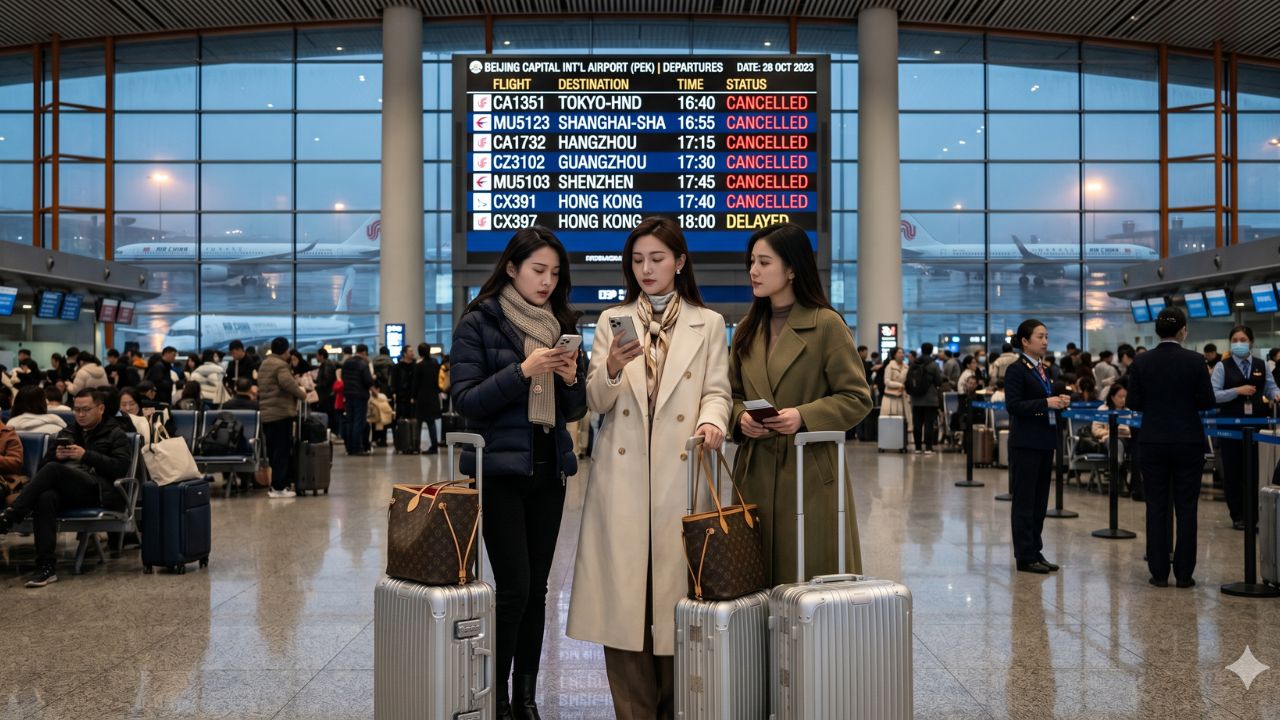
Image generated by AI
A Massive Operational Meltdown Plunges Beijing into Gridlock
While massive sectors of the global passenger network frequently battle highly unpredictable weather events, synchronized logistical bottlenecks and horrific fleet management constraints remain the absolute most terrifying catalysts for sudden, unmanageable terminal congestion. Delivering highly urgent, breaking airline news, verified Chinese aviation trackers confirm that a catastrophic operational breakdown has actively generated severe, cascading travel chaos across the massive northern China aviation network. Today, June 2, 2026, severe travel distress forcefully emerged as Beijing Capital International Airport (PEK)—the absolute busiest mega-hub in northern China—abruptly reported a terrifying surge in airport disruptions, violently stranding highly vulnerable commuters attempting to traverse domestic and international borders.
While desperate travelers already attempt to navigate sudden, terrifying flight cancellations caused by massive summer volumes across major international hubs, these exclusive aviation updates reveal the horrifying vulnerability of high-frequency Chinese routes. Verified transit data confirms that major carriers have abruptly triggered over 50 critically severe flight cancellations out of Beijing over the past few days. This horrific operational collapse is actively destroying the high-value travel itineraries of passengers flying into massive mega-hubs including Tokyo, Shanghai, Guangzhou, and Shenzhen, leaving elite corporate crowds violently trapped inside the congested national capital gateway.
Expanded Overview: The Scale of the Aviation Crisis
The sudden, highly publicized execution of this massive national operational meltdown serves as an undeniable example of how rapidly the country's most critical transit network can completely disintegrate under extreme scheduling pressure. The massive disruption heavily impacts elite corporate travel, essential government transit, and massive international tourism corridors. The latest Beijing Capital flight cancellations highlight exactly how severe schedule disruptions on the capital's busiest air routes can violently affect passenger movement connecting across all of China and into Japan.
The terrifying reality of this crisis is found in the sheer volume and scale of the aircraft affected. The disruptions involve a massive mix of high-capacity widebody and narrowbody aircraft, including Airbus A359, A333, A330, Boeing 789, B738, A21N, and even the new C919. This catastrophic failure instantly paralyzes both inbound and outbound traffic, actively destroying hundreds of incredibly vulnerable connecting itineraries. This massive disruption instantly destroys crucial business meetings and vital regional connections, violently triggering a massive travel chain reaction that destroys schedule reliability and inflicts severe financial damages on stranded passengers relying on Beijing for national reach.
Section-Wise Breakdown of the Connectivity Crisis
The Shanghai and Guangzhou Corridors Brutally Severed
The absolute largest share of the devastating cancellations involved vital routes linking Beijing with the massive financial hubs in eastern and southern China. Major airlines violently failed to execute multiple flights to Shanghai Hongqiao International Airport (ZSSS), with massive A333 and A359 aircraft abruptly removed from the schedule. Simultaneously, critical high-capacity links to Guangzhou Baiyun International Airport (ZGGG) and Shenzhen Bao'an International Airport (ZGSZ) were completely scrapped. This devastated the primary corporate travel spine of China, instantly stranding thousands of business executives attempting to travel between the political capital and the southern economic zones.
Japanese Links Paralyzed
The catastrophic disruption violently extended beyond the immediate domestic borders, completely paralyzing essential international travel to Japan. Multiple critical flights operated by Japan Airlines (JAL) and Air China (CCA) were abruptly removed from the active schedule. Vital widebody B789 and A321 services connecting Beijing Capital to Tokyo Haneda (HND) and Kansai International (KIX) were completely scrapped. Because these international connections are incredibly time-sensitive, the cancellation of these routes instantly forced international tourists and executives to frantically seek alternative flights across the East China Sea.
Regional Mega-Hubs Suffer Cascading Failures
The collapse also violently impacted regional mega-hubs across every province. High-demand routes to Hangzhou Xiaoshan (ZSHC), Changsha Huanghua (ZGHA), Chengdu Tianfu (ZUTF), Fuzhou Changle (ZSFZ), Xiamen Gaoqi (ZSAM), and Haikou Meilan (ZJHK) suffered devastating two-way cancellations. The primary catalysts for this massive breakdown include severe air traffic congestion during peak hours, complex operational adjustments involving massive widebody aircraft rotations, and restrictive airspace management protocols across northern China.
Verified Beijing Network Disruption Data
To fully comprehend the massive operational scale and devastating delays dictating this highly volatile national crisis, the following tables explicitly detail the exact cancellation metrics officially recorded during the Beijing Capital Airport network disruption:
Beijing Capital Int’l Airport Flight Cancellations – Complete Departure List
| Ident | Type | Destination Airport | Departure (CST) |
|---|---|---|---|
| CES5120 | A333 | Shanghai Hongqiao Int’l (SHA / ZSSS) | Wed 05:00 PM |
| JAL22 | B789 | Tokyo Int’l (Haneda) (HND / RJTT) | Wed 04:20 PM |
| CHH7611 | A333 | Shanghai Hongqiao Int’l (SHA / ZSSS) | Tue 08:55 PM |
| CCA1593 | A21N | Penglai International (YNT / ZSYT) | Tue 08:30 PM |
| CCA1728 | A21N | Hangzhou Xiaoshan Int’l (HGH / ZSHC) | Tue 07:30 PM |
| CCA1565 | A359 | Shanghai Hongqiao Int’l (SHA / ZSSS) | Tue 06:30 PM |
| CCD1503 | B738 | Nanjing Lukou Int’l (NKG / ZSNJ) | Tue 06:05 PM |
| CHH7295 | B738 | Fuzhou Changle Int’l (FOC / ZSFZ) | Tue 05:15 PM |
| CCA183 | A321 | Tokyo Int’l (Haneda) (HND / RJTT) | Tue 05:10 PM |
| CCA161 | A321 | Kansai Int’l (KIX / RJBB) | Tue 04:30 PM |
| CCA1871 | A320 | Xiamen Gaoqi Int’l (XMN / ZSAM) | Tue 02:30 PM |
| CHH7247 | B738 | Chengdu Tianfu Int’l (TFU / ZUTF) | Tue 12:55 PM |
| CHH7335 | B789 | Changsha Huanghua Int’l (CSX / ZGHA) | Tue 11:55 AM |
| CSZ9116 | A320 | Shenzhen Bao’an Int’l (SZX / ZGSZ) | Tue 09:20 AM |
| CHH7482 | B738 | Haikou Meilan Int’l (HAK / ZJHK) | Tue 09:00 AM |
| CCA1491 | B38M | Zunyi Maotai Airport (WMT / ZUMT) | Tue 09:00 AM |
| CHH7535 | B738 | Changsha Huanghua Int’l (CSX / ZGHA) | Mon 10:05 PM |
| CCA1593 | 909 | Penglai International (YNT / ZSYT) | Mon 08:25 PM |
| CHH7813 | B738 | Guangzhou Baiyun Int’l (CAN / ZGGG) | Mon 07:30 PM |
| CHH7153 | A20N | Nanning Wuxu Int’l (NNG / ZGNN) | Mon 05:15 PM |
| CHH7295 | B738 | Fuzhou Changle Int’l (FOC / ZSFZ) | Mon 05:15 PM |
| CCD1815 | B738 | Xiamen Gaoqi Int’l (XMN / ZSAM) | Mon 04:30 PM |
| CHH7805 | B738 | Guangzhou Baiyun Int’l (CAN / ZGGG) | Mon 10:30 AM |
| CHH7535 | B738 | Changsha Huanghua Int’l (CSX / ZGHA) | Sun 10:05 PM |
| CHH7129 | B738 | Harbin Taiping Int’l (HRB / ZYHB) | Sun 09:55 PM |
| CHH7715 | B738 | Shenzhen Bao’an Int’l (SZX / ZGSZ) | Sun 09:30 PM |
| CCA1521 | A330 | Shanghai Hongqiao Int’l (SHA / ZSSS) | Sun 02:30 PM |
| CHH7079 | B738 | Sanya Phoenix Int’l (SYX / ZJSY) | Sun 08:30 AM |
| CHH7577 | A333 | Hangzhou Xiaoshan Int’l (HGH / ZSHC) | Sun 06:55 AM |
Beijing Capital Int’l Airport Flight Arrivals Cancelled – Complete Arrival List
| Ident | Type | Origin Airport | Arrival (CST) |
|---|---|---|---|
| CCA1729 | C919 | Hangzhou Xiaoshan Int’l (HGH / ZSHC) | Wed 11:30 PM |
| CES5157 | A333 | Shanghai Hongqiao Int’l (SHA / ZSSS) | Wed 03:45 PM |
| JAL21 | B789 | Tokyo Int’l (Haneda) (HND / RJTT) | Wed 01:00 PM JST |
| CCA1566 | A359 | Shanghai Hongqiao Int’l (SHA / ZSSS) | Wed 12:55 AM |
| CHH7536 | B738 | Changsha Huanghua Int’l (CSX / ZGHA) | Wed 12:05 AM |
| CCA1594 | A21N | Penglai International (YNT / ZSYT) | Tue 11:55 PM |
| CHH7296 | B738 | Fuzhou Changle Int’l (FOC / ZSFZ) | Tue 11:50 PM |
| CCD1504 | B738 | Nanjing Lukou Int’l (NKG / ZSNJ) | Tue 10:55 PM |
| CSZ9115 | A320 | Shenzhen Bao’an Int’l (SZX / ZGSZ) | Tue 10:55 PM |
| CCA1872 | A320 | Xiamen Gaoqi Int’l (XMN / ZSAM) | Tue 09:55 PM |
| CHH7336 | B789 | Changsha Huanghua Int’l (CSX / ZGHA) | Tue 07:00 PM |
| CCA1719 | A21N | Hangzhou Xiaoshan Int’l (HGH / ZSHC) | Tue 06:25 PM |
| CCA1492 | B38M | Zunyi Maotai Airport (WMT / ZUMT) | Tue 03:45 PM |
| CHH7481 | B738 | Haikou Meilan Int’l (HAK / ZJHK) | Tue 03:00 PM |
| CHH7148 | B738 | Chengdu Tianfu Int’l (TFU / ZUTF) | Tue 11:15 AM |
| CHH7154 | A20N | Nanning Wuxu Int’l (NNG / ZGNN) | Tue 12:55 AM |
| CHH7536 | B738 | Changsha Huanghua Int’l (CSX / ZGHA) | Tue 12:15 AM |
| CCA1594 | 909 | Penglai International (YNT / ZSYT) | Tue 12:05 AM |
| CHH7296 | B738 | Fuzhou Changle Int’l (FOC / ZSFZ) | Mon 11:50 PM |
| CCD1816 | B738 | Xiamen Gaoqi Int’l (XMN / ZSAM) | Mon 11:40 PM |
| CHH7810 | B738 | Guangzhou Baiyun Int’l (CAN / ZGGG) | Mon 06:15 PM |
| CHH7536 | B738 | Changsha Huanghua Int’l (CSX / ZGHA) | Mon 12:15 AM |
| CHH7130 | B738 | Harbin Taiping Int’l (HRB / ZYHB) | Mon 12:15 AM |
| CHH7710 | B738 | Shenzhen Bao’an Int’l (SZX / ZGSZ) | Sun 08:15 PM |
| CCA1522 | A333 | Shanghai Hongqiao Int’l (SHA / ZSSS) | Sun 09:15 PM |
| CHH7080 | B738 | Sanya Phoenix Int’l (SYX / ZJSY) | Sun 06:15 PM |
| CHH7578 | A333 | Hangzhou Xiaoshan Int’l (HGH / ZSHC) | Sun 12:55 PM |
| CHH7154 | B738 | Nanning Wuxu Int’l (NNG / ZGNN) | Sun 12:55 AM |
Passenger Impact: Navigating the Regional Meltdown
For the modern commuter attempting to navigate this highly volatile Chinese network, the passenger impact of this massive Beijing meltdown is completely exhausting. Massive flight cancellations on elite corporate routes to Shanghai, Shenzhen, and Tokyo are incredibly frustrating, leaving business travelers utterly stranded with zero alternative rapid transport options.
- Anticipate Overwhelming Terminal Congestion: Because massive, high-capacity widebody aircraft (including A333, A359, and B789s) were violently cancelled, thousands of passengers were simultaneously dumped back into the Beijing Capital terminal. Securing seats on later flights or high-speed rail will be nearly impossible due to incredibly high existing load factors.
- Document All Severe Expenses: Stranded passengers must furiously retain all booking records, boarding passes, and corporate hotel receipts. Travelers should aggressively check airline policies regarding carrier-controlled failures to demand immediate financial reimbursement for lost business days.
- Book Accommodations Immediately: If stranded overnight, do not wait in massive terminal queues. Immediately pre-check nearby hotels or airport accommodations via mobile apps to secure a room before the thousands of other displaced passengers exhaust the local inventory.
Conclusion: A Highly Volatile Transit Crisis
The massive, highly publicized operational failure across Beijing Capital International Airport represents a severe, terrifying crisis for the Chinese travel sector. By actively forcing passengers to endure over 50 critical, high-capacity flight disruptions on the nation's most vital domestic and international corridors, the airline industry guarantees an incredibly stressful, highly exhausting journey. As the operational teams frantically battle this sudden air traffic gridlock, passengers are heavily urged to aggressively monitor their bookings, strictly demand their mandated compensation, and fully expect massive, cascading flight disruptions amidst unprecedented Chinese travel chaos.
Key Takeaways
- Massive Capital Hub Meltdown: Beijing Capital International Airport suffered over 50 critical flight cancellations spanning both highly lucrative departures and arrivals over several days.
- Shanghai and Tokyo Links Severed: Critical widebody routes connecting Beijing to Shanghai Hongqiao and Tokyo Haneda were catastrophically cancelled, instantly stranding hundreds of highly lucrative corporate and international passengers.
- Massive Widebody Failures: Massive Airbus A359, A333, and Boeing 789 Dreamliner aircraft were abruptly entangled in the schedule collapse, causing massive terminal overcrowding.
- New Tech Disrupted: The highly publicized C919 aircraft was also caught in the devastating cancellation wave.
- Passenger Survival Tactics: Travelers are aggressively urged to check their flight status hours in advance, enroll in SMS alerts, and keep all documentation readily available to rapidly rebook alternative flights before terminal queues become unmanageable.
Disclaimer: The specific cancellation metrics, delayed flight timelines, and airline operational failures presented in this report are based on verified transit tracking data from FlightAware regarding the Beijing Capital Airport network disruption on June 2, 2026. Official airline routing, terminal congestion levels, and final ticket rebooking options are highly volatile and subject to continuous, real-time update based on active carrier operational directives, complex airspace management, and sudden air traffic constraints. Prospective passengers are urgently advised to fiercely monitor their specific booking status and verify active flight schedules directly via the airline's official portal prior to airport arrival.
Kunal K Choudhary
Co-Founder & Contributor
A passionate traveller and tech enthusiast. Kunal contributes to the vision and growth of Nomad Lawyer, bringing fresh perspectives and driving the community forward.
Learn more about our team →