
Mount Anak Krakatau Eruption Grounds Batik Air Flights Between Malaysia and Indonesia
Volcanic ash from Mount Anak Krakatau forces Batik Air to cancel 8 flights between Kuala Lumpur, Subang, and Jakarta. See affected flight numbers and risks.

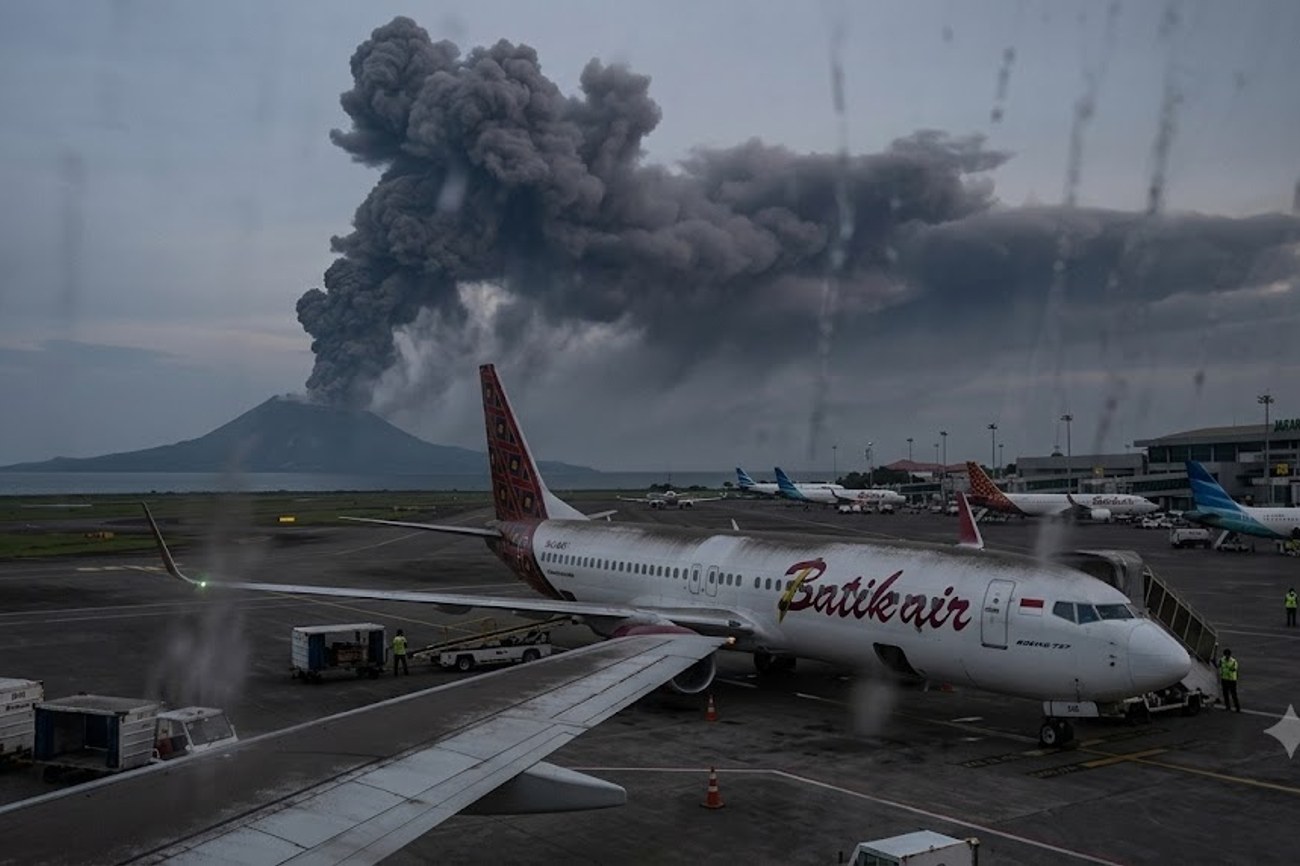
Image generated by AI
Jakarta Aviation Crisis Triggered by Volcanic Activity
[Jakarta, September 7, 2026] — A sudden surge in volcanic activity at Mount Anak Krakatau has paralyzed several key aviation links between Malaysia and Indonesia, forcing Batik Air to ground eight scheduled services. The decision comes as ash clouds from the active volcano drifted into critical flight paths, prompting immediate safety interventions to prevent aircraft engine failure and systemic malfunctions.
The grounding affects a high-traffic corridor connecting Kuala Lumpur International Airport (KUL) and Subang Airport (SZB) with Jakarta’s Soekarno-Hatta International Airport (CGK). Aviation officials confirmed that the cancellations were a preemptive measure following a coordinated risk assessment between airline operators and regional airport authorities.
Specific Batik Air Flight Cancellations
The suspension of services targeted specific flight numbers to mitigate the risk of flying through contaminated airspace. According to operational data, six of the cancelled services operated the Kuala Lumpur to Jakarta route, while two served the connection between Subang and Jakarta.
The following flight numbers were officially cancelled:
| Flight Number | Route Segment |
|---|---|
| OD398 | Kuala Lumpur / Subang $\leftrightarrow$ Jakarta |
| OD399 | Kuala Lumpur / Subang $\leftrightarrow$ Jakarta |
| OD346 | Kuala Lumpur / Subang $\leftrightarrow$ Jakarta |
| OD347 | Kuala Lumpur / Subang $\leftrightarrow$ Jakarta |
| OD388 | Kuala Lumpur / Subang $\leftrightarrow$ Jakarta |
| OD389 | Kuala Lumpur / Subang $\leftrightarrow$ Jakarta |
| OD390 | Kuala Lumpur / Subang $\leftrightarrow$ Jakarta |
| OD391 | Kuala Lumpur / Subang $\leftrightarrow$ Jakarta |
Passengers impacted by these cancellations have been directed to seek flight re-bookings or process refunds through the airline's official channels.
Mount Anak Krakatau and the Ring of Fire Risk
The disruption stems from renewed eruptions at Mount Anak Krakatau, a volatile volcanic peak situated in the Sunda Strait, separating the islands of Java and Sumatra. This region is a focal point of the Pacific Ring of Fire, a horseshoe-shaped area known for intense seismic and volcanic activity.
The volcano's history of violent eruptions—most notably the 2018 event that triggered a catastrophic tsunami—has made it a primary site for constant surveillance by Indonesian geologists. The current eruption released dense plumes of ash that entered commercial aviation altitudes, necessitating an immediate halt to flights in the affected sectors.
Technical Dangers of Volcanic Ash in Aviation
While volcanic ash may appear as simple smoke from a distance, it consists of microscopic shards of volcanic glass, minerals, and pulverized rock. These particles pose an existential threat to jet engines and aircraft airframes.
When these particles enter a jet engine, the high temperatures cause the glass to melt and then resolidify on the turbine blades, potentially leading to total engine flameout. Beyond propulsion, ash contamination causes several other critical failures:
- Sensor Blockage: Ash can clog Pitot tubes, leading to inaccurate airspeed readings for pilots.
- Structural Abrasion: The abrasive nature of the particles can "sandblast" cockpit windows, reducing visibility to near zero.
- Systemic Malfunctions: Fine particulates can infiltrate electronic components and navigation systems, compromising flight stability.
Widespread Impact on Jakarta’s Aviation Hub
The Batik Air cancellations are part of a larger systemic failure across Indonesia’s aviation network. Soekarno-Hatta International Airport (CGK), the nation's primary gateway, has faced severe operational pressure. Reports indicate that thousands of flights nationwide have been delayed or scrapped as ash clouds rendered the airspace unsafe.
Jakarta serves as the central nervous system for Southeast Asian travel, linking international business hubs with domestic destinations. When CGK experiences disruption, the ripple effect is felt across the region, affecting not only regional carriers but also international tourists attempting to reach destinations such as Bali, Yogyakarta, and West Java.
Regional Connectivity and Tourism Fallout
The Kuala Lumpur-Jakarta corridor is one of the most heavily trafficked international routes in Southeast Asia, serving as a vital link for diplomatic, commercial, and familial ties. The volatility of the current situation is highlighted by the fact that Malaysia Airlines also cancelled services to Jakarta, mirroring the actions of Batik Air.
This synchronized shutdown underscores the vulnerability of regional air connectivity to natural disasters. For the tourism sector, these cancellations create a logistical nightmare. Many international travelers use Jakarta as a transit point; missed connections here often lead to stranded passengers and cancelled hotel bookings in Indonesia's wider archipelago.
Indonesia’s Disaster Readiness and Monitoring
To combat these recurring threats, Indonesia has invested heavily in volcanic monitoring infrastructure. Government agencies and aviation authorities utilize real-time tracking to map ash drift and determine "no-fly" zones.
These monitoring systems allow authorities to make rapid-fire decisions regarding:
- The immediate closure of regional airports.
- The implementation of strict airspace restrictions.
- The issuance of emergency travel warnings to international carriers.
Path to Operational Recovery
The restoration of full flight schedules between Malaysia and Indonesia remains contingent on atmospheric conditions. Aviation authorities are monitoring for a decrease in ash concentration and clear airspace clearance. Until official approval is granted by aviation regulators, flights will remain suspended or diverted.
Why This Matters (Information Gain & Experience)
For the modern traveler, this event highlights a critical reality: in Southeast Asia, "weather delays" often encompass geological events. From a logistical standpoint, this creates a dependency on flexible ticketing. Travelers booking flights into Jakarta or Bali during periods of volcanic unrest should prioritize "flexible" or "refundable" fares, as standard non-refundable tickets offer little protection against "Acts of God" like eruptions.
Furthermore, this situation demonstrates the fragility of the "hub-and-spoke" model. When a primary hub like Soekarno-Hatta is compromised, the entire regional network suffers. Travelers should consider alternative entry points into Indonesia—such as flying directly into Denpasar (Bali)—if Jakarta is flagged as a high-risk zone due to volcanic activity.
Related Travel Guides
Disclaimer
This article is for informational and educational purposes only. It does not constitute legal, financial, or professional advice. While we strive to provide accurate and up-to-date information, travel policies, regulations, and conditions change rapidly. Always verify information with official sources before making travel decisions. Nomad Lawyer makes no representations about the accuracy, reliability, completeness, or suitability of the information provided. Readers should consult qualified professionals for advice specific to their circumstances. The views expressed in this article are those of the author and do not necessarily reflect the views of Nomad Lawyer.
Kunal K Choudhary
Co-Founder & Contributor
A passionate traveller and tech enthusiast. Kunal contributes to the vision and growth of Nomad Lawyer, bringing fresh perspectives and driving the community forward.
Learn more about our team →