
Barrierless Free Flow Toll System Launches at Delhi Borders in 2026
Delhi's barrierless free flow toll system arrives in 2026, using RFID tags and ANPR cameras to eliminate congestion at border checkpoints while automating revenue collection for travelers entering the capital.

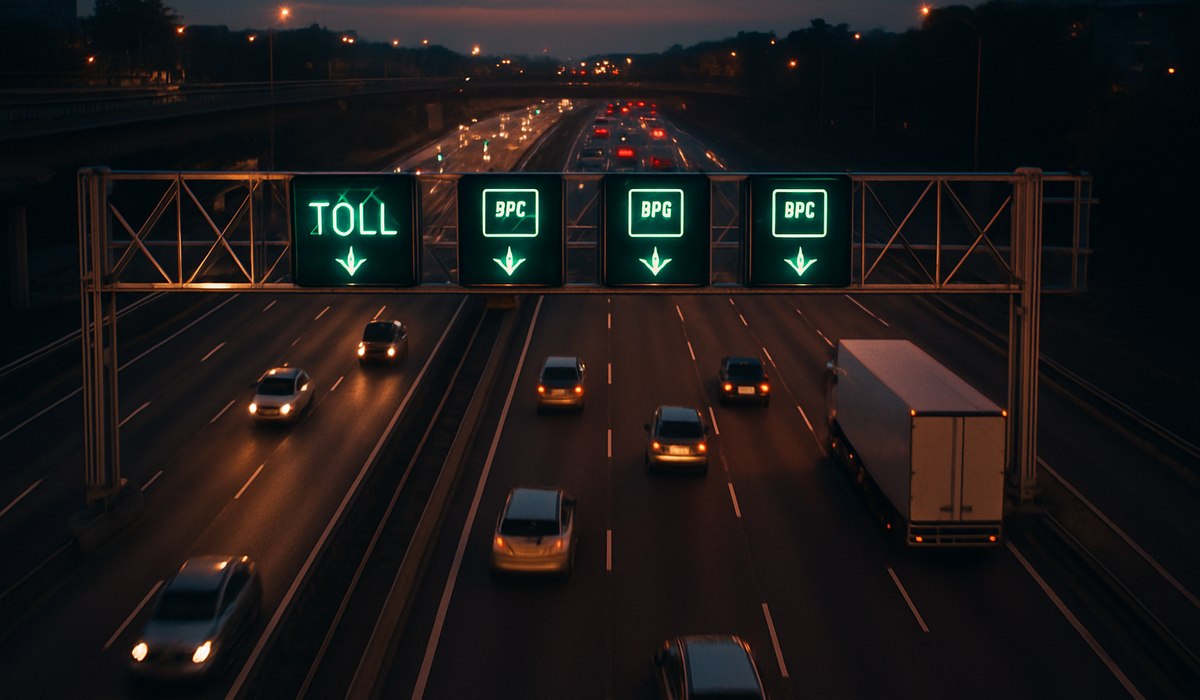
Image generated by AI
Delhi's Barrierless Free Flow Toll System Set to Transform Border Crossings
Delhi is preparing to launch a revolutionary barrierless free flow toll collection system at its border entry points, eliminating vehicle queues and automating fee processing. Starting in 2026, the new infrastructure will allow vehicles equipped with RFID tags to pass through designated gantries without stopping, while high-definition cameras verify registration details and process payments instantly. This transformation targets congestion relief during peak travel hours while securing approximately Rs 910 crore in annual toll revenue for municipal authorities.
How the Barrierless Toll System Works
The barrierless free flow system operates on a seamless automated model that removes traditional toll booth delays. Vehicles carrying RFID tags approach designated gantry points and have toll charges deducted automatically from their linked accounts as they pass through. There's no requirement to stop, slow down, or interact with toll operators—the entire transaction completes in seconds.
The infrastructure uses real-time data processing to identify vehicles, verify registration status, and collect fees simultaneously. This technology eliminates the bottleneck that typically occurs when hundreds of vehicles queue at traditional toll plazas during morning and evening rush periods. Early implementations have demonstrated that barrierless free flow systems can increase throughput by 300-400 percent compared to conventional toll operations.
Travelers entering Delhi from surrounding states like Haryana, Uttar Pradesh, and Rajasthan will experience dramatically shorter crossing times. The system accommodates vehicles with RFID tags, making the transition smooth for regular commuters and long-distance travelers alike.
RFID Tags and ANPR Technology Integration
RFID (Radio Frequency Identification) technology forms the backbone of the new toll collection framework. Each participating vehicle receives a tag containing unique identification data linked to the vehicle owner's account. When vehicles approach toll gantries, readers automatically detect these tags from distances of 5-10 meters, initiating instant payment processing.
Complementing RFID functionality, Automatic Number Plate Recognition (ANPR) cameras capture high-resolution images of vehicle registration numbers for validation and enforcement purposes. These cameras serve multiple functions: confirming vehicle identity, documenting crossing timestamps, and identifying unregistered or fraudulent vehicles. The dual-technology approach ensures both seamless legitimate passage and effective security monitoring.
For travelers without RFID tags, alternative payment methods are being developed to ensure inclusivity. The system design anticipates gradual adoption, allowing a transition period where traditional payment methods coexist with modern electronic infrastructure. Learn more about modern tolling technology at India's National Highways Authority documentation.
Expected Impact on Border Crossing Times
Current data from pilot programs suggests remarkable improvements in crossing efficiency. Traditional toll plazas process approximately 100-150 vehicles hourly during congested periods. The barrierless free flow system can handle 800-1,200 vehicles per hour at the same physical location.
Peak-hour crossing times are expected to decrease from 15-30 minutes to under 2 minutes per vehicle. Weekend travelers heading to neighboring states will notice particularly significant time savings, as recreational traffic often creates substantial backups at current border checkpoints. The reduction in idling time also delivers environmental benefits through decreased vehicle emissions during the crossing process.
Commuters using Delhi-Haryana and Delhi-Uttar Pradesh corridors daily will experience the most dramatic improvements. Frequent travelers can expect to save 30-60 minutes weekly through faster border passages. The system's 24/7 operational capability ensures consistent performance across all traffic patterns, without slowdowns during specific hours.
Revenue Targets and Implementation Timeline
Municipal Corporation authorities targeting approximately Rs 910 crore in annual toll revenue have partnered with specialized agencies to operate and maintain the new infrastructure. This revenue figure surpasses previous collections by roughly 25-30 percent, reflecting both increased traffic volume and improved collection efficiency.
The implementation timeline spans multiple phases throughout 2026. Initial rollout focuses on major border entry points serving highest traffic volumes. Secondary checkpoints receive infrastructure upgrades in subsequent phases, with complete citywide deployment anticipated by year-end. Authorities are simultaneously managing vehicle registration transitions to ensure RFID tag adoption reaches critical mass before peak congestion seasons arrive.
Vehicle owners can register for RFID tags at designated enrollment centers across Delhi and neighboring states. The registration process requires basic documentation and typically completes within 24 hours. Early adoption incentives, including reduced toll rates for initial registrants, encourage rapid system participation among the traveling public.
Key Data Table: Barrierless Free Flow System Performance Metrics
| Metric | Current System | Barrierless Free Flow | Improvement |
|---|---|---|---|
| Vehicles processed per hour | 100-150 | 800-1,200 | 500-700% increase |
| Average crossing time | 15-30 minutes | Under 2 minutes | 87-93% reduction |
| Daily vehicles accommodated | 1,200-1,800 | 9,600-14,400 | 700% increase |
| Projected annual toll revenue | Rs 720 crore | Rs 910 crore | Rs 190 crore increase |
| Operational hours | 6am-10pm | 24/7 | Continuous service |
| Technology integration | Manual | RFID + ANPR | Full automation |
What This Means for Travelers
The barrierless free flow toll transformation delivers substantial benefits for anyone crossing Delhi's borders:
-
Plan shorter travel times: Account for 2-3 minutes for border crossing instead of 15-30 minutes. This dramatically improves scheduling accuracy for business meetings and flight connections.
-
Register for RFID tags immediately: Visit authorized enrollment centers to obtain your vehicle's RFID tag. Early registrants often receive promotional toll rate reductions during the transition period.
-
Verify account funding: Ensure your linked account maintains adequate balance before attempting border crossings. Account top-ups can be completed online through official portals within minutes.
-
Expect traffic pattern changes: Faster crossings may temporarily reduce traffic on alternative routes. Familiar bypass routes might experience decreased congestion during peak hours.
-
Keep documentation updated: Ensure your vehicle registration remains current and matches the details registered in the toll system. Mismatches between registration and system records may trigger enforcement procedures.
-
Plan around rollout phases: Confirm which border checkpoints have active barrierless free flow infrastructure before traveling. Phased implementation means some entry points remain on traditional systems temporarily.
-
Monitor official announcements: Stay informed about RFID tag requirements, registration deadlines, and toll rate structures through official municipal and transport department channels.
Frequently Asked Questions
What happens if my vehicle doesn't have an RFID tag? Alternative payment mechanisms are being developed for transitional periods. Travelers without RFID tags can use mobile payment apps or traditional toll booth methods at designated lanes, though these process slower than automated passage.
How do I register my vehicle for the barrierless free flow system? Visit authorized enrollment centers operated by municipal corporations across Delhi and neighboring states. You'll need your vehicle's registration certificate, owner identification, and a valid contact number. Processing typically completes within 24 hours.
Will the barrierless free flow system operate during all hours? Yes, the system operates 24/7 without interruption. Unlike traditional toll booths with restricted hours, automated gantries function continuously throughout the day and night for uninterrupted border crossing capability.
What toll rates apply to the barrierless free flow system? Rates match current toll structures established by municipal authorities. Early registrants may receive promotional discounts during the transition
Disclaimer
This article is for informational and educational purposes only. It does not constitute legal, financial, or professional advice. While we strive to provide accurate and up-to-date information, travel policies, regulations, and conditions change rapidly. Always verify information with official sources before making travel decisions. Nomad Lawyer makes no representations about the accuracy, reliability, completeness, or suitability of the information provided. Readers should consult qualified professionals for advice specific to their circumstances. The views expressed in this article are those of the author and do not necessarily reflect the views of Nomad Lawyer.
Raushan Kumar
Founder & Lead Developer
Full-stack developer with 11+ years of experience and a passionate traveller. Raushan built Nomad Lawyer from the ground up with a vision to create the best travel and law experience on the web.
Learn more about our team →