
Barrierless Free Flow Toll System Launches at Delhi Border Checkpoints in 2026
Delhi introduces a barrierless free flow toll system at border entry points in 2026, using RFID tags and ANPR cameras to eliminate vehicle stops and reduce congestion for travelers.

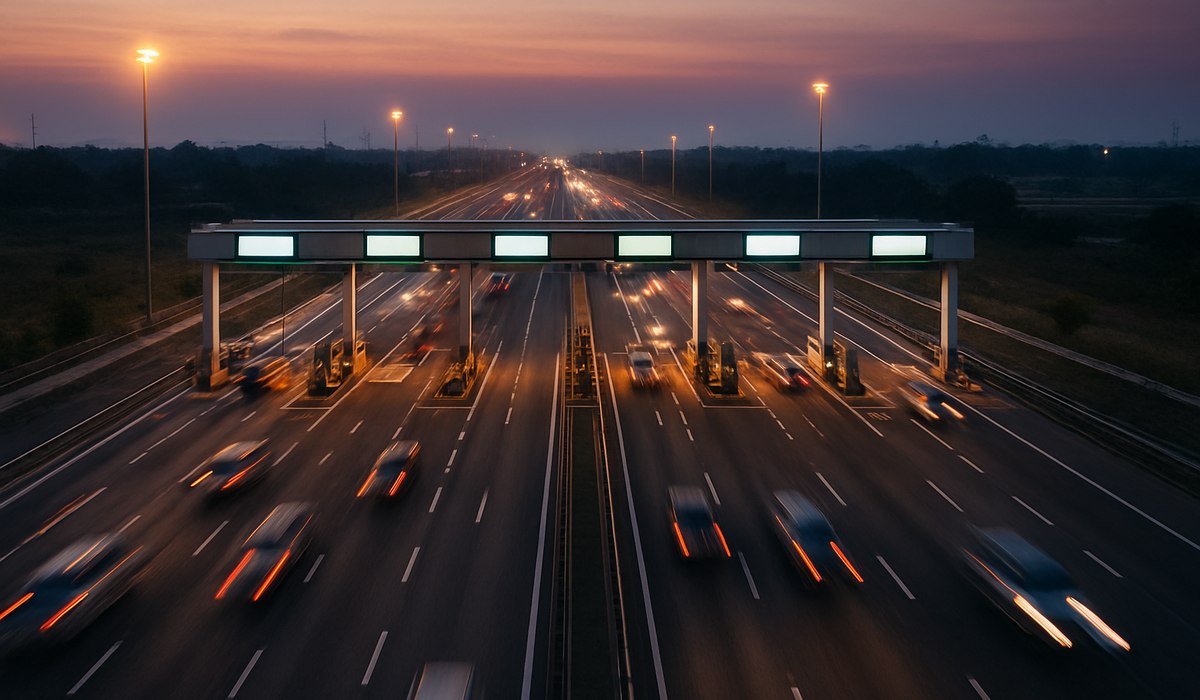
Image generated by AI
Delhi's Barrierless Free Flow Toll System Transforms Border Entry Experience
Delhi is implementing a revolutionary barrierless free flow toll system at border entry points, eliminating traditional checkpoint delays for travelers entering the capital. Vehicles equipped with RFID tags will pass through designated gantries without stopping, while high-definition ANPR cameras simultaneously capture registration data for validation and enforcement. This groundbreaking initiative addresses chronic congestion that has plagued Delhi's border crossings, promising seamless passage for commuters and tourists beginning in 2026.
The Municipal Corporation of Delhi (MCD) has partnered with a newly engaged toll infrastructure operator targeting approximately Rs 910 crore in annual toll revenue. The system represents a significant shift from conventional toll collection methods, integrating cutting-edge technology to enhance travel efficiency across the capital's entry corridors.
How the Barrierless Toll System Works
The barrierless free flow toll mechanism operates through a sophisticated dual-technology approach. Vehicles approaching designated gantries trigger RFID readers that instantly identify tagged vehicles and deduct toll charges from pre-loaded accounts. Simultaneously, HD ANPR (Automatic Number Plate Recognition) cameras photograph each vehicle's registration plate, creating a verification layer for enforcement purposes.
This seamless integration eliminates the need for physical barriers, manual toll booths, or vehicle stops. Travelers maintain continuous speed through toll zones, reducing fuel consumption and emissions while improving traffic flow. The system accommodates vehicles moving at highway speeds without requiring deceleration or acceleration patterns that characterize traditional toll plazas.
MCD's operational framework emphasizes real-time transaction processing and automated fine assessment for vehicles without valid tags or prepaid accounts. Learn more about India's digital payment infrastructure.
Benefits for Travelers and Commuters
The barrierless free flow system delivers immediate advantages for both domestic and international visitors navigating Delhi's border regions. Commuters no longer face unpredictable delays at toll checkpoints, enabling accurate travel time calculations and reliable scheduling for business meetings, airport transfers, and sightseeing itineraries.
Reduced congestion directly improves air quality by minimizing idling vehicles and stop-start driving patterns. Environmental benefits extend to decreased noise pollution in border residential areas. For taxi and ride-sharing services, operational efficiency gains translate to competitive pricing and improved service availability.
Tourists benefit from smoother entry experiences, enabling faster access to Delhi's iconic attractions including the India Gate, Red Fort, and Humayun's Tomb. The elimination of toll booth interactions reduces transaction friction and provides visitors with simplified, predictable journey experiences.
Payment flexibility improves accessibility for diverse traveler demographics. Pre-registered RFID users enjoy completely automated transactions, while manual payment options accommodate first-time visitors and international tourists. Explore Delhi's top travel destinations.
Technology Behind RFID and ANPR Integration
RFID (Radio Frequency Identification) technology enables contactless communication between vehicle tags and gantry readers positioned overhead. Each tag contains encrypted vehicle-specific data and account information, transmitted instantaneously as vehicles pass designated zones. The system operates without requiring line-of-sight activation, functioning effectively in various weather conditions and lighting scenarios.
ANPR cameras provide independent verification through optical character recognition technology. High-definition imaging captures registration plate details, which undergo automated processing against vehicle databases. This dual-verification approach ensures accurate toll deduction while enabling enforcement against unregistered or fraudulent vehicles.
The integrated platform processes thousands of simultaneous transactions without system degradation. Data storage follows secure cloud-based protocols with real-time backup systems preventing information loss. For technical specifications, consult the Ministry of Road Transport and Highways database.
Timeline and Implementation Plans
MCD's phased rollout strategy begins with border gantry installations across primary entry corridors in Q3 2026. Initial deployment focuses on high-traffic zones including the NH-1 corridor toward Haryana and the eastern approaches from Uttar Pradesh.
Existing toll infrastructure undergoes retrofitting to accommodate RFID readers and ANPR camera arrays. Motorists receive advance notification periods allowing time for RFID tag acquisition and account registration. Public awareness campaigns utilizing digital platforms and traditional media ensure traveler preparedness before full system activation.
The implementation targets operational capacity of 50,000+ vehicles daily per gantry location. System performance metrics include transaction success rates above 99.5% and average processing times under 0.5 seconds per vehicle. Check official Delhi Traffic Police announcements for updated timelines.
Key System Performance and Revenue Data
| Metric | Details |
|---|---|
| Technology Used | RFID tags + HD ANPR cameras |
| Annual Revenue Target | Rs 910 crore |
| Processing Speed | Under 0.5 seconds per vehicle |
| Expected Daily Capacity | 50,000+ vehicles per gantry |
| System Accuracy | 99.5%+ transaction success rate |
| Vehicle Stop Requirement | Zero (barrierless passage) |
| Launch Window | Q3 2026 |
| Weather Functionality | All-weather operation |
| Enforcement Method | Automated fine assessment via ANPR |
| Payment Options | RFID prepaid + manual options |
What This Means for Travelers
The barrierless free flow toll system fundamentally reshapes the Delhi border crossing experience for 2026 travelers. Here are critical implications:
-
Predictable Journey Times: Eliminate toll booth unpredictability; plan arrivals based on actual distance-time calculations rather than congestion buffers.
-
Mandatory RFID Registration: Acquire RFID tags before traveling to Delhi. Untagged vehicles face automatic fine assessments through ANPR enforcement, adding unexpected costs.
-
Advanced Account Setup: Register with the toll operator's digital platform before border crossing to enable seamless prepaid transactions and avoid delays at initial deployment stages.
-
International Visitor Considerations: Rental car companies will manage tag installation; confirm RFID/ANPR compliance when booking vehicles to prevent enforcement issues.
-
Enhanced Traffic Flow: Expect reduced overall congestion benefiting all travelers. Smoother entry enables better scheduling for airport connections and time-sensitive commitments.
-
Environmental Co-benefits: Reduced idling emissions improve Delhi's air quality, creating healthier conditions for travelers with respiratory sensitivities.
Frequently Asked Questions
How do I get an RFID tag before entering Delhi?
RFID tags are available through the MCD toll operator's official portal and authorized retail partners across border regions. Online registration typically requires vehicle registration certificate, driver identification, and bank account details for prepaid account linking. Tags arrive within 3-5 business days via postal delivery or can be collected at designated centers.
What happens if my vehicle doesn't have an RFID tag?
Untagged vehicles trigger ANPR camera documentation at toll gantries. Automated systems cross-reference registration plates against vehicle databases, generating fine notices sent to registered vehicle owners via postal mail or digital platforms. Fines accumulate until toll charges plus penalties are paid through the operator's payment portal.
Are tolls charged every time I cross Delhi's borders?
Yes, each border crossing activates toll charges according to vehicle category and distance traveled. Prepaid RFID accounts deduct charges automatically; single-crossing visitors pay through manual payment options at designated booths or digital platforms. Multi-entry passes are available for frequent travelers.
Will this system accommodate rental cars and taxis?
Rental companies must pre-install RFID tags on all fleet vehicles
Disclaimer
This article is for informational and educational purposes only. It does not constitute legal, financial, or professional advice. While we strive to provide accurate and up-to-date information, travel policies, regulations, and conditions change rapidly. Always verify information with official sources before making travel decisions. Nomad Lawyer makes no representations about the accuracy, reliability, completeness, or suitability of the information provided. Readers should consult qualified professionals for advice specific to their circumstances. The views expressed in this article are those of the author and do not necessarily reflect the views of Nomad Lawyer.
Raushan Kumar
Founder & Lead Developer
Full-stack developer with 11+ years of experience and a passionate traveller. Raushan built Nomad Lawyer from the ground up with a vision to create the best travel and law experience on the web.
Learn more about our team →