
Bangkok Waterway Route: The Iconic Khlong Saen Saep Express Boat Travel Guide
Ditch the traffic for Bangkok's historic canals. Learn fares, lines, and boarding protocols for the Khlong Saen Saep Express Boat.

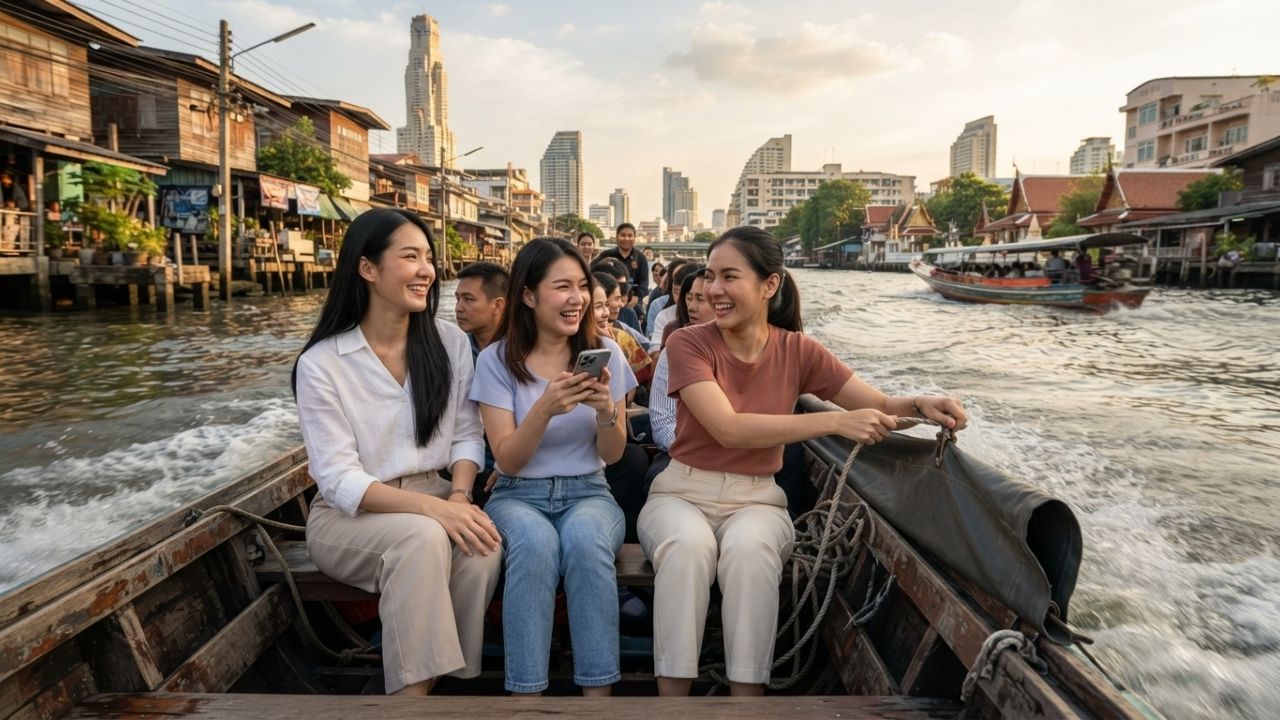
Image generated by AI
Navigating Bangkok’s historic waterways via the Khlong Saen Saep Express Boat provides an extraordinarily fast transit method that avoids landlocked vehicle delays entirely. Operating between 5:30 AM and 7:15 PM for fares under 22 THB, this heritage aquatic network connects historic temples with modern commercial districts.
Navigating dense tropical capitals often presents physical challenges for international visitors due to surface roadway congestion. Stepping onto the inner-city aquatic transit network offers a swift alternative. These fast passenger ferries glide along historic water corridors, bypassing asphalt route delays entirely and reshaping how independent travelers explore Thailand’s capital.
Adopting these local water paths encourages self-reliant exploration, lowers transit budgets, and decreases the traveler's carbon footprint compared to taking idling road taxis.
Gliding past Traffic Congestion along Bangkok’s Canal Express Routes
The Khlong Saen Saep Express Boat is a key component of the city's public transport network, managed under safety guidelines from the Marine Department of Thailand. Unlike leisure cruise lines, this system functions as a rapid commuter highway slicing directly through the urban core from west to east.
The entire aquatic system operates with high operational frequency, moving thousands of local commuters daily. For the international visitor, riding these old-school wooden vessels provides a direct glimpse into local life along the canal margins, connecting residential suburbs with commercial hubs.
Route Geographics: The Golden Mount Line and NIDA Line
The canal network is divided into two operational sectors, which intersect at a central interchange:
- The Golden Mount Line (Western Segment): Connects the historic Old City, originating at Panfa Leelard Pier near the Golden Mount, Wat Saket, and the Grand Palace. It terminates at Pratunam Pier.
- The NIDA Line (Eastern Segment): Extends eastward from Pratunam Pier through residential and school zones, passing through Bang Kapi and terminating at Wat Sing.
Pratunam Pier serves as the central transfer hub connecting both lines. Travelers crossing between the western and eastern lines must change boats here. The transfer is free; passengers do not need to buy a new ticket as long as they retain the paper receipt issued by the conductor on the first leg of their journey.
Dockside Mobility, Onboard Fare Collections, and Splash Tarps
The express vessels operate at high speeds, pivoting briefly against dockside bumpers while conductors secure temporary lines. Embarking and disembarking require agility, as boats stop for only brief intervals. Passengers should stand near the boarding edges before the boat docks, watching their footing on the wet gunwales.
Fares are economical, costing between 12 THB and 22 THB (approximately $0.35 USD to $0.65 USD), dictated by the distance traveled. Onboard conductors move along the exterior wooden ledges of the moving vessel, using cylindrical metal coin boxes to collect payments.
To protect passengers from the murky canal water, the vessels are equipped with side canvas tarps on a rope-and-pulley system. When the boat accelerates and displaces water, passengers seated along the outer benches pull these ropes upward collectively to block incoming waves, keeping the cabin dry.
Local Visitor Guide and Canal Boarding Etiquette
To help you navigate the canal system and ride like a local:
- Prepare Small Change: Carry coins and small bank notes (20 THB or 50 THB bills). Do not hand large-denomination notes (500 THB or 1000 THB) to the conductors, as they cannot safely manage large cash exchanges on the moving boat edges.
- Hold On Securely: Seating fills quickly, and standing room is narrow. Keep a firm grip on the overhead structural bars at all times while the boat is underway.
- Visual Stop Tracking: Pier announcements in English are rare, and signs are primarily in local script. Keep your smartphone's GPS map active to track your position, and look out for key visual landmarks like bridges or temples to identify your stop.
- Off-Peak Transit Times: To avoid intense commuter crowds, ride the boats between 09:30 and 15:30 on weekdays, or during weekend mornings.
- Local Culinary Specialties:
- Near Panfa Leelard Pier: Walk to nearby historic street vendors to sample Pad Thai Fai Daeng (stir-fried noodles cooked over high flames) and sweet mango sticky rice.
- Near Pratunam Pier: Enjoy traditional Hainanese chicken rice (Khao Man Gai) at the nearby family-run shops.
Future Projections for Municipal Waterway Transit and Eco-Tourism
The integration of canal transit supports broader efforts by the Bangkok Metropolitan Administration (BMA) to promote public transit options and reduce urban emissions. By shifting passenger traffic from congested roadways to historical waterways, the city is protecting its environmental quality.
Over the coming years, municipal updates plan to introduce electric passenger vessels on connecting canal routes, reducing noise and water pollution. By showcasing these local networks, the Tourism Authority of Thailand encourages visitors to engage in sustainable, budget-friendly travel practices, preserving the authentic character of Bangkok’s historic waterways.
Related Travel Guides
Disclaimer
This article is for informational and educational purposes only. It does not constitute legal, financial, or professional advice. While we strive to provide accurate and up-to-date information, travel policies, regulations, and conditions change rapidly. Always verify information with official sources before making travel decisions. Nomad Lawyer makes no representations about the accuracy, reliability, completeness, or suitability of the information provided. Readers should consult qualified professionals for advice specific to their circumstances. The views expressed in this article are those of the author and do not necessarily reflect the views of Nomad Lawyer.
Kunal K Choudhary
Co-Founder & Contributor
A passionate traveller and tech enthusiast. Kunal contributes to the vision and growth of Nomad Lawyer, bringing fresh perspectives and driving the community forward.
Learn more about our team →