
Bangkok Flooding Disrupts Airport Transit: Flight Waivers and Monsoon Travel Guide 2026

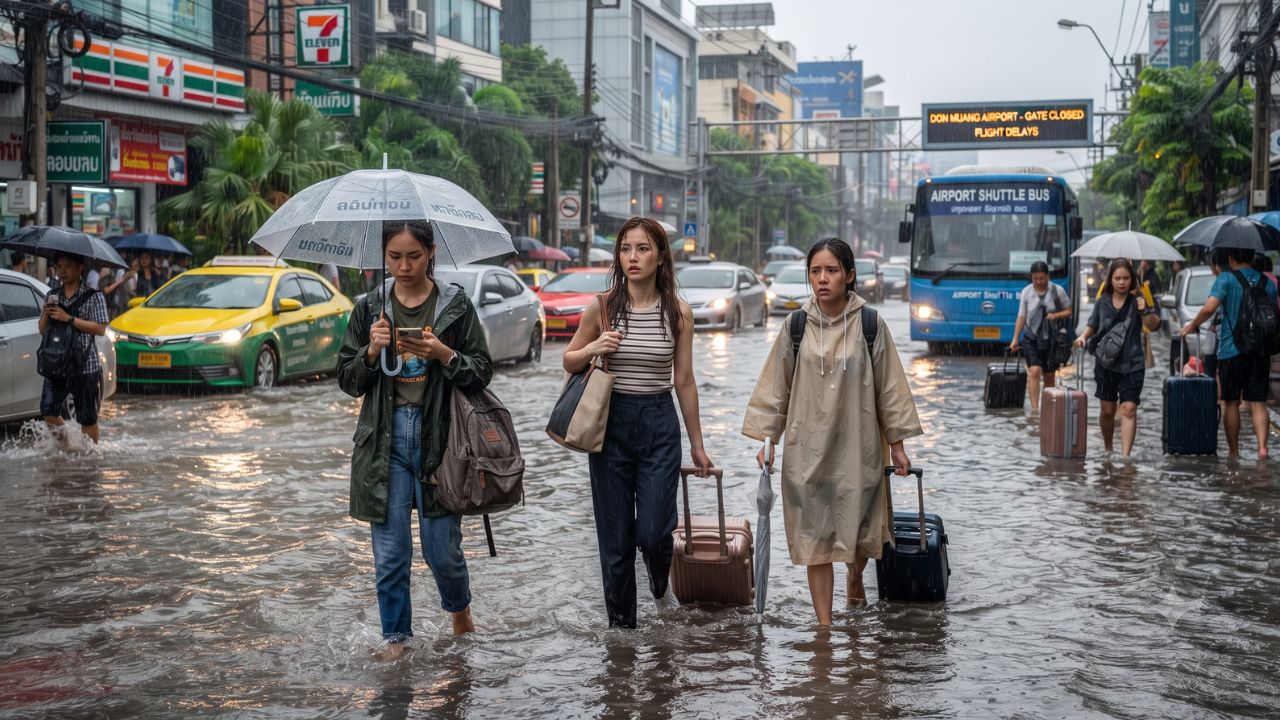
During peak monsoon downpours, a standard 40-minute taxi ride from downtown Sukhumvit to Don Mueang or Suvarnabhumi Airport can easily stretch past three hours as low-lying arterial expressways succumb to flash flooding. In response to severe urban waterlogging and gridlock across the Thai capital between September 26 and September 28, 2026, Thailand's leading domestic and regional carriers—including Nok Air, Thai AirAsia, Thai AirAsia X, and Thai Lion Air—have implemented emergency passenger assistance protocols, offering free rebooking, extended travel vouchers, and flexible cancellation credits.
While runways at both Suvarnabhumi Airport (BKK) and Don Mueang International Airport (DMK) remain operational, the physical bottleneck lies on the city's flooded access roads, tollways, and canal-adjacent intersections. For international travelers and domestic island-hoppers caught in the storm, understanding the precise, carrier-specific waiver rules and knowing how to navigate elevated mass transit lines makes the difference between catching a flight and getting stranded in standstill traffic.
Airline Flexibility Policies Across Bangkok's Major Carriers
The relief measures rolled out for the September 26–28 travel window vary substantially depending on the operating airline. Travelers must recognize that waiver conditions are not standardized across the aviation sector:
Nok Air Relief Framework
Covering passengers departing from Don Mueang Airport or travelers who missed scheduled departures on September 26, 2026, Nok Air provides two flexible options:
- One-Time Flight Change: Passengers can reschedule their flight once within 30 days of the original departure date without paying any change penalty or fare difference.
- Full Credit Voucher: Travelers may convert 100% of their ticket value into a credit voucher valid for rebooking within 30 days.
Thai AirAsia and Thai AirAsia X Options
For passengers holding confirmed tickets to or from Bangkok between September 26 and September 28, 2026:
- Seven-Day Free Rebooking: Eligible travelers can make a single flight date change on the same route within seven days of the original departure without incurring change fees, subject to seat availability.
- Two-Year Credit Account: Passengers who choose to postpone their holiday entirely can deposit the full ticket value into an AirAsia Credit Account, valid for new flight bookings across the airline network for up to two years from approval.
- Airport Arrival Buffer: The airline officially urges passengers to allow two to three hours of transit buffer when traveling to the terminal.
Thai Lion Air Travel Credit and Date Adjustments
Operating across both domestic routes and international corridors between September 26 and September 28, 2026:
- 30-Day Change Window: Passengers can alter their flight date once within 30 days of the original itinerary with change fees waived. If rescheduling onto public holidays or long holiday weekends, fare differences still apply.
- 30-Day Travel Credit: Ticket values can be held as travel credit for 30 days from the original travel date.
- No-Show Protection: Passengers unable to notify the airline prior to departure due to flood delays will have their ticket automatically preserved as 30-day credit to arrange subsequent adjustments.
What Makes Bangkok's Monsoon Transit Unique
Bangkok sits on the low-lying alluvial floodplains of the Chao Phraya River delta, with large swathes of the metropolis resting barely 1.5 meters above sea level. When intense tropical monsoon squalls coincide with high Gulf of Thailand ocean tides, the city's complex drainage network of canals (khlongs) and underground storm tunnels reaches full capacity.
This geographic reality transforms ground transit into an unpredictable obstacle course. Key access arteries—such as Vibhavadi Rangsit Road leading to Don Mueang and Bang Na–Trat Expressway connecting to Suvarnabhumi—regularly experience surface water accumulation, stalling low-clearance passenger cars and city buses.
By contrast, Bangkok's elevated and underground rail systems operate completely independent of road conditions. Travelers consulting the Tourism Authority of Thailand will find that avoiding road-based taxis during heavy rains by switching to the SRT Red Line for Don Mueang or the Airport Rail Link for Suvarnabhumi provides a weather-proof transit corridor that guarantees arrival times.
Visitor Insider Tips for Beating Bangkok Airport Flood Delays
Navigating Bangkok during late September storm cycles requires sharp local planning and strategic transit choices:
- Ditch the Taxi for Elevated Rail: If heading to Suvarnabhumi Airport during rainstorms, take the MRT Blue Line to Phetchaburi Station or the BTS Sukhumvit Line to Phaya Thai, then connect directly to the elevated Airport Rail Link (City Line), which reaches the passenger terminal in 26 minutes for 45 THB.
- The SRT Dark Red Line Hack for Don Mueang: Skip the gridlocked Vibhavadi highway. Take the MRT Blue Line or BTS Green Line to Krung Thep Aphiwat Central Terminal (Bang Sue) and board the SRT Dark Red Line suburban train. It connects directly to Don Mueang Airport via an elevated air-conditioned skywalk in under 20 minutes for 33 THB.
- Hotel Neighborhood Selection: During the peak September–October rainy period, choose hotels within direct, covered walking distance of BTS or MRT stations (such as Asok, Sala Daeng, or Phrom Phong). Navigating flooded side-alleys (sois) with heavy roller luggage can be exhausting and practically impossible.
- Local Weather Monitoring: Monitor real-time rain radar maps via the Bangkok Metropolitan Administration (BMA) Flood Prevention Center portal before leaving your hotel room. If purple or red radar cells appear over central Bangkok, start your airport journey at least four hours before international departures.
- Carry Waterproof Dry Bags: Keep passports, electronics, and paper flight itineraries inside zip-seal waterproof bags inside your daypack, as sudden tropical downpours can soak luggage during curbside unloading.
Cultural and Environmental Context: Living with Water in the Chao Phraya Basin
Water has defined Siamese civilization for centuries, earning historical Bangkok the moniker "Venice of the East." Traditional Thai communities built wooden teak homes on tall stilts along canal networks, allowing seasonal floodwaters to recede naturally into surrounding agricultural wetlands.
Over the past half-century, rapid urban development concreted over hundreds of natural waterways to build multilane roadways and high-rise commercial corridors. This loss of natural water retention (kaem ling or "monkey cheeks," a concept pioneered by King Bhumibol Adulyadej) intensified flash flooding challenges across central commercial districts.
Today, Bangkok is investing in colossal underground retention basins, modernized water pumping stations, and extended electric rail transit to adapt to changing climate realities. For travelers, respecting local environmental realities means embracing modern mass transit over private vehicles, reducing carbon emissions and avoiding gridlock during storm events.
FAQ: Visiting Bangkok During Monsoon Season 2026
How do I reach Suvarnabhumi Airport during heavy rain without getting stuck in traffic?
Take the Airport Rail Link from Phaya Thai or Makkasan stations. The elevated train bypasses all flooded highways, arriving at the terminal basement in 26 minutes.
Which train connects central Bangkok to Don Mueang International Airport?
The SRT Dark Red Line commuter rail runs from Krung Thep Aphiwat Central Terminal directly to Don Mueang Airport, connecting via a covered skywalk.
What should I do if flooding makes me miss my flight?
Contact your carrier immediately. Nok Air, Thai AirAsia, and Thai Lion Air provide fee waivers, rebooking windows, or credit vouchers for flights affected between September 26 and September 28, 2026.
Is it safe to visit Bangkok during the late September rainy period?
Yes. Major tourist attractions, shopping complexes, and rail systems operate normally. Simply rely on elevated trains and allow extra transfer time between destinations.
When tropical rains sweep across Bangkok's golden spires, mastering the city's elevated rail network turns travel disruption into a seamless local journey.
Related Travel Guides
Disclaimer
This article is for informational and educational purposes only. It does not constitute legal, financial, or professional advice. While we strive to provide accurate and up-to-date information, travel policies, regulations, and conditions change rapidly. Always verify information with official sources before making travel decisions. Nomad Lawyer makes no representations about the accuracy, reliability, completeness, or suitability of the information provided. Readers should consult qualified professionals for advice specific to their circumstances. The views expressed in this article are those of the author and do not necessarily reflect the views of Nomad Lawyer.
Preeti Gunjan
Contributor & Community Manager
A passionate traveller and community builder. Preeti helps grow the Nomad Lawyer community, fostering engagement and bringing the reader experience to life.
Learn more about our team →