
Bali Flights Disrupted by Mount Lewotobi Laki Laki Ash in April 2026
Mount Lewotobi Laki Laki's volcanic ash is forcing widespread bali flights disrupted across Asia's busiest routes in April 2026, affecting thousands despite the airport remaining open.

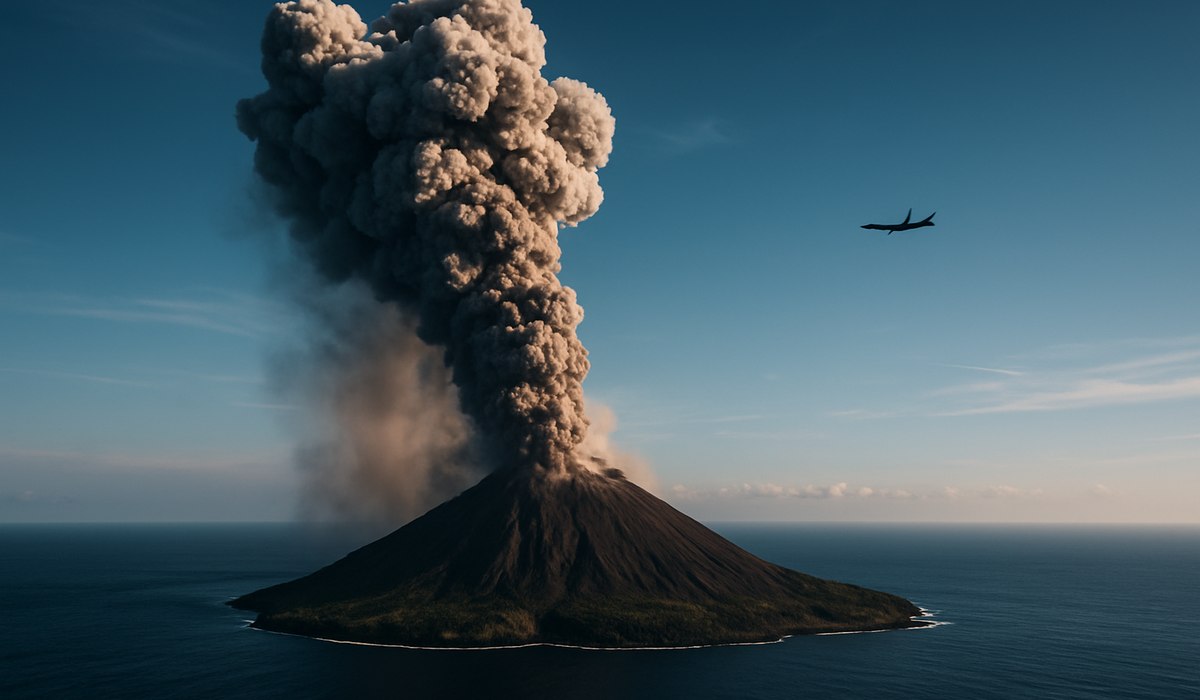
Image generated by AI
Bali Flights Disrupted as Volcanic Ash Grounds International Routes
Mount Lewotobi Laki Laki's ash clouds are forcing widespread flight cancellations to Bali despite I Gusti Ngurah Rai International Airport remaining technically operational. The eruptions in eastern Indonesia's East Nusa Tenggara region are sending volcanic particles into critical air corridors serving one of Asia's busiest aviation hubs. Carriers operating routes from India, Australia, and Southeast Asia have suspended rotations or diverted aircraft mid-journey as ash dispersal forecasts deteriorate along approach and departure paths. Thousands of passengers face rebooking delays and extended stays as the volcano continues to disrupt regional traffic.
Volcanic Eruption Sends Ash Into Key Air Corridors
Eastern Indonesia's Mount Lewotobi Laki Laki has renewed volcanic activity that specifically threatens Bali's international connectivity. The volcano sits approximately 800 kilometers east of Denpasar, yet ash plumes at cruising altitude are reaching critical flight paths used by transcontinental services. Aviation authorities and meteorological agencies track ash dispersion patterns continuously, noting that upper-atmosphere particles pose documented risks to jet engine performance and aircraft avionics systems.
Ash ingestion can cause immediate engine flame-out, forcing pilots to declare emergencies and execute emergency descents. Even microscopic silicate particles accumulate on turbine blades, reducing engine efficiency and requiring costly maintenance interventions. The Federal Aviation Administration (FAA) provides strict guidance on ash-avoidance protocols that airlines and pilots must follow when volcanic contamination is forecast.
Airlines have adopted conservative positioning strategies, routing aircraft around affected corridors or suspending operations entirely when ash clouds are predicted to intersect departure and arrival routes during critical flight phases. Regional meteorological centers issue ash forecasts every 6-12 hours, prompting rapid schedule adjustments that cascade across multiple airlines simultaneously.
Wave of Cancellations Hits Bali's Ngurah Rai Airport
The cascading impact on Bali's main gateway has been severe and unpredictable. Records from the last two weeks of April 2026 show that more than 30 international flights were canceled during peak disruption periods, including services to Delhi, Singapore, Sydney, Melbourne, and major Southeast Asian hubs. Outbound and inbound flights faced simultaneous withdrawals as carriers waited for updated ash dispersion models.
Airlines have implemented last-minute scheduling reviews that sometimes reinstated flights after conditions improved, while others were canceled only hours before boarding. This operational volatility creates uncertainty for passengers attempting to reach Bali for vacations, business meetings, and connecting flights to other regional destinations. Domestic flights connecting Bali to volcanic zones farther east faced suspension first, with shorter regional routes being the initial casualties when ash clouds drifted across eastern air corridors.
Ground handling teams at Ngurah Rai have cycled between normal operations and surge-capacity passenger processing, managing stranded travelers who missed connections or opted to extend stays rather than navigate rebooking chaos. The stop-start pattern has strained airport facilities and staffing coordination across multiple consecutive days.
How Ash Impacts Aircraft Safety and Operations
Volcanic ash poses distinct hazards that justify airline caution and aviation authority intervention. Ash particles in the 10-100 micron range pass through engine inlet filters and accumulate on turbine blades, reducing compression efficiency and causing compressor stalls. Historical incidents, including the 1982 British Airways Flight 9 engine failure near Jakarta, demonstrate how quickly multiple engines can fail when aircraft encounter concentrated ash clouds.
Modern engines have improved inlet design, but no aircraft is immune to ash contamination at high particle concentrations. Pilots and dispatchers rely on satellite imagery, pilot reports (PIREPS), and meteorological forecasts to identify ash-free corridors. When ash clouds are forecast to intersect standard routes during critical flight phases—particularly climb-out and initial descent—airlines cancel rather than risk engine damage or in-flight emergencies.
Ash also impacts visibility on approach, coats windscreens and external sensors, and can cause static electricity buildup. Bali's tropical weather patterns can concentrate ash clouds unexpectedly as wind patterns shift, forcing real-time tactical decisions that override pre-planned schedules.
What Travelers Should Know Before Booking to Bali
Volcanic activity in eastern Indonesia presents a timing risk that travelers must understand before committing to Bali bookings. Eruptive periods can last weeks or months, with intermittent activity creating unpredictable cancellation windows. Airlines typically waive change fees when volcanic disruptions are declared, but alternative flights may not be available immediately.
Travel insurance policies increasingly recognize volcanic ash as a defined covered event, though eligibility depends on policy purchase date and specific terms. Policies purchased after volcanic activity begins may not cover resulting cancellations. Review policy documents carefully before booking flights during active eruptive periods.
Flexibility is the single most valuable asset when traveling to Bali during volcanic disruptions. Building extra buffer days into itineraries reduces pressure to accept poor flight options. Checking ash forecast maps before booking and avoiding the 72-hour pre-departure window when most cancellations are announced can help manage risk.
| Data Point | Details |
|---|---|
| Volcano Location | Mount Lewotobi Laki Laki, East Nusa Tenggara, Indonesia |
| Distance to Bali | ~800 kilometers northeast |
| April 2026 Cancellations | 30+ international flights during peak disruption periods |
| Routes Most Affected | Delhi-Denpasar, Singapore-Denpasar, Sydney-Denpasar, Melbourne-Denpasar |
| Airport Status | I Gusti Ngurah Rai International remains open; flight cancellations driven by ash forecasts |
| Typical Rebooking | 3-7 day delays; alternative routing through Jakarta or Surabaya |
Traveler Action Checklist
-
Monitor ash forecasts daily using satellite imagery from meteorological agencies and volcanic monitoring services through your airline's travel alert system.
-
Contact your airline immediately if bali flights disrupted appear on your booking; secure fee-free rebooking or refund options before standby queues form.
-
Review your travel insurance policy to confirm volcanic ash coverage, policy effective date, and claim procedures before filing any disruption claims.
-
Book flexible tickets when ash activity is active; the additional cost typically recovers value through change flexibility during disruptions.
-
Consider alternative airports such as Ngurah Rai's secondary routing through Surabaya or Jakarta to bypass affected corridors.
-
Build extra buffer days into your itinerary; add 2-3 days before critical travel dates to avoid missing connections or business deadlines.
-
Download offline maps and document hotel information, airline contact numbers, and travel insurance details before departure.
-
Join airline frequent flyer programs to access priority rebooking services and flight change privileges during operational disruptions.
FAQ: Bali Flights and Volcanic Disruptions
Q: Will Bali's airport close completely due to Mount Lewotobi Laki Laki ash?
Complete closures are unlikely unless ash concentration exceeds visibility and air quality thresholds. More probable are rolling cancellations of specific flights while the airport remains open. Historical Mount Agung eruptions in 2017-2018 caused brief full closures, but current activity patterns suggest partial disruption is more likely than total shutdown.
Q: Can I get a refund if my Bali flight is canceled due to volcanic ash?
Yes. Airlines
Disclaimer
This article is for informational and educational purposes only. It does not constitute legal, financial, or professional advice. While we strive to provide accurate and up-to-date information, travel policies, regulations, and conditions change rapidly. Always verify information with official sources before making travel decisions. Nomad Lawyer makes no representations about the accuracy, reliability, completeness, or suitability of the information provided. Readers should consult qualified professionals for advice specific to their circumstances. The views expressed in this article are those of the author and do not necessarily reflect the views of Nomad Lawyer.
Kunal K Choudhary
Co-Founder & Contributor
A passionate traveller and tech enthusiast. Kunal contributes to the vision and growth of Nomad Lawyer, bringing fresh perspectives and driving the community forward.
Learn more about our team →