
Austrian Airlines Prepares for Aviation Future With New Destinations, Fleet Streamlining and Smarter Capacity Control
Austrian Airlines Prepares for Aviation Future With New Destinations, Fleet Streamlining and Smarter Capacity Control

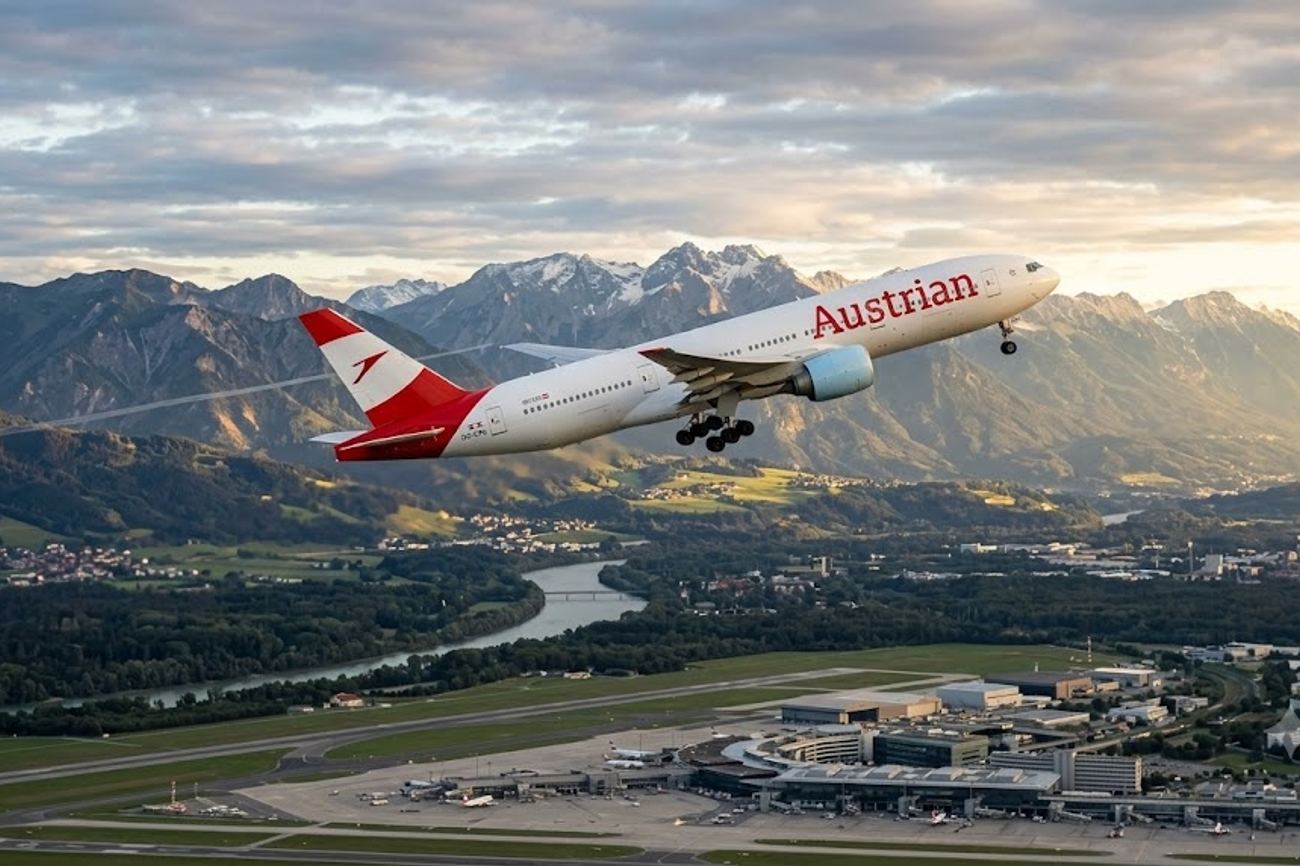
Image generated by AI
[Vienna, May 2026] — Austrian Airlines is aggressively restructuring its operational model to combat rising costs and market volatility, announcing a drastic fleet consolidation that will reduce its aircraft families from five down to two by 2028.
The carrier is currently executing a multi-pronged strategy to strengthen its European network while simplifying its technical operations. This shift involves the introduction of seven new European destinations for the Summer 2026 season and a transition toward a streamlined fleet consisting exclusively of the Boeing 787 for long-haul routes and the Airbus A320 family for short- and medium-haul services.
The Push for Operational Simplicity
The primary catalyst for this transformation is the need to eliminate operational complexity and curb escalating overhead. For years, Austrian Airlines managed five distinct aircraft fleets, a structure that increased maintenance requirements, crew training costs, and scheduling rigidity. By 2028, the airline intends to operate only two aircraft families.
This simplification is designed to create a more agile operation. By standardizing the fleet, the carrier can optimize spare parts inventory and streamline pilot certifications. The move is a direct response to a competitive European landscape where lean operations are necessary to survive pricing pressures from low-cost carriers (LCCs), particularly at the airline's primary hub in Vienna.
Network Expansion and Market Reach
Despite the internal drive for efficiency, the airline is simultaneously expanding its footprint. The Summer 2026 schedule includes seven new European destinations, some of which are already active while others will phase in throughout the season.
The airline's growth strategy focuses on filling specific gaps in its current network to capture untapped passenger demand. This expansion is supported by the carrier's deep integration with the Lufthansa Group and its membership in the Star Alliance, which allows for coordinated network planning and improved transfer options for passengers connecting through Vienna to global destinations.
The following table outlines the specific fleet transition planned for the coming years:
| Operation Type | Current State | Target State (by 2028) |
|---|---|---|
| Long-Haul | Multiple Wide-body types | Boeing 787 exclusively |
| Short/Medium-Haul | Multiple Narrow-body types | Airbus A320 Family exclusively |
| Total Fleet Families | 5 Families | 2 Families |
Practical Traveler Advisory and Strategic Insights
For the average passenger, these corporate shifts translate into several tangible changes in the travel experience:
Consistency in Cabin Experience: As the fleet standardizes, passengers will encounter more uniform seating, in-flight entertainment, and cabin configurations across different routes. The reliance on the Boeing 787 for long-haul flights generally means better cabin pressure and humidity levels, reducing jet lag.
Increased Connectivity: The addition of seven new European routes provides more direct options from Vienna, reducing the need for secondary connections and shortening total travel time.
Price Sensitivity: The airline is closely monitoring "passenger acceptance" regarding price hikes. Because the carrier is fighting for market share against low-cost airlines in Vienna, travelers may see more aggressive pricing strategies as the airline tests how much of the rising operational costs can be passed on to the consumer.
Reliability: Fleet streamlining typically leads to fewer cancellations caused by "technical issues" because the airline has a more concentrated pool of parts and specialized engineers for fewer aircraft types.
Managing the Fuel Crisis
Fuel remains the single largest expenditure for Austrian Airlines, and the carrier is utilizing aggressive financial hedging to stabilize its budget. Through the Lufthansa Group, the airline has secured 80% of its fuel consumption for 2026.
While an 80% hedge provides a significant buffer against sudden price spikes caused by global geopolitical crises, the remaining 20% exposure still represents a substantial financial risk. To mitigate this, the airline is employing "Smarter Capacity Control," which allows it to adjust flight frequencies and schedules in real-time based on fluctuating fuel prices and market demand.
This flexible approach ensures that the airline does not operate underperforming routes during periods of extreme fuel volatility, prioritizing profitability over sheer volume.
The Future of the Vienna Hub
The competitive environment in Vienna is shifting, with low-cost carriers capturing a larger share of the market. Austrian Airlines is responding not by engaging in a "race to the bottom" on pricing, but by leveraging its premium connectivity and alliance partnerships.
The airline continues to scout for "missing spots" in its European network to ensure it remains the primary gateway for travelers entering Central and Eastern Europe. The goal is to balance the high-efficiency model of a streamlined fleet with the high-service model of a full-service carrier.
As 2028 approaches, the success of this strategy will depend on the airline's ability to maintain its premium positioning while operating with the lean cost structure of a much smaller operation.
FAQ: Austrian Airlines Strategy 2026-2028
What new flights are available in Summer 2026? Austrian Airlines has added seven new European destinations to its network. While some routes are already operational, others will be introduced gradually throughout the summer season to meet passenger demand.
Which planes will I fly on after 2028? The airline is simplifying its fleet. For long-haul international flights, you will fly on Boeing 787 aircraft. For shorter European and medium-haul flights, the airline will exclusively use the Airbus A320 family.
How is the airline handling rising ticket prices? The carrier is monitoring market behavior in Vienna to determine how much price increases passengers will accept. They are balancing these costs by reducing operational complexity and using fuel hedging to keep fares stable.
Is Austrian Airlines still part of the Lufthansa Group? Yes. The airline remains deeply integrated within the Lufthansa Group and continues to collaborate closely with Star Alliance partners to provide global connectivity and coordinated flight schedules.
A leaner fleet and a wider map: Vienna's flagship carrier bets on simplicity to survive the volatility of European skies.
Related Travel Guides
Disclaimer
This article is for informational and educational purposes only. It does not constitute legal, financial, or professional advice. While we strive to provide accurate and up-to-date information, travel policies, regulations, and conditions change rapidly. Always verify information with official sources before making travel decisions. Nomad Lawyer makes no representations about the accuracy, reliability, completeness, or suitability of the information provided. Readers should consult qualified professionals for advice specific to their circumstances. The views expressed in this article are those of the author and do not necessarily reflect the views of Nomad Lawyer.
Raushan Kumar
Founder & Lead Developer
Full-stack developer with 11+ years of experience and a passionate traveller. Raushan built Nomad Lawyer from the ground up with a vision to create the best travel and law experience on the web.
Learn more about our team →