
Austria Alpine Tourism Crisis 2026: Low-Altitude Ski Hotels Shift to Year-Round Wellness Models
Low-altitude Austrian hotels below 1,500m are abandoning winter-centric business models as snow scarcity and rising OpEx drive a pivot toward year-round wellness and cycling tourism.

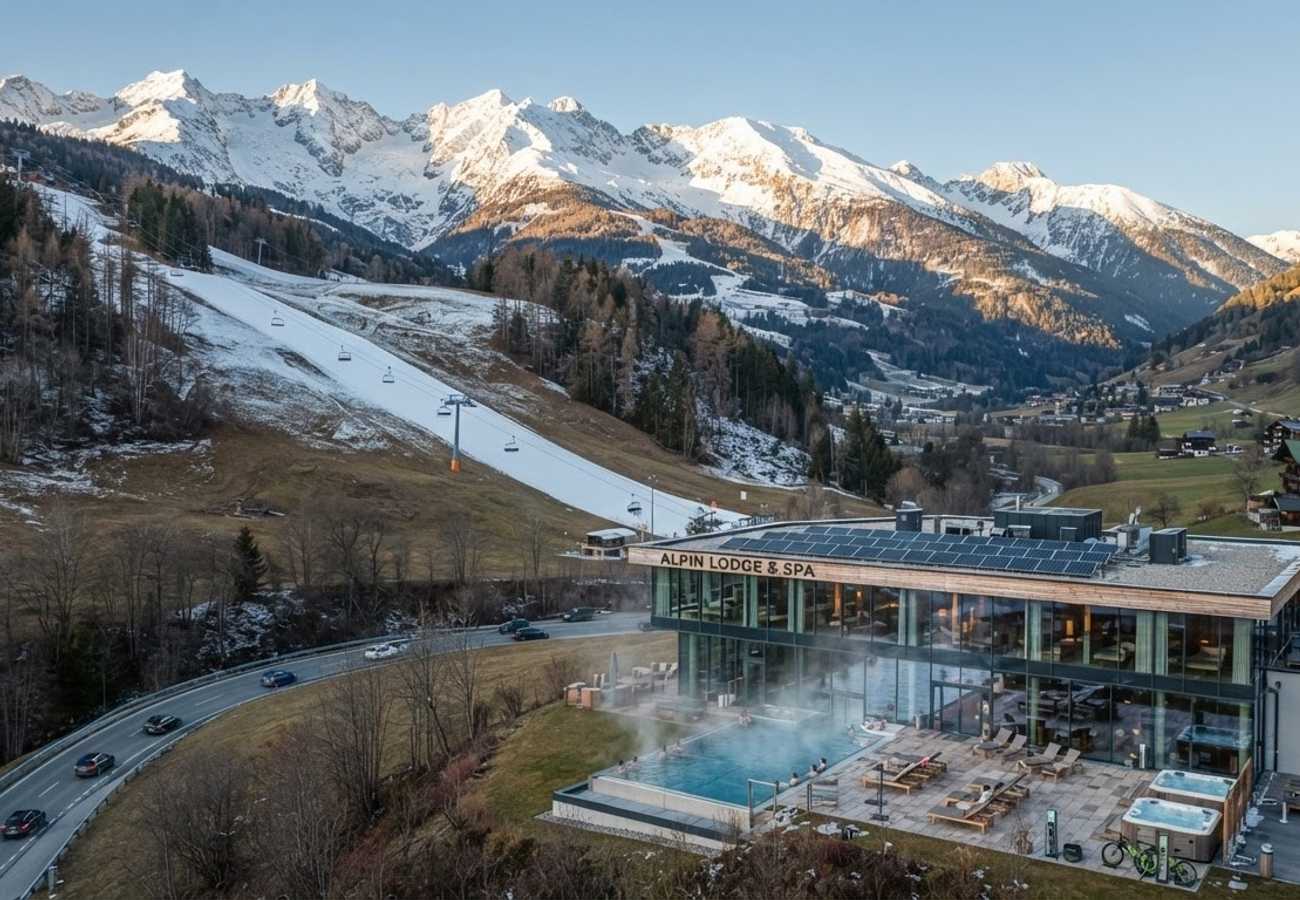
Image generated by AI
A stark divide is emerging in the Austrian Alps as hotels located below 1,500 metres face a systemic collapse of the traditional winter ski model, forcing a desperate pivot toward year-round wellness and summer tourism. While national tourism figures suggest record-breaking growth, a granular look at altitude-stratified data reveals that low-elevation valley resorts are suffering from shortened seasons and unsustainable operating costs.
The Austrian hospitality sector is currently navigating a geographical fracture. For decades, the business model for Alpine hotels relied on a predictable winter window. However, shifting snow conditions have created two distinct realities: high-altitude glaciers that remain profitable and low-altitude valleys where the "winter" season is effectively evaporating.
National Growth Masks Localized Valley Decline
On the surface, the 2025/2026 winter season appears to be a triumph for Austrian tourism. According to preliminary data from Statistik Austria, the sector recorded a historic 74.23 million overnight stays and 21.33 million guest arrivals between November 2025 and April 2026. This represents a 2.5% increase in bed-nights and a 3.4% rise in visitor registrations compared to the 2024/2025 season, comfortably surpassing pre-pandemic peaks from 2018/2019.
Foreign markets remain the primary engine of this growth, contributing 57.56 million overnights. Germany continues to be the dominant feeder market with 26.5 million nights, followed closely by the Netherlands. However, these aggregate numbers hide a troubling trend for hotels in lower elevations.
While urban hubs like Vienna saw a 6.1% increase (totaling 9.5 million overnights) and high-altitude resorts above 1,800 metres registered gains between 2.8% and 6.1%, the story is different in the valleys. Accommodations situated below 1,500 metres saw a 5.4% contraction in 2025/2026, contributing to a cumulative three-year decline of 8.3%. This downturn is particularly acute in the Bregenzerwald in Vorarlberg, the lower regions of the Wilder Kaiser, peripheral districts of the Kitzbüheler Alpen, and family-oriented clusters in Lower Austria and Carinthia.
Meteorological Shifts and the Compression of the Ski Window
The catalyst for this divergence is the rising elevation of the zero-degree Celsius isotherm. In terrain below 1,500 metres, precipitation that once arrived as snow is increasingly falling as rain during the early and late winter periods. This results in the washing away of valley-floor base layers and creates volatile freeze-thaw cycles that ruin slope quality.
The impact on operational timelines is severe. While glacier peaks above 1,800 metres successfully maintained operating seasons of 145 to 155 days, commercial ski windows in the valleys have shrunk to fewer than 80 operational days. This compression leaves low-altitude hoteliers with a massive revenue gap during what was historically their most profitable quarter.
Consumer Migration Toward High-Altitude Certainty
The visual degradation of the landscape—where narrow strips of artificial snow are surrounded by brown, snowless meadows—has triggered a shift in guest behavior. Middle-market families from the Netherlands, eastern Austria, and southern/western Germany, who previously prioritized value and accessibility over extreme terrain, are now resisting bookings at mid-elevation three- and four-star properties.
This has led to a market bifurcation:
- Elevation Flight: Affluent skiers are migrating to "snow-guaranteed" resorts above 1,800 metres, such as Ischgl, Sölden, Obertauern, and Obergurgl. This concentration of demand has allowed high-altitude operators to exert significant pricing power, pushing average daily room rates (ADR) above €380 during peak periods.
- Recreational Substitution: Price-sensitive families, unwilling to pay the 35% to 50% premium demanded by high-altitude resorts, are abandoning downhill skiing altogether. These travelers are substituting Alpine winter trips with urban cultural breaks, southern European sun holidays, or domestic summer retreats.
Comparative Performance Metrics (2023–2026)
The following data illustrates the financial and operational decoupling between the peaks and the valleys over the last three seasons.
| Dimension & Operational Metric | 2023/2024 Baseline | 2024/2025 Transition | 2025/2026 Climate Split |
|---|---|---|---|
| High-Altitude (>1,800m) Clusters | |||
| Operating Season Length | 140–160 days | 135–150 days | 145–155 days |
| Overnight Stays (YoY Variance) | +1.8% | +2.1% | +2.8% |
| Winter Average Daily Rate (ADR) | €280–€340 | €310–€380 | €340–€420 |
| Average Length of Stay (LOS) | 5.4 nights | 5.2 nights | 5.3 nights |
| Gross Operating Profit Margin | 34.2% | 35.0% | 36.8% |
| Sub-1,500m Valley Accommodations | |||
| Operating Season Length | 105 days | 88 days | 72–80 days |
| Overnight Stays (YoY Variance) | -0.8% | -2.3% | -5.4% (cum. -8.3%) |
| Winter Average Daily Rate (ADR) | €165–€195 | €170–€205 | €175–€210 |
| Average Length of Stay (LOS) | 4.6 nights | 4.1 nights | 3.5 nights |
| Utility Cost Per Occupied Room | €14.50 | €18.20 | €22.80 |
| GOPPAR Margin Compression | Baseline | -160 bps | -340 bps |
| Shoulder Season Cancellation Rate | 8.4% | 14.2% | 22.6% |
| Snowmaking Unit Economics | |||
| Avg Wet-Bulb Production Temp | -4.2°C | -2.8°C | -1.5°C |
| Base Cost Per m³ Snow Produced | €3.50–€4.20 | €5.00–€6.10 | €7.20–€8.50 |
| Six-Day Adult Lift Pass Price | €320–€345 | €365–€390 | €415–€445 |
| Capital Allocation Distribution | |||
| Winter Infrastructure & Ski Depots | 75% | 40% | 20% |
| Energy Efficiency & Self-Gen | 15% | 35% | 30% |
| Four-Season Wellness & Cycling | 10% | 25% | 50% |
The Thermodynamics Trap and Rising OpEx
Low-altitude resorts are caught in a "thermodynamics trap." Mechanical snow production relies on the wet-bulb temperature—the lowest temperature achievable through evaporative cooling. When wet-bulb temperatures hover near -1.5°C (as seen in the 2025/2026 season), the energy required to freeze atomized water into ice crystals skyrockets.
This has led to an explosion in operating expenses (OpEx). The base cost to produce one cubic metre of snow has risen from a baseline of €3.50–€4.20 in 2023 to €7.20–€8.50 in 2026. As utility costs per occupied room in the valleys climbed to €22.80, profit margins were further squeezed.
Why This Matters: The Shift to "Four-Season" Hospitality
For the traveler, this shift means that the traditional "ski holiday" in the lower Alps is becoming a gamble. Guests can no longer assume that a mid-elevation resort will have viable slopes in December or March. However, this crisis is forcing an evolution in the guest experience.
From a logistical and investment standpoint, the data shows a massive reallocation of capital. In 2023, 75% of capital was spent on winter infrastructure; by 2026, that figure plummeted to 20%, with 50% of investment now flowing into four-season wellness and cycling facilities.
This transition creates a new type of Alpine destination. Instead of relying on a precarious three-month window of snow, hotels are rebranding as year-round wellness retreats. By investing in high-end spas, thermal baths, and extensive e-bike networks, these properties are insulating themselves against climate volatility. For the modern traveler, this means more diverse options for off-season visits and a move away from the "boom-or-bust" cycle of winter tourism.
The Alpine valley is no longer just a gateway to the peaks, but a destination for wellness in its own right.
Related Travel Guides
Disclaimer
This article is for informational and educational purposes only. It does not constitute legal, financial, or professional advice. While we strive to provide accurate and up-to-date information, travel policies, regulations, and conditions change rapidly. Always verify information with official sources before making travel decisions. Nomad Lawyer makes no representations about the accuracy, reliability, completeness, or suitability of the information provided. Readers should consult qualified professionals for advice specific to their circumstances. The views expressed in this article are those of the author and do not necessarily reflect the views of Nomad Lawyer.
Raushan Kumar
Founder & Lead Developer
Full-stack developer with 11+ years of experience and a passionate traveller. Raushan built Nomad Lawyer from the ground up with a vision to create the best travel and law experience on the web.
Learn more about our team →