
Australia's Wild Travel Surge 2026: Darwin, Cairns, and Broome Lead High-Adrenaline Tourism
Six Australian regional hubs, led by Darwin and Cairns, are redefining extreme tourism in 2026 as thrill-seekers pivot toward raw, off-grid wilderness expeditions.

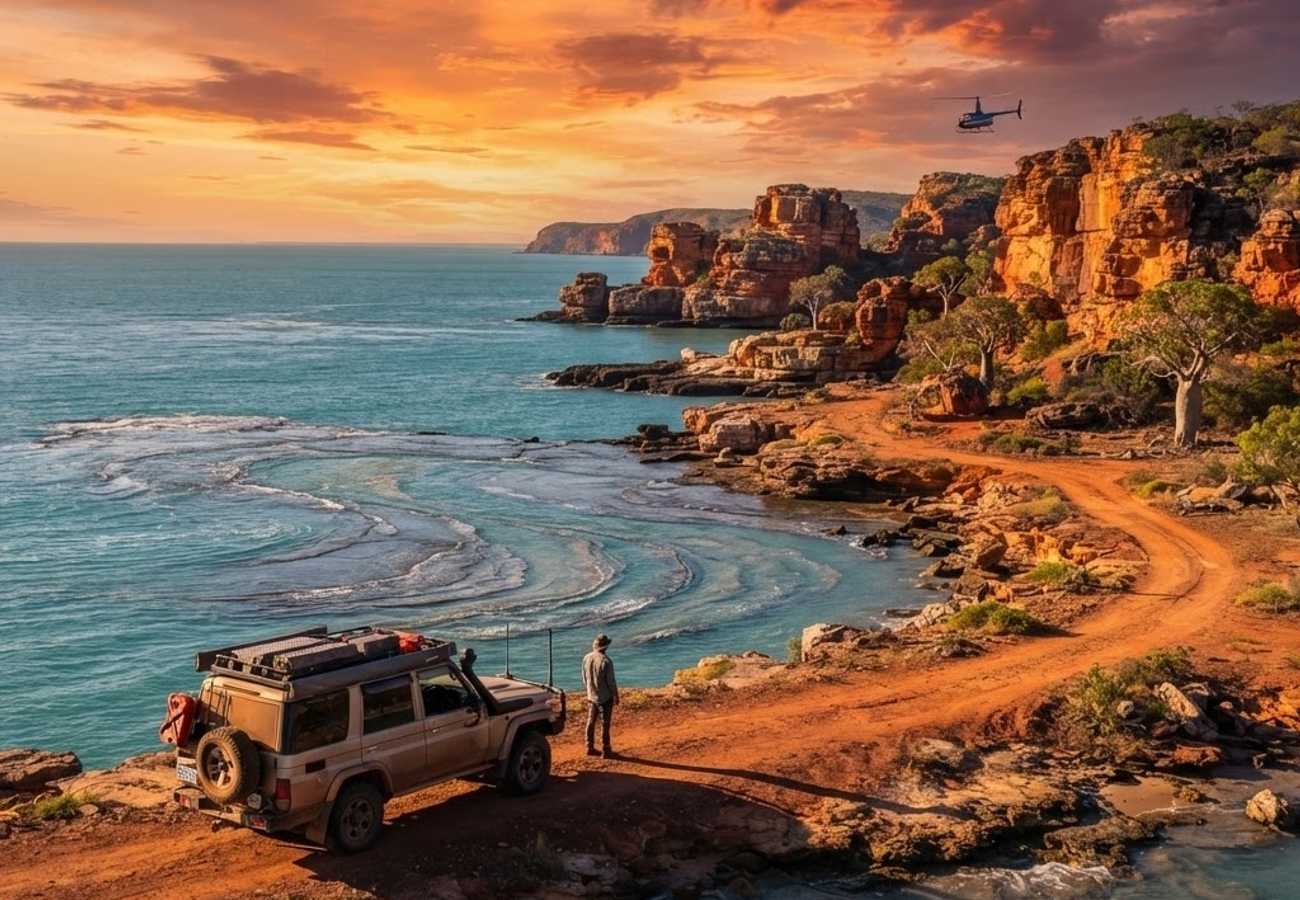
Image generated by AI
Six Australian regional hubs are currently dominating the global extreme tourism sector, as a post-pandemic shift toward raw, off-grid exploration drives thousands of thrill-seekers to the continent's most unforgiving landscapes.
While Australia's major metropolitan centers continue to attract urban tourists, the real growth in 2026 is occurring in the periphery. Cities like Darwin, Cairns, Hobart, Broome, Alice Springs, and Exmouth have transitioned from quiet regional towns into high-capacity launchpads for high-stakes expeditions. These gateways provide the necessary medical and aviation infrastructure required to support travelers venturing into prehistoric rainforests, deep oceanic trenches, and lethal desert environments.
Tropical Frontiers and Apex Predators in Darwin
Darwin has emerged as the primary entry point for those seeking the rawest environments of the Northern Territory. The city serves as the operational base for expeditions into Kakadu and Litchfield National Parks, where the geography is defined by ancient sandstone escarpments and monsoonal wetlands.
The draw for adrenaline seekers in this region is the high-risk interaction with saltwater crocodiles. Industry reports indicate a surge in airboating and heli-fishing tours within remote tidal rivers. However, the extreme nature of the environment necessitates strict adherence to "Crocwise" safety protocols. Officials warn that swimming in unmonitored waterways or tidal estuaries is strictly prohibited due to the high density of apex predators.
Marine and Jungle Extremes in Cairns
In Far North Queensland, Cairns has solidified its status as the adventure capital of the north. The city is uniquely positioned where the world's oldest tropical rainforests intersect with the Great Barrier Reef, allowing for a hybrid of marine and terrestrial extreme sports.
Travelers are increasingly opting for liveaboard diving expeditions to the remote outer reefs or engaging in Class-IV white-water rafting on the Tully River. The region also supports high-altitude adrenaline activities, including coastal skydiving. Due to the seasonal presence of lethal jellyfish, the use of stinger suits is mandatory for any ocean swimming between November and April.
Sub-Polar Challenges in Hobart
Moving south to Tasmania, Hobart provides a stark contrast to the tropical north. This island capital serves as the base for those seeking cold-climate challenges, characterized by alpine peaks and the tempestuous Southern Ocean.
The region is currently seeing an influx of multi-day thru-hikers tackling the Southwest Wilderness and sea-kayakers navigating the basalt cliffs of Bruny Island. Because Tasmanian weather is notoriously volatile, alpine-grade gear is required even during the summer months (October to April) to prevent hypothermia and exposure during rapid weather shifts.
Remote Kimberley Expeditions via Broome
Broome remains the essential gateway to the Kimberley region of Western Australia, one of the most isolated wilderness areas on earth. The region is defined by massive tidal shifts and the legendary Gibb River Road, an unpaved track that demands rigorous vehicle preparation.
Current trends show a rise in high-powered jet-boating trips to witness the Horizontal Falls and coastal kayaking encounters with marine megafauna. Given the vast distances between fuel stations and the lack of cellular coverage, expedition leaders mandate the use of satellite communications, dual spare tires, and significant water reserves for all 4WD journeys.
Red Centre Survival in Alice Springs
Alice Springs serves as the heart of outback exploration, surrounded by the MacDonnell Ranges and the Simpson Desert. The primary draw for endurance athletes is the 223km Larapinta Trail, a trek known for its exposed ridgelines and punishing arid climate.
Beyond hiking, the city supports high-adrenaline quad biking across desert dunes and hot-air ballooning over the ranges. The extreme thermal conditions of the Red Centre pose a significant risk; during the summer months (November to March), travelers are advised to carry a minimum of four liters of water per person daily to avoid severe dehydration.
Deep-Sea Encounters in Exmouth
On the North West Cape of Western Australia, Exmouth provides direct shoreline access to the Ningaloo Reef. Unlike other reef systems that require long boat transits, Exmouth allows for drift-snorkeling meters from the beach alongside whale sharks, manta rays, and humpback whales.
The inland geography of Cape Range National Park offers further challenges, including sea-cave kayaking and hiking through deep limestone canyons. Due to strong tidal currents on the outer reef drops, industry experts recommend utilizing guided marine charters rather than attempting solo excursions.
Regional Adventure Hubs: 2026 Comparison Data
| Destination & Region | Wild Profile & Vibe | Core Adventures | Prime Season | Key Safety & Local Info |
|---|---|---|---|---|
| Darwin (NT) | Tropical frontier / Sandstone escarpments | Croc airboating, 4WD Kakadu, Heli-fishing | May – Sept | High Hazard: Strict “Crocwise” rules |
| Cairns (QLD) | Rainforest & Reef capital | Outer Reef scuba, Tully River rafting, Skydiving | May – Oct | Stinger suits required Nov–Apr |
| Hobart (TAS) | Sub-polar / Alpine & Southern Ocean | Bruny Island kayaking, SW Wilderness hiking | Oct – Apr | Rapid weather shifts; alpine gear essential |
| Broome (WA) | Remote Kimberley gateway | Gibb River Road 4WD, Horizontal Falls jet-boating | May – Oct | Sat-coms and dual spares required |
| Alice Springs (NT) | Red-Centre desert / Mountain ranges | Larapinta Trail (223km), Quad biking | Apr – Oct | High heat risk; 4L+ water per day |
| Exmouth (WA) | Coral coast / Arid desert | Whale shark swimming, Ningaloo drift snorkeling | Apr – Aug | Strong tidal currents; use guided charters |
Why This Matters: The Shift to High-Stakes Travel
For the modern traveler, the rise of these regional hubs represents a departure from "curated" tourism toward "experiential" risk. The move toward Darwin, Broome, and Alice Springs suggests that luxury and convenience are being replaced by a desire for authentic, high-stakes engagement with nature.
From a logistical standpoint, this trend creates a unique tension: travelers want "off-grid" experiences, yet they rely on the sophisticated emergency infrastructure provided by these hub cities. The ability to jump from a high-end hotel in Cairns to a Class-IV rapid in the Tully River within hours is what makes the Australian model successful.
Furthermore, this shift places a higher burden of responsibility on the traveler. In these environments, a lack of preparation—such as forgetting a satellite beacon in the Kimberley or ignoring crocodile warnings in the Northern Territory—can have fatal consequences. The "wild travel" trend is not merely about the destination, but about the skill and preparation required to survive it.
The frontier is no longer a place on a map, but a state of adrenaline.
Related Travel Guides
Disclaimer
This article is for informational and educational purposes only. It does not constitute legal, financial, or professional advice. While we strive to provide accurate and up-to-date information, travel policies, regulations, and conditions change rapidly. Always verify information with official sources before making travel decisions. Nomad Lawyer makes no representations about the accuracy, reliability, completeness, or suitability of the information provided. Readers should consult qualified professionals for advice specific to their circumstances. The views expressed in this article are those of the author and do not necessarily reflect the views of Nomad Lawyer.
Kunal K Choudhary
Co-Founder & Contributor
A passionate traveller and tech enthusiast. Kunal contributes to the vision and growth of Nomad Lawyer, bringing fresh perspectives and driving the community forward.
Learn more about our team →