
Australia International Tourism Spending Surpasses €10 Billion in Sydney and Brisbane
Australia's international visitor spending reached $40.9 billion, with Sydney and Brisbane generating a combined $17.2 billion.
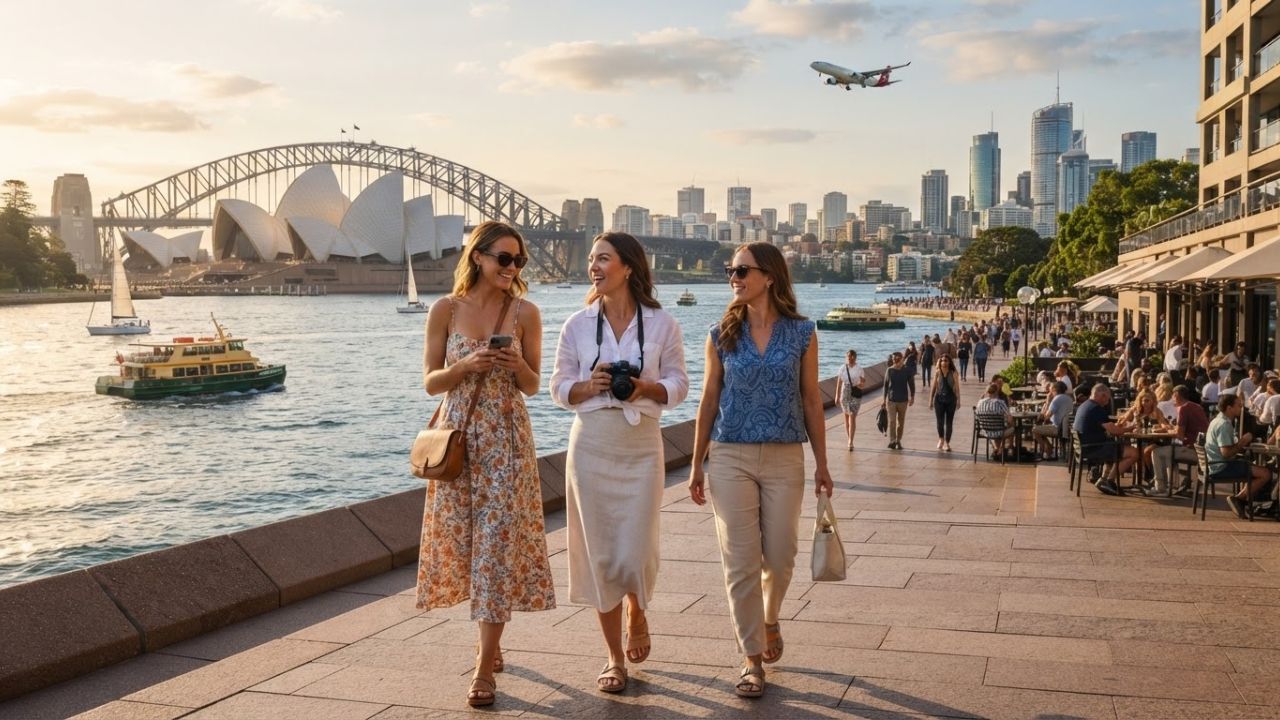
Image generated by AI
Generating a record $40.9 billion in total international visitor spending and supporting 727,000 jobs, Australia's travel sector has surpassed the €10 billion milestone across Sydney and Brisbane.
The Core Transit Update
International aviation corridors and regional transit networks across the Australian continent are managing record traveler volumes. Tourism Research Australia (TRA) statistics for the year ending March 2026 show that international arrivals grew by 10 per cent to reach 9.2 million trips.
Direct visitor spending surged by 20 per cent to hit $40.9 billion, driven by Tourism Australia's $125 million "Come and Say G'day" global marketing campaign and the expansion of international seat capacity to 28.1 million seats. Combined, the metropolitan hubs of Sydney ($13.9 billion) and Brisbane ($3.3 billion) generated $17.2 billion AUD (transcending the €10.3 billion EUR threshold), establishing the eastern seaboard as a premier global lifestyle corridor.
Seaboard Expenditures & Source Markets
Planning a journey to Oceania requires tracking regional transit infrastructure and analyzing tourist origin profiles. The following tables outline the eastern seaboard international tourism metrics and detail Brisbane's key source markets.
| Destination City Gateway | International Visitors | Total Visitor Nights | Stated International Spend (AUD) | Stated Campaign / Event Focus |
|---|---|---|---|---|
| Sydney Metro (NSW) | 3.9 million visitors | 89.9 million nights | $13.9 billion | Nancy-Bird Walton Airport & Barangaroo |
| Brisbane Metro (QLD) | 1.3 million visitors | 26.5 million nights | $3.3 billion | 2032 Olympics, Lions tour, BEDA events |
| Combined Seaboard | 5.2 million visitors | 116.4 million nights | $17.2 billion | Equivalent to over €10.3 billion EUR |
Australia's eastern seaboard international tourism metrics (year ending March 2026).
| Source Market Country | Brisbane Visitor Volume | Year-Over-Year Growth | Stated Traveler Profile Trend |
|---|---|---|---|
| People's Republic of China | 128,000 visitors | +10.0% YoY increase | High-yield Independent Free Travelers (FIT) |
| United States of America | 111,000 visitors | +7.7% YoY increase | Premium leisure and corporate business travel |
| United Kingdom (Holiday) | 88,000 visitors | +25.5% YoY increase | High propensity for extended multi-state itineraries |
| Japan | 52,000 visitors | +12.4% YoY increase | Record performance driven by airline partnerships |
| Singapore | 30,000 visitors | +10.6% YoY increase | Strong education and institutional links |
Key international source markets for Brisbane (year ending September 2025).
Traveler Logistics Guide
From a ground-level perspective, the best way to navigate this is to schedule your arrival through the newly expanded terminal gates of Brisbane Airport (BNE) or Sydney Kingsford Smith Airport (SYD), as the recent expansion of bilateral aviation agreements has increased flight frequencies from major hubs in Asia and the Middle East, lowering connection times. Checking regional flight availability is recommended.
To plan your trip:
- Allow Safe Connecting Windows: Intra-city transit in Sydney is highly efficient via the expanded Sydney Metro network, but allow at least three hours for airport transfers if you are connecting to regional flights.
- Observe Visa Entry Policies: Verify your electronic travel authorization (ETA) or visa requirements through official Australian immigration portals before booking ticketing.
- Book Olympic Corridor Rooms Early: Brisbane Lord Mayor Adrian Schrinner and BEDA CEO Anthony Ryan are acquiring major fixtures (such as the British and Irish Lions tour and the NRL Magic Round) ahead of the 2032 Olympic Games. Book hotel rooms months in advance.
- Disperse Regional Spending: When visiting Queensland, spend time in regional locations (like the Great Barrier Reef or southern wine districts) to support the 361,000 small tourism businesses.
Infrastructure Impact Assessment
The implementation of biometric airport systems and the expansion of the Western Sydney International (Nancy-Bird Walton) Airport protect regional transport lines from central corridor bottlenecks.
By directing traveler spending to high-yield local services, Indigenous eco-tours, and city dining precincts, the visitor economy—generating $81.1 billion in direct tourism GDP—supports 727,000 jobs, funds public infrastructure maintenance, and ensures that tourism growth remains sustainable across both capital and regional zones.
Related Travel Guides
Connecticut Tourism Hits $20 Billion Economic Impact in 2025
Shravani Mela 2026 Deoghar Travel Tips and Logistics Guide
10 Best Travel Tips for Planning Trips to Australia, Navigating Sydney Airport, and Booking Luxury Hotels in Brisbane, According to Reddit
Disclaimer
This article is for informational and educational purposes only. It does not constitute legal, financial, or professional advice. While we strive to provide accurate and up-to-date information, travel policies, regulations, and conditions change rapidly. Always verify information with official sources before making travel decisions. Nomad Lawyer makes no representations about the accuracy, reliability, completeness, or suitability of the information provided. Readers should consult qualified professionals for advice specific to their circumstances. The views expressed in this article are those of the author and do not necessarily reflect the views of Nomad Lawyer.