
Aurora Expeditions Smashes Antarctic Records in Historic 2025-26 Season Review
Aurora Expeditions has concluded its most ambitious Antarctic season in 35 years, setting global records with 819 landings, groundbreaking drone reconnaissance, and historic southward navigation.

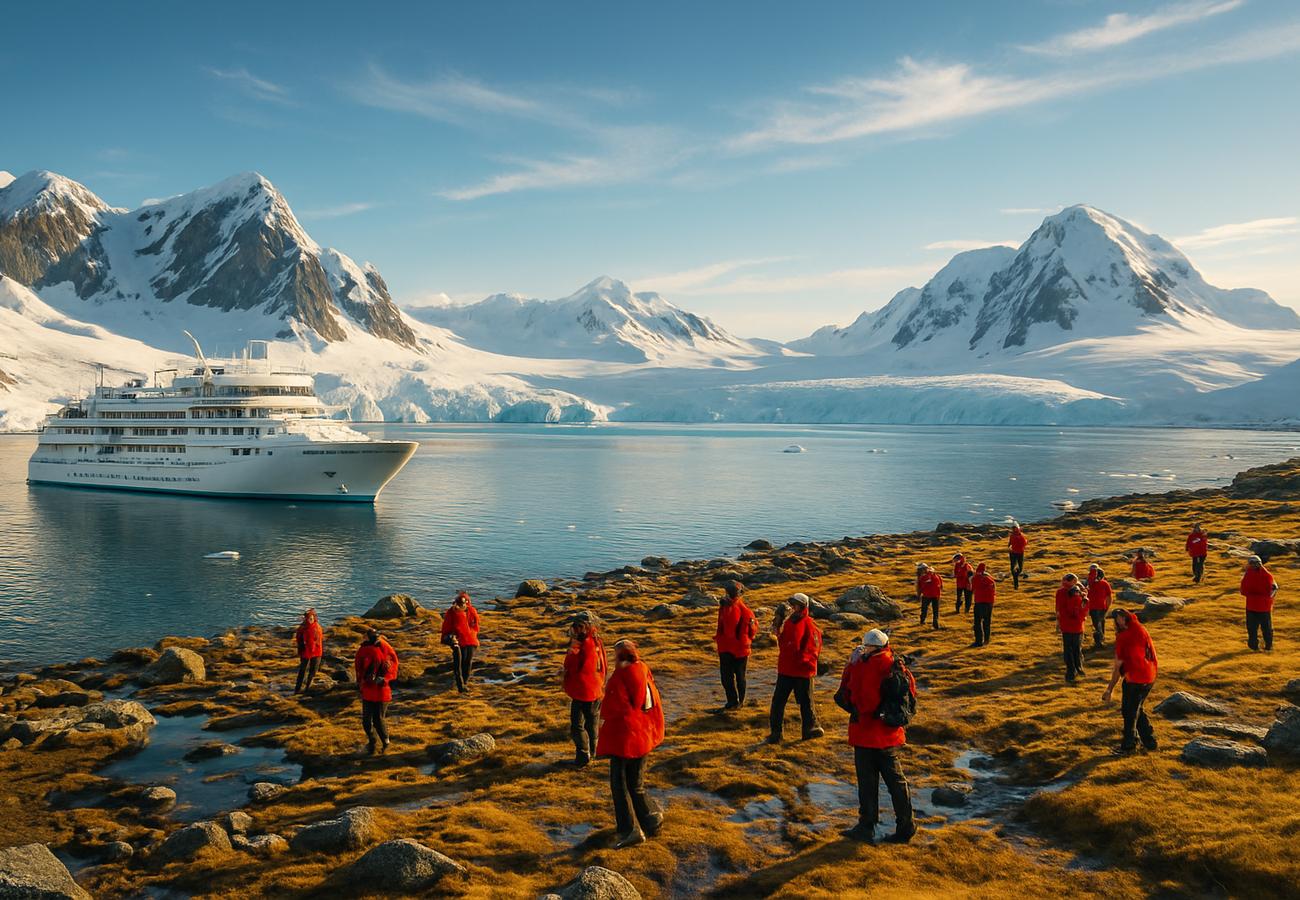
Image generated by AI
Quick Summary
- Aurora Expeditions has concluded its monumental 2025-26 Antarctic season, celebrating 35 years of polar exploration with a record-breaking 30 voyages and an estimated 819 individual landings.
- The season saw a massive 30% surge in passenger numbers, drawing explorers from 56 different nations driven by a growing demand for immersive, education-led travel.
- The newly christened third vessel, the Douglas Mawson, made maritime history by navigating the Ross Sea to attain an unprecedented southern position of 78 degrees 44.405 minutes south.
- The company heavily integrated technology and environmental stewardship, deploying professional Remotely Piloted Aircraft Systems (RPAS) for ice scouting and logging thousands of citizen science hours on projects like microplastic research and the Happywhale database.
Aurora Expeditions has officially closed the book on its most ambitious and technologically advanced Antarctic season to date. Marking 35 years of pioneering polar exploration, the 2025-26 austral summer delivered a staggering series of maritime and environmental “firsts” for the Antarctic continent.
Driven by a surging global demand for sustainable, education-led travel to the world's most remote wilderness, the company successfully executed a record 30 voyages, completing 819 individual landings and hosting passengers from 56 different nations — a massive 30% year-on-year increase in capacity.
The Douglas Mawson: Expanding the Frontier
The cornerstone of this landmark year was the highly anticipated launch of the Douglas Mawson, Aurora’s third purpose-built expedition vessel. Christened in Sydney in November 2025, the ship's deployment allowed the company to operate three vessels simultaneously in the Antarctic region for the first time in its corporate history.
However, the Douglas Mawson was not just about increasing passenger volume; it was built to push the physical boundaries of passenger navigation. The vessel made international headlines by battling the ice-heavy waters of the Ross Sea to attain a historic, record-breaking position of 78 degrees 44.405 minutes south.
This extreme southward push coincided with Aurora’s long-awaited return to East Antarctica — a notoriously treacherous, ice-choked territory the cruise line had not successfully accessed in over 15 years.
High-Tech Safety: Drone Reconnaissance and AI Routing
Navigating such extreme latitudes safely required a massive leap in maritime reconnaissance. To support its bridge teams, Aurora deployed professional-grade Remotely Piloted Aircraft Systems (RPAS) — heavy-duty drones used to conduct real-time ice assessments and identify safe shore landing sites.
(Note: The International Association of Antarctica Tour Operators (IAATO) strictly prohibits the use of recreational drones by passengers to protect local wildlife, making Aurora's professional deployment a highly regulated, critical safety measure).
In addition to drone technology, the 2025-26 season saw the full integration of AI-powered routing technology across the fleet. This software continuously analyzes real-time wind, wave, and ocean current patterns to optimize ship routes, maximizing fuel efficiency and drastically lowering the carbon emissions per passenger.
The Citizen Scientist Evolution
The core of Aurora's 2025-26 mission aligned strictly with the Madrid Protocol, which designates Antarctica as a “natural reserve, devoted to peace and science.” Guests were actively encouraged to trade their binoculars for data sheets, contributing thousands of hours to vital environmental monitoring.
Key citizen science achievements this season included:
- Microplastic Research: Utilizing newly installed, fleet-wide water filtration systems, passengers helped monitor and log microscopic pollutant levels in the supposedly pristine Southern Ocean.
- Whale and Seabird Monitoring: Travelers documented migratory patterns and uploaded individual marine mammal sightings to global databases like Happywhale, aiding marine biologists in tracking population health.
- Oceanographic Data Collection: Guests actively assisted in measuring water temperature, salinity, and clarity to track the accelerating impacts of glacial melt.
Active Adventures and Polar Plunges
While the scientific and technological achievements were groundbreaking, the visceral, human experience of the ice remained the primary draw.
The season statistics highlight the physical engagement of the passengers:
- 2,835 “Polar Plunges”: A record number of guests completed the freezing rite of passage by leaping into the sub-zero Southern Ocean.
- 269 Expert-Led Lectures: The expedition teams delivered deep-dive educational sessions covering everything from complex glaciology to the gritty history of the Heroic Age of Exploration.
Furthermore, the introduction of the specialized “Active Antarctica” itineraries redefined the standard cruise model. Offering 14 different all-inclusive activities — including snowshoeing across untouched alpine ridges and kayaking beneath cathedral-like icebergs — the program successfully transitioned passengers from passive tourists into active, lifelong global ambassadors for Antarctic preservation.
As the industry looks ahead to the 2026-27 cycle, Aurora Expeditions has set an extraordinarily high benchmark, proving that the world's most fragile frontiers can be explored with a meticulous blend of cutting-edge technology, profound wonder, and deep environmental respect.
FAQ: Aurora Expeditions 2025-26 Antarctic Season
How far south did the Douglas Mawson travel? During the 2025-26 season, Aurora Expeditions' new vessel, the Douglas Mawson, attained a historic, record-breaking position of 78 degrees 44.405 minutes south in the Ross Sea.
Are passengers allowed to fly drones in Antarctica? No. The International Association of Antarctica Tour Operators (IAATO) strictly prohibits recreational drone use by passengers to protect wildlife. However, Aurora Expeditions utilizes professional-grade RPAS (drones) operated by staff exclusively for safety, ice assessment, and landing reconnaissance.
What is the "Active Antarctica" program? "Active Antarctica" is a specialized voyage itinerary offering 14 different all-inclusive physical activities, such as alpine snowshoeing and iceberg kayaking, designed to deeply immerse travelers in the environment.
Related Travel Guides
Disclaimer
This article is for informational and educational purposes only. It does not constitute legal, financial, or professional advice. While we strive to provide accurate and up-to-date information, travel policies, regulations, and conditions change rapidly. Always verify information with official sources before making travel decisions. Nomad Lawyer makes no representations about the accuracy, reliability, completeness, or suitability of the information provided. Readers should consult qualified professionals for advice specific to their circumstances. The views expressed in this article are those of the author and do not necessarily reflect the views of Nomad Lawyer.
Kunal K Choudhary
Co-Founder & Contributor
A passionate traveller and tech enthusiast. Kunal contributes to the vision and growth of Nomad Lawyer, bringing fresh perspectives and driving the community forward.
Learn more about our team →