
UK Campervan Crackdown 2026: New Parking Bans Hit Cornwall, Highlands, and Beyond
The UK has rolled out sweeping new parking bans and regulations for campervans and motorhomes in 2026, hitting staycation hotspots like Cornwall, the Scottish Highlands, and North Yorkshire with strict fines.

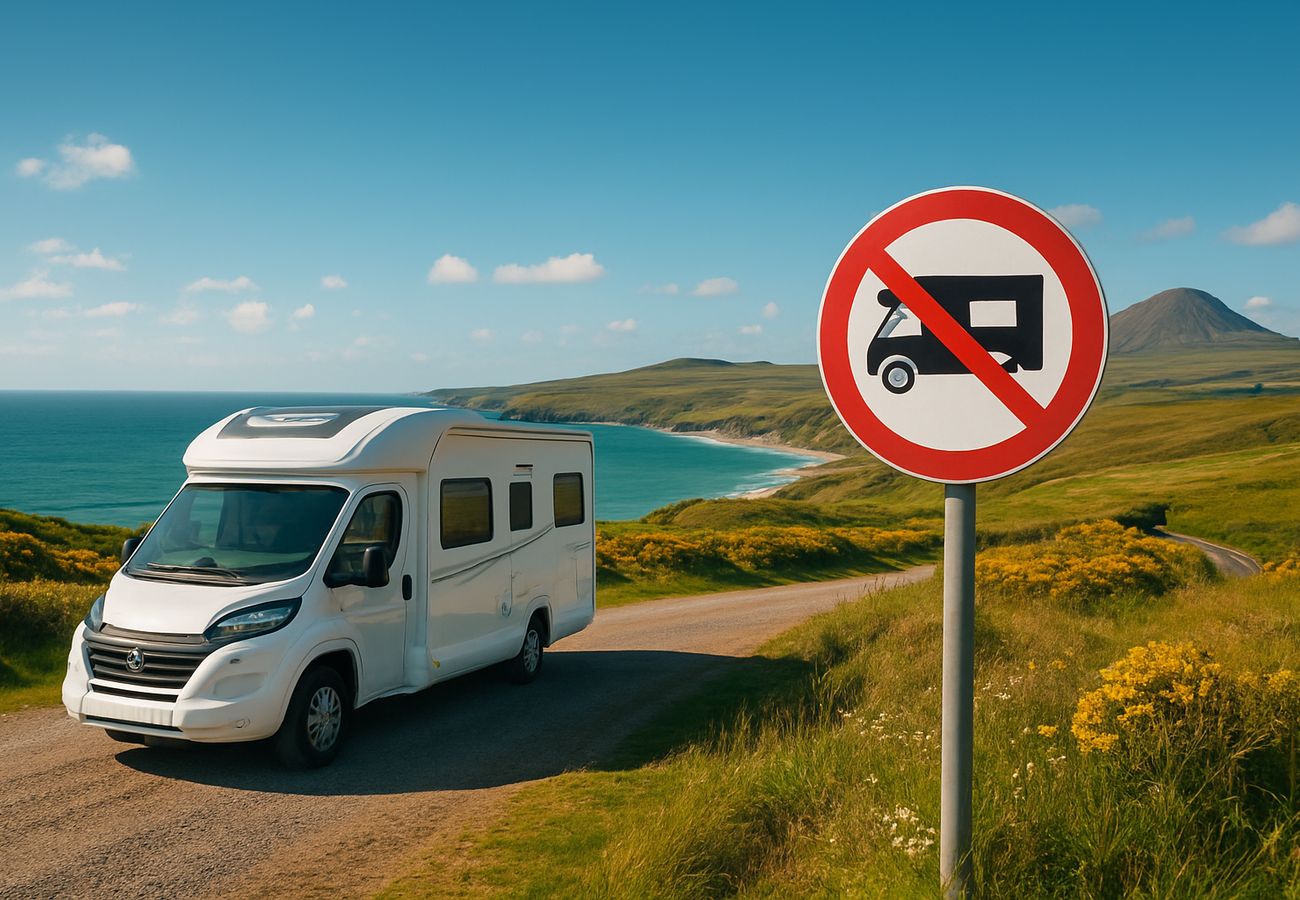
Image generated by AI
Quick Summary
- May 2026 marks the introduction of sweeping new parking regulations across the UK targeting campervans and motorhomes, driven by local authorities battling over-tourism and environmental degradation.
- North Yorkshire has made its overnight parking ban permanent on coastal roads in Scarborough and Whitby (11:00 PM to 7:00 AM), with £70 Penalty Charge Notices (PCNs) for violators.
- Derbyshire's Peak District has rolled out its first-ever "Red Routes" (No Stopping zones) around Castleton and Mam Tor, while Cornwall has heavily restricted coastal parking with 2-meter height barriers and mandated self-contained transit zones ("Aires").
- The Scottish Highlands (NC500) has introduced seasonal Traffic Regulation Orders and a strict 2026 Pavement Rule that issues national statutory fines to motorhomes parked with two wheels on the curb.
In a massive structural shift aimed at curbing over-tourism and protecting fragile local environments, local authorities across the United Kingdom have officially rolled out a series of stringent parking regulations, charges, and outright bans targeting the campervan and motorhome sector.
Effective May 2026, these aggressive new policies dramatically alter the landscape of the UK "staycation." Regions heavily reliant on domestic tourism — including North Yorkshire, Cornwall, Derbyshire, Denbighshire, Pembrokeshire, and the Scottish Highlands — are leading the crackdown. For travelers planning a motorhome holiday, understanding these localized rules is now the difference between a relaxing coastal trip and hundreds of pounds in fines.
Coastal Crackdowns: North Yorkshire and Cornwall
The coastal regions of England, highly susceptible to unregulated "wild camping," have introduced some of the strictest measures in the country.
Scarborough and Whitby (North Yorkshire): Following years of complaints regarding obstructed sea views and environmental damage, North Yorkshire Council has upgraded its trial overnight parking ban into a permanent law. Motorcaravans are now strictly prohibited from parking on popular seafront stretches, including Marine Drive and Royal Albert Drive, between 11:00 PM and 7:00 AM daily. Violators face an immediate Penalty Charge Notice (PCN) of up to £70.
Bude and Coastal Cornwall: Cornwall Council has aggressively escalated its fight against unregulated overnight stays through stringent Traffic Regulation Orders (TROs).
- Height Barriers: 2-meter height barriers have been installed at numerous coastal car parks specifically to block large campervans.
- Regulated "Aires": Overnight parking is now heavily corralled into designated transit zones known as Aires, costing between £5 and £15 per night.
- Self-Containment Mandate: Access to these Aires requires vehicles to be fully self-contained, meaning they must possess onboard toilets and gray-water waste tanks.
National Parks and Mountain Routes: Peak District and Scottish Highlands
Narrow roads and sensitive mountainous terrain are the focal points for restrictions in the UK's interior and northern regions.
Derbyshire (Peak District): Beginning May 5, 2026, Derbyshire County Council introduced the region's first-ever "Red Routes" around Castleton and Mam Tor. These strict "No Stopping" zones cover key arteries including Old Mam Tor Road, Winnats Pass, and Rushup Edge. The routes are designed to prevent large vehicles from obstructing traffic on narrow passes, with £70 fines strictly enforced for any motorhome found parked along the red lines.
The Scottish Highlands (NC500): The massively popular North Coast 500 route has struggled with motorhome congestion for years. In 2026, the Highland Council and Trossachs National Park Authority implemented seasonal TROs allowing for zero-notice overnight bans at high-demand hotspots like the Falls of Falloch. Furthermore, a new 2026 Pavement Rule has been weaponized against campervans; parking with two wheels on the curb — a common tactic to keep narrow Highland roads clear — is now officially classified as a traffic obstruction and carries a heavy national fine.
Wales Overhauls Motorhome Infrastructure: Denbighshire and Pembrokeshire
Welsh authorities are attempting to balance restriction with managed infrastructure, creating highly regulated short-stay environments to combat wild camping in residential zones.
Denbighshire: In early May, the county council introduced restrictions targeting previous free-parking hotspots, notably Marine Drive in Rhyl. To absorb the displaced traffic, the council launched six new short-stay motorhome bays in specific car parks across Ruthin, Corwen, and Llangollen.
Pembrokeshire: Following the collapse of the earlier "Pembs Stop" initiative, a new two-year regulatory trial launched in late April 2026. Targeting high-traffic areas like Fishguard and Tenby, the council has restricted overnight parking to heavily monitored sites such as Goodwick Moor. The cost is £10 per night, and stays are strictly capped at one night maximum to prevent the establishment of long-term encampments.
National Statutory Guidelines and Fines
While local councils dictate specific geographical bans, national statutory guidance for 2026 has unified the punitive measures. The national crackdown on pavement parking now applies to any vehicle blocking access for wheelchairs or prams, carrying fines ranging from £70 to £100 (discounted by 50% if paid within 14 days).
Additionally, the UK is rapidly adopting the European model of "self-containment" as a baseline requirement for motorhome tourism. Travelers in basic converted vans without onboard sanitation will find their legal overnight options severely limited going forward.
The 2026 regulations represent a permanent paradigm shift. Motorhome enthusiasts must now meticulously plan their itineraries, pre-book regulated Aires, and abandon the traditional, unregulated "wild camping" approach that defined the UK staycation boom of previous years.
FAQ: UK Campervan and Motorhome Bans 2026
Where is overnight campervan parking banned in North Yorkshire? Overnight parking for motorcaravans is permanently banned on specific coastal roads in Scarborough and Whitby, including Marine Drive and Royal Albert Drive, between 11:00 PM and 7:00 AM.
What are the "Red Routes" in the Peak District? Introduced in May 2026, Red Routes are strict "No Stopping" zones around Castleton and Mam Tor (including Old Mam Tor Road and Winnats Pass). Parking any vehicle, including motorhomes, on these routes results in an immediate £70 fine.
What is the new rule for parking on curbs in the Scottish Highlands? Under the 2026 Pavement Rule, parking a motorhome or campervan with two wheels on the curb is now officially classified as a traffic obstruction and carries a national statutory fine of up to £100.
Related Travel Guides
Disclaimer
This article is for informational and educational purposes only. It does not constitute legal, financial, or professional advice. While we strive to provide accurate and up-to-date information, travel policies, regulations, and conditions change rapidly. Always verify information with official sources before making travel decisions. Nomad Lawyer makes no representations about the accuracy, reliability, completeness, or suitability of the information provided. Readers should consult qualified professionals for advice specific to their circumstances. The views expressed in this article are those of the author and do not necessarily reflect the views of Nomad Lawyer.
Kunal K Choudhary
Co-Founder & Contributor
A passionate traveller and tech enthusiast. Kunal contributes to the vision and growth of Nomad Lawyer, bringing fresh perspectives and driving the community forward.
Learn more about our team →