
Aurora Expeditions Just Brought 56 Nations to Antarctica — and Put Them to Work on Science
Aurora Expeditions' record 2025-26 Antarctic season saw 819 landings, a 30% rise in expeditioners from 56 nationalities, and citizen science programs covering whale monitoring, seabird tracking, and ocean data collection.

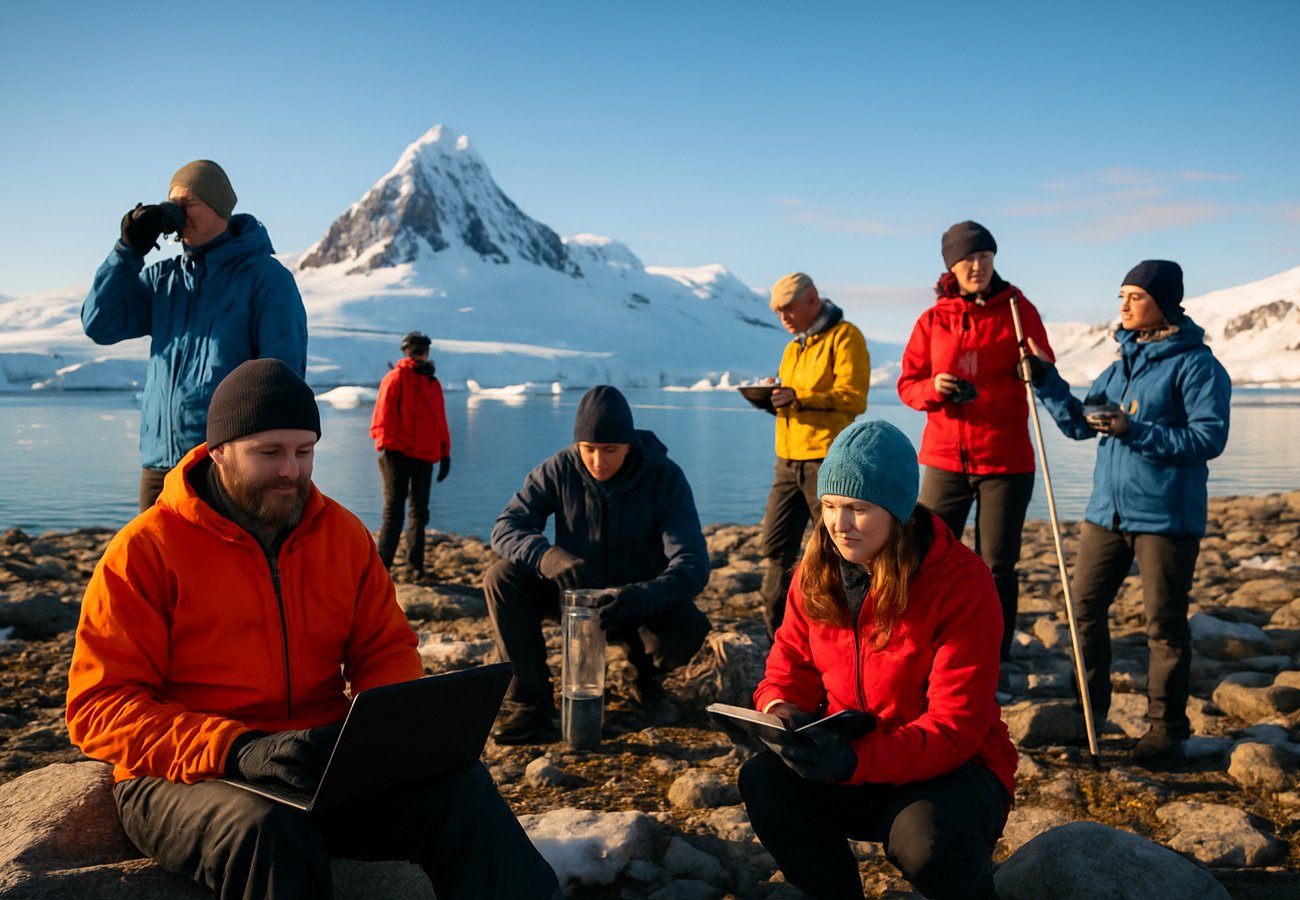
Image generated by AI
Quick Summary
- Aurora Expeditions completed 30 voyages and approximately 819 landings in its record 2025–26 Antarctic season, with a 30% increase in total expeditioners drawn from 56 different nationalities.
- For the first time in 35 years, Aurora operated three expedition ships simultaneously in Antarctica — made possible by the inaugural season of the newly launched Douglas Mawson, introduced in Sydney in November.
- Active Antarctica voyages offer 14 distinct immersive activities including kayaking and hiking, shifting polar travel from passive sightseeing to active participation.
- Onboard citizen science programs give every passenger a contributing role in active Antarctic research across whale monitoring, seabird tracking, and ocean data collection.
Aurora Expeditions has completed its largest Antarctic season on record — 30 voyages, approximately 819 landings, and expeditioners from 56 nationalities — but the headline number that deserves the most attention is not the voyage count. It is the 30% year-over-year increase in the number of people travelling to Antarctica from every corner of the world, and the fact that a growing portion of them are now contributing directly to polar research through onboard citizen science programs covering whale monitoring, seabird tracking, and ocean data collection.
56 Nationalities, 819 Landings: The Globalisation of Antarctic Travel
The 2025–26 Aurora Expeditions season produced a specific profile of who is now choosing Antarctica as a travel destination. Expeditioners representing 56 distinct nationalities boarded Aurora vessels across 30 voyages — a figure that signals the end of Antarctic expedition cruising as a niche pursuit of a small, geographically concentrated traveller demographic.
The 30% increase in expeditioner numbers year-over-year is significant in that context. Antarctic expedition travel is constrained by ship capacity, environmental permit limits, and the physical demands of the destination. Growing passenger numbers by 30% within those constraints requires not just higher demand but also meaningful fleet expansion — which is precisely what Aurora delivered through the addition of its third vessel.
The 819 landings figure translates to a genuinely high-density programme relative to the number of voyages. Landings in Antarctica are weather-dependent, ice-dependent, and environmentally regulated — achieving 819 across 30 voyages represents consistent operational execution in one of Earth's most unpredictable environments.
Key Facts & Highlights
- Total voyages: 30 in the 2025–26 Antarctic season.
- Landings: Approximately 819 — a new operational record.
- Expeditioner growth: 30% increase year-over-year.
- Nationalities represented: 56 — making this Aurora's most globally diverse season.
- Fleet milestone: First time in 35 years Aurora operated three ships simultaneously in Antarctica.
- New vessel: Douglas Mawson launched in Sydney in November, completed its inaugural Antarctic season.
- Southernmost point reached: 78° 44.405' south — a new world record.
- Active Antarctica activities: 14 distinct immersive activities per itinerary.
- Citizen science programs: Whale monitoring, seabird tracking, and ocean data collection.
- Technology: AI-powered routing, drone-supported scouting, microplastic filtration systems.
The 35-Year Fleet Milestone: Three Ships Simultaneously
When Douglas Mawson entered Antarctic service for its inaugural season after being introduced in Sydney in November, it quietly triggered a milestone that took 35 years to arrive. Aurora Expeditions had not operated three expedition ships simultaneously in Antarctica since the company's early era — a reflection of how deliberately the company has grown its fleet relative to the scale of the destination.
Three simultaneous ships enabled two structurally important outcomes. First, it increased total voyage capacity, directly enabling the 30% rise in expeditioner numbers. Second, it unlocked itinerary diversification — including the return to East Antarctica after a 15-year absence — that a two-ship operation could not achieve while maintaining its existing route commitments.
Douglas Mawson itself symbolises both heritage and operational modernity. Named after the legendary Australian Antarctic explorer, the vessel was built to meet contemporary expedition standards while carrying forward the company's 35-year history of polar travel.
Citizen Science: From Passive Sightseers to Active Researchers
The most underreported element of Aurora's record season is the systematic integration of passenger-contributed scientific research into the voyage structure. Expeditioners on Aurora voyages are not simply observers of Antarctic wildlife — they are active participants in data collection programs that contribute to ongoing research in three specific areas.
Whale monitoring involves passengers and expedition staff documenting cetacean sightings, behaviours, and locations during voyages. In Antarctic waters, where blue, humpback, minke, and orca populations converge, the geographic range of a 30-voyage season produces a volume of observation data that fixed research stations cannot replicate.
Seabird tracking programs capture data on the species, numbers, and distribution of the Southern Ocean's extraordinary seabird populations — including albatrosses, petrels, and penguins — across the multiple latitudinal zones that Aurora's voyages traverse.
Ocean data collection adds a physical science dimension, with passengers contributing to datasets on water temperature, salinity, and microplastic concentrations at remote locations that research vessels visit infrequently. This last category connects directly to Aurora's microplastic filtration system initiative — a technological measure that simultaneously protects the ocean and raises passenger awareness of the pollution challenge at the site where its consequences are most visible.
Active Antarctica: 14 Ways to Stop Watching and Start Doing
Aurora's Active Antarctica voyage format offers 14 distinct activities that physically engage passengers with the Antarctic environment rather than observing it from the deck.
The programme includes kayaking through ice-strewn polar waters and hiking across glacial terrain — experiences that place participants in direct sensory contact with the Antarctic landscape in a way that zodiac transfers to viewing platforms cannot replicate. The breadth of 14 activities within a single itinerary reflects a deliberate design philosophy: passengers have different physical capabilities, risk tolerances, and interests, and a single-activity format unnecessarily narrows who can participate in active polar exploration.
This approach aligns with the broader shift in experiential travel toward personalised adventure formats — a trend that Aurora is applying in one of the world's most challenging environments.
What This Means for Travelers
For travelers considering Antarctic expedition travel, Aurora's 2025–26 season data points suggest several practically useful conclusions:
- Demand is rising fast. A 30% expeditioner increase in a single season, from 56 nationalities, signals that Antarctic expedition travel is moving toward the mainstream of luxury adventure tourism. Voyage availability will tighten accordingly.
- Citizen science programs add tangible value. For travelers who want their journeys to produce outcomes beyond personal experience, Aurora's research programs offer a genuine participatory science framework — not a symbolic gesture.
- Three-ship capacity may be near its ceiling. Environmental permit structures in Antarctica limit total passenger numbers across the season. Future growth will be constrained by regulation as much as demand.
Conclusion
Aurora Expeditions' 2025–26 season — 30 voyages, 819 landings, 56 nationalities, and citizen science programs spanning whale monitoring to ocean data — sets a new benchmark for what responsible Antarctic expedition travel can accomplish at scale. With Douglas Mawson now a permanent member of the three-ship fleet and demand accelerating globally, the challenge for Aurora's next season will be managing growth without compromising the expedition integrity that drives its appeal.
Frequently Asked Questions (FAQ)
How many nationalities sailed with Aurora Expeditions in the 2025–26 Antarctic season? Aurora Expeditions carried expeditioners from 56 nationalities during its record 2025–26 Antarctic season, which saw a 30% year-over-year increase in total passenger numbers.
What is the Douglas Mawson and when did it launch? Douglas Mawson is Aurora Expeditions' third expedition vessel, introduced in Sydney in November 2025. Its inaugural Antarctic season enabled Aurora to operate three ships simultaneously in Antarctica for the first time in 35 years.
What citizen science programs does Aurora Expeditions offer aboard its Antarctica ships? Aurora passengers contribute to three active research programs: whale monitoring, seabird tracking, and ocean data collection — all conducted during regular voyage operations in Antarctic waters.
How many activities are included in Active Antarctica voyages? Active Antarctica itineraries include 14 distinct immersive activities, including kayaking and hiking, designed to engage passengers physically with the Antarctic environment rather than observing it as passive sightseers.
Related Travel Guides
Aurora Expeditions Just Launched 'Active Antarctica'
Disclaimer
This article is for informational and educational purposes only. It does not constitute legal, financial, or professional advice. While we strive to provide accurate and up-to-date information, travel policies, regulations, and conditions change rapidly. Always verify information with official sources before making travel decisions. Nomad Lawyer makes no representations about the accuracy, reliability, completeness, or suitability of the information provided. Readers should consult qualified professionals for advice specific to their circumstances. The views expressed in this article are those of the author and do not necessarily reflect the views of Nomad Lawyer.
Kunal K Choudhary
Co-Founder & Contributor
A passionate traveller and tech enthusiast. Kunal contributes to the vision and growth of Nomad Lawyer, bringing fresh perspectives and driving the community forward.
Learn more about our team →