
Atlanta's Hartsfield-Jackson Airport Grinds to Halt: 198 Flights Delayed, 4 Canceled Across Major Airlines in July 2026
Hartsfield-Jackson International Airport in Atlanta experienced massive operational disruptions with 198 delayed flights and 4 cancellations, affecting Delta, Southwest, American, and United across major domestic and international routes.

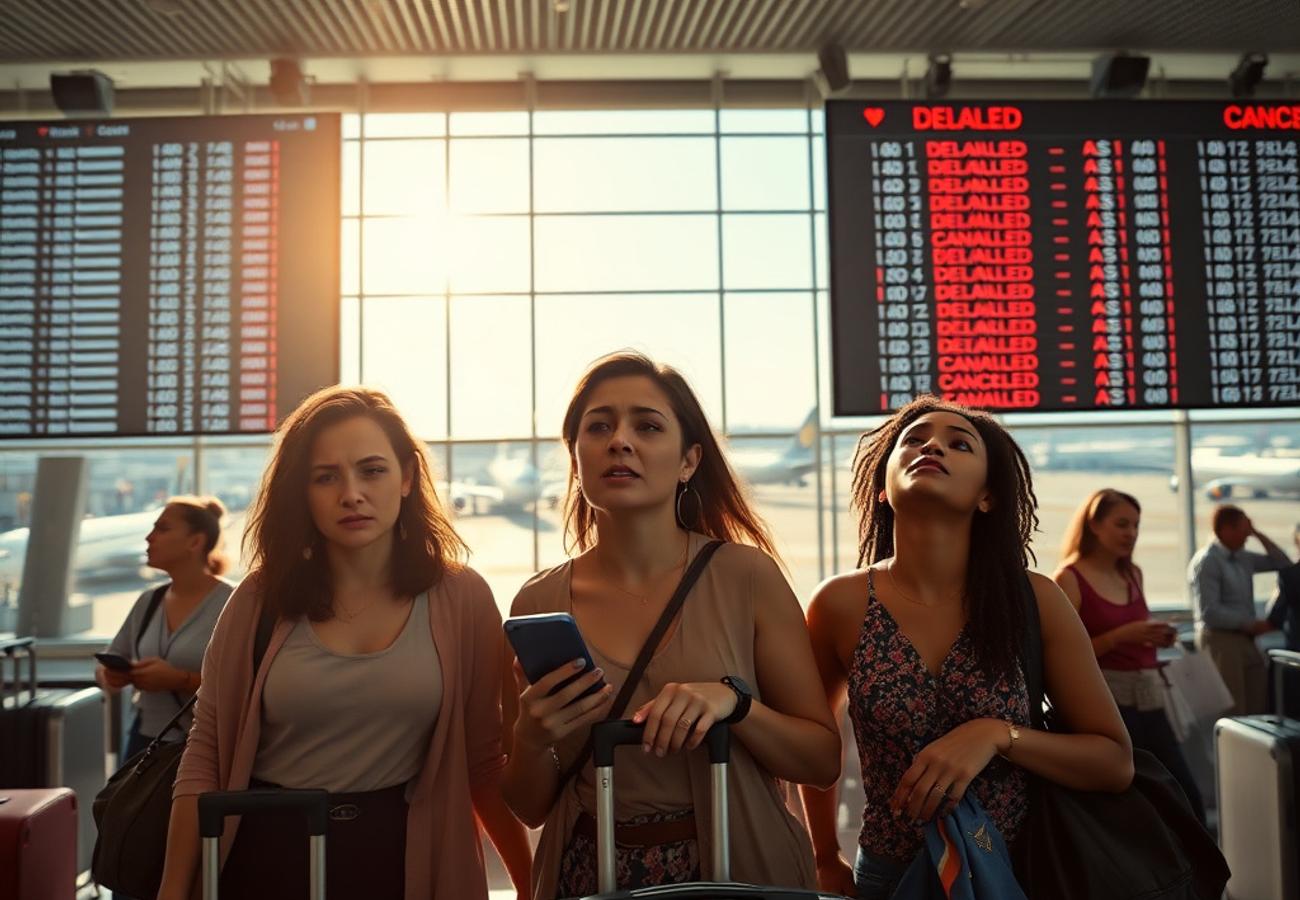
Image generated by AI
Chaos at America's Busiest Airport: Nearly 200 Flights Delayed in Single Day
Hartsfield-Jackson International Airport in Atlanta faced a meltdown on one of the busiest summer travel days, with 198 flight delays and 4 cancellations cascading across the nation's most critical aviation hub. For thousands of passengers heading to destinations ranging from New York to London to Tokyo, what should have been a routine departure turned into a frustrating waiting game at departure gates.
The disruption rippled across every major carrier operating from the facility: Delta Air Lines, Southwest Airlines, American Airlines, United Airlines, Spirit Airlines, Frontier Airlines, and Alaska Airlines all reported significant schedule impacts. Passengers bound for Los Angeles, Orlando, Chicago, Dallas, Miami, Paris, and Amsterdam found themselves caught in the chaos.
Why Atlanta Matters—And Why Its Problems Become Everyone's Problem
Let me be direct: when Hartsfield-Jackson sneezes, the entire U.S. aviation network catches a cold.
This airport isn't just busy—it's historically the world's busiest by passenger traffic and aircraft movements, handling thousands of flights daily. More critically, it functions as a massive domestic and international hub for Delta Air Lines, meaning aircraft and crews constantly rotate through Atlanta on their way to destinations nationwide.
A single delayed inbound flight arriving from another city can trigger a domino effect, affecting multiple scheduled departures hours later. When you combine that cascading impact across 198 different delays, you're looking at aviation gridlock that extends far beyond Georgia's borders.
Reddit: "Just sat on the tarmac at ATL for three hours watching the departure board turn red. Missed my connection to Paris entirely." — r/travel
The Numbers Behind the Disruption
198 delayed flights. 4 cancellations. While cancellations remained relatively contained, the sheer volume of delays affected tens of thousands of individual passengers. Consider that the average flight carries between 100-150 passengers—that's potentially 20,000+ travelers directly impacted before accounting for connecting passengers and downstream effects.
The operational strain on Hartsfield-Jackson illustrated the immense pressure facing modern aviation infrastructure during peak summer travel season. Families on school holidays, leisure travelers, and business passengers converged on the airport simultaneously, stretching every system to capacity.
What Actually Causes Delays at Major Hubs?
The delays didn't materialize from nowhere. Multiple operational factors contributed to the disruption:
Air traffic management restrictions frequently limit the number of aircraft that can depart within specific time windows, particularly when weather systems affect multiple regions simultaneously.
Adverse weather conditions remain among the leading culprits—according to the Federal Aviation Administration (FAA), weather drives a significant percentage of flight delays across the National Airspace System, especially during summer months when thunderstorms develop rapidly across broad geographic areas.
Aircraft rotations create cascading delays when inbound flights arrive late, pushing outbound departures further back.
Crew scheduling requirements limit how quickly airlines can reassign flight crews to subsequent flights.
Technical inspections and maintenance checks occasionally delay departures when routine safety protocols identify issues requiring attention.
The complexity multiplies at hub airports like Atlanta, where hundreds of aircraft must coordinate movements within tight windows while maintaining safe separation standards.
The Ripple Effect Across the National Airspace
Here's what most casual travelers don't realize: a delay originating in Atlanta doesn't stay in Atlanta.
Flights arriving into the city often pass through multiple controlled airspaces before reaching Georgia. Weather conditions in neighboring states, congestion along heavily traveled corridors, or temporary air traffic flow management initiatives can all influence arrival times. The FAA routinely implements traffic management programs to preserve aircraft separation whenever weather or congestion reduces available airspace capacity.
These safety-first measures—while absolutely necessary—inevitably extend departure and arrival times throughout the national network. A weather delay in Florida can delay flights departing from Atlanta to Chicago eight hours later.
What Can Passengers Actually Do?
For travelers facing disrupted schedules, proactive behavior matters significantly.
Check flight status before departing home. This single step eliminates wasted trips to the airport when flights are already delayed or canceled.
Enable airline mobile notifications for real-time updates. Southwest, Delta, American, and United all provide push notifications when flight status changes.
Arrive with buffer time. During peak travel periods, security lines at major hubs can extend 45 minutes to an hour beyond normal processing times.
Monitor gate assignments throughout your journey—gates frequently change during periods of heavy congestion.
Keep essentials in carry-on baggage. Medications, chargers, and important documents should never travel in checked bags when connections are at risk.
Speak with airline representatives early if your connection appears threatened. Airlines can rebook passengers proactively rather than waiting until flights depart.
The Transportation Security Administration (TSA) explicitly recommends arriving early during peak travel periods, particularly when airports experience above-average passenger volumes.
How Airport Operators Respond to Crisis
Airport authorities coordinate with airlines, air traffic controllers, and federal agencies to minimize disruptions when operational challenges emerge. The FAA manages the nation's air traffic control system while continuously optimizing aircraft movement to maintain safety. Airport operators handle gate assignments, passenger services, baggage systems, and terminal logistics.
Recovery from a disruption this size typically requires several hours as airlines work through the backlog of delayed flights and crew repositioning. Hartsfield-Jackson began recovery operations as aircraft gradually moved through the system and weather systems shifted.
Looking Forward: Peak Summer Travel Continues
The current travel season will generate consistently strong passenger demand across the United States through August. Airlines continue adapting to busier schedules, which means travelers should remain flexible and prepared for potential disruptions.
Operational conditions at large hub airports can improve rapidly once weather systems move away or congestion eases. However, passengers with upcoming travel plans should continue monitoring official flight information.
The bottom line: when nearly 200 flights stack up at the world's busiest airport, recovery doesn't happen instantly. But informed travelers—those checking updates, arriving early, and remaining flexible—navigate disruptions considerably more smoothly than those caught off guard.
Stay connected, stay flexible, and never underestimate the value of checking that flight status before leaving home.
Related Travel Guides
Disclaimer
This article is for informational and educational purposes only. It does not constitute legal, financial, or professional advice. While we strive to provide accurate and up-to-date information, travel policies, regulations, and conditions change rapidly. Always verify information with official sources before making travel decisions. Nomad Lawyer makes no representations about the accuracy, reliability, completeness, or suitability of the information provided. Readers should consult qualified professionals for advice specific to their circumstances. The views expressed in this article are those of the author and do not necessarily reflect the views of Nomad Lawyer.
Raushan Kumar
Founder & Lead Developer
Full-stack developer with 11+ years of experience and a passionate traveller. Raushan built Nomad Lawyer from the ground up with a vision to create the best travel and law experience on the web.
Learn more about our team →