
Breaking Airline News: Severe Travel Chaos Averted as Atlanta Airport Deploys Massive Concourse D Expansion to Crush Passenger Gridlock
Breaking airline news: Amidst a terrifying era of massive passenger congestion, Atlanta's Hartsfield-Jackson Airport executes a highly aggressive, $1.4 billion structural expansion to completely bypass paralyzing terminal gridlock.

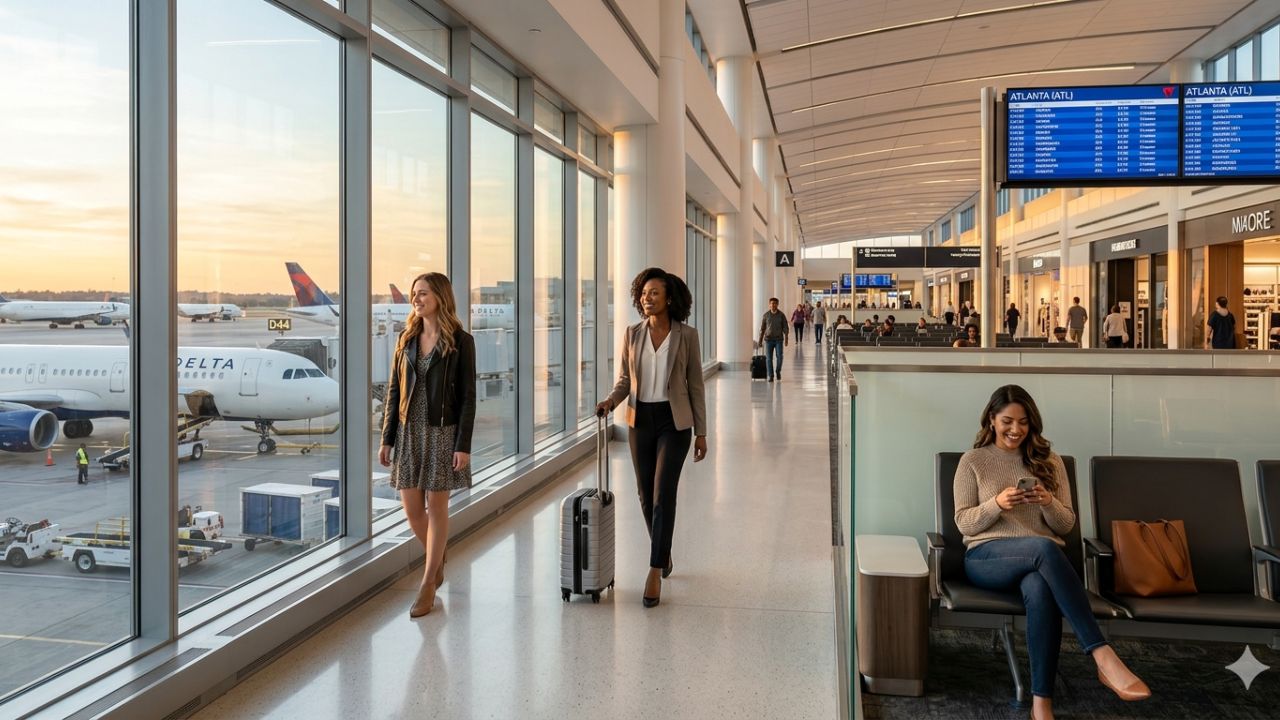
Image representing the intense strategic battle as global aviation leaders aggressively deploy massive terminal infrastructure expansions to combat severe passenger congestion and bypass paralyzing domestic transit corridors.
Breaking Airline News: Severe Travel Chaos Averted as Atlanta Airport Deploys Massive Concourse D Expansion to Crush Passenger Gridlock
As paralyzing airport disruptions, tightly constrained operational bandwidth, and massive waves of passenger congestion violently threaten the North American aviation network, the absolute busiest airport in the world is executing a highly aggressive, high-stakes infrastructural maneuver. In a desperate bid to physically rescue millions of domestic and regional travelers from the terrifying delays plaguing congested transit connections, Hartsfield-Jackson Atlanta International Airport (ATL) has officially unveiled three highly anticipated new boarding gates. This critical capacity injection serves as the frontline defense mechanism within the massive $1.4 billion Concourse D expansion under the aggressive ATLNext capital improvement program. By actively widening corridors and deploying modular infrastructure, the Atlanta mega-hub is directly averting severe travel chaos and terrifyingly high missed-connection rates, ensuring travelers can safely bypass terminal gridlock.
In a harrowing display of modern aviation strategy, the sheer volume of travelers currently overwhelming standard transit routes is forcing global airline dispatchers and airport authorities to completely rewrite their structural blueprints. Historically, attempting to upgrade active terminal hubs during peak travel seasons resulted in violently choked concourses, terrifying gate rushes, and entirely ruined travel itineraries. However, Atlanta’s Concourse D—a highly critical nerve center for domestic and regional flight operations—is aggressively fighting back. By forcefully extending the physical footprint of the terminal while maintaining completely uninterrupted airport operations, ATL is delivering a lethal strategic blow to the threat of structural collapse. This massive deployment ensures that airlines can violently slash aircraft turnaround times, ultimately shielding furious passengers from the agonizing misery of prolonged departure delays.
Expanded Overview: The Massive Scale of the Reinforcement
The terrifying crisis of overwhelming passenger demand currently gripping the domestic US network brutally exposes the severe limitations of outdated, narrow terminal infrastructure. Recognizing that standard passenger holding zones are failing to clear massive crowds, Atlanta Airport is attempting to forcefully decompress the traffic. Concourse D is being aggressively extended by approximately 300 feet and violently widened by nearly 40 feet, instantly creating a massive influx of desperately needed space for boarding, passenger circulation, and essential airline operations. To completely safeguard this expansion, the project has secured a massive $40 million in federal infrastructure grants, actively reinforcing ATL’s status as the ultimate global aviation fortress and ensuring that regional economies throughout Georgia remain highly protected from the devastating financial impacts of severe travel chaos.
Section-Wise Breakdown: The Operational Realignment
The Modular Rescue Strategy
To survive the terrifying surge in passenger demand without triggering immediate operational meltdowns, ATL has deployed a brilliant tactical shield: modular construction. To prevent construction crews from actively choking the concourse during the day, massive sections of the terminal are entirely prefabricated offsite. These heavily reinforced modules are then rapidly installed under the cover of darkness during overnight operations. This highly aggressive strategy completely minimizes disruption to the active flight schedule, keeping vital gates fully operational and shielding passengers from the terrifying dust, noise, and chaos typically associated with major airport overhauls.
Securing the Passenger Lifeline
Recognizing that travel chaos destroys passenger psychology, this massive expansion is heavily designed to protect the traveler's mental state. The paralyzing fear of missed connections and horrific terminal crowding is being violently dismantled. The redesigned Concourse D incorporates expanded seating areas, upgraded retail and dining spaces, and accessible walkways. By utilizing natural daylight and energy-efficient lighting alongside highly intuitive signage, the airport is instantly pacifying furious passengers. Travelers are now experiencing a far more comfortable, beautifully efficient environment, completely isolating them from the chaotic gate rushes occurring at less optimized rival airports.
Unleashing Airline Operational Efficiency
The massive infrastructural shift aggressively centers around completely eliminating the friction that causes cascading network delays. The addition of these three new gates, combined with the incredibly wide 40-foot corridor expansion, grants airlines the absolute operational freedom to rapidly turn around massive passenger jets. Wider boarding zones facilitate incredibly smooth passenger flow during the absolutely critical peak morning and evening travel surges. This allows domestic and international carriers to actively deploy larger aircraft and inject massive flight scheduling flexibility, ultimately crushing the delays that trigger severe travel chaos.
Aviation Strategy & Infrastructure Defense Matrix
To fully comprehend the massive logistical and strategic fallout of this intercontinental expansion, corporate travel managers and domestic commuters must review the exact operational metrics currently defining the new corridor. The following matrix provides a granular breakdown of the specific, officially verified strategic data driving ATL's maneuver to prevent structural travel chaos.
| Strategic Operational Metric | Confirmed Verification Data |
|---|---|
| Primary Defense Infrastructure | Hartsfield-Jackson Atlanta International Airport (ATL) |
| Target Congestion Zone | Concourse D (Critical Domestic and Regional Operations) |
| Total Capital Investment | $1.4 Billion (Under the aggressive ATLNext Program) |
| Immediate Capacity Deployment | 3 Brand New Boarding Gates Officially Unveiled |
| Federal Defense Funding | $40 Million in Strategic Federal Infrastructure Grants |
| Physical Structural Expansion | Extended by exactly 300 Feet / Widened by nearly 40 Feet |
| Disruption Mitigation Strategy | Overnight Modular Construction Installation |
| Official Completion Target | Fully Operational to maximum capacity by 2029 |
Passenger Impact: Surviving the Terminal Jump
For the millions of domestic tourists and business commuters who frequently rely on the heavily congested Atlanta transit corridors, this massive capacity deployment represents a highly anticipated lifeline against severe operational delays. The brutal reality of enduring terrifyingly long layovers in overcrowded terminals inflicts intense psychological stress and entirely destroys meticulously planned itineraries. By aggressively widening Concourse D, ATL is attempting to actively prevent the terrifying friction that results in severely missed connections and entirely ruined travel plans across the Southeastern United States.
Survival Guide for Transit Travelers
Travelers desperately preparing to navigate the massive Atlanta mega-hub must immediately execute the following survival protocols:
- Leverage the Widened Corridors: Bypassing the historic congestion of Concourse D is now possible; passengers should immediately utilize the newly expanded 40-foot wide corridors to safely outmaneuver massive crowds during peak travel hours.
- Monitor Gate Assignments: Because the three new gates are now fully operational, travelers must relentlessly monitor the official airline apps and flight tracking systems, as airlines will aggressively shuffle departure assignments to utilize these faster turnaround zones.
- Prepare for Continued Evolution: While the new gates are a massive relief, the complete ATLNext expansion will run until 2029; passengers must maintain extreme vigilance and always arrive early to navigate the ongoing, highly synchronized overnight construction shifts.
Industry Analysis: The Economics of Modular Expansion
From a strategic aviation perspective, the travel turmoil currently forcing these massive deployments highlights the terrifying vulnerability of relying on legacy terminal configurations. Industry analysts confirm that Atlanta Airport's decision to utilize offsite modular construction is a masterstroke in crisis management. Instead of exposing itself to severe operational risk and paralyzing delays while attempting to build on the active tarmac, the airport instantly drops in fully completed, highly compliant terminal sections. This aggressive tactical deployment proves that modern mega-hubs must execute extreme, highly targeted engineering maneuvers to rapidly expand capacity without triggering the exact travel chaos they are attempting to solve.
Conclusion: A Strategic Retreat to Ensure Aviation Survival
As the extremely critical 2029 completion date approaches, the massive expansion of Concourse D represents a massive warning to rival domestic hubs. The aggressive maneuvering by Hartsfield-Jackson Atlanta International Airport proves that capturing market dominance requires terrifyingly swift and highly optimized infrastructural upgrades. Corporate travel buyers and everyday passengers attempting to navigate this highly unstable era of airport disruptions must embrace these new, highly efficient transit zones. By acting aggressively to leverage these expanded lifelines, travelers can successfully survive the intense summer travel surges and completely avoid the paralyzing threat of global travel chaos.
Key Takeaways
- Massive Infrastructure Relaunch: Atlanta Airport has officially unveiled three new gates at Concourse D, representing a major milestone in the $1.4 billion ATLNext program.
- Crushing Terminal Gridlock: The concourse is being aggressively extended by 300 feet and widened by 40 feet to completely eliminate terrifying gate congestion and rapid passenger gridlock.
- Modular Tactical Defense: ATL is utilizing offsite modular construction, installing massive terminal sections overnight to guarantee zero disruption to the active daily flight schedule.
- Federal Reinforcement: The massive defense strategy is heavily backed by $40 million in strategic federal infrastructure grants to secure the airport's capacity growth.
- Traveler Advisory: Passengers will experience immediate relief via faster boarding flows and expanded seating, but must remain highly vigilant as the massive construction project continues through 2029.
Related Travel Guides
Disclaimer
This article is for informational and educational purposes only. It does not constitute legal, financial, or professional advice. While we strive to provide accurate and up-to-date information, travel policies, regulations, and conditions change rapidly. Always verify information with official sources before making travel decisions. Nomad Lawyer makes no representations about the accuracy, reliability, completeness, or suitability of the information provided. Readers should consult qualified professionals for advice specific to their circumstances. The views expressed in this article are those of the author and do not necessarily reflect the views of Nomad Lawyer.
Kunal K Choudhary
Co-Founder & Contributor
A passionate traveller and tech enthusiast. Kunal contributes to the vision and growth of Nomad Lawyer, bringing fresh perspectives and driving the community forward.
Learn more about our team →