
Ultra-Long-Range Aviation: How the Airbus A350 Is Shattering Distance Barriers in Commercial Flight
Breaking airline news and aviation industry updates for 2026.

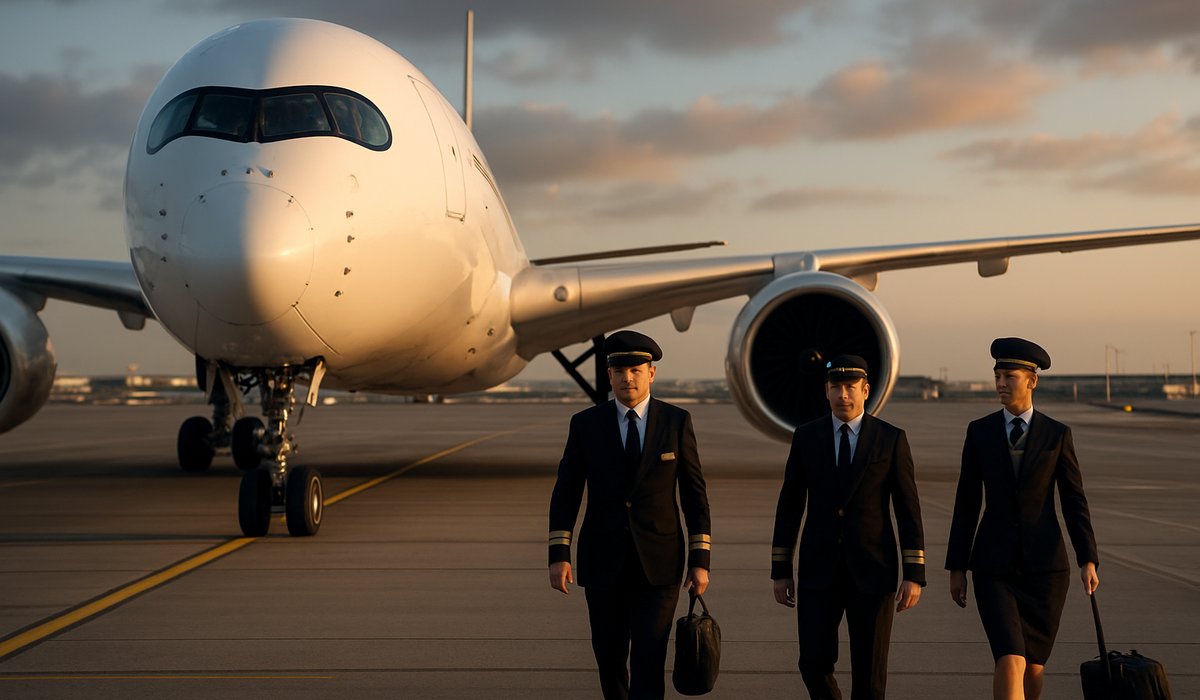
Image generated by AI
Ultra-Long-Range Aviation: How the Airbus A350 Is Shattering Distance Barriers in Commercial Flight
Engineering at the extreme: Inside the technological revolution pushing 18-hour nonstop flights into mainstream operations
The New Frontier in Commercial Aviation
Commercial aviation is entering uncharted territory. The Airbus A350 is redefining what's possible in long-haul travel, enabling airlines to operate nonstop routes exceeding 19,000 kilometers—journeys that stretch nearly to the limits of human endurance and aircraft capability. These ultra-long-range flights, approaching 18-hour durations, are transitioning from experimental demonstrations to scheduled services on major international networks, fundamentally reshaping global connectivity.
This breakthrough represents far more than incremental progress. Airlines can now connect city pairs previously requiring intermediate stops, reducing passenger fatigue, cutting operational complexity, and opening new revenue opportunities in premium long-haul markets. Yet achieving this performance demands extraordinary engineering precision and pushes aircraft systems to their operational margins.
Engineering at the Extreme
The A350's capability to sustain near-maximum-range operations stems from ruthless attention to efficiency across every system. The aircraft's structure must maintain integrity while carrying a 300-ton payload through extreme temperature variations, fuel-load stresses, and aerodynamic pressures. Engineers have eliminated unnecessary weight throughout the airframe while maximizing fuel capacity—a delicate equation where every kilogram matters across nearly 20-hour flights.
Aerodynamic optimization extends beyond fuselage design. Wing geometry, engine nacelle integration, and even paint selection influence fuel consumption across extended range operations. Advanced materials—including carbon-fiber composites that comprise approximately half the airframe—enable strength without weight penalties that would be prohibitive on conventional aluminum aircraft.
Thermodynamic management becomes critical during sustained operations. Engines operating at high thrust levels for extended periods generate heat that demands sophisticated cooling systems. Cabin pressurization, electrical generation, and hydraulic systems must maintain reliability through mission durations where conventional aircraft would typically be undergoing maintenance.
Continuous Optimization Through Data
Every flight generates terabytes of operational data. Airlines and manufacturers continuously analyze performance metrics, identifying marginal efficiency gains that compound across thousands of annual flights. Weight reduction programs target non-critical components. Flight planning algorithms optimize routing and altitude for prevailing wind patterns.
The A350's success depends on this relentless optimization cycle—the cumulative effect of countless small improvements that collectively enable aircraft to operate safely and consistently at performance limits previously considered theoretical.
Impact on Global Aviation Networks
Ultra-long-range capabilities are reshaping aviation strategy. Airlines are launching routes once considered economically unviable, while reducing reliance on congested hub airports. The technology extends flight range while improving fuel efficiency compared to earlier wide-body aircraft, creating competitive advantages in premium markets where schedule frequency and journey duration directly influence airline selection.
Frequently Asked Questions
Q: How do airlines keep passengers comfortable on 18-hour flights? A: Modern ultra-long-range aircraft like the A350 feature enhanced cabin pressurization, superior humidity control, and optimized cabin configurations with increased space per seat to minimize fatigue on extended journeys.
Q: What's the difference between maximum range and typical operating range? A: Maximum range assumes optimal conditions—minimal cargo, no reserves, perfect weather. Typical operations maintain 10-15% fuel reserves and accommodate cargo, reducing practical range to approximately 15,000-17,000 kilometers.
Q: How does fuel price affect ultra-long-range route economics? A: Jet fuel costs directly impact viability of 18-hour routes. Higher fuel prices increase break-even point, requiring stronger passenger demand to justify the substantial fuel burn and extended aircraft utilization times.
Q: Which airlines currently operate A350 ultra-long-range services? A: Several carriers including Singapore Airlines, Qatar Airways, and Air France have deployed A350 aircraft on routes exceeding 17 hours, with expansion planned across Asian, Middle Eastern, and European networks.
Q: Could smaller aircraft eventually fly these distances? A: Unlikely within commercial constraints. Larger aircraft achieve better fuel efficiency at extreme range. Physics favors bigger machines for ultra-long-range operations, making the A350 and competing wide-bodies the practical limit for near-18-hour schedules.
Related Travel Guides
Flight Delay Compensation Guide 2026
Understanding Airline Route Changes
Airport Security Process Updated (2026)
External Resources
Disclaimer
This article is for informational and educational purposes only. It does not constitute legal, financial, or professional advice. While we strive to provide accurate and up-to-date information, travel policies, regulations, and conditions change rapidly. Always verify information with official sources before making travel decisions. Nomad Lawyer makes no representations about the accuracy, reliability, completeness, or suitability of the information provided. Readers should consult qualified professionals for advice specific to their circumstances. The views expressed in this article are those of the author and do not necessarily reflect the views of Nomad Lawyer.
Preeti Gunjan
Contributor & Community Manager
A passionate traveller and community builder. Preeti helps grow the Nomad Lawyer community, fostering engagement and bringing the reader experience to life.
Learn more about our team →