
Asian Giants Unite: South Korea, Japan, and India Tackle Energy Crisis Amid Hormuz Blockade
As the Strait of Hormuz blockade enters a critical phase, an unprecedented coalition of over thirty nations, including South Korea, Japan, China, and India, has formed to combat soaring energy costs and supply shortages.

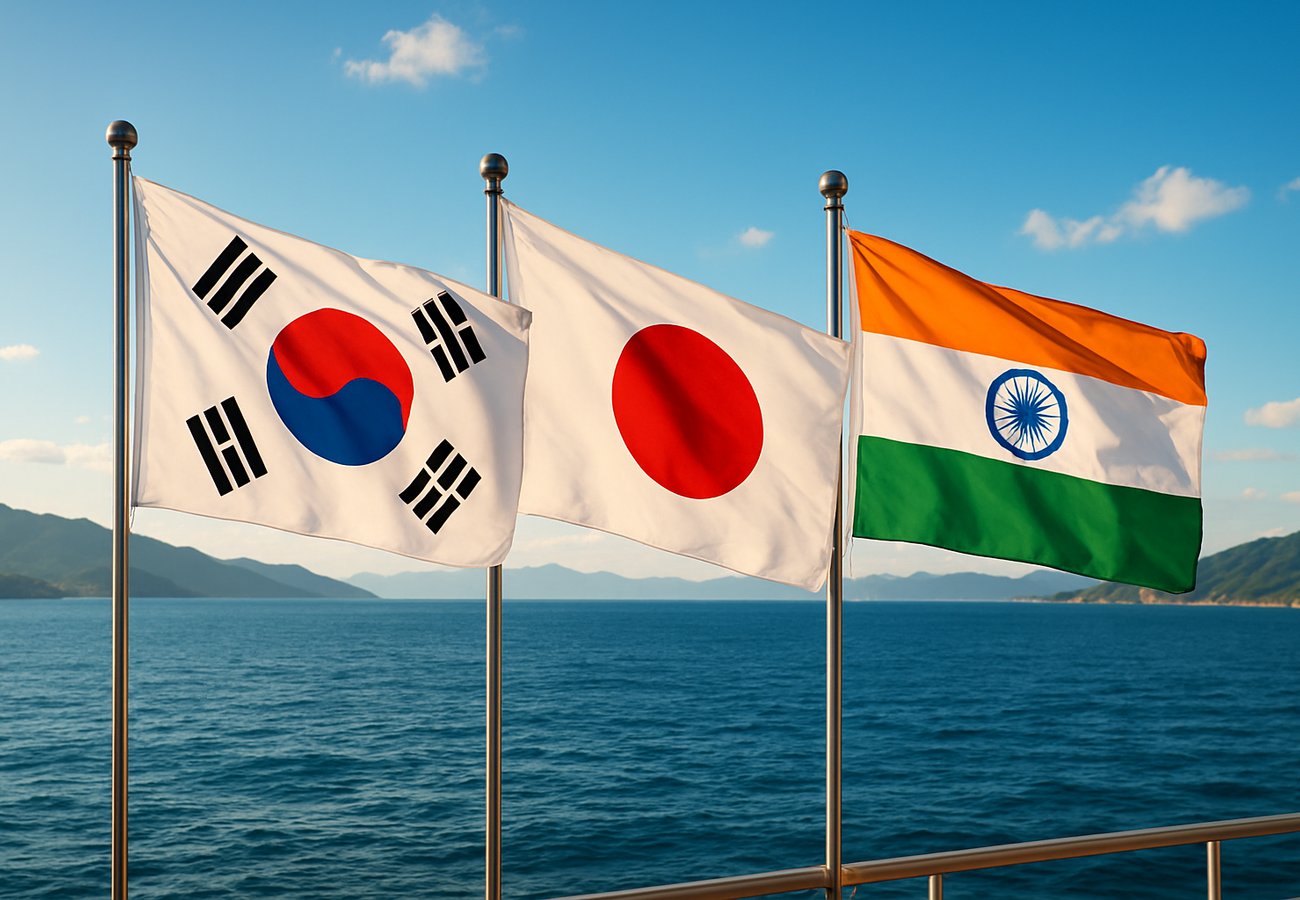
Image generated by AI
Quick Summary
- An international coalition representing South Korea, Japan, India, China, Vietnam, Thailand, and over thirty-two nations in West Asia has united to address the catastrophic energy shortages caused by the Strait of Hormuz blockade on May 4, 2026.
- Approximately 20% of global oil shipments and a significant portion of the world's Liquefied Natural Gas (LNG) transit this chokepoint, and its closure has triggered skyrocketing import costs and severe industrial deficits across Asia.
- South Korea and Japan are facing critical deficits in LNG supply from the UAE and Qatar, while India is battling inflationary pressure on food and essential goods as energy-related logistics costs soar.
- The coalition is urgently demanding renewed diplomatic negotiations and the opening of alternative energy corridors through Russia, Central Asia, and Southeast Asian maritime links to prevent a total global economic slowdown.
The global energy market has been pushed to a breaking point as the geopolitical crisis in the Strait of Hormuz evolves into a full-scale economic emergency. For the energy-dependent giants of East and South Asia, the blockade is not just a maritime dispute; it is a direct threat to national industrial production and the daily survival of their populations.
From the high-tech hubs of Seoul and Tokyo to the manufacturing heartlands of Vietnam and China, the halt of Gulf energy exports is forcing an immediate and radical restructuring of global supply chains.
Energy Vulnerability: Impact by Country (May 2026)
The following data outlines the specific risks and economic pressures facing the leading members of the Asian coalition.
| Country | Primary Energy Risk | Economic Impact |
|---|---|---|
| South Korea | Critical LNG Shortage | Industrial production deficits; rising utility costs |
| Japan | UAE/Qatar LNG Reliance | Threat to national power grid stability |
| China | High Import Cost Surge | Ramping up expensive alternatives; supply chain drag |
| India | Oil Price Inflation | Rising food prices; pressure on the transport sector |
| Thailand | Tourism & Manufacturing Hit | Increased logistical costs for Southeast Asian trade |
| Vietnam | Manufacturing Logistics | Disrupted flow of raw materials and energy for factories |
| UAE & Qatar | Export Insecurity | Revenue volatility and maritime security risks |
Regional Impact: The Crisis in West Asia
While the Asian giants feel the pinch as consumers, the nations of West Asia are facing structural threats to their status as global energy powerhouses:
- United Arab Emirates (UAE): Growing insecurity over maritime transit has led to a surge in insurance premiums for all oil and gas exports, threatening the UAE's role as a reliable global hub.
- Saudi Arabia: The Kingdom is racing to expand its Red Sea pipelines to bypass Hormuz, but the logistical challenges of rerouting such massive volumes are leading to temporary supply bottlenecks.
- Qatar: As the world’s leading LNG exporter, Qatar is currently unable to fulfill its long-term delivery contracts to Asia on time, creating a "ripple effect" of energy deficits from Seoul to Singapore.
- Bahrain & Kuwait: These smaller players are seeing a significant economic slowdown as their primarily oil-reliant budgets are hammered by the inability to move product through the strait.
The Global Emergency: A Call for Unity
The blockade has exposed the profound interconnectedness of the global economy. Over thirty-two nations—including Armenia, Azerbaijan, Pakistan, and the Central Asian republics—have joined the call for an immediate resolution.
Rising Import Costs: The price of LPG and natural gas has reached record highs in 2026, leading to inflation that is spilling over into the food and raw material sectors across the Indian subcontinent and Southeast Asia.
Travel and Tourism Disruptions: The aviation industry is struggling as flight routes over the Gulf are rerouted, adding hours to transit times and increasing fuel surcharges. Tourism-dependent economies like Thailand and the UAE are seeing a sharp decline in international arrivals as travelers avoid the region's volatility.
FAQ: Asian Energy Coalition and Hormuz
Which countries are in the coalition? The core group includes South Korea, Japan, China, India, Thailand, Vietnam, and the UAE, supported by a broader bloc of over thirty nations across Asia and the Middle East.
Why is LNG so important in this crisis? Unlike oil, which can sometimes be rerouted via pipeline, LNG (Liquefied Natural Gas) requires specific maritime terminals and tankers. The blockade of Hormuz effectively cuts off the world's most productive LNG lane.
How is India responding to the inflation? The Indian government is diversifying its energy sources by strengthening ties with Russia and Central Asia, while implementing temporary price stabilization measures for essential food items.
Related Travel Guides
Disclaimer
This article is for informational and educational purposes only. It does not constitute legal, financial, or professional advice. While we strive to provide accurate and up-to-date information, travel policies, regulations, and conditions change rapidly. Always verify information with official sources before making travel decisions. Nomad Lawyer makes no representations about the accuracy, reliability, completeness, or suitability of the information provided. Readers should consult qualified professionals for advice specific to their circumstances. The views expressed in this article are those of the author and do not necessarily reflect the views of Nomad Lawyer.
Kunal K Choudhary
Co-Founder & Contributor
A passionate traveller and tech enthusiast. Kunal contributes to the vision and growth of Nomad Lawyer, bringing fresh perspectives and driving the community forward.
Learn more about our team →