
Severe Weather Systems Trigger cancellations and Delays Across Asian Hubs 2026
Extreme weather systems, including Typhoon Maysak and monsoons, cause 709 cancellations and 10,449 delays across major Asian airports.

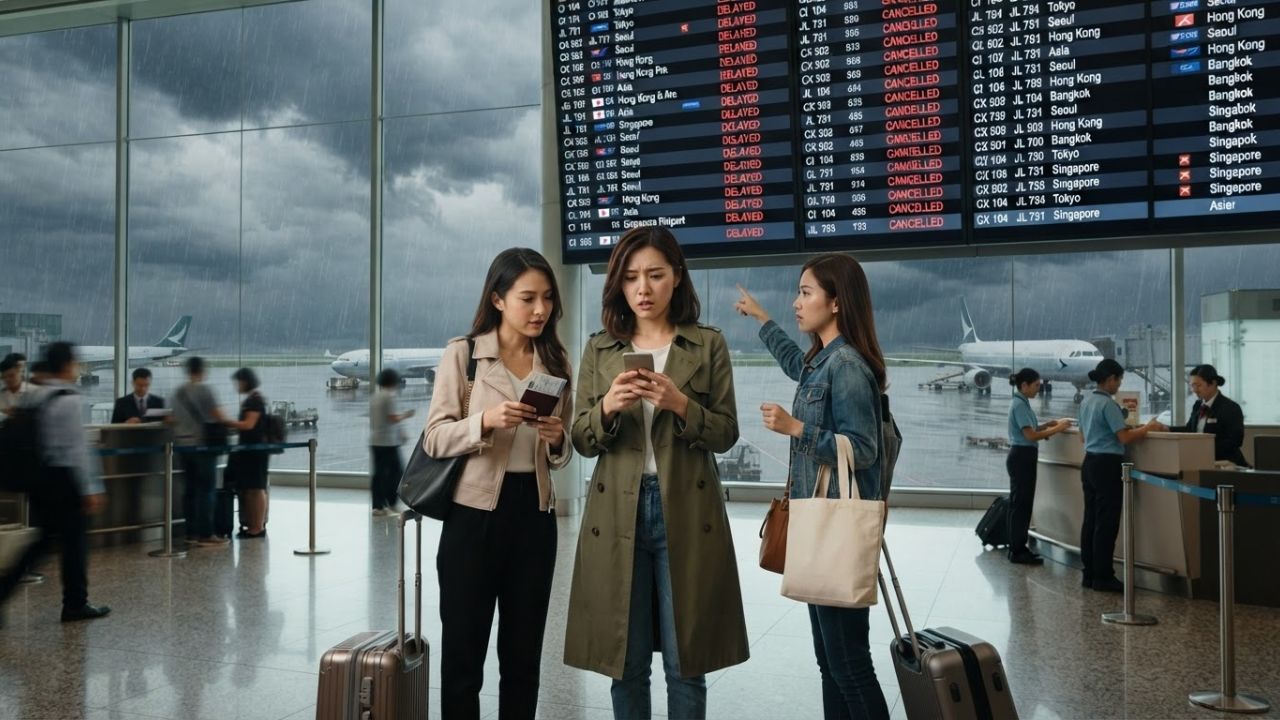
Image generated by AI
Severe Weather Systems Trigger 709 Cancellations and 10,449 Delays Across Major Asian Aviation Hubs in July 2026
A massive weather system, combining Typhoon Maysak in East Asia and active monsoon cycles in South Asia, has disrupted operations at key airport hubs. Flight tracking databases show 709 cancellations and 10,449 delays across the region, heavily impacting major airlines like China Eastern and Cathay Pacific.
Typhoon and Monsoon Systems Collide in East Asia
Extreme weather patterns have placed severe strain on the Asian aviation network, resulting in widespread flight cancellations and transit delays. Heavy monsoon rainfall, regional flooding, and tropical storm movements have simultaneously impacted airports in China, India, Japan, Indonesia, Taiwan, Hong Kong, Thailand, and the Philippines.
Flight tracking systems show that the cumulative operational disruption has reached 709 cancellations and 10,449 delayed flights across the continent. Coastal areas face immediate threats from high-velocity winds, while inland airports are managing disruptions caused by waterlogged runways and ATC restrictions.
Chinese Aviation Hubs Bear the Brunt of Typhoon Maysak
China has recorded the highest share of flight disruptions, with southern and central provinces experiencing intense rainfall linked directly to Typhoon Maysak. Ground operations and aircraft rotations have faced heavy constraints, leading to cascading delays across the domestic airspace network.
Shenzhen Bao’an International Airport (SZX) reported the highest disruption rate, registering 122 cancellations and 832 delays. Major hub airports, including Beijing Capital (PEK), Guangzhou Baiyun (CAN), and Shanghai Pudong (PVG), also registered hundreds of delayed departures as carriers managed air traffic control holds.
Monsoon Rainfalls Disrupt Airports in India and Indonesia
In South Asia, the active summer monsoon has brought heavy, localized rainfall that has flooded airport access roads and slowed baggage handling services. In India, Delhi's Indira Gandhi International Airport (DEL) led disruptions with 13 cancellations and 247 delays, followed by Mumbai (BOM) and Bengaluru (BLR).
Indonesia also registered significant scheduling volatility. Jakarta’s Soekarno-Hatta International Airport (CGK) recorded 26 cancellations and 239 delays, while regional operations in Makassar and Surabaya experienced minor delays.
Airline Operations Strained by Regional Weather Systems
Airlines across Asia are struggling to maintain schedule integrity due to airport parking limits and delayed aircraft arrivals. Chinese state-owned carriers have experienced the heaviest operational impact.
China Eastern Airlines reported the highest volume of disrupted flights, with 154 cancellations and 920 delays, followed closely by Air China and XiamenAir. Outside mainland China, regional carriers such as Cathay Pacific in Hong Kong and EVA Air in Taiwan have faced significant routing challenges.
Practical Passenger Advice for Navigating Flight Delays
Travelers caught in these weather-related delays should familiarize themselves with regional passenger protection regulations:
- Chinese Civil Aviation Rules: For delays caused by weather or air traffic control (outside airline control), carriers must assist passengers in securing meals and lodging, though the expenses are typically paid by the passenger.
- India DGCA Guidelines: The Directorate General of Civil Aviation (DGCA) requires airlines to provide free meals and refreshments for delays exceeding two to four hours, and alternative flights or full refunds if a flight is cancelled.
- Pre-Travel Verification: Passengers must monitor flight status online before leaving for the airport, as weather disruptions can trigger rapid scheduling changes.
- Flexible Booking Options: Travelers are advised to opt for flexible booking classes or purchase comprehensive travel insurance that covers weather-related flight disruptions and missed connections.
Long-Term Industry Resilience Against Extreme Weather
The scale of the current flight cancellations shows the ongoing vulnerability of global aviation networks to severe weather events. While carriers have improved their predictive weather modeling, the combination of typhoon winds and monsoon flooding presents an operational bottleneck.
As aviation demand grows in Asia, airports must invest in advanced drainage infrastructure and low-visibility navigation systems. Until these upgrades are completed, travelers must remain prepared for delays and cancellations during the summer storm season.
Regional Airport Disruption Statistics
| Airport | Code | Country / Region | Cancellations | Delays |
|---|---|---|---|---|
| Shenzhen Bao’an International Airport | SZX | China | 122 | 832 |
| Guangzhou Baiyun International Airport | CAN | China | 28 | 780 |
| Beijing Capital International Airport | PEK | China | 76 | 734 |
| Shanghai Pudong International Airport | PVG | China | 16 | 661 |
| Beijing Daxing International Airport | PKX | China | 25 | 568 |
| Hangzhou Xiaoshan International Airport | HGH | China | 15 | 478 |
| Nanjing Lukou International Airport | NKG | China | 12 | 458 |
| Kunming Changshui International Airport | KMG | China | 20 | 415 |
| Shanghai Hongqiao International Airport | SHA | China | 27 | 399 |
| Xi’an Xianyang International Airport | XIY | China | 19 | 359 |
| Chengdu Tianfu International Airport | TFU | China | 8 | 353 |
| Chongqing Jiangbei International Airport | CKG | China | 15 | 347 |
| Wuhan Tianhe Airport | WUH | China | 17 | 303 |
| Chengdu Shuangliu International Airport | CTU | China | 13 | 260 |
| Tianjin Binhai International Airport | TSN | China | 13 | 249 |
| Indira Gandhi International Airport | DEL | India | 13 | 247 |
| Jakarta Soekarno-Hatta International Airport | CGK | Indonesia | 26 | 239 |
| Shenyang Taoxian International Airport | SHE | China | 11 | 221 |
| Zhuhai International Airport | ZUH | China | 12 | 202 |
| Changsha Huanghua International Airport | CSX | China | 8 | 196 |
| Chhatrapati Shivaji International Airport | BOM | India | 14 | 151 |
| Suvarnabhumi Bangkok International Airport | BKK | Thailand | 3 | 101 |
| Sultan Hasanuddin International Airport | UPG | Indonesia | 17 | 58 |
| Bengaluru International Airport | BLR | India | 18 | 55 |
| Manila International Airport | MNL | Philippines | 7 | 47 |
| Vnukovo Airport | VKO | Russia | 3 | 38 |
| Sardar Vallabhbhai Patel International Airport | AMD | India | 9 | 27 |
| Juanda International Airport | SUB | Indonesia | 4 | 22 |
| Navi Mumbai International Airport | NMI | India | 3 | 12 |
| Guam International Airport | GUM | Guam | 3 | 8 |
Airline Performance & Disruption Statistics
| Airline | Country / Region | Cancellations | Delays |
|---|---|---|---|
| China Eastern Airlines | China | 154 | 920 |
| China Southern Airlines | China | 28 | 692 |
| Air China | China | 124 | 521 |
| Shenzhen Airlines | China | 14 | 342 |
| Sichuan Airlines | China | 5 | 319 |
| XiamenAir | China | 109 | 230 |
| China Express Airlines | China | 18 | 221 |
| Hainan Airlines | China | 58 | 206 |
| IndiGo | India | 4 | 172 |
| Spring Airlines | China | 21 | 153 |
| Cathay Pacific | Hong Kong | 31 | 97 |
| China United Airlines | China | 19 | 95 |
| Batik Air | Indonesia | 12 | 88 |
| All Nippon Airways | Japan | 27 | 67 |
| Korean Air | South Korea | 10 | 63 |
| Japan Airlines | Japan | 44 | 46 |
| China Airlines | Taiwan | 34 | 29 |
| EVA Air | Taiwan | 69 | 26 |
| Akasa Air | India | 36 | 14 |
Key Takeaways
- Widespread Asian Disruption: Typhoon Maysak and summer monsoons have combined to cause 709 cancellations and 10,449 delayed flights across Asia.
- China Heavily Impacted: Shenzhen Bao'an (SZX) and Beijing Capital (PEK) airports recorded the highest disruption rates in mainland China.
- Carrier Flight Cuts: China Eastern and Air China registered over 270 cancellations combined, while EVA Air led Taiwanese carriers in cancellations.
- Passenger Rights Variations: Indian DGCA rules guarantee passenger meals and refreshments during delays, while Chinese regulations put lodging costs on passengers for weather-related events.
FAQ
Am I entitled to free accommodation if my flight in China is delayed by a storm?
No. Under Chinese civil aviation regulations, if a flight is delayed or cancelled due to weather, air traffic control, or other factors outside the airline's control, the airline must assist in arranging accommodation, but the cost must be covered by the passenger.
What compensation am I entitled to for flight cancellations in India?
Under DGCA guidelines, if a flight is cancelled and the airline does not inform you at least two hours before departure, you are entitled to an alternate flight or a full refund. You may also be eligible for cash compensation depending on the delay duration.
Can I modify my flight booking without fees during severe weather?
Most airlines waiver change fees during active typhoon or monsoon warnings. Travelers should check their carrier's specific travel advisories to verify fee waivers.
Disclaimer
This article is for informational and educational purposes only. It does not constitute legal, financial, or professional advice. While we strive to provide accurate and up-to-date information, travel policies, regulations, and conditions change rapidly. Always verify information with official sources before making travel decisions. Nomad Lawyer makes no representations about the accuracy, reliability, completeness, or suitability of the information provided. Readers should consult qualified professionals for advice specific to their circumstances. The views expressed in this article are those of the author and do not necessarily reflect the views of Nomad Lawyer.
Kunal K Choudhary
Co-Founder & Contributor
A passionate traveller and tech enthusiast. Kunal contributes to the vision and growth of Nomad Lawyer, bringing fresh perspectives and driving the community forward.
Learn more about our team →