
Asia Aviation Disruption 2026: Over 2,970 Flight Delays and 220 Cancellations Across Major Hubs

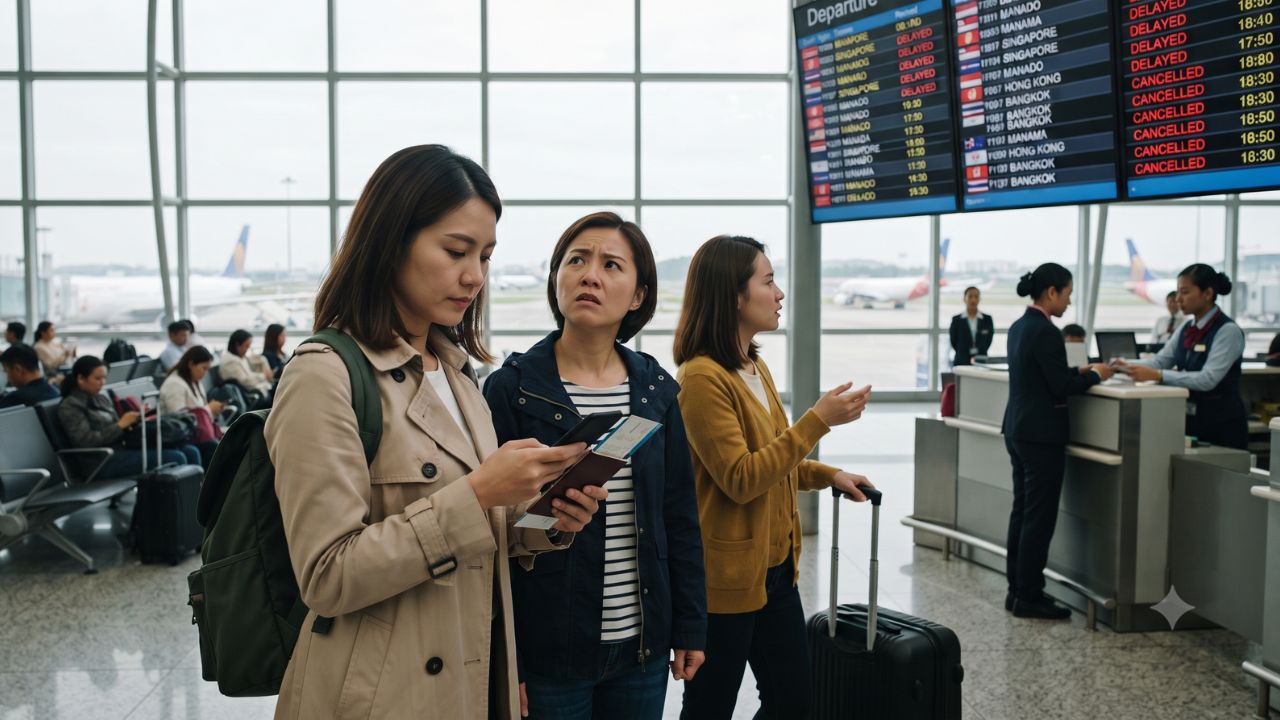
Compounding severe convective thunderstorms across southern China with airspace constraints in the Middle East, over 2,979 flight delays and 220 cancellations grounded transit passengers across major Asian aviation corridors. In a single 24-hour monitoring window recorded on October 4, 2026, Shenzhen Bao’an International Airport registered the highest delay count across the continent with 396 delayed departures, while Kunming Changshui recorded 26 outright cancellations. From Jakarta’s Soekarno-Hatta handling 276 delays to Delhi’s Indira Gandhi Airport logging 103 disruptions, cascading turnaround delays have challenged travelers across East Asia, South Asia, Indonesia, and Gulf transit hubs.
For international passengers traveling through connecting gateways, understanding how regional weather patterns, air traffic management flow programs, and airline passenger compensation charters operate—such as operational frameworks governed by the International Air Transport Association (IATA)—is vital to managing unexpected layovers and preserving multi-segment itineraries.
Regional Hub Breakdown: Shenzhen, Jakarta, and Istanbul Lead Disruptions
The disruption data reflects a convergence of convective weather fronts across the South China Sea, saturated runway capacity in Southeast Asia, and regional airspace bottlenecks. Real-time aviation tracking curated via FlightAware reveals the wide operational impact across primary Asian gateways:
1. Mainland China Aviation Hubs
China’s primary air corridors bore the brunt of schedule fracturing. Beyond Shenzhen’s 396 delays, Shanghai Pudong International Airport recorded 253 delayed flights and four cancellations, while Shanghai Hongqiao registered 121 delays and 12 cancellations. Beijing Daxing logged 125 delays and 12 cancellations, while Beijing Capital reported 97 delays and nine cancellations. Regional hubs also experienced high disruption rates: Kunming Changshui registered 106 delays and 26 cancellations, Chengdu Tianfu recorded 91 delays and five cancellations, and Xi’an Xianyang reported 87 delays and five cancellations.
Among carriers, China Eastern recorded 317 delayed flights (12%) and 69 cancellations (2%), while China Southern logged 299 delays (12%) and four cancellations. Air China reported 126 delays (7%) and six cancellations, Spring Airlines recorded 86 delays (13%), and Shanghai Airlines had 54 delays (15%).
2. South Asia and India
India’s major commercial airports faced localized delays, with Delhi’s Indira Gandhi International recording 103 delays and six cancellations, Hyderabad registering 65 delays and four cancellations, and Bengaluru reporting 59 delays and four cancellations. Navi Mumbai International logged 22 delays and 11 cancellations (8% origin and 10% destination cancellations).
IndiGo registered 172 delayed flights (7%) and seven cancellations, while Air India recorded 34 delays (5%). Akasa Air posted 17 delays (7%) and 12 cancellations (5%), and SpiceJet recorded 24 delays (34%) and four cancellations (5%).
3. Indonesia and Southeast Asia
In Southeast Asia, Jakarta-Soekarno-Hatta (CGK) recorded 276 delayed flights and 15 cancellations. Secondary hubs experienced spillover congestion: Medan Kuala Namu logged 49 delays and two cancellations, Makassar Sultan Hasanuddin recorded 48 delays and five cancellations, and Palembang registered 27 delays and four cancellations (6% cancellation rate). At Manado’s Sam Ratulangi Airport, passengers faced 10 delays and two cancellations (7% destination cancellation rate). Batik Air recorded 93 delays (29%) and 18 cancellations (5%), while Citilink registered 47 delays (18%) and two cancellations.
4. Middle East, West Asia, and Connecting Gateways
Connecting passengers moving through transcontinental hubs encountered significant waiting periods. Istanbul Airport (IST) recorded 219 delays and four cancellations. Tel Aviv Ben Gurion logged 177 delays, with carrier Israir recording a 41% delay rate (36 delayed flights)—the highest percentage delay rate among all monitored airlines. Dubai International Airport (DXB) logged 131 delays and eight cancellations, with Emirates registering 59 delays (11%) and flydubai posting 56 delays (19%). Riyadh King Khalid Airport reported 101 delays and four cancellations, while Bahrain International registered 12 delays and 10 cancellations (4% origin and destination cancellation rate), accompanied by Gulf Air recording 10 cancellations (6%).
| Airport Hub / Gateway | IATA Code | Delayed Flights | Cancelled Flights | Key Operational Impact |
|---|---|---|---|---|
| Shenzhen Bao’an | SZX | 396 delays | 2 cancellations | Highest single-airport delay count across Asia |
| Jakarta Soekarno-Hatta | CGK | 276 delays | 15 cancellations | Major Southeast Asian domestic and regional delays |
| Shanghai Pudong | PVG | 253 delays | 4 cancellations | International long-haul and regional schedule backlogs |
| Istanbul Airport | IST | 219 delays | 4 cancellations | Transcontinental connecting banks delayed |
| Tel Aviv Ben Gurion | TLV | 177 delays | 3 cancellations | Israir recorded 41% carrier delay rate |
| Dubai International | DXB | 131 delays | 8 cancellations | Emirates & flydubai connecting banks impacted |
| Beijing Daxing | PKX | 125 delays | 12 cancellations | 1% origin and destination cancellation rate |
| Shanghai Hongqiao | SHA | 121 delays | 12 cancellations | High-frequency domestic trunk routes affected |
| Kunming Changshui | KMG | 106 delays | 26 cancellations | Highest cancellation count in the dataset |
| Delhi Indira Gandhi | DEL | 103 delays | 6 cancellations | Northern India trunk route turnaround backlogs |
| Riyadh King Khalid | RUH | 101 delays | 4 cancellations | Saudia recorded 53 delayed flights (10%) |
| Chengdu Tianfu | TFU | 91 delays | 5 cancellations | Western China transit connections delayed |
| Bahrain International | BAH | 12 delays | 10 cancellations | Gulf Air registered 10 cancellations (6%) |
What Makes Asian Aviation Networks Vulnerable to Cascade Delays
Commercial aviation across Asia operates within highly dense, interdependent route structures where a delay in one hub triggers compounding delays across multiple countries:
- Intense Fleet Utilization: Low-cost and full-service carriers across China, India, and Indonesia schedule aircraft with tight 30-to-45-minute ground turnarounds. When a morning flight from Shenzhen or Jakarta is delayed by bad weather, that specific aircraft carries a cumulative delay into four or five subsequent domestic and regional flights.
- Airspace Flow Management Constraints: Unlike North America or Europe, vast portions of East Asian airspace are reserved for state and military operations, leaving narrow commercial air corridors that quickly become congested when severe weather forces flight path diversions.
- Convective Weather Corridors: Late monsoon squall lines, tropical depressions, and high-altitude mountain winds around Kunming, Chengdu, and the South China Sea routinely force ground stop holds to maintain safe separation distances.
- Connecting Hub Vulnerability: Giant transit hubs like Dubai and Istanbul depend on synchronized flight banks, where hundreds of inbound flights arrive within a 90-minute window to feed outbound flights. A minor delay on an inbound feeder flight risks misconnecting passengers across worldwide routes.
Visitor Insider Tips
When traveling through heavily congested Asian air hubs during periods of widespread irregular operations, follow these field-tested insider recommendations:
- Bypassing In-Terminal Rebooking Queues: When a flight is cancelled at Shenzhen, Shanghai, or Jakarta, customer service desks can have lines of 200 or more people. Instead of standing in line, open your airline's official smartphone app or call the airline's overseas English-language call center directly (such as calling the airline's Singapore or UK support desk) to secure alternative seat inventory before gate agents process queue tickets.
- Managing Separate Ticket Connections: If you booked self-transfers on separate tickets across low-cost carriers like Batik Air, Akasa Air, or Spring Airlines, airlines have no legal obligation to rebook your missed onward flight. Build a minimum layover buffer of four to five hours when self-connecting between terminals at Jakarta (CGK) or Delhi (DEL).
- Transit Hotel and Meal Voucher Protocols: In Mainland China, Civil Aviation Administration regulations require airlines to provide complimentary hotel lodging and meals if a flight is cancelled or delayed due to airline engineering or operational faults. If weather is the declared cause, airlines must assist in booking accommodation, but the passenger covers the hotel cost.
- Retaining Digital and Paper Evidence: Keep physical boarding passes, baggage claim tags, and screenshot timestamped delay notifications from your airline app. This documentation is essential when filing travel insurance reimbursement claims for delay-related hotel expenses, meals, and essential toiletries.
- Baggage Tracking Precautions: When tight flight connections are delayed, checked luggage frequently fails to transfer to the connecting aircraft. Place Bluetooth luggage tracking tags inside checked bags and pack three days of essential medications, chargers, and change of clothes in your carry-on luggage.
Cultural and Environmental Context
The rapid growth of commercial aviation across Asia reflects the continent's rising economic mobility, connecting previously isolated regional cities with global trade networks. However, running dense flight schedules across fragile coastal and tropical climates creates substantial environmental and operational challenges.
Airport authorities are investing heavily in rapid-exit taxiways, green ground power units, and AI-assisted flow management to minimize aircraft idling on saturated runways. By staying informed about passenger rights charters published by national transport ministries, travelers contribute to a more resilient travel ecosystem that balances high-density mobility with safety standards.
FAQ: Managing Flight Disruptions in Asia 2026
What should I do if my connecting flight is delayed in Asia?
Check your entire itinerary sector-by-sector on your airline’s mobile app. If your initial flight is delayed enough to miss your connection, contact the operating carrier immediately to be rebooked onto the next available service.
Which airline experienced the highest percentage delay rate?
Israir recorded the highest carrier delay rate in the dataset, with 41% of its flights (36 departures) delayed, followed by SpiceJet with a 34% delay rate.
Are airlines required to provide food and lodging during weather delays?
Under international aviation standards, airlines provide welfare assistance (food, water, and accommodation coordination) during extensive delays. However, compensation liability depends on whether the disruption was caused by extraordinary weather or airline operational fault.
Which airport in Asia recorded the highest number of cancellations?
Kunming Changshui International Airport (KMG) recorded the highest cancellation count among individual airports, with 26 flight cancellations.
By tracking real-time flight data, keeping buffer times between connections, and understanding passenger rights, travelers can navigate complex global aviation delays with confidence.
Related Travel Guides
- Africa Conservation and Safari Renaissance 2026: 13 MegaFam Routes Spotlight Multi-Country Wilderness Travel
- Canada and Europe Digital Payment Revolution 2026: Real-Time Rail, TIPS, and Transatlantic Travel Guide
- Barcelona Airport Surpasses 40 Million Passenger Milestone in 2026 as UK, Italy, and Germany Drive Inbound Surge
- United Airlines Aggressive Loyalty Match 2026: Status War Against Delta and American
Disclaimer
This article is for informational and educational purposes only. It does not constitute legal, financial, or professional advice. While we strive to provide accurate and up-to-date information, travel policies, regulations, and conditions change rapidly. Always verify information with official sources before making travel decisions. Nomad Lawyer makes no representations about the accuracy, reliability, completeness, or suitability of the information provided. Readers should consult qualified professionals for advice specific to their circumstances. The views expressed in this article are those of the author and do not necessarily reflect the views of Nomad Lawyer.
Raushan Kumar
Founder & Lead Developer
Full-stack developer with 11+ years of experience and a passionate traveller. Raushan built Nomad Lawyer from the ground up with a vision to create the best travel and law experience on the web.
Learn more about our team →