
Asia Flight Disruption Wave: Over 3,370 Delays and 280 Cancellations Hit Hangzhou, Dubai, and Shanghai
Cascading air traffic controls trigger 3,375 delays and 281 cancellations across Asia, heavily impacting Hangzhou, Dubai, Shanghai, and Jakarta.

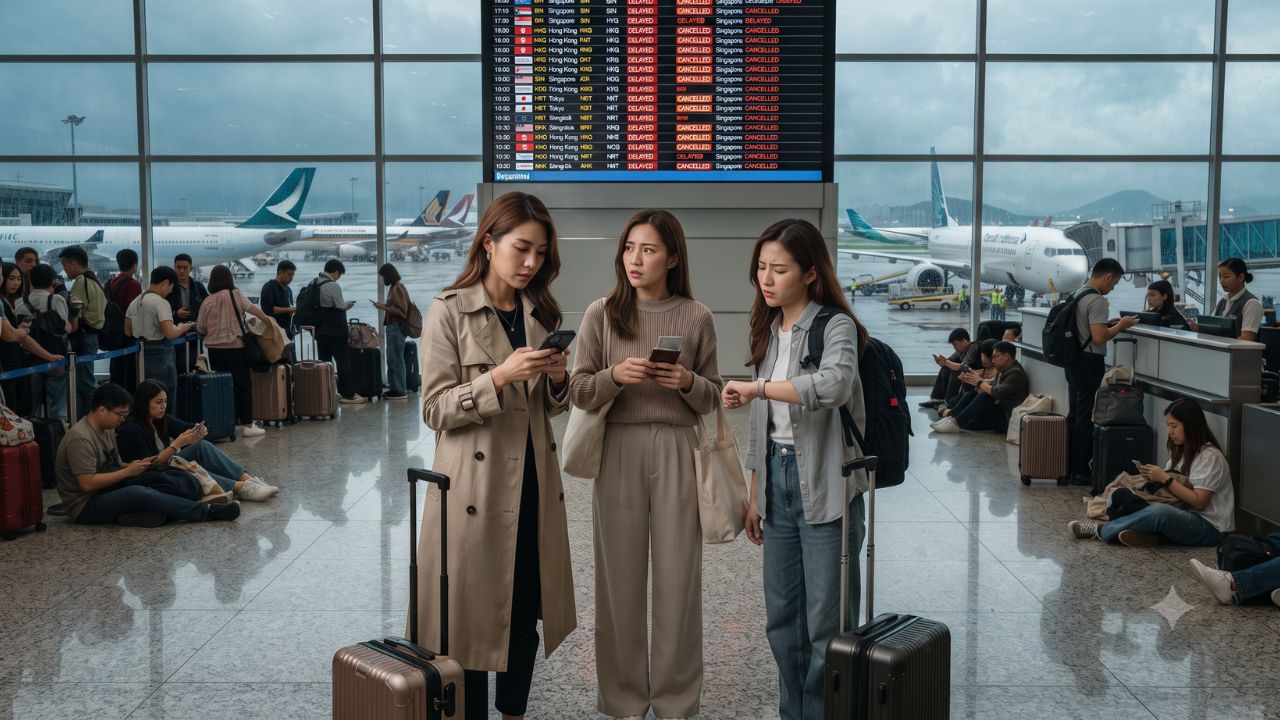
Image generated by AI
Sweeping through premier aviation gateways across East Asia, Southeast Asia, and the Middle East, a severe wave of airspace flow controls and operational bottlenecks has grounded 281 flights and delayed 3,375 services, with Hangzhou, Dubai, and Shanghai bearing the brunt of the disruptions.
Cascading Continental Disruption: 21 Major Hubs Impacted
Air travel across Asia encountered acute operational friction today as coordinated air traffic flow restrictions, seasonal convective weather, and cascading crew duty-hour timeouts rippled across international flight corridors. Verified aviation monitoring records from FlightAware—captured as of mid-afternoon Eastern Time—confirm that 3,375 flights have been delayed and 281 flights cancelled across China, Hong Kong, Indonesia, Saudi Arabia, Thailand, and the United Arab Emirates.
The disruption spans 21 key international and domestic transit hubs. China's mega-airports experienced the most severe backlogs, led by Hangzhou Xiaoshan recording 484 delays—the highest total on the continent—closely followed by Dubai International with 447 delays and Shanghai Pudong logging 417 delays.
For long-haul travelers, transatlantic and transpacific schedules have been compromised. Dubai reported 11 flight delays directly involving services to or from the United States, while Shanghai Pudong recorded 10 US-linked delays and Beijing Capital logged two.
Airport Disruption Matrix: The 21 Most Affected Asian Gateways
The following master ledger details the full operational impact across the 21 primary Asian airports reporting heavy schedule revisions:
| Airport Gateway | IATA Code | Flight Delays | Flight Cancellations | Primary Operational Drivers |
|---|---|---|---|---|
| Hangzhou Xiaoshan | HGH | 484 delays | 12 cancellations | Highest delay volume in Asia; Yangtze River Delta airspace holds |
| Dubai International | DXB | 447 delays | 6 cancellations | 11 US flight delays; intercontinental connecting bank congestion |
| Shanghai Pudong | PVG | 417 delays | 15 cancellations | 10 US flight delays; East China coastal flow management |
| Jakarta Soekarno-Hatta | CGK | 222 delays | 26 cancellations | Heavy domestic connecting delays; afternoon convective storms |
| Guangzhou Baiyun | CAN | 209 delays | 12 cancellations | Pearl River Delta terminal flow restrictions |
| Beijing Capital | PEK | 167 delays | 26 cancellations | 2 US flight delays; northern airway metering programs |
| Shanghai Hongqiao | SHA | 165 delays | 11 cancellations | High-density domestic business trunk route delays |
| Bangkok Suvarnabhumi | BKK | 149 delays | 2 cancellations | Regional Southeast Asian arrival sequencing holds |
| Hong Kong International | HKG | 130 delays | 3 cancellations | South China Sea airway routing re-sequencing |
| King Abdulaziz (Jeddah) | JED | 128 delays | 8 cancellations | Middle Eastern pilgrimage and regional transit bottlenecks |
| King Khalid (Riyadh) | RUH | 122 delays | 13 cancellations | Gulf domestic and international schedule realignments |
| Kunming Changshui | KMG | 103 delays | 17 cancellations | Southwest China mountainous approach spacing |
| Xi’an Xianyang | XIY | 102 delays | 0 cancellations | Central China transit airway metering |
| Beijing Daxing | PKX | 99 delays | 0 cancellations | Modern mega-hub absorbing secondary airspace flow holds |
| Chongqing Jiangbei | CKG | 96 delays | 16 cancellations | Upper Yangtze valley weather and slot restrictions |
| Chengdu Shuangliu | CTU | 92 delays | 14 cancellations | Western regional domestic schedule delays |
| Chengdu Tianfu | TFU | 72 delays | 31 cancellations | Highest airport cancellation volume in Asia |
| Batik Air Hubs (Indonesia) | Multiple | 81 delays | 35 cancellations | 23% delay rate and 10% cancellation rate |
| Sultan Mahmud Badaruddin II (Palembang) | PLM | 13 delays | 8 cancellations | Regional Sumatran feeder flight disruptions |
Airline Performance: China Eastern and Air China Face Heavy Toll
Mainline flag carriers and regional budget airlines across the continent are absorbing intense schedule volatility:
- China Eastern Airlines (81 Cancellations, 424 Delays): Operating major hubs at Shanghai Pudong, Shanghai Hongqiao, and Kunming, China Eastern recorded a 15% delay rate and a 2% cancellation rate, representing the largest single delay volume of any Asian carrier.
- Air China (67 Cancellations, 199 Delays): China’s national flag carrier logged a 9% delay rate and a 3% cancellation rate, primarily concentrated at Beijing Capital and Chengdu. Together, China Eastern and Air China generated 623 delays and 148 cancellations.
- Batik Air (35 Cancellations, 81 Delays): The Indonesian full-service carrier suffered severe operational disruption, logging an alarming 10% cancellation rate and a 23% delay rate, stranding passengers connecting across the Indonesian archipelago through Jakarta and Palembang.
- Saudia (21 Cancellations, 62 Delays): The Saudi flag carrier reported a 10% delay rate and a 3% cancellation rate across its primary hubs in Jeddah and Riyadh.
Operational Diagnostics: Flow Management and Weather Bottlenecks
Aviation analysts identify three primary mechanisms driving today's widespread Asian schedule collapses:
- Airspace Militarization and Flow Management in China: Over 70% of Chinese airspace remains strictly managed by military authorities, funneling hundreds of commercial flights into narrow civilian air corridors. When localized thunderstorms appear over the Yangtze River Delta, air traffic controllers enforce severe slot metering, resulting in hundreds of grounded aircraft across Hangzhou, Shanghai, and Guangzhou.
- Middle Eastern Thermal and Intercontinental Bank Compression: At Dubai (DXB), massive banks of long-haul wide-body jets arrive and depart within compressed two-hour windows to facilitate connections between Europe, Asia, and Australasia. A delay in one incoming bank cascades through hundreds of subsequent rotations.
- Equatorial Convective Storms in Southeast Asia: Mid-afternoon monsoon storm cells over Java and western Sumatra created significant landing holds at Jakarta Soekarno-Hatta and Palembang, forcing Batik Air to cancel flights as aircraft rotations broke down.
Local Insider Guidance for Travelers Stranded Across Asian Gateways
Passengers navigating delays or cancellations across these major transit hubs can mitigate travel friction with these field-tested local strategies:
- Switch to China’s High-Speed Rail (CRH) Along the Yangtze Delta: If your domestic flight between Hangzhou (HGH) and Shanghai (PVG/SHA) or Beijing (PEK/PKX) is delayed by more than two hours, abandon the airport. Walk directly to the connected high-speed rail terminals. China's Fuxing bullet trains travel at 350 km/h, linking Hangzhou East to Shanghai Hongqiao in just 45 minutes, and Shanghai to Beijing in 4 hours and 18 minutes—completely immune to airspace flow holds.
- Utilize the Dubai Metro and Concourse Sleep Pods: If stranded at Dubai International (DXB) during a multi-hour delay, do not remain at crowded gate areas. The Dubai Metro Red Line departs directly from Terminal 1 and Terminal 3, reaching downtown Dubai in 20 minutes. If staying airside, utilize the sleep 'n fly sleep pods located in Concourses A, B, and C, and request a complimentary airline meal voucher at Emirates or transfer service counters for delays exceeding four hours.
- Board Jakarta's SkyTrain and Airport Railink: At Jakarta Soekarno-Hatta (CGK), skip highway traffic gridlock if rebooking requires changing terminals. Take the free automated SkyTrain (Kalayang) connecting Terminals 1, 2, and 3. For overnight hotel stays in central Jakarta, take the air-conditioned Railink airport train directly to BNI City Station in 50 minutes.
- Savor Regional Culinary Landmarks During Airport Delays: Turn extended layovers into cultural experiences:
- Hangzhou: Savor authentic Longjing green tea and sweet lotus root pastries at terminal tea houses.
- Bangkok Suvarnabhumi: Head down to Level 1 near Gate 8 to dine at the celebrated Magic Food Point, an authentic street-food court serving fresh pad Thai, som tum, and mango sticky rice at local street prices.
- Jeddah: Sample traditional Hejazi spiced chicken and rice (saleeg) or freshly brewed Arabic coffee scented with cardamom at the Terminal 1 transit concourse.
- Demand Single-Ticket Through-Check Rights on Asian Flag Carriers: When rebooking on Chinese or Gulf carriers, ensure gate staff re-issue your baggage tags with interline transfer confirmation to your final destination, preventing you from having to clear customs and retrieve bags during secondary domestic connections.
Long-Term Tourism Outlook: Enhancing Intermodal Resilience Across Asia
Today’s 3,375 flight delays and 281 cancellations underline the urgent need for structural airspace reform and intermodal integration across the Asian continent. While mega-hubs like Dubai, Beijing Daxing, and Shanghai Pudong boast state-of-the-art terminal architecture, runway throughput remains vulnerable to outdated airway allocations.
For travelers, the enduring takeaway is clear: as Asia's aviation hubs operate near maximum capacity, savvy passengers must pair digital flight tracking with intermodal alternatives like high-speed rail to navigate the world's most dynamic travel market with confidence.
Frequently Asked Questions: Asia Flight Disruptions
How many flights were delayed and cancelled across Asia today? A total of 3,375 flight delays and 281 flight cancellations were recorded across major airports in China, Hong Kong, Indonesia, Saudi Arabia, Thailand, and the UAE.
Which airport in Asia experienced the highest number of flight delays? Hangzhou Xiaoshan International Airport (HGH) in China recorded the highest delay total on the continent with 484 delayed flights.
Which airlines were most heavily affected by the disruptions? China Eastern recorded 424 delays and 81 cancellations, while Air China logged 199 delays and 67 cancellations. Batik Air in Indonesia faced 81 delays and 35 cancellations, and Saudia recorded 62 delays and 21 cancellations.
Which airport had the highest number of flight cancellations? Chengdu Tianfu International Airport (TFU) in China recorded the highest cancellation count in Asia with 31 cancelled flights.
Related Travel Guides
Disclaimer
This article is for informational and educational purposes only. It does not constitute legal, financial, or professional advice. While we strive to provide accurate and up-to-date information, travel policies, regulations, and conditions change rapidly. Always verify information with official sources before making travel decisions. Nomad Lawyer makes no representations about the accuracy, reliability, completeness, or suitability of the information provided. Readers should consult qualified professionals for advice specific to their circumstances. The views expressed in this article are those of the author and do not necessarily reflect the views of Nomad Lawyer.
Raushan Kumar
Founder & Lead Developer
Full-stack developer with 11+ years of experience and a passionate traveller. Raushan built Nomad Lawyer from the ground up with a vision to create the best travel and law experience on the web.
Learn more about our team →