
Asia Aviation Crisis 2026: 2,166 Delays and 256 Cancellations Hit Riyadh, Jakarta, and Delhi
Severe weather and geopolitical tensions triggered 2,166 delays and 256 cancellations across Asian aviation hubs, including Riyadh, Jakarta, and Delhi, on September 3, 2026.
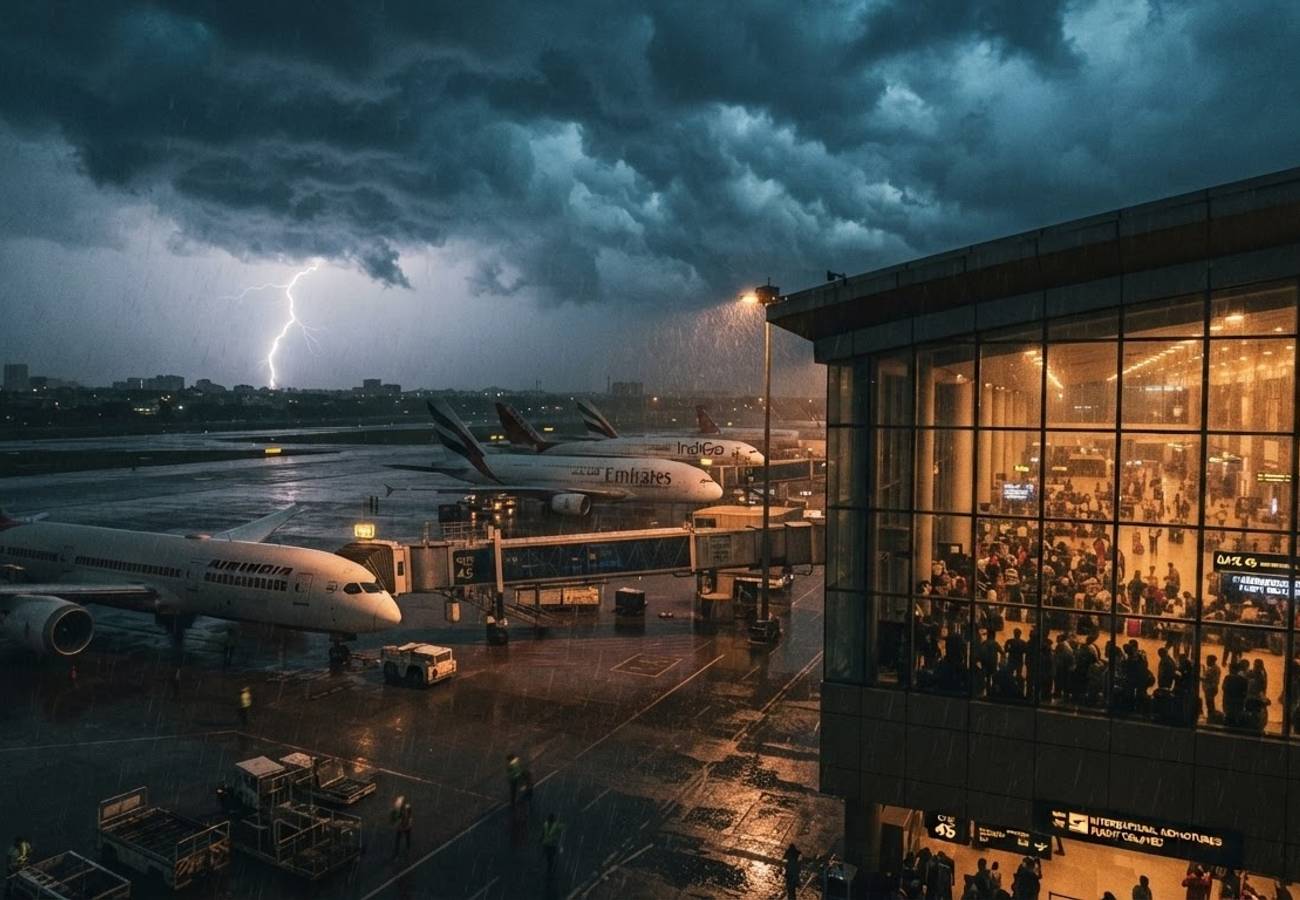
Image generated by AI
Severe weather and geopolitical volatility have paralyzed aviation networks across Asia, resulting in 2,166 delays and 256 cancellations in a single 24-hour window.
Operational stability collapsed on September 3, 2026, as a convergence of heavy monsoons, dense volcanic smoke, and active typhoons forced immediate ground stops at 35 airports, including major hubs in Riyadh, Makassar, and Delhi. The scale of the disruption has left hundreds of thousands of passengers stranded, with regional transit networks unable to absorb the compounding environmental risks.
Primary Drivers of Network Failure
The current chaos is not the result of a single event but a systemic failure caused by four distinct regional pressures:
- South Asian Monsoons: Extreme rainfall and thunderstorms have flooded tarmacs and reduced visibility, stalling aircraft turnarounds in India.
- East Asian Typhoons: Storm systems across Japan, China, and Taiwan have triggered safety protocols for high crosswinds, grounding crews and aircraft.
- Southeast Asian Haze: Dense wildfire smoke in Indonesia has degraded visibility to unsafe levels, freezing operations at regional strips and choking international hubs.
- Middle East Geopolitics: Closure of critical flight corridors has forced westbound flights into fuel-heavy alternative routes, desynchronizing widebody aircraft schedules.
Regional Impact Analysis
The disruptions are concentrated in three primary zones, with specific airports and carriers bearing the brunt of the operational collapse.
South Asia and Middle East
India has become the primary chokepoint for the region. Delhi’s Indira Gandhi International Airport recorded 326 delays and 10 cancellations. Mumbai’s Chatrapati Shivaji International Airport logged 120 delays. In Saudi Arabia, King Abdulaziz International Airport faced 112 delays, while King Khalid International Airport reported 96.
From a carrier perspective, IndiGo experienced the highest volume of instability, with 289 delayed flights—roughly 14% of its daily schedule. Air India recorded 147 delays, while Saudia reported 78 delays and 24 cancellations.
Southeast Asia
Indonesian airspace is currently compromised by smoke and haze. Jakarta-Soekarno-Hatta International Airport is one of the most disrupted hubs on the continent, reporting 232 delays and 12 cancellations. Sultan Hasanuddin International Airport recorded 99 delays. Batik Air has been severely impacted, reporting 89 delays and 19 cancellations.
East Asia
China and Japan are struggling with typhoon-related constraints. In China, Guangzhou Baiyun International Airport led with 134 delays, and Beijing Capital International Airport logged 103. Chengdu Tianfu International Airport saw the highest cancellation rate in China with 20 flights scrubbed and 44 delays.
In Japan, Osaka International (Itami) logged 128 delays. The most acute impact was seen at Kagoshima airport, where 21 cancellations occurred. Japan Air Commuter faced a near-total collapse, cancelling 34 flights, which wiped out 49% of its daily operational schedule.
Operational Data Summary (September 3, 2026)
| Region/Hub | Airport/Airline | Delays | Cancellations |
|---|---|---|---|
| South Asia | Indira Gandhi Intl (Delhi) | 326 | 10 |
| South Asia | Chatrapati Shivaji Intl (Mumbai) | 120 | - |
| Middle East | King Abdulaziz Intl | 112 | - |
| Middle East | King Khalid Intl | 96 | - |
| SE Asia | Jakarta-Soekarno-Hatta | 232 | 12 |
| SE Asia | Sultan Hasanuddin Intl | 99 | - |
| East Asia | Guangzhou Baiyun Intl | 134 | - |
| East Asia | Beijing Capital Intl | 103 | - |
| East Asia | Chengdu Tianfu Intl | 44 | 20 |
| East Asia | Osaka International (Itami) | 128 | - |
| Carrier | IndiGo | 289 | - |
| Carrier | China Eastern Airlines | 221 | 28 |
| Carrier | All Nippon Airways (ANA) | 120 | - |
| Carrier | Japan Air Commuter | - | 34 (49% of schedule) |
Why This Matters: Industry Implications
From a logistical perspective, this event highlights the fragility of "just-in-time" aviation scheduling in Asia. When a hub like Delhi or Jakarta fails, the ripple effect is not local; it creates a vacuum of available aircraft and crews across the entire continent.
For travelers and corporate planners, the real impact is the "recovery lag." Because crews are now stranded out of position (particularly in East Asia), schedules will not return to normal the moment the weather clears. We are seeing a transition where "Acts of God" clauses are being heavily leveraged by airlines to avoid paying for hotel and meal vouchers, leaving passengers financially exposed.
Furthermore, the forced rerouting around Middle Eastern airspace is increasing fuel burn and flight times. This suggests that the "standard" flight duration for Asia-Europe routes is effectively increasing, which will likely lead to higher ticket pricing as airlines bake these fuel costs into their 2026-2027 tariffs.
Forward Outlook
Expect prolonged instability over the next 72 hours as airlines attempt to reposition crews. Passengers should prioritize digital rebooking over terminal queues. Our analysis suggests that regional carriers like Japan Air Commuter and Batik Air will struggle longer than global giants due to smaller fleet reserves.
The aviation network is currently in a state of reactive recovery, not proactive management.
Related Travel Guides
Disclaimer
This article is for informational and educational purposes only. It does not constitute legal, financial, or professional advice. While we strive to provide accurate and up-to-date information, travel policies, regulations, and conditions change rapidly. Always verify information with official sources before making travel decisions. Nomad Lawyer makes no representations about the accuracy, reliability, completeness, or suitability of the information provided. Readers should consult qualified professionals for advice specific to their circumstances. The views expressed in this article are those of the author and do not necessarily reflect the views of Nomad Lawyer.