
Middle East Aviation Crisis 2026: 1,617 Delays and 71 Cancellations Hit Istanbul and Cairo Hubs
Severe aviation disruptions across the Middle East result in 1,617 delays and 71 cancellations, impacting major hubs in Turkey, Egypt, and the UAE due to airspace rerouting.
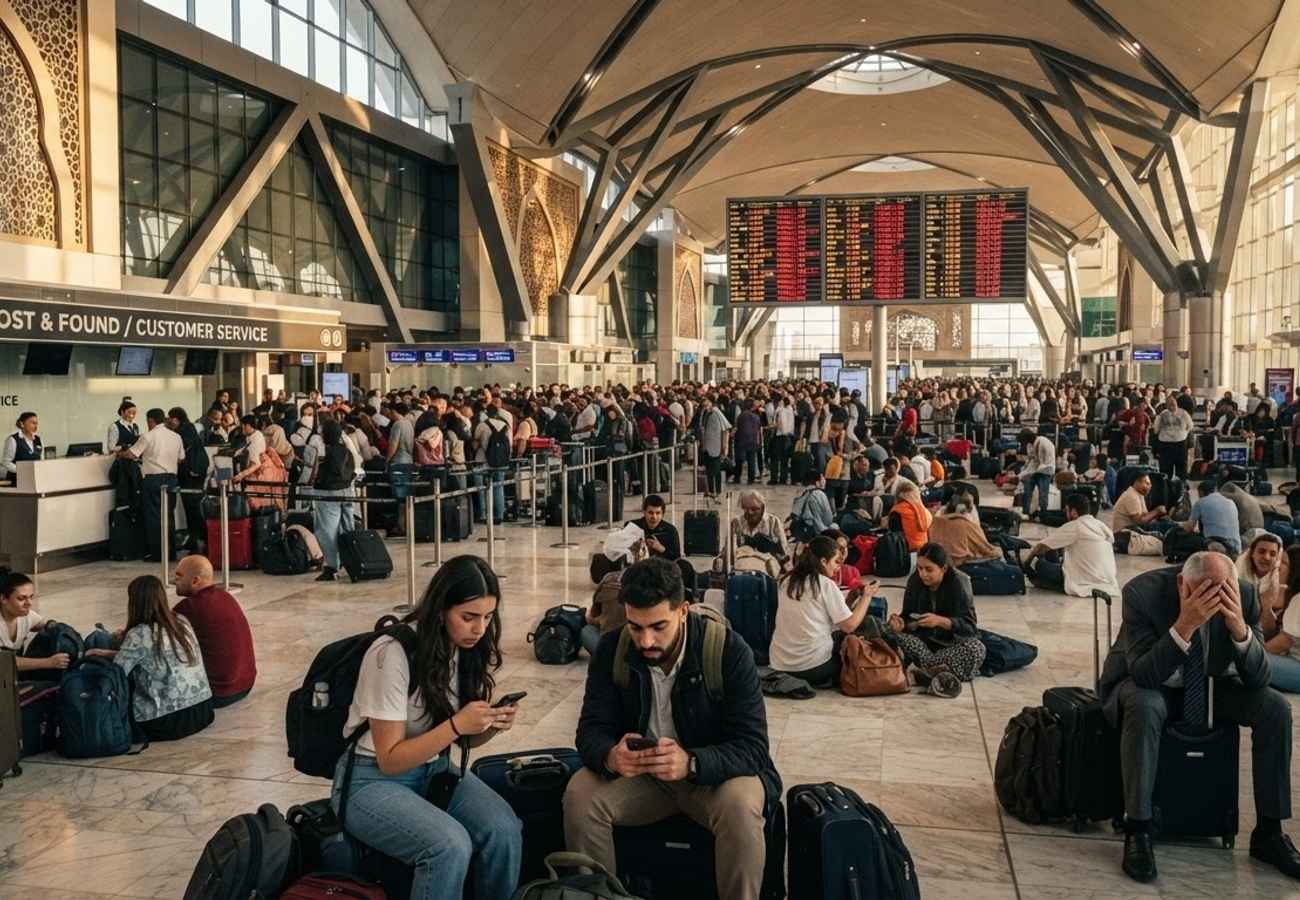
Image generated by AI
A regional aviation crisis has triggered 1,617 delays and 71 cancellations across the Middle East, leaving thousands of passengers stranded at critical hubs in Istanbul, Cairo, and the Gulf.
The Middle East's aviation network is currently facing a systemic bottleneck. A combination of geopolitical tensions forcing airspace rerouting and sudden localized weather fronts has created a cascading effect on flight schedules. This is not merely a series of isolated incidents; it is a regional operational failure where crew misplacements and gate congestion are now impacting both short-haul and long-haul connectivity.
Regional Hub Performance Analysis
The pressure is most acute at international connection hubs where high-density schedules leave zero margin for error. When a single corridor is squeezed, the resulting delay ripples through every subsequent flight assigned to that aircraft or crew.
| Airport | Delays | Cancellations | Primary Pressure Point |
|---|---|---|---|
| Dubai International (DXB) | 319 | 6 | Highest overall disruption count |
| Istanbul Airport (IST) | 264 | 1 | Rerouted transit corridors |
| Cairo International (CAI) | 226 | 2 | Intense operational slowdowns |
| Istanbul Sabiha Gokcen (SAW) | 201 | 5 | Capacity squeeze |
| Abu Dhabi International (AUH) | 156 | 2 | Regional congestion |
| King Abdulaziz (Jeddah) | 130 | 12 | High cancellation rate |
| King Khalid (Riyadh) | 109 | 14 | Highest single-airport cancellations |
| Sharjah International (SHJ) | 81 | 2 | Transit bottlenecks |
| Kuwait International (KWI) | 56 | 1 | Operational lag |
| King Fahd (Dammam) | 37 | 2 | Regional flow issues |
| Abha Regional | 20 | 10 | Severe localized impact |
| Al Maktoum International (DWC) | 14 | 1 | Secondary hub overflow |
| Erbil International | 4 | 1 | Minor corridor disruption |
| Gizan Regional | 0 | 8 | Weather-driven cancellations |
| Najran Domestic | 0 | 4 | Weather-driven cancellations |
Carrier Impact and Operational Strain
The burden of these disruptions falls heavily on national flag carriers. While some airlines struggle with raw numbers, others are facing a higher percentage of their total schedule being compromised.
Turkish Airlines recorded the highest raw number of delayed flights with 234 delays (13%) and 1 cancellation. However, EgyptAir suffered the most significant relative impact, with 108 delays representing 35% of its scheduled operations.
Emirates faced 178 delays (33%) and 1 cancellation, largely due to extended detour routes and ground congestion in Dubai. Meanwhile, Saudia experienced the most severe cancellation rate among carriers, dropping 24 flights (4%) and recording 85 delays (14%). Other impacted carriers include Flynas, which saw 51 delays (15%) and 2 cancellations.
Cultural & Environmental Value: The Human Impact
For the traveler, the real impact is the erosion of the "seamless transit" experience that Middle Eastern hubs have spent decades building. The shift toward forced rerouting isn't just a logistical hurdle; it increases fuel burn and carbon emissions as aircraft fly longer paths to avoid restricted airspace.
From a cultural perspective, these disruptions highlight the vulnerability of global tourism to regional geopolitical shifts. When hubs like Istanbul and Cairo stall, the economic ripple effect hits local airport vendors, hotel partners, and the broader tourism ecosystem that relies on the predictable flow of international visitors.
Visitor Insider Tips
Navigating a regional aviation crisis requires a tactical approach to avoid spending 24 hours in a terminal.
- The Digital-First Rule: Do not head to the airport if your flight is marked as canceled. Terminal queues during multi-carrier collapses are unmanageable. Use the airline app to secure a refund or rebook.
- Waiver Hunting: Check for "Emergency Rebooking Policies." During these crises, carriers often waive fare differences and modification fees for affected routes.
- Duty-of-Care Enforcement: If delayed beyond 2 to 4 hours, you are legally entitled to meal vouchers and communication access. For overnight delays caused by carrier issues, demand hotel and transport vouchers immediately.
- Real-Time Tracking: Turn on SMS and email notifications. In congested airspace, gate assignments and turnaround times change in minutes, not hours.
Tourism Outlook
The long-term impact of these disruptions may accelerate the push for more diversified airspace agreements and the adoption of AI-driven predictive scheduling to better handle "black swan" events. While the Middle East remains a dominant force in global aviation, these events underscore the need for greater operational resilience and a shift toward more sustainable, flexible routing that can withstand geopolitical volatility.
Stay vigilant and verify all travel documents before departing for the terminal.
Related Travel Guides
Disclaimer
This article is for informational and educational purposes only. It does not constitute legal, financial, or professional advice. While we strive to provide accurate and up-to-date information, travel policies, regulations, and conditions change rapidly. Always verify information with official sources before making travel decisions. Nomad Lawyer makes no representations about the accuracy, reliability, completeness, or suitability of the information provided. Readers should consult qualified professionals for advice specific to their circumstances. The views expressed in this article are those of the author and do not necessarily reflect the views of Nomad Lawyer.