
Arizona Haboob Dust Storm Slams Phoenix Casa Grande Pinal on July 4 Weekend 2026 Travel Chaos
A massive haboob dust storm driven by monsoon winds swept across central Arizona on July 4 weekend, reducing visibility near Casa Grande and disrupting holiday travel across Phoenix and Pinal County.

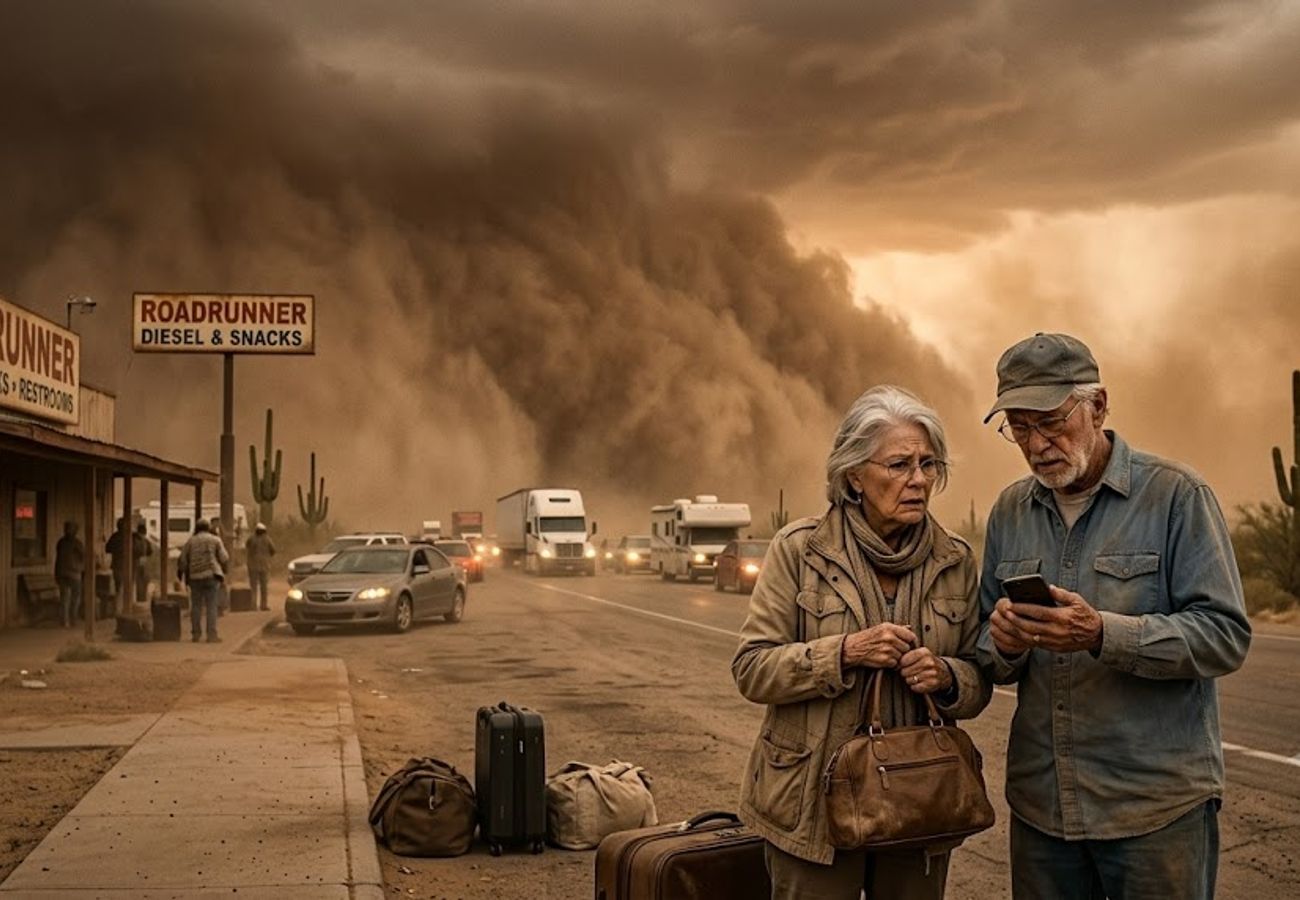
Image generated by AI
I was driving south on Interstate 10 toward Tucson when the sky ahead turned an apocalyptic shade of brown. What looked like a distant mountain range was actually a wall of dust, easily 3,000 feet tall, rolling north across the Sonoran Desert at highway speed. Within minutes, the world outside my windshield went from clear afternoon light to something resembling a sepia-toned fog.
This was July 4 weekend, 2026. A massive haboob had formed near Casa Grande, roughly halfway between Phoenix and Tucson, after monsoon thunderstorms collapsed and sent powerful outflow winds racing across dry desert terrain. The timing could not have been worse for holiday travelers.
The National Weather Service issued dust advisories for Pinal County and parts of Maricopa County as the storm moved north toward the Phoenix metropolitan area. Visibility along I-10 and I-8 dropped to near zero in stretches, turning one of America's busiest travel corridors into a parking lot of confused and frightened drivers.
I managed to pull off at a truck stop near Eloy, about 20 miles south of Casa Grande. Inside, travelers who had been caught in the thick of it described the experience in terms usually reserved for war zones. One family from Flagstaff told me they had stopped dead on the interstate, unable to see the hood of their own car, for nearly 15 minutes before the worst of it passed.
Haboobs are not rare in Arizona. The state sees them regularly between June and September during the North American Monsoon, when moist air from the Gulf of California meets intense desert heat, fueling afternoon and evening thunderstorms. When those storms collapse, cold air rushes downward and outward across the desert floor, lifting loose sand and dust into massive walls that can stretch for dozens of miles.
What made this particular event notable was its timing. The July 4 holiday weekend brings some of the heaviest road traffic of the summer across Arizona. Families driving between Phoenix, Tucson, Flagstaff, and the many lake and recreation destinations in between found themselves directly in the path of the storm.
Casa Grande sits at the geographic heart of this vulnerability. The city of roughly 55,000 people straddles the I-10 corridor about 70 miles south of Phoenix and 70 miles north of Tucson. The surrounding desert is flat, dry, and largely undeveloped, making it an ideal launchpad for airborne dust when strong winds hit.
"I've driven through Arizona monsoons for 20 years. The rule is simple: if you see a wall of dust ahead, do not drive into it. Pull off the road completely, turn off your headlights so nobody follows your lights into you, keep your seatbelt on, and wait. People die in chain-reaction pileups because they keep driving blind." — u/DesertRat1973, r/Arizona
The Arizona Department of Transportation runs a dust storm safety campaign built around a simple message: "Pull Aside, Stay Alive." Their guidance is specific and worth memorizing if you plan to drive in Arizona during monsoon season. Check traffic conditions before leaving. If you encounter a dust storm, reduce speed immediately, pull completely off the paved portion of the road, turn off all vehicle lights including emergency flashers, set the parking brake, and keep your seatbelt fastened until visibility returns.
Turning off your lights is counterintuitive but critical. Drivers behind you may try to follow your taillights, assuming you are still moving on the roadway. With your lights off, they are less likely to drive into your parked vehicle.
At Phoenix Sky Harbor International Airport, operations continued largely as normal during this event, though airport officials confirmed they were monitoring visibility and wind data closely. Dust storms can trigger ground stops or arrival delays when visibility drops below FAA minimums for safe operations. If you are flying through Phoenix during monsoon season, check your airline's app or the Phoenix Sky Harbor flight status page before heading to the terminal.
I spent about 90 minutes at that Eloy truck stop waiting for the dust to settle. When I finally got back on the road, the landscape looked like it had been dipped in powdered clay. Every surface, from saguaro cacti to highway signs, wore a thin film of brown. The air still smelled of dust and ozone from the thunderstorms that had triggered the whole event.
Arizona leads the United States in haboob frequency by a wide margin. The combination of expansive dry desert, loose sandy soil, and a reliable summer monsoon creates conditions that no other state matches. Some of the largest haboobs in recent memory, including the massive July 2011 storm that rolled through Phoenix, reached heights of 5,000 feet and stretched more than 100 miles wide.
Similar events occur in West Texas, New Mexico, Southern California, and Nevada, but Arizona's are the most frequent and the most disruptive to populated areas. Phoenix, Tucson, Yuma, and the communities along the I-10 corridor between them bear the brunt every summer.
For travelers planning a visit to Arizona during the monsoon months, the dust storms are part of the deal. They are spectacular to witness from a safe distance and genuinely dangerous if you are caught unprepared on the highway. The key is knowing what to do before the wall of dust arrives, because once it hits, you will not have time to figure it out.
Traveling through Arizona's monsoon season means respecting the desert on its own terms. The haboobs will come. The only question is whether you are ready when they do.
Practical Visitor Guide
Best Time to Visit Arizona: October through April offers the most reliable weather. Monsoon season runs from roughly mid-June through September, with dust storms most common in July and August. If you must travel during monsoon months, plan drives for early morning when thunderstorm activity is minimal.
Dust Storm Safety: If you encounter a haboob while driving, pull completely off the roadway, turn off all lights, set the parking brake, and stay inside the vehicle. Never drive into a wall of dust. Do not stop in a travel lane, as this causes chain-reaction collisions.
Checking Road Conditions: Monitor the Arizona Department of Transportation's AZ511 traffic map for real-time road conditions and closures. The NWS Tucson and NWS Phoenix offices post dust advisories on their social media channels, often faster than they appear on weather apps.
Air Travel: Phoenix Sky Harbor International Airport (PHX) is the main hub. Check your airline's app for delays during monsoon events. Regional airports in Tucson (TUS) and Mesa (AZA) may also experience brief disruptions during severe dust storms.
Budget Expectations: Arizona is generally affordable compared to coastal destinations. Hotel rates in Phoenix and Tucson range from $90 to $200 per night depending on season. Gas prices tend to run slightly below the national average. Budget $40 to $60 per day for food if you eat at local spots rather than resort restaurants.
Local Safety Beyond Dust Storms: Summer temperatures in Phoenix regularly exceed 110 degrees Fahrenheit. Carry water at all times, never hike midday in summer, and keep your gas tank above half full when driving between cities. Cell service can be spotty on remote desert highways between Phoenix and Tucson.
Related Travel Guides
Disclaimer
This article is for informational and educational purposes only. It does not constitute legal, financial, or professional advice. While we strive to provide accurate and up-to-date information, travel policies, regulations, and conditions change rapidly. Always verify information with official sources before making travel decisions. Nomad Lawyer makes no representations about the accuracy, reliability, completeness, or suitability of the information provided. Readers should consult qualified professionals for advice specific to their circumstances. The views expressed in this article are those of the author and do not necessarily reflect the views of Nomad Lawyer.
Kunal K Choudhary
Co-Founder & Contributor
A passionate traveller and tech enthusiast. Kunal contributes to the vision and growth of Nomad Lawyer, bringing fresh perspectives and driving the community forward.
Learn more about our team →