
Argentina’s Solar Railway Drives South American Cross-Border Tourism Growth Connecting Brazil, Chile, and Uruguay to the Andean Quebrada de Humahuaca
Argentina's Tren Solar de la Quebrada attracts travelers from Brazil, Chile, and Uruguay to Jujuy's UNESCO World Heritage Andean valley.

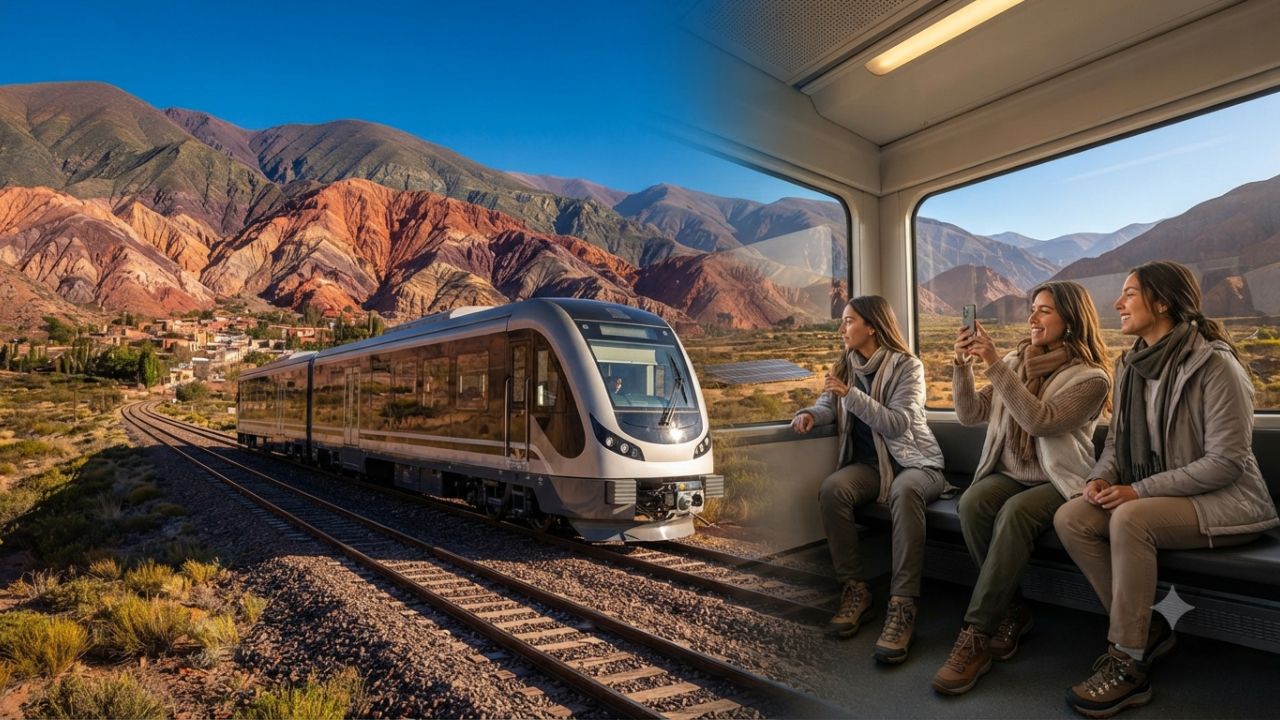
Image generated by AI
Argentina’s solar-powered passenger train is driving a surge in regional cross-border travel, attracting visitors from Brazil, Chile, and Uruguay to Jujuy province. The Tren Solar de la Quebrada operates across a 42-kilometre battery-electric corridor in the UNESCO World Heritage-listed Quebrada de Humahuaca, positioning northern Argentina as a major focal point for sustainable South American tourism itineraries.
Cross-Border Tourism Growth Across South American Markets
The expansion of zero-emission rail infrastructure in Jujuy is reshaping passenger flows across southern South America. Promoted in partnership with Visit Argentina, the Tren Solar de la Quebrada offers international visitors a low-carbon transport option through the UNESCO World Heritage Centre site of Quebrada de Humahuaca. The route provides direct rail transit across six mountain communities, restoring passenger rail access to the valley after a three-decade interruption.
Travelers from neighboring markets—particularly Brazil, Chile, and Uruguay—represent a major segment of regional arrivals in northern Argentina. Geographic proximity, expanded air connectivity into Salta and Jujuy, and overland mountain passes have positioned Jujuy as a key destination for South American eco-tourists seeking cultural heritage and mountain travel.
Key elements driving cross-border regional adoption include:
- Regional Source Markets: Brazil stands as Argentina’s primary regional visitor market, with strong secondary demand originating from Chile and Uruguay.
- Overland Accessibility: Direct highway corridors—such as the Paso de Jama connecting San Pedro de Atacama in Chile with Jujuy—allow seamless multi-country land itineraries.
- Decentralized Tourism Distribution: By stopping at six distinct towns, the solar railway disperses visitor expenditure beyond major urban hubs into smaller indigenous settlements.
Regional Market Connections & Solar Train Specifications
The operational and market characteristics of the Tren Solar de la Quebrada underline its role in South American regional connectivity:
| Tourism & Operational Parameter | System Specification | Market Impact |
|---|---|---|
| Railway Operator | Tren Solar de la Quebrada | Regional transport in Jujuy Province, Argentina |
| Primary Visitor Markets | Brazil, Chile, and Uruguay | Key South American cross-border visitor origin points |
| Route Distance | 42 kilometres | Connecting six Andean heritage communities |
| Power Storage System | 6 lithium battery units | Charged via locally generated solar electricity |
| Operational Battery Range | 100 to 120 kilometres | Range exceeds double the active 42km line length |
| Energy Recovery | Regenerative braking system | Converts kinetic deceleration energy to battery storage |
| Passenger Milestone | 90,000+ total passengers | Total travelers recorded since June 2024 launch |
| Catenary Requirement | None (Off-grid BEV rail) | Operates without overhead power lines or diesel |
Traveler Logistics Guide: Cross-Border Connections & Andean Itineraries
International visitors traveling from neighboring South American countries can integrate the Tren Solar de la Quebrada into broader regional travel routes across northern Argentina.
Routing from Neighboring Nations
- From Brazil: Flight connections operate regularly from major hubs like São Paulo (GRU) and Rio de Janeiro (GIG) into Buenos Aires or direct seasonal flights to Salta (SLA). From Salta Airport, travelers access Volcán station via regional coach or rental car along National Route 9.
- From Chile: Travelers navigating northern Chile can cross the Andes via the Paso de Jama high-altitude mountain pass, traveling from San Pedro de Atacama directly into Jujuy province via Chile Travel overland routes.
- From Uruguay: River ferry connections across the Río de la Plata to Buenos Aires link directly with domestic flights to Jujuy Airport (JUJ).
Station Itinerary & Town Logistics
The 42-kilometre solar line allows travelers to explore six mountain towns on a flexible schedule:
- Volcán Terminal: The entry point for northern rail travel, equipped with fast-charging infrastructure and heritage railway facilities.
- Purmamarca: Famous for the Seven Colors Mountain (Cerro de los Siete Colores) and crafts markets. Visitors should schedule a 2 to 3 hour stopover.
- Tilcara: Features the historic Pucará de Tilcara fortress and serves as the planned location for the line's third solar fast-charging hub.
- Rural Hamlets & Humahuaca: Intermediate stops offer access to high-altitude vineyards, traditional Andean culinary venues, and hiking trails.
Ticketing & Altitude Planning
- Advance Booking: Online reservation channels permit international visitors to book hop-on, hop-off passes before arriving in Argentina.
- Elevation Guidance: Altitudes across the Quebrada de Humahuaca range between 2,000 and 3,000 meters above sea level. Travelers arriving from sea-level cities (such as Montevideo or Rio de Janeiro) should dedicate their first day to mild activity and proper hydration.
Sustainable Infrastructure & Heritage Preservation Assessment
Developing heavy electrified rail infrastructure with overhead catenary lines across high-altitude, seismically active mountain corridors presents complex engineering challenges. The Tren Solar model avoids overhead wiring, preserving the visual integrity of the UNESCO World Heritage valley while delivering zero-emission passenger mobility.
By combining solar generation with battery electric vehicle (BEV) rail technology, Jujuy provides a template for remote destinations seeking to expand tourism access while eliminating direct diesel exhaust emissions across ecologically sensitive mountain environments.
Frequently Asked Questions: South American Cross-Border Rail Travel (2026)
Which South American countries drive passenger demand for Argentina’s solar train?
Visitors from Brazil, Chile, and Uruguay represent the primary regional international markets traveling to Jujuy to experience the Tren Solar de la Quebrada.
How does the solar train charge its batteries?
The train utilizes six onboard lithium batteries that are recharged at station fast-charging hubs using solar electricity generated at solar parks in Jujuy province.
Can travelers connect to the solar train from Chile?
Yes. Travelers crossing the Andes from San Pedro de Atacama via the Paso de Jama mountain pass arrive directly in Jujuy province to connect with the rail line at Volcán or Purmamarca.
How many towns are connected by the Tren Solar de la Quebrada?
The 42-kilometre railway line connects six towns across the Quebrada de Humahuaca valley.
How many passengers have traveled on Argentina's solar train since its launch?
Official provincial records indicate that more than 90,000 passengers have used the service since passenger operations commenced in June 2024.
Related Travel Guides
Disclaimer
This article is for informational and educational purposes only. It does not constitute legal, financial, or professional advice. While we strive to provide accurate and up-to-date information, travel policies, regulations, and conditions change rapidly. Always verify information with official sources before making travel decisions. Nomad Lawyer makes no representations about the accuracy, reliability, completeness, or suitability of the information provided. Readers should consult qualified professionals for advice specific to their circumstances. The views expressed in this article are those of the author and do not necessarily reflect the views of Nomad Lawyer.
Kunal K Choudhary
Co-Founder & Contributor
A passionate traveller and tech enthusiast. Kunal contributes to the vision and growth of Nomad Lawyer, bringing fresh perspectives and driving the community forward.
Learn more about our team →