
Argentina Shows Wild Nature Flourishes When Conscious Travel Protects Native Wildlife In Corrientes And Jujuy, All You Need To Know
Argentina Shows Wild Nature Flourishes When Conscious Travel Protects Native Wildlife In Corrientes And Jujuy, All You Need To Know

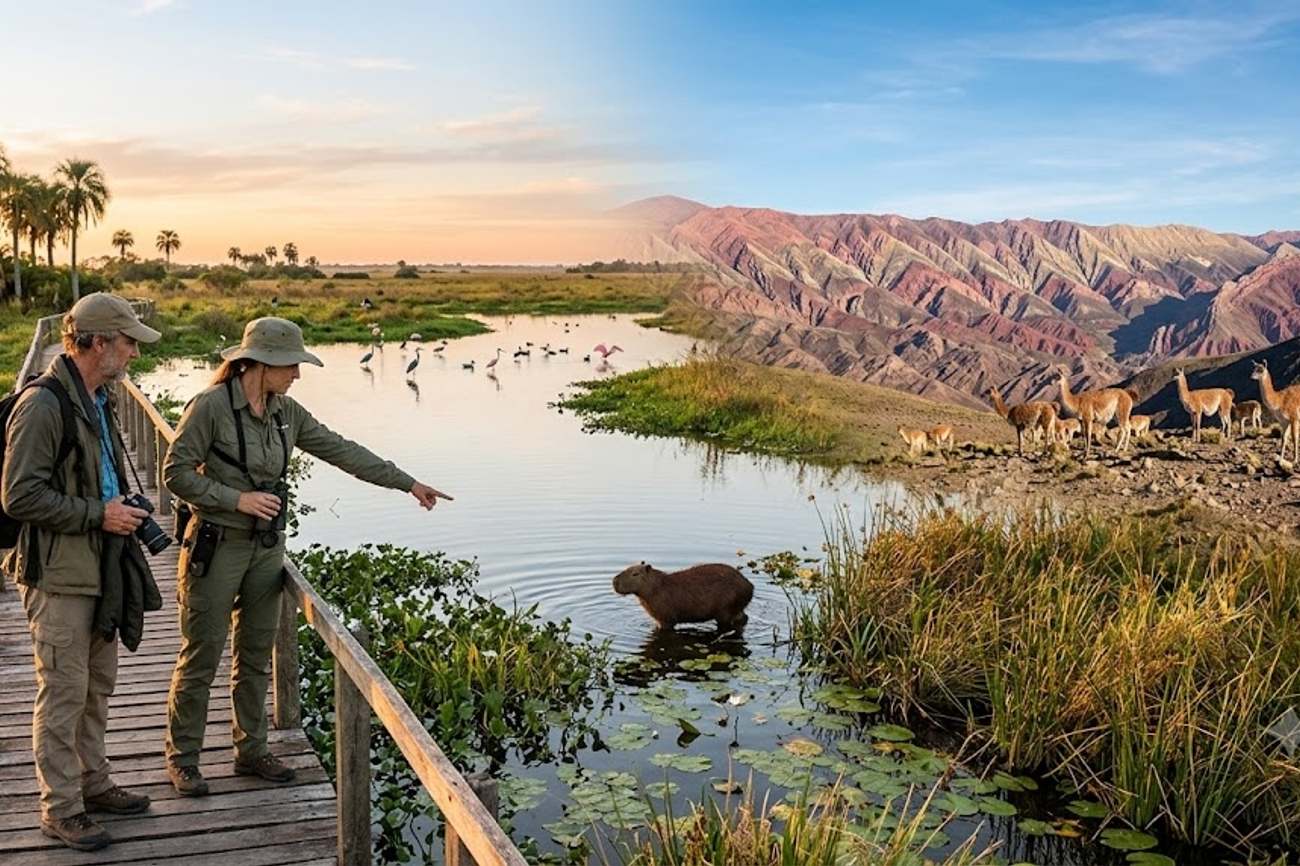
Image generated by AI
Argentina's shift toward community-led tourism is not merely a policy change but a structural economic pivot; while traditional urban tourism in Buenos Aires has historically dominated the market, the growth of rural, indigenous-led networks in provinces like Jujuy and Formosa now represents a scalable alternative to high-footprint travel. By transitioning from extractive tourism models to those governed by the Ley Nacional de Turismo (Ley N° 25.997), Argentina is repositioning its territorial stewardship to ensure that economic autonomy remains with the Wichí, Pilagá, Kolla, and Quechua populations. This movement aligns with a global trend toward "regenerative travel," where the metric of success is no longer just visitor volume, but the measurable restoration of ecosystems and the financial stability of marginalized rural settlements.
The Community Empowerment Model in Numbers
The current restructuring of Argentina's tourism identity is built upon a rigorous legal and institutional framework that removes the "middleman" from the rural travel economy. The Ley Nacional de Turismo (Ley N° 25.997) serves as the statutory engine, mandating that socio-economic inclusion and cultural preservation are not optional extras but legal requirements across all provincial jurisdictions. This is supported by the Secretaría de Turismo, Ambiente y Deportes de la Nación, which provides the formal training and institutional backing necessary for indigenous communities to transition from laborers to owners.
In the Gran Chaco ecosystem of Formosa, the model is operationalized through the Ministerio de Turismo de Formosa. Here, the focus is on the Bañado La Estrella wetlands. By utilizing native guide networks from the Pilagá and Wichí communities, the province has created a closed-loop economic system. Revenue from navigation, birdwatching, and cultural interpretation tours at hubs like El Vertedero and Fortín Soledad stays within the native villages. This prevents the "leakage" common in international tourism—where profits typically flow to foreign tour operators—and instead reinforces the ancestral lands bordering Parque Nacional Chaco.
Similarly, in the high Andes of Jujuy, the Red de Turismo Rural Comunitario de Jujuy has scaled to include over 35 indigenous Kolla and Quechua communities. This network manages everything from regional gastronomy to mountain trekking circuits, ensuring that remote mountain villages maintain direct ownership of their cultural assets. This shift is validated by international benchmarks, such as the UN Tourism Best Tourism Villages program, which evaluates settlements under 15,000 inhabitants—including Villa General Belgrano in Córdoba—against strict social and environmental metrics. According to data from the World Tourism Organization (UNWTO), such rural development frameworks are essential for mitigating the negative impacts of over-tourism in urban centers.
Regional Comparative Analysis: Conservation vs. Commerce
The divergence in strategy across Argentina's provinces shows a calculated approach to balancing environmental fragility with economic necessity. In Corrientes, the strategy is "rewilding as employment." The Esteros del Iberá wetlands have seen a systemic conversion of extractive economies (hunting and poaching) into conservation-led networks. Former poachers are now certified nature guides and wildlife trackers, transforming a liability into a professional asset. This is financed through the CFI Financial Support Framework, which provides direct credit to family-run posadas in portals like Portal Carambola and Portal San Nicolás.
In contrast, Córdoba focuses on "volume management." Because destinations like Sierras Chicas and Valle de Punilla attract higher visitor counts, the province employs the Hoteles más Verdes eco-certification to mandate waste reduction and energy efficiency. While Corrientes focuses on species recovery, Córdoba focuses on infrastructure mitigation under Ley N° 8801/99, which regulates low-impact trekking to prevent land degradation in areas like Parque Nacional Quebrada del Condorito and Parque Nacional Ansenuza.
The following table illustrates the differing operational priorities across these key regions:
| Province | Primary Ecosystem | Lead Governance Model | Key Regulatory Driver | Economic Transition |
|---|---|---|---|---|
| Corrientes | Esteros del Iberá | Rewilding Networks | CFI Financial Framework | Poachers $\rightarrow$ Nature Guides |
| Formosa | Bañado La Estrella | Indigenous-led (Wichí/Pilagá) | Ministerio de Turismo | External $\rightarrow$ Internal Revenue |
| Córdoba | Sierras Chicas | Eco-certified Hospitality | Ley N° 8801/99 | High Volume $\rightarrow$ Low Impact |
| Jujuy | High Andes | Red de Turismo Rural | Ley Nacional N° 25.997 | Labor $\rightarrow$ Community Ownership |
| Entre Ríos | Uruguay/Paraná Rivers | Agro-tourism Cooperatives | Subsecretaría de Turismo | Extractive $\rightarrow$ Sustainable Thermal |
Practical Traveler Advisory and Strategic Insights
For the individual traveler, the shift toward the Red Argentina de Turismo Rural Comunitario (RATuRC) guidelines means that the "off-the-beaten-path" experience is now professionalized and legally protected. Travelers visiting the north or the wetlands are no longer relying on unregulated third-party agents but are engaging with certified community stewards.
Actionable Booking Advice:
- Prioritize Certified Portals: When visiting Corrientes or Formosa, book through recognized portals such as Portal San Nicolás or El Vertedero. This ensures your expenditure directly supports the CFI Financial Support Framework and local family-run posadas rather than external agencies.
- Verify Eco-Certifications in Córdoba: If staying in the Sierras Chicas or Valle de Punilla, specifically seek out "Hoteles más Verdes" certified properties. This is the only reliable indicator that the property is adhering to the province's strict water and energy mandates.
- Budget for Indigenous-Led Tours: In Jujuy, expect to book through the Red de Turismo Rural Comunitario. These experiences often require more lead time than urban tours because they are managed by community families rather than corporate entities.
Travelers visiting the Iberá Wetlands in Corrientes or the highlands of Jujuy can coordinate their itineraries through the Argentina Tourism Board, which provides official guidelines on sustainable exploration. These regions emphasize low-impact tourism to ensure the preservation of native species and fragile ecosystems. 4. Seasonal Timing: For the wetlands of Formosa and Corrientes, align your travel with the hydrological cycles of the Bañado La Estrella to maximize wildlife sightings, as these tours are strictly regulated to avoid disturbing nesting patterns.
Forward Projection: The 2026 Trajectory
Based on the current trajectory of the Ley Nacional de Turismo and the integration of the UN Tourism Best Tourism Villages metrics, Argentina is moving toward a "decentralized tourism economy." The data suggests a movement away from the traditional Buenos Aires-Iguazú-Patagonia triangle toward a multi-nodal system where provinces like Entre Ríos and Formosa become primary destinations rather than secondary stops.
The expansion of agro-tourism cooperatives in Entre Ríos, particularly around Parque Nacional El Palmar and Parque Nacional Pre-Delta, indicates that the government is successfully linking thermal water conservation with community-managed river itineraries. As the Subsecretaría de Turismo de Entre Ríos tightens effluent discharge controls on thermal spas, we can expect a price increase in "luxury" thermal stays, which will likely drive more travelers toward the lower-cost, high-authenticity agro-tourism cooperatives.
Furthermore, the success of the rewilding model in Corrientes is likely to be exported to other provinces. When former extractive workers are converted into conservationists, the economic stability of the region increases. According to IATA trends regarding sustainable aviation and destination management, there is an increasing demand for "meaningful travel." Argentina is positioning itself to capture this market share by offering territorial stewardship as a core part of the visitor experience.
FAQ: Argentina Community Tourism 2026
Will these community-led experiences be more expensive than traditional tours? Initially, prices may be comparable, but "high-value" experiences in Jujuy and Formosa often include direct contributions to community funds. You are paying for authenticity and conservation rather than corporate overhead, meaning more of your money stays in the local economy.
Is it safe to book with small rural cooperatives instead of large agencies? Yes. Because these networks operate under the Ley Nacional de Turismo (Ley N° 25.997) and the RATuRC guidelines, they have institutional backing and formal training, providing a layer of security and quality control previously missing from rural travel.
Which regions are best for eco-conscious travelers in 2026? Corrientes (Esteros del Iberá) is the gold standard for rewilding, while Formosa (Bañado La Estrella) offers the most authentic indigenous-led wilderness experiences. Córdoba is ideal for those seeking sustainable alpine hospitality with verified eco-certifications.
How do I find certified indigenous guides in the North? The most reliable method is through the Red de Turismo Rural Comunitario de Jujuy or the Ministerio de Turismo de Formosa, which maintain lists of certified Wichí, Pilagá, and Kolla guides.
The transition from seeing the traveler as a consumer to seeing them as a contributor is the defining shift in Argentina's 2026 tourism strategy.
Related Travel Guides
- China’s Zhejiang Opens Dubai Tourism Hub To Attract Rising Middle East Travellers With Culture And Innovation
- New York Joins Miami and Chicago as Barcelona’s Direct Air Links and New Tourist Taxes Reshape 2026 Holidays
- France Aligns With US And Other Nations To Modernize Global Ski Facilities Amid Rising Climate Demands
Disclaimer
This article is for informational and educational purposes only. It does not constitute legal, financial, or professional advice. While we strive to provide accurate and up-to-date information, travel policies, regulations, and conditions change rapidly. Always verify information with official sources before making travel decisions. Nomad Lawyer makes no representations about the accuracy, reliability, completeness, or suitability of the information provided. Readers should consult qualified professionals for advice specific to their circumstances. The views expressed in this article are those of the author and do not necessarily reflect the views of Nomad Lawyer.
Raushan Kumar
Founder & Lead Developer
Full-stack developer with 11+ years of experience and a passionate traveller. Raushan built Nomad Lawyer from the ground up with a vision to create the best travel and law experience on the web.
Learn more about our team →