
April Flight Disruptions Surge Across Seven Nations in 2026
April 2026 sees 311 flight delays spike across seven nations, exposing fragile airport operations. Weather, conflict rerouting, and staffing shortages converge to strain global aviation hubs serving nomadic professionals.

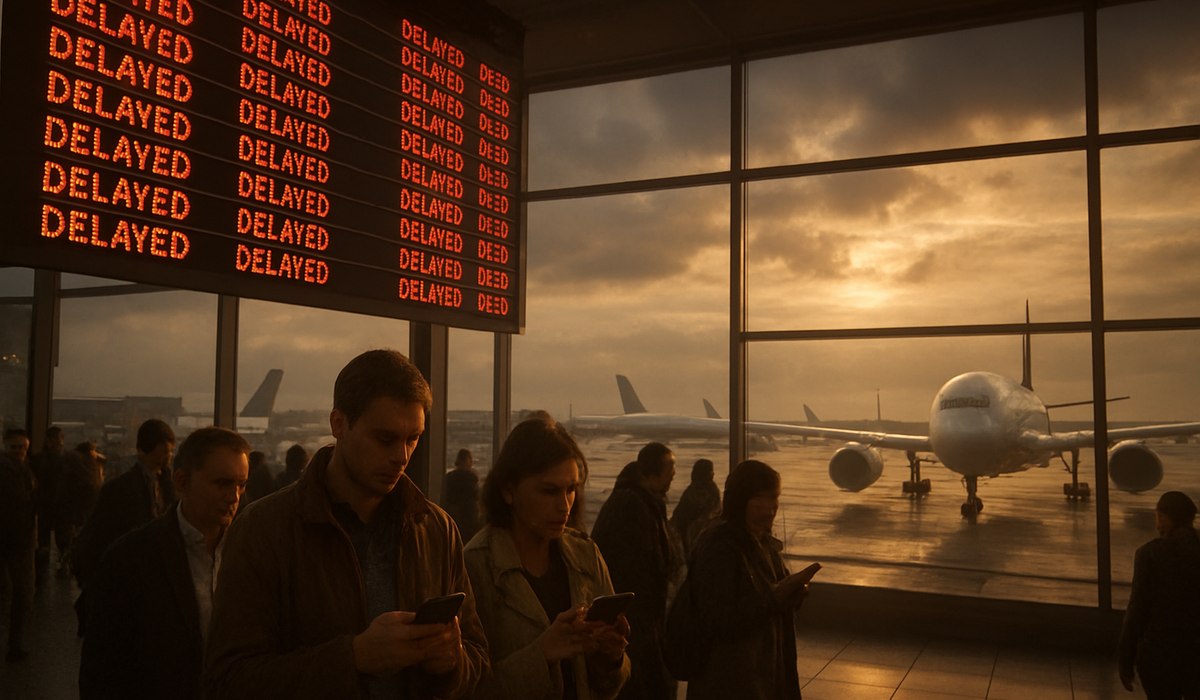
Image generated by AI
April Flight Disruptions Hit Seven Nations: 311 Delays Signal Mounting Strain
A sharp spike of 311 flight delays across seven nations in early April 2026 exposes how fragile global aviation infrastructure remains when multiple operational stressors collide. The affected countries—China, Japan, India, Thailand, Singapore, the United Arab Emirates, and several European gateways—experienced a concentrated wave of disruptions ranging from 30 to 120 minutes, cascading through connecting hubs and stranding thousands of nomadic professionals and remote workers dependent on international routes.
While 311 delays may seem modest against the backdrop of millions of daily flights globally, aviation analysts emphasize that this cluster reveals an underlying pattern of systemic strain. The April flight disruptions across these seven nations underscore how quickly localized shocks can propagate across borders when airports operate at near-maximum capacity with minimal buffer for irregularities.
Seven-Nation Snapshot: 311 Delays in Early April 2026
Publicly available tracking data and regional aviation reports confirm that early April 2026 witnessed a concentrated operational crisis affecting major transit hubs. The 311 delayed flights recorded across seven nations represented a patchwork of cascading delays—many extending 30 to 120 minutes—that accumulated throughout the day as aircraft and crew rotations fell progressively out of sequence.
The incident primarily impacted Shanghai, Guangzhou, Beijing, Tokyo, Singapore, Bangkok, Dubai, and Abu Dhabi. These hub-and-spoke networks are critical connectors linking Europe to Asia, and when capacity constraints hit these facilities simultaneously, the ripple effect crosses multiple time zones within hours. Industry observers note that mid-scale disruption events like this one often precede larger operational meltdowns, making them early-warning indicators of systemic weakness.
For real-time tracking of current conditions at affected airports, consult FlightAware for live departure and arrival data.
The Ripple Effect on Connecting Hubs and Onward Flights
The cascading impact of April flight disruptions extended far beyond the initial delay clusters. Late-arriving aircraft pushed back entire departure banks at connecting hubs, forcing tight connections to break and stranding passengers across Europe-Asia corridors. Passengers holding through-tickets on Middle Eastern and Southeast Asian gateways faced the highest disruption risk.
Hub-and-spoke network architects have long warned that early-morning departure delays propagate throughout the day as the same aircraft and crew rotate through multiple sectors. A single aircraft delayed three hours in Shanghai might miss scheduled rotations in Tokyo, Bangkok, and Singapore—each miss generating additional downstream delays. The 311 delayed flights captured in this seven-nation snapshot represented only the visible portion of a much deeper cascading effect across the global network.
Nomadic professionals with tight meeting schedules or visa-dependent connections faced particular vulnerability. Many were forced to rebook onto flights 24-48 hours later, disrupting remote work schedules and client deliverables across multiple continents.
Weather, Conflict and Capacity Constraints Converge
Three distinct operational pressures combined to trigger April flight disruptions across the seven affected nations.
Spring Weather Volatility: Unsettled conditions across Europe and parts of Asia brought low visibility, thunderstorm cells, and shifting wind patterns. These weather phenomena reduce runway capacity, forcing air traffic controllers to slow departure and arrival rates. Reduced throughput at bottleneck airports compounds delays across the broader network.
Middle East Airspace Rerouting: The ongoing conflict in and around Iran continues to reshape global air corridors. Published overflight data shows that airspace closures divert long-haul services between Europe, Asia, and Africa onto longer southern or northern routing. These diversions add flight time, increase fuel consumption, and elevate crew duty-time limit violations—a hidden driver of operational cascades.
Workforce Shortages: European and regional aviation authorities have repeatedly flagged persistent air traffic control staffing gaps and ground operations capacity shortfalls. Passenger volumes have rebounded to or above pre-pandemic levels, but hiring has lagged. When demand scales faster than staffing capacity, seemingly minor shocks produce system-wide disruption. Airlines amplify this vulnerability by operating leaner fleets with tight turnarounds, leaving minimal spare aircraft and crew to absorb irregular operations.
For regulatory guidance on these systemic challenges, see the FAA and U.S. Department of Transportation resources.
Asia and Middle East Hubs Bear the Brunt of Cascading Delays
April 2026 reaffirmed the central vulnerability of Asian and Gulf hubs within the global aviation network. Shanghai, Guangzhou, Beijing, Tokyo, Singapore, Bangkok, Dubai, and Abu Dhabi each process thousands of connecting passengers daily. When operational bottlenecks hit multiple hubs simultaneously, delays propagate across continents in hours.
Regional travel media documented a particularly severe April window in which thousands of flights across China, Japan, India, Indonesia, Thailand, Singapore, and the United Arab Emirates experienced delays or cancellations. The 311 delayed flights in this seven-nation cluster formed a smaller but telling slice of the broader disruption pattern, demonstrating how quickly local capacity issues become international incidents.
Network planners emphasize that hub vulnerability is structural. One weather delay in Shanghai at 6 a.m. local time cascades to Tokyo (8 a.m.), Bangkok (7 a.m.), and Dubai (12 p.m. UTC), affecting passengers with zero margin for connection recovery. Airlines have compressed turnarounds to 30-45 minutes to maximize aircraft utilization, leaving no buffer when delays occur.
What This Means for Nomadic Professionals and Remote Workers
April flight disruptions across seven nations carry specific implications for location-independent professionals managing international schedules and visa timelines.
Connection Risk Elevation: If you're booking through hubs affected by this pattern (Shanghai, Singapore, Bangkok, Dubai, Abu Dhabi), build minimum 3-hour connection buffers instead of the standard 90 minutes. Hub vulnerabilities are structural, not temporary.
Crew Duty-Time Constraints: Conflicts and rerouting forcing longer flight times increase crew fatigue and duty-time limit violations, which paradoxically trigger additional cancellations. Expect 2-4 additional operational delays per week on Middle East-routed services.
Spring Weather Seasonality: April through June brings higher thunderstorm frequency across Europe and Asia. Book early morning departures when possible, as these typically clear before afternoon storm systems develop.
Workforce Staffing Timeline: European and Asian aviation bodies have signaled that staffing shortages will persist through at least Q3 2026. Capacity-constrained periods will likely expand, not contract, in coming months.
Live Flight Tracking and Real-Time Updates
During operational disruptions, real-time monitoring provides your most reliable information source. Use FlightAware to track aircraft in flight, view departure/arrival trends at specific airports, and identify cascading delays before they affect your booking.
Set up airport alerts for your planned arrival hub (e.g., Singapore, Dubai) at least 24 hours before departure. These notifications flag departure delays at your origin, giving you early warning to contact your airline about rebooking options.
Download airline mobile apps for your carriers, as they typically push delay notifications faster than email channels. Enable push notifications on your phone to catch critical updates immediately.
Passenger Rights During Flight Disruptions
When April flight disruptions or operational delays affect your travel, specific passenger protections apply depending on your departure region and airline.
U.S. and Canadian Passengers: The U.S. Department of Transportation mandates carrier meal vouchers, hotel accommodations, and rebooking on the next available flight or competitor service for delays exceeding 3 hours on arrival
Disclaimer
This article is for informational and educational purposes only. It does not constitute legal, financial, or professional advice. While we strive to provide accurate and up-to-date information, travel policies, regulations, and conditions change rapidly. Always verify information with official sources before making travel decisions. Nomad Lawyer makes no representations about the accuracy, reliability, completeness, or suitability of the information provided. Readers should consult qualified professionals for advice specific to their circumstances. The views expressed in this article are those of the author and do not necessarily reflect the views of Nomad Lawyer.
Kunal K Choudhary
Co-Founder & Contributor
A passionate traveller and tech enthusiast. Kunal contributes to the vision and growth of Nomad Lawyer, bringing fresh perspectives and driving the community forward.
Learn more about our team →