
US Travel Chaos: American Airlines Triggers Sudden Cabin Service Halts Amid Terrifying Rise in Turbulence Injuries
As severe mid-air turbulence violently injures cabin crews, American Airlines aggressively tightens landing rules, severely altering passenger service to prevent further travel chaos.

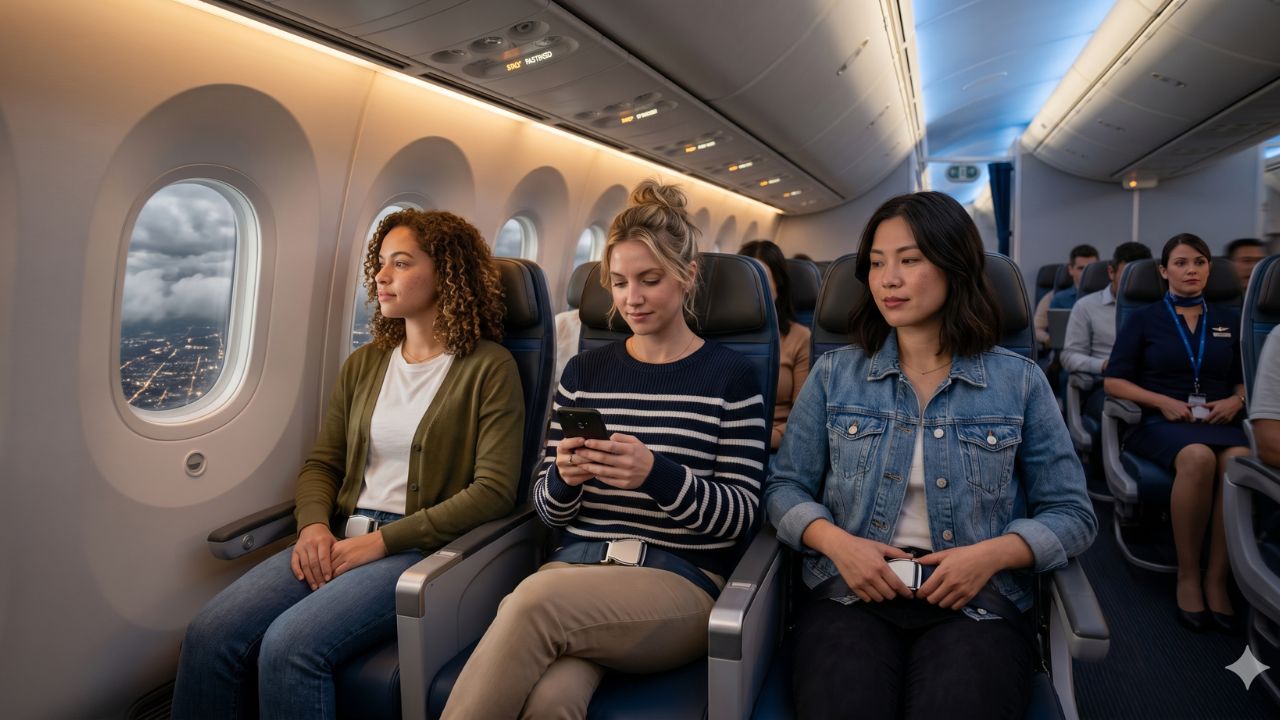
Image generated by AI
A Massive Safety Crisis Forces American Airlines to Halt Service
While massive sectors of the global passenger network frequently battle highly unpredictable logistical bottlenecks, sudden and incredibly violent mid-air turbulence remains the absolute most terrifying catalyst for severe injuries and sudden travel chaos. Delivering highly urgent, breaking airline news, verified international aviation safety regulators confirm that a catastrophic rise in crew injuries has actively forced a massive operational overhaul across the United States. Today, June 1, 2026, severe travel distress forcefully emerged as American Airlines abruptly announced highly restrictive cabin rules to violently combat the escalating threat of severe descent turbulence.
While desperate travelers already attempt to navigate sudden, terrifying airport disruptions caused by massive summer volumes, these exclusive aviation updates reveal a massive shift in how passengers will experience domestic and international flights. Starting June 3, 2026, American Airlines will radically alter its landing procedures to aggressively protect flight attendants. The new, highly restrictive rule requires cabin crew to abruptly halt service and secure themselves in jumpseats significantly earlier than before, directly resulting in an earlier end to cabin service and forcing passengers to violently alter their in-flight routines as the terrifying threat of unstable air forces the airline's hand.
Expanded Overview: The Scale of the Turbulence Crisis
The sudden, highly publicized execution of this operational mandate serves as an undeniable example of how rapidly the world's most critical transit carriers must adapt to terrifying atmospheric volatility. The policy has been shaped entirely around the catastrophic safety risks faced by highly vulnerable cabin crew. Turbulence is officially considered one of the absolute most serious causes of workplace injury for flight attendants, violently exposing them to horrific injuries while they conduct landing checks.
The Association of Professional Flight Attendants (APFA) has definitively linked this sudden change to the desperate need for more time, highly improved communication, and radically reduced exposure during unstable atmospheric conditions. Passengers will feel this change intensely. Seat belts will need to be fastened much earlier. Tray tables, expensive laptops, and loose items will be forcibly stored sooner, and all glassware will be abruptly removed before the aircraft reaches the volatile lower altitudes.
Section-Wise Breakdown of the Safety Overhaul
The American Airlines Cabin Shutdown
The massive American Airlines procedure will completely change the way the cabin is prepared before landing. Currently, cabin preparation is generally started around 10 to 15 minutes before touchdown, usually near 10,000 feet. Under the highly revised system, the terrifying cabin preparation process will aggressively begin at 18,000 feet.
Flight attendants will then be legally expected to secure themselves in their jumpseats as soon as humanly possible, and absolutely no later than 10,000 feet. At that exact point, a double chime will be violently sounded by the flight deck. In most descent profiles, the landing cabin checks will be aggressively started about four to eight minutes earlier than before, stripping passengers of vital service time to prevent horrific injuries.
The Terrifying Human Cost: Recent Incidents
The absolute risk has been horrifically underlined by severe, violent incidents involving major United States carriers. In February 2024, a United Airlines (UA) Boeing 777 travelling from Los Angeles (LAX) to Newark (EWR) was violently caught in a massive turbulence event. Three flight attendants were thrown into the air without warning. One flight attendant was knocked totally unconscious after being thrown violently against the ceiling and then onto a heavy beverage cart, suffering a shattered femur and a crushed spinal vertebra.
Furthermore, a 2024 incident involved an Alaska Airlines (AS) flight from Seattle (SEA) to Phoenix (PHX). Three flight attendants were violently thrown into the air, suffering severe injuries that required them to be medically removed from the aircraft after landing.
The Industry-Wide Safety Shift
Earlier cabin securing has already been violently adopted by other major airlines to prevent absolute disaster. United Airlines aggressively introduced a comparable rule on December 1, 2023, mandating crew be seated by 10,000 feet. Delta Air Lines brutally changed its descent procedures last year, forcing attendants to be seated by 18,000 feet. Southwest Airlines forcefully moved early on this issue nearly two years ago.
Verified NTSB Turbulence Data
To fully comprehend the massive operational scale and absolute danger dictating this highly volatile network adjustment, the following table explicitly details the exact turbulence metrics officially recorded by the National Transportation Safety Board (NTSB) between 2009 and 2018:
| NTSB Turbulence Metric | Verified Threat Statistic |
|---|---|
| Descent Accident Ratio | 36% of all turbulence accidents occurred during descent |
| Low-Altitude Danger Zone | >65% of descent incidents occurred below 20,000 feet |
| Flight Attendant Vulnerability | Crew account for nearly 80% of serious turbulence injuries |
| Galley/Walking Hazard | 40% of crew injuries linked to walking during compliance checks |
| American Airlines Rule Trigger | Cabin preparation now begins at 18,000 feet |
| American Airlines Seating Deadline | Crew must be seated by 10,000 feet |
Passenger Impact: Navigating the Shorter Service Window
For the modern domestic commuter attempting to navigate this highly volatile American network, the passenger impact of this massive operational shift is completely exhausting. Massive mid-air service halts are incredibly frustrating, but knowing the strict logistical realities can heavily minimize in-flight stress.
- Prepare for Sudden Service Halts: Passengers on highly lucrative, medium-haul routes such as Phoenix (PHX) to Las Vegas (LAS) and Philadelphia (PHL) to Boston (BOS) will fiercely feel the time crunch. Flight attendants will have a violently shorter window to complete service before they must secure the cabin.
- Comply with Early Directives: The purpose of the new rule is not passenger inconvenience; it is absolute risk reduction. Passengers must actively close laptops and stash tray tables the moment the 18,000-foot preparation sequence begins.
- Understand Global Discrepancies: While US airlines tighten safety, international carriers operate vastly differently. For instance, in Spain, Iberia (IB) cabin crew have been known to actively continue service until the landing gear is heard lowering at a highly dangerous 2,000 feet.
Industry Analysis: The Fragility of Cabin Operations
From a macroeconomic and industry operations perspective, the localized US safety shift highlights a massive, terrifying truth: the global aviation system continues to face severe operational vulnerabilities regarding atmospheric safety. The massive NTSB data clearly proves that the aircraft cabin absolutely must be prepared before the incredibly volatile altitude range below 20,000 feet, where violent, unpreventable turbulence injuries occur most often. The American Airlines shift proves that the era of leisurely, long-descent passenger service in the United States is officially and permanently over.
Conclusion: A Highly Volatile In-Flight Experience
The massive, highly publicized operational overhaul of American Airlines' descent procedures represents a severe, terrifying crisis for the North American travel sector regarding mid-air safety. By actively forcing passengers to endure abruptly shortened cabin service and earlier lockdown procedures, the airline industry guarantees an incredibly stressful, highly regulated journey. As the operational teams frantically battle this massive atmospheric threat, passengers are heavily urged to aggressively follow crew instructions, strictly stow their gear earlier, and fully expect massive, cascading service disruptions amidst unprecedented US travel chaos.
Key Takeaways
- Massive Safety Overhaul: Starting June 3, 2026, American Airlines flight attendants must aggressively prepare cabins for landing by 18,000 feet.
- Strict Lockdown Mandate: All crew must be completely secured in their jumpseats no later than 10,000 feet to prevent horrific injuries.
- Terrifying NTSB Statistics: NTSB data proves >65% of descent-related turbulence incidents violently occur below 20,000 feet.
- Short Route Impact: Flights between 250 and 300 miles (like PHX-LAS and PHL-BOS) will see massively compressed service windows.
- Passenger Survival Tactics: Travelers are aggressively urged to stow laptops and large devices significantly earlier to avoid highly dangerous mid-air projectiles during severe turbulence.
Disclaimer: The specific turbulence metrics, severe injury reports, and airline operational policies presented in this report are based on verified transit tracking data and NTSB findings regarding the American Airlines policy shift on June 1, 2026. Official airline routing, in-flight service protocols, and cabin readiness directives are highly volatile and subject to continuous, real-time update based on active carrier operational directives and sudden weather emergencies. Prospective passengers are urgently advised to fiercely monitor safety briefings and strictly adhere to all flight crew instructions during turbulent conditions.
Disclaimer
This article is for informational and educational purposes only. It does not constitute legal, financial, or professional advice. While we strive to provide accurate and up-to-date information, travel policies, regulations, and conditions change rapidly. Always verify information with official sources before making travel decisions. Nomad Lawyer makes no representations about the accuracy, reliability, completeness, or suitability of the information provided. Readers should consult qualified professionals for advice specific to their circumstances. The views expressed in this article are those of the author and do not necessarily reflect the views of Nomad Lawyer.
Kunal K Choudhary
Co-Founder & Contributor
A passionate traveller and tech enthusiast. Kunal contributes to the vision and growth of Nomad Lawyer, bringing fresh perspectives and driving the community forward.
Learn more about our team →