
Breaking Airline News: American Airlines Flight JIA5578 Executes Terrifying Mid-Air U-Turn to Cincinnati, Sparking Immediate Travel Chaos
Breaking airline news: Amidst a terrifying era of severe operational disruptions, an American Airlines regional jet suddenly abandons its route to Philadelphia, executing a dramatic mid-air return to Cincinnati and trapping passengers in transit chaos.

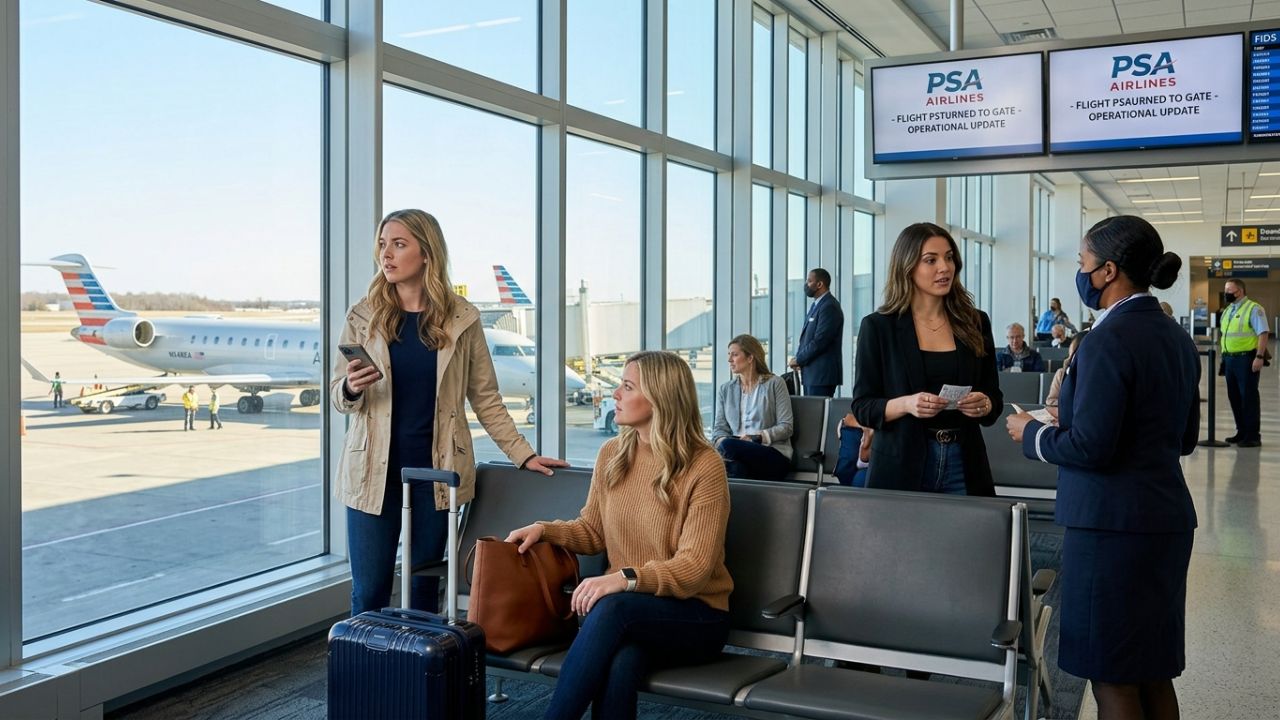
Image representing the intense strategic battle as global aviation authorities and flight crews desperately execute mid-air operational diversions to combat severe technical anomalies and bypass paralyzing airspace chaos.
Breaking Airline News: American Airlines Flight JIA5578 Executes Terrifying Mid-Air U-Turn to Cincinnati, Sparking Immediate Travel Chaos
As paralyzing operational disruptions, terrifying technical anomalies, and severe schedule meltdowns violently threaten to completely choke highly complex domestic itineraries transiting through massive legacy hubs, a sudden in-flight emergency has triggered unprecedented passenger panic. In a harrowing display of modern transit vulnerability, an American Airlines regional flight was aggressively slammed by an unforeseen operational crisis on Wednesday, June 10, 2026. PSA Airlines Flight JIA5578, operating a critical morning connection from Cincinnati to the massive Philadelphia hub, abruptly abandoned its route mid-air. Executing a terrifying 180-degree turn over Kentucky airspace, the flight crew forcefully initiated a "return to base" diversion, violently shattering the meticulously planned itineraries of every passenger onboard. Because Philadelphia operates as a highly critical East Coast gateway, this aggressive operational collapse did not remain localized; it violently rippled outward, completely destroying onward connections to the Northeast and Europe, ensuring that corporate commuters and tourists are now directly exposed to the agonizing misery historically defining extreme travel chaos.
In a brutal display of the ongoing global transit crisis, the sheer logistical nightmare of attempting to navigate essential domestic corridors is currently being violently amplified by sudden in-flight disruptions. For the passengers strapped into Flight JIA5578, the expectation of a seamless morning departure was abruptly shattered when the aircraft commander initiated an unexpected descent back to the origin airport. When a hub-bound flight suffers a total route abandonment, the ensuing damage is catastrophic: passengers violently miss their massive widebody connections overseas or their tight domestic transfers, forcing airlines into a terrifying scramble to rebook furious travelers across multiple fragmented schedules. This massive injection of operational uncertainty forced Cincinnati airport staff to work furiously to minimize the tension upon the aircraft's return, demonstrating exactly how fragile the American travel grid has become when subjected to sudden, high-stakes airborne anomalies.
Expanded Overview: The Massive Scale of the Transit Contagion
The terrifying crisis of overwhelming passenger stress currently gripping the domestic transit grid brutally exposes the severe limitations of flying through highly congested hubs when the feeder network collapses. Recognizing that aggressively forcing travelers to endure a terrifying mid-air return leads directly to severe psychological friction, aviation authorities are attempting to forcefully decompress the tension through absolute transparency. The sheer scale of this disruption is immense. Data obtained directly from advanced flight telemetry networks reveals that the terrifying ripple effect violently infected major international connecting routes out of Philadelphia. While the flight landed safely, the resulting delay severely impacted the massive global gateway, forcing passengers into terrifying holding patterns on the ground in Ohio and completely destroying the fragile illusion of stable, reliable airline scheduling across the Eastern Seaboard.
Section-Wise Breakdown: The Operational Realignment
Breaking the Morning Schedule Gridlock
To survive the terrifying surge in global travel demand, airlines rely entirely on seamless, early-morning departures to properly feed their massive legacy hubs. However, Cincinnati/Northern Kentucky International Airport (CVG) became the absolute epicenter of this travel chaos. Flight records confirm that the aircraft actually left the gate slightly earlier than scheduled, breaking ground at approximately 8:01 AM EDT. The aircraft initially proceeded flawlessly, climbing aggressively into the Kentucky sky. However, the fragile timeline was abruptly shattered when the flight crew detected a situation requiring an immediate halt to the journey, opting to violently scrub the Philadelphia transit.
Deploying the Mid-Air Tactical Return
Looking beyond the terrifying psychological impact on the cabin, this massive crisis aggressively required swift, decisive action from the flight deck. The aircraft remained airborne for approximately 34 minutes. Rather than pushing forward to a remote diversion field where maintenance support might be non-existent, the crew brilliantly executed a "same-airport diversion." The aircraft touched down safely back at CVG at approximately 8:23 AM EDT, massively earlier than its scheduled arrival in Pennsylvania. Returning to the departure airport allows airlines to forcefully deploy existing maintenance technicians and customer service teams to immediately attack the technical fault and begin the grueling process of rebooking stranded passengers.
Securing the Flight Tracking Data
The massive infrastructural anomaly was immediately captured by global civilian radar networks. The specific aircraft involved was a Mitsubishi CRJ-900LR (frequently designated as a CRJ900), operating under the registration N595NN. Open-source telemetry from FlightAware (specifically tracking the KCVG to KPHL vector for June 10, 2026) and Flightradar24 (tracking flight aa5578) explicitly confirmed the violent course reversal. These independent tracking matrices are absolutely essential during severe operational disruptions, providing terrified passengers and families on the ground with near real-time visibility into the exact physical location of the diverted aircraft.
Operational Diversion Matrix
To fully comprehend the massive logistical and strategic fallout of this terrifying operational failure, corporate travel managers and affected tourists must review the exact disruption metrics defining the crisis. The following matrix provides a granular breakdown of the specific, officially verified flight data driving this massive travel chaos.
| Operational Flight Metric | Confirmed Incident Data |
|---|---|
| Operating Carrier | PSA Airlines (Operated for American Airlines) |
| Flight Identifier | Flight JIA5578 |
| Aircraft Type & Registration | Mitsubishi CRJ-900LR (N595NN) |
| Date of Disruption | Wednesday, June 10, 2026 |
| Intended Routing | Cincinnati (CVG) ↔ Philadelphia (PHL) |
| Actual Airborne Duration | Approximately 34 Minutes |
| Departure / Return Times | Departed ~8:01 AM EDT / Landed ~8:23 AM EDT |
Passenger Impact: Surviving the Terminal Stranding
For the dozens of global tourists and corporate commuters attempting to navigate the rapidly collapsing domestic transit corridors, this massive operational failure represents a terrifying descent into travel misery. The brutal reality of enduring a sudden mid-air turn, feeling the aircraft descend, and landing exactly where you started, only to realize your onward flight from Philadelphia is now physically impossible to reach, inflicts intense psychological stress and completely destroys meticulously planned itineraries.
Survival Guide for Stranded Travelers
Travelers desperately preparing to navigate this highly unstable network must immediately execute the following survival protocols if their flight is diverted back to base:
- Leverage Digital Rebooking Shields: Passengers must aggressively monitor the American Airlines mobile app the exact second the aircraft touches down; do not wait to deplane and join massive physical queues at the Cincinnati terminal. Instead, use the app to secure alternate routing through Charlotte (CLT) or Dallas (DFW) immediately before available seats are entirely wiped out by other stranded travelers.
- Understand Diversion Logistics: Corporate travelers must recognize that a same-airport diversion is actually the best-case scenario during an emergency; because the airline already has massive infrastructure at CVG, aircraft substitutions and maintenance evaluations occur exponentially faster than if the flight had diverted to a tiny, unsupported regional airfield.
- Demand Policy Transparency: Passengers must relentlessly audit their passenger rights; while airlines prioritize safety, passengers violently impacted by this operational return must aggressively demand meal compensation and priority re-accommodation on competing carriers to survive the economic toll of the stranding.
Industry Analysis: The Economics of Tactical Paralysis
From a strategic aviation perspective, the travel turmoil currently forcing these massive diversions highlights the terrifying vulnerability of global infrastructure when exposed to mechanical or operational anomalies. Industry analysts confirm that executing a safe return to the origin airport is an absolute masterstroke in crisis management. Anup Kumar Keshan, Founder and Editor-in-Chief of Travel And Tour World, explicitly noted that the return of Flight JIA5578 forcefully highlights the aviation sector’s unwavering focus on safety. Although these unexpected diversions severely disrupt passenger itineraries, such decisions reflect the industry’s absolute commitment to precautionary action, entirely shielding the aviation ecosystem from potentially catastrophic in-flight emergencies.
Conclusion: A Strategic Retreat to Ensure Aviation Survival
As the extremely critical travel season accelerates, the massive disruption triggered over Cincinnati represents a terrifying warning to passengers attempting to transit through major legacy hubs. The aggressive mid-air return proves that maintaining global safety requires completely insulating the aircraft from unresolved technical threats, even if it means violently destroying the day's flight schedule. Corporate travel buyers, logistics managers, and everyday passengers attempting to navigate this highly unstable era of airport disruptions must embrace extreme vigilance. By acting aggressively to demand policy clarity, utilizing flexible booking options, and maintaining comprehensive travel insurance, travelers can successfully survive these intense operational surges and completely avoid the paralyzing threat of airline-induced travel chaos.
Key Takeaways
- Massive Tactical Threat: PSA Airlines Flight JIA5578 suffered a severe operational disruption on June 10, 2026, executing a massive mid-air diversion and returning to Cincinnati.
- Crushing the Schedule Gridlock: The localized failure violently cascaded across the American Airlines network, immediately destroying passenger connections at the massive Philadelphia (PHL) hub.
- Strategic Aircraft Action: The Mitsubishi CRJ-900LR (Registration N595NN) remained airborne for a terrifying 34 minutes, departing at 8:01 AM EDT and touching back down at 8:23 AM EDT.
- Safety Over Schedule: Aviation experts explicitly confirmed that executing a "same-airport diversion" allows the airline to forcefully deploy existing maintenance and customer service teams, violently accelerating the recovery process.
- Traveler Advisory: Passengers impacted by sudden in-flight diversions must aggressively leverage airline mobile apps for instant onward connection rebooking the moment the wheels touch the tarmac, relying on real-time flight data to survive the disruption.
Related Travel Guides
Disclaimer
This article is for informational and educational purposes only. It does not constitute legal, financial, or professional advice. While we strive to provide accurate and up-to-date information, travel policies, regulations, and conditions change rapidly. Always verify information with official sources before making travel decisions. Nomad Lawyer makes no representations about the accuracy, reliability, completeness, or suitability of the information provided. Readers should consult qualified professionals for advice specific to their circumstances. The views expressed in this article are those of the author and do not necessarily reflect the views of Nomad Lawyer.
Kunal K Choudhary
Co-Founder & Contributor
A passionate traveller and tech enthusiast. Kunal contributes to the vision and growth of Nomad Lawyer, bringing fresh perspectives and driving the community forward.
Learn more about our team →