
American Airlines Tarmac Emergencies and Ground Delays Spark Regulatory Scrutiny in 2026
Recent American Airlines tarmac incidents, including emergency diversions and multi-hour ground holds, are renewing debates over passenger rights and carrier contingency plans.

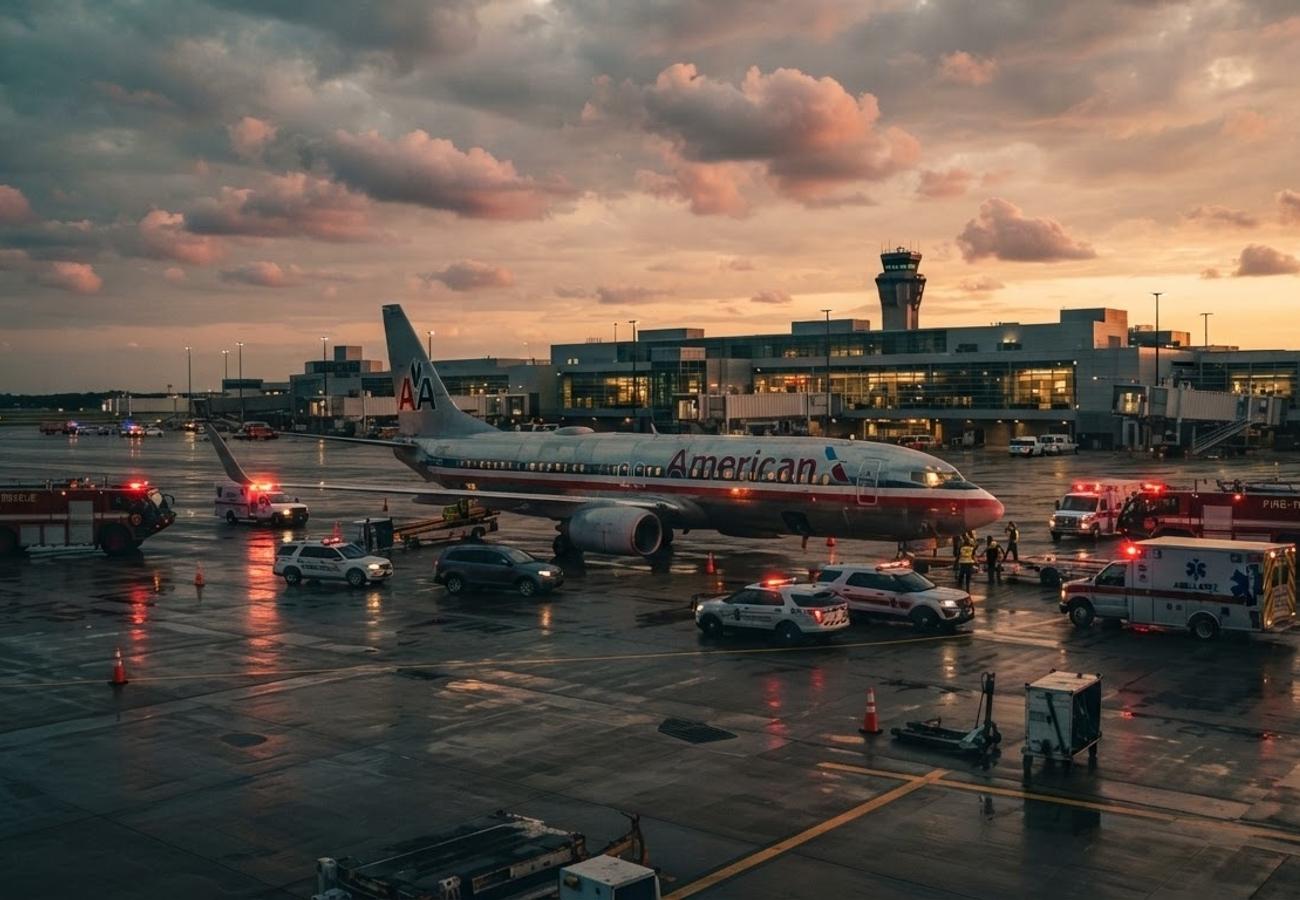
Image generated by AI
A series of emergency diversions and ground holds has placed American Airlines under the microscope, with some passengers reporting tarmac waits of up to five hours during the 2026 summer peak.
The operational stability of one of the world's largest carriers is facing renewed scrutiny following a string of "irregular operations" where aircraft were halted on the tarmac. While safety protocols dictate that passengers remain onboard during emergency assessments, the frequency of these events—and the duration of the resulting delays—has sparked a conversation about the gap between official contingency plans and the actual traveler experience.
The Shift Toward Ground-Based Emergencies
Recent data indicates a trend where critical incidents are unfolding on the tarmac rather than in flight. These events typically fall into two categories: precautionary safety responses and systemic operational failures.
In June, Flight AA1641, a Boeing 737, was forced to return to Miami shortly after takeoff due to a technical issue. While the landing was safe, the aircraft was immediately surrounded by fire and rescue vehicles. For the passengers, this meant a period of confinement on the tarmac while crews performed an initial assessment before replacement travel could be arranged.
Beyond technical failures, the 2026 summer season has seen a rise in "remote stand" diversions. Aircraft diverted from their original routes are frequently parked at unused gates or remote areas of the airfield. This leaves passengers stranded in sealed cabins while the airline coordinates fuel, inspections, and crew duty-time limits.
Passenger Experience and the "Five-Hour Hold"
While the airline maintains strict safety standards, social media and travel forums tell a story of growing frustration. The most striking example occurred in late July on a transcontinental route from Los Angeles to Boston. Passengers reported boarding on time, only to remain on the tarmac for approximately five hours before takeoff while awaiting operational clearance.
Other travelers have documented waits exceeding three hours after landing, citing gate shortages and staff constraints at major hub airports. While some have received loyalty miles or vouchers as compensation, many report a lack of clear communication regarding why they were held and whether the delay violated federal mandates.
Regulatory Framework and DOT Compliance
The U.S. Department of Transportation (DOT) maintains strict limits on tarmac delays to prevent passenger distress. American Airlines' own contingency plan specifies that domestic aircraft cannot remain on the tarmac for more than three hours without offering passengers the option to deplane.
However, compliance has been inconsistent. In a 2023 consent order, regulators cited 43 flights where American Airlines exceeded these limits, concluding that the carrier lacked the resources to execute its tarmac delay plan during periods of high disruption.
For international flights, the thresholds are higher, but the requirements for basic human needs remain:
- Provision of potable water and snacks.
- Access to functioning restrooms.
- Regular, transparent updates from the cockpit.
High-Visibility Diversions
Not all tarmac events are caused by delays; some are high-stakes emergency responses. A recent widebody flight from Boston to London diverted to New York (JFK) following a suspected landing gear issue. The aircraft landed under an emergency declaration and was met by a fleet of ambulances and fire trucks.
While these scenarios prioritize safety over convenience, they highlight the strain on airport infrastructure. When a flight diverts unexpectedly, it often lands at an airport without a spare gate, forcing passengers to wait on the taxiway until a tow crew or a remote stand becomes available.
Visitor Insider Tips: Surviving the Tarmac
For the modern nomad or business traveler, the risk of a ground hold is a reality of 2026 aviation. To mitigate the stress of a tarmac emergency, follow these local expert recommendations:
- The "Personal Item" Strategy: Never put essential medications, chargers, or high-protein snacks in your overhead luggage. Keep them in a seat-back bag. If a plane is held for five hours, you will not have access to your carry-on.
- Hydration Hack: Always carry a refillable water bottle. While airlines are required to provide water during long delays, the distribution process can be slow in a crowded cabin.
- Document Everything: If you are held on the tarmac for more than three hours, note the exact time of pushback and the time you were offered a chance to deplane. This data is essential for DOT complaints and compensation claims.
- Off-Peak Windows: To avoid the "cascading delay" effect seen in 2026, aim for flights departing before 8:00 AM. Mid-day and evening flights are significantly more prone to gate shortages and crew timeouts.
Tourism and Operational Outlook
The long-term impact of these incidents depends on how American Airlines integrates better communication technology and ground resource management. As hub airports become more congested, the ability to move passengers off a diverted aircraft quickly will become a primary metric of carrier reliability. For the traveler, the focus is shifting from "on-time arrival" to "ground-care quality."
Safety remains the priority, but transparency is the new currency of passenger loyalty.
Related Travel Guides
Disclaimer
This article is for informational and educational purposes only. It does not constitute legal, financial, or professional advice. While we strive to provide accurate and up-to-date information, travel policies, regulations, and conditions change rapidly. Always verify information with official sources before making travel decisions. Nomad Lawyer makes no representations about the accuracy, reliability, completeness, or suitability of the information provided. Readers should consult qualified professionals for advice specific to their circumstances. The views expressed in this article are those of the author and do not necessarily reflect the views of Nomad Lawyer.
Kunal K Choudhary
Co-Founder & Contributor
A passionate traveller and tech enthusiast. Kunal contributes to the vision and growth of Nomad Lawyer, bringing fresh perspectives and driving the community forward.
Learn more about our team →