
American Airlines Transforms JFK's Terminal 8 Into Premium Travel Hub With $100 Million Modernization
Breaking airline news and aviation industry updates for 2026.

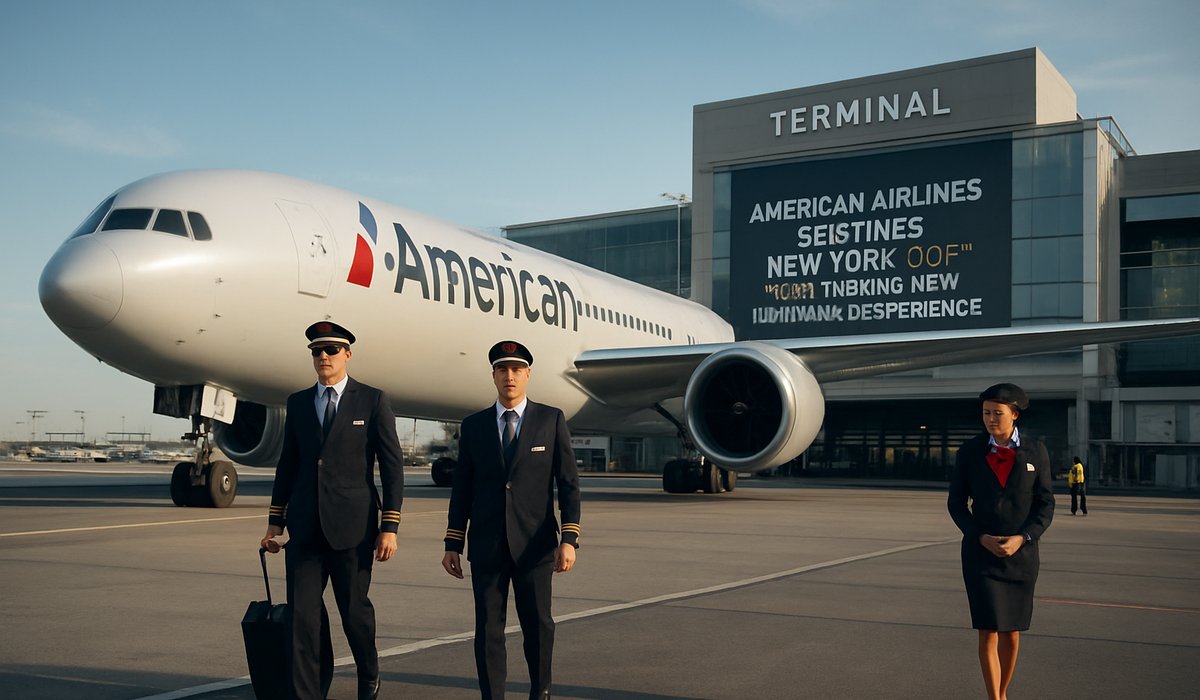
Image generated by AI
American Airlines Transforms JFK's Terminal 8 Into Premium Travel Hub With $100 Million Modernization
Major infrastructure overhaul signals airline's commitment to competitive advantage in New York's crowded aviation market
New Terminal Redesign Positions American Airlines for International Expansion
American Airlines announced a comprehensive redesign of Terminal 8 at John F. Kennedy International Airport on April 21, marking a significant infrastructure investment that extends well beyond cosmetic updates. The carrier's multi-million-dollar initiative introduces more than 60 new dining, retail, duty-free, and experiential venues, fundamentally reshaping how passengers experience international travel through New York's busiest hub.
The modernization effort reflects broader industry trends as major carriers compete aggressively for premium passenger segments. With jet fuel prices stabilizing and aviation travel demand remaining robust, airlines are increasingly investing in terminal infrastructure to differentiate their service offerings and justify premium pricing strategies.
Strategic Competitive Move in Crowded New York Market
JFK's Terminal 8 serves as a critical gateway for American Airlines' transatlantic and international operations, handling millions of passengers annually. The redesign directly addresses growing competition from rival carriers including United Airlines, Delta Air Lines, and international flag carriers that operate parallel facilities at the New York airport complex.
By expanding its retail and dining footprint, American Airlines aims to capture additional ancillary revenue—a critical revenue stream as traditional airline fees from baggage charges and seat selection have plateaued. Industry analysts note that premium terminal experiences increasingly influence customer loyalty decisions, particularly among business travelers and high-value frequent flyers who represent disproportionate revenue contributions.
Broader Industry Context: Infrastructure as Competitive Strategy
The Terminal 8 investment signals a shift in how major carriers deploy capital in the post-pandemic recovery period. Rather than focusing exclusively on fleet modernization or cost reduction, airlines like American are prioritizing passenger experience improvements that justify sustained pricing power in an inflationary environment.
The terminal redesign arrives as the aviation industry grapples with persistent operational challenges, including staffing constraints, increased maintenance backlogs, and volatile fuel surcharges that have pressured airline profitability throughout 2024. Premium terminal experiences serve as a tangible value proposition that insulates carriers from commoditization pressures affecting economy-class segments.
What This Means for Travelers and the Broader Market
The modernization underscores American Airlines' strategic positioning at JFK as New York's primary international carrier. Passengers will encounter expanded shopping and dining options, modernized gate areas, and enhanced amenities designed to reduce travel friction during the notoriously congested airport experience.
For the broader aviation sector, Terminal 8's transformation demonstrates how terminal infrastructure investments compete alongside aircraft technology and route expansion as differentiators in mature markets. As carriers face continued pressure to maintain margins amid rising operational costs, the passenger experience increasingly becomes a premium revenue lever.
FAQ: American Airlines Terminal 8 Redesign and Travel Impact
Q: When will Terminal 8 at JFK fully reopen with new amenities? A: American Airlines announced the redesign initiative in April, though specific opening timelines for individual venues vary. Check American Airlines' website for staged opening announcements.
Q: Will Terminal 8 improvements affect baggage fees or other airline charges? A: Terminal improvements are separate from airline pricing structures. Baggage charges and ancillary fees remain independent of terminal redesigns, though enhanced services may occasionally justify premium fare positioning.
Q: How does this compare to other airline terminal upgrades at major U.S. airports? A: Terminal modernization is industry-standard among major carriers. United, Delta, and other operators maintain comparable investment programs at hub airports including Chicago O'Hare, Atlanta Hartsfield-Jackson, and Los Angeles.
Q: Does the Terminal 8 redesign impact flight schedules or operations? A: Modern terminal upgrades typically proceed during overnight and off-peak hours, minimizing operational disruption. American Airlines coordinates construction with flight schedules to avoid service interruptions.
Q: Are international passengers charged differently due to the new terminal amenities? A: Terminal infrastructure costs are absorbed into airline operational budgets rather than passed directly to passengers through explicit surcharges, though carriers may adjust fares to reflect enhanced service offerings.
Related Travel Guides
Flight Delay Compensation Guide 2026
Understanding Airline Route Changes
Airport Security Process Updated (2026)
External Resources
Disclaimer
This article is for informational and educational purposes only. It does not constitute legal, financial, or professional advice. While we strive to provide accurate and up-to-date information, travel policies, regulations, and conditions change rapidly. Always verify information with official sources before making travel decisions. Nomad Lawyer makes no representations about the accuracy, reliability, completeness, or suitability of the information provided. Readers should consult qualified professionals for advice specific to their circumstances. The views expressed in this article are those of the author and do not necessarily reflect the views of Nomad Lawyer.
Preeti Gunjan
Contributor & Community Manager
A passionate traveller and community builder. Preeti helps grow the Nomad Lawyer community, fostering engagement and bringing the reader experience to life.
Learn more about our team →