
American Airlines Flight AA5902 Diverts to Savannah After Thunderstorms Block Tallahassee Approach on 30 July 2026
American Airlines Flight AA5902, an Embraer ERJ-145 operated by Piedmont Airlines, diverted from Charlotte to Savannah/Hilton Head on 30 July 2026 after severe weather blocked the Tallahassee approach.

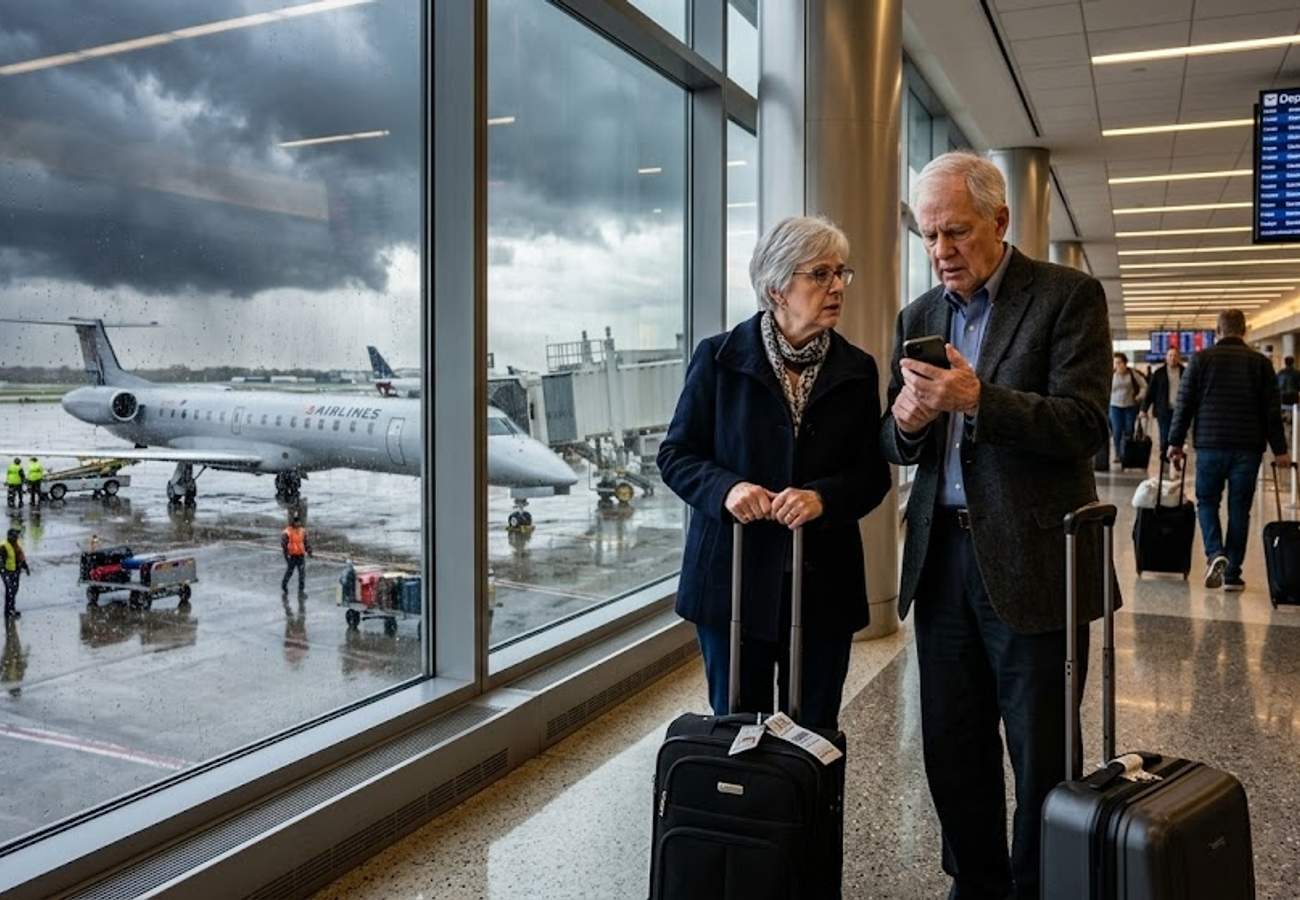
Image generated by AI
[SAVANNAH, GA — 1 August 2026] An Embraer ERJ-145 regional jet operating as American Airlines Flight AA5902 diverted to Savannah/Hilton Head International Airport on 30 July 2026, cutting short its planned Charlotte-to-Tallahassee service after severe afternoon thunderstorms rendered the destination approach unsafe. The twin-engine aircraft, registered N670AE and flown by Piedmont Airlines under the American Eagle regional brand, landed without incident at 17:13 — twelve minutes ahead of its originally scheduled Tallahassee arrival.
The reroute disrupted travel plans for passengers bound for Florida's capital city, but aviation safety protocols functioned exactly as designed: when holding patterns burn through contingency fuel and weather closes the destination runway, crews execute predetermined diversions to alternate airfields rather than risk a dangerous approach.
American Airlines Flight AA5902: Timeline of the Diversion
Flight AA5902 departed Charlotte Douglas International Airport (CLT) at 15:40 on 30 July 2026, targeting a scheduled landing at Tallahassee International Airport (TLH) at 17:25. The service was operated by Piedmont Airlines, a regional carrier that flies under the American Eagle codeshare arrangement with American Airlines, using an Embraer ERJ-145 bearing tail registration N670AE.
Mid-flight, the crew altered course. Instead of descending into Tallahassee, the regional jet tracked east toward the Georgia coast and touched down safely at Savannah/Hilton Head International Airport (SAV) at 17:13. Flight tracking data confirms the aircraft completed the diversion without any further operational irregularity. Initial logs had briefly misidentified the aircraft type, but subsequent records confirmed the Embraer ERJ-145 completed the flight normally.
No injuries were reported. The diversion represented a standard safety intervention triggered by deteriorating weather conditions over the planned destination.
Why Southeastern Summer Flights Reroute to Alternate Airports
Mid-summer air traffic across the southeastern United States routinely faces violent afternoon convective weather. Rapid thunderstorm development, localized wind shear, and intense lightning cells can materialize directly over destination airports with little advance warning. When these weather fronts settle over hubs like Tallahassee, air traffic controllers frequently issue temporary ground stops or low-visibility approach restrictions that prevent incoming aircraft from attempting a landing.
Pilots flying regional routes must continuously monitor airborne conditions while calculating remaining fuel reserves against civil aviation safety mandates. These regulations require aircraft to carry enough contingency fuel to execute a missed approach, enter a holding pattern, and still reach a designated alternate airport with additional reserves intact. When holding patterns deplete fuel below those required margins, flight crews initiate predetermined diversions to alternate hubs — exactly what happened with AA5902 on 30 July.
The decision is not discretionary. Federal aviation regulations establish minimum fuel thresholds that trigger mandatory diversion actions. Crews who push past those thresholds risk certificate action and, more critically, passenger safety.
Savannah/Hilton Head International Airport: A Strategic Alternate for Regional Jets
Savannah/Hilton Head International Airport functions as a primary alternate landing site for regional flights operating along the coastal corridors connecting North Carolina, South Carolina, Georgia, and Florida. The airfield features dual runways exceeding 9,300 feet in length — more than sufficient to accommodate regional aircraft like the Embraer ERJ-145 during unplanned operational diversions.
Physical runway capacity is only part of the equation. Savannah also provides comprehensive ground handling infrastructure, rapid refuelling services, and dedicated terminal support designed to process diverted passengers efficiently. Its coastal geographic position frequently places the airfield outside the inland storm systems that disrupt airports further from the coast, making it a dependable sanctuary when major regional hubs experience temporary operational shutdowns.
For AA5902 specifically, Savannah offered three decisive advantages: clear weather at the time of diversion, runway capacity well suited to the ERJ-145, and ground support infrastructure capable of handling an unscheduled arrival without extended delay.
What Caused the Flight Diversion Over the Southeast
The primary factor driving the diversion was thunderstorm activity that restricted visibility and safe approach corridors into southern Florida. When weather systems close the arrival path, civil aviation regulations require that an aircraft have both adequate fuel and a clear runway to land. With the Tallahassee approach compromised and fuel reserves diminishing during holding patterns, the flight crew executed the diversion to Georgia.
Savannah/Hilton Head International Airport emerged as the most suitable alternate because of its longer runway capacity, superior ground support availability, and position outside the active weather cell. The crew's decision prioritized passenger safety over schedule adherence — the fundamental principle governing all aviation diversion protocols.
Passenger Rights During Weather-Related Flight Diversions
When a regional jet diverts to an alternate airport, passengers often face confusion about their rights and what happens next. Under U.S. Department of Transportation regulations, weather-related diversions do not trigger the same compensation frameworks as airline-caused delays. However, carriers remain responsible for passenger welfare during the disruption.
Airlines typically rebook affected passengers on the next available flight to the original destination, either from the diversion airport or after repositioning the aircraft. For the AA5902 diversion, passengers would have been accommodated on subsequent American Airlines or codeshare services to Tallahassee, or the aircraft itself may have continued to TLH once weather conditions cleared.
Understanding these protocols before traveling helps passengers manage expectations. A diversion does not mean the flight is cancelled — it means the crew identified a real-time hazard and chose a safer alternate landing site. Travelers who know this distinction can navigate the disruption with less anxiety and engage more effectively with airline customer service during rebooking.
Why This Matters for Travelers: Real-World Impact of Safety Diversions
For the traveler, this event underscores a reality that frequent flyers understand well: regional flights in the southeastern United States during summer months carry an elevated risk of weather-related disruption. The corridor between Charlotte and Florida crosses some of the most active thunderstorm territory in North America, and afternoon departures — like AA5902's 15:40 pushback — coincide almost exactly with peak convective activity.
From a logistical standpoint, this creates a practical planning challenge. Passengers booking regional connections through Charlotte to Florida destinations during July and August should build buffer time into their itineraries, particularly for late-afternoon flights. A diversion to Savannah, while safe, can add two to four hours to total travel time depending on how quickly weather clears and rebooking proceeds.
The ERJ-145 itself adds another layer of consideration. As a 50-seat regional jet, the aircraft type offers limited cabin space and fewer amenities than mainline equipment. When diversions occur, passengers on smaller regional jets may wait longer for ground support simply because fewer staff and resources are allocated to these stations compared to major hubs. Travelers who prioritize comfort and schedule reliability may want to select mainline flights — typically operated on Airbus A320 or Boeing 737 family aircraft — when routing through Charlotte during peak thunderstorm season.
The broader takeaway: diversions are not failures. They are the system working as intended. Flight AA5902 landed safely because the crew followed established safety protocols rather than attempting a risky approach into a storm-socked airport. That outcome — every passenger arriving on the ground without injury — represents the standard the aviation system is built to protect.
When the weather closes the runway, the safest seat is always on the ground at an alternate airport.
Related Travel Guides
Disclaimer
This article is for informational and educational purposes only. It does not constitute legal, financial, or professional advice. While we strive to provide accurate and up-to-date information, travel policies, regulations, and conditions change rapidly. Always verify information with official sources before making travel decisions. Nomad Lawyer makes no representations about the accuracy, reliability, completeness, or suitability of the information provided. Readers should consult qualified professionals for advice specific to their circumstances. The views expressed in this article are those of the author and do not necessarily reflect the views of Nomad Lawyer.
Preeti Gunjan
Contributor & Community Manager
A passionate traveller and community builder. Preeti helps grow the Nomad Lawyer community, fostering engagement and bringing the reader experience to life.
Learn more about our team →