
American Airlines Flight AA1760 Makes Emergency Landing in Myrtle Beach
American Airlines Flight AA1760, a Boeing 737-800, returns safely to Myrtle Beach after engine flames are reported following a suspected bird strike.

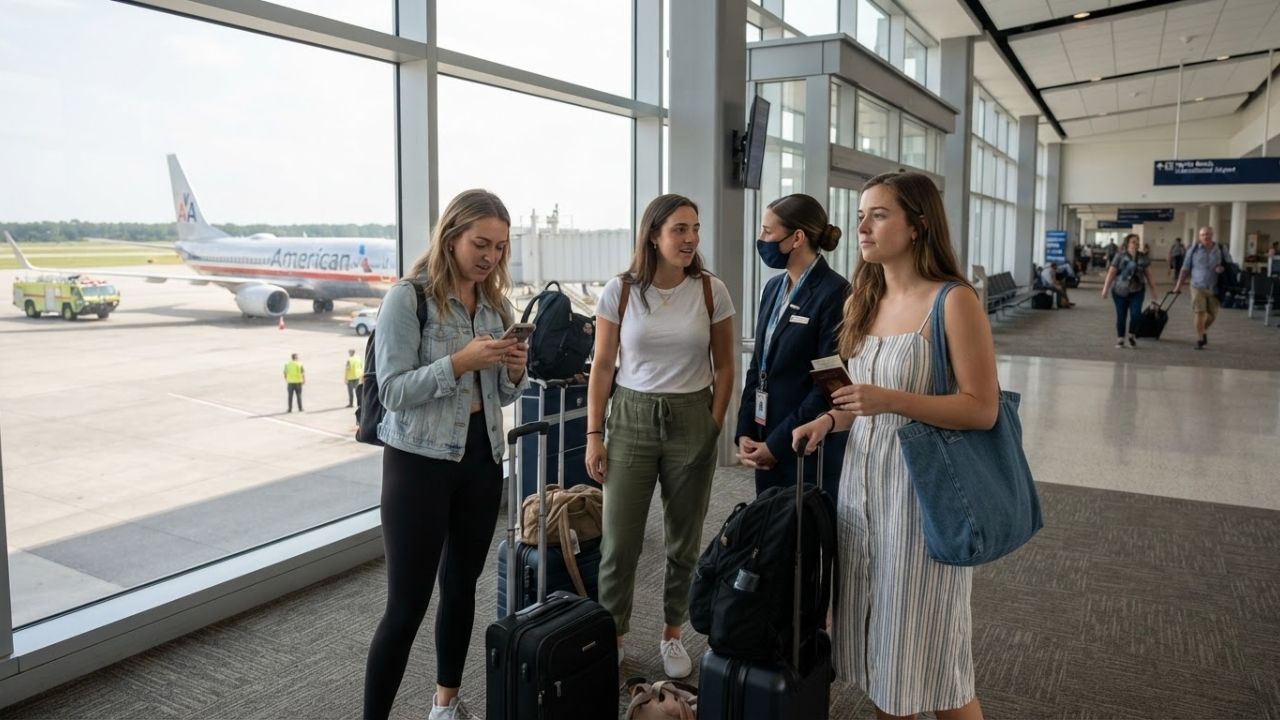
Image generated by AI
American Airlines Flight AA1760, carrying 172 passengers and 9 crew members, safely declared a Mayday emergency and returned to Myrtle Beach International Airport after engine flames were observed following a suspected bird strike on August 10, 2026.
Emergency Return: Mid-Air Engine Incident in South Carolina
A short domestic flight in the Carolinas ended in an emergency return shortly after departure. American Airlines Flight AA1760, operating from Myrtle Beach International Airport (MYR) with Charlotte Douglas International Airport (CLT) as its scheduled destination, encountered an abnormal engine situation shortly after takeoff on August 10, 2026.
The aircraft involved was a Boeing 737-800, a twin-engine narrowbody commercial jet operated by airlines worldwide. Soon after departure, the flight crew observed an engine issue and decided to return to Myrtle Beach rather than continue toward Charlotte. The pilots communicated an emergency declaration to air traffic control, using the international distress call "Mayday, mayday, mayday," and successfully executed a safe landing back at Myrtle Beach International, a scenario requiring the same emergency management as seen during other weather-induced travel delays.
Wildlife Hazards and Airport Mitigation Initiatives
Initial reports indicate that the aircraft may have experienced a bird strike shortly after takeoff. Wildlife strikes remain a significant aviation safety challenge, particularly during the takeoff and landing phases of flight when aircraft operate at lower altitudes and engines are at high power settings.
A bird entering a jet engine can damage internal fan blades and other critical components. Depending on the size of the wildlife and the speed of the aircraft, a strike can lead to engine vibration, unusual sounds, reduced thrust, or visible flames from the exhaust pipe. Following the landing of Flight AA1760, bird remains were reportedly identified near the runway. The Federal Aviation Administration (FAA) is expected to monitor the investigation, and maintenance teams will complete detailed inspections to confirm the extent of the engine damage.
Twin-Engine Safety Design and Crew Preparedness
The Boeing 737-800 involved in the incident is part of Boeing's Next Generation family, typically configured to carry between 160 and 180 passengers depending on airline cabin layouts. The twin-engine design of modern narrowbody passenger jets is engineered to allow pilots to maintain control and complete a safe landing even after a single-engine failure or shutdown.
During an engine-related emergency, flight crews follow strict checklists developed by manufacturers and regulators. These protocols guide the pilots through assessing the aircraft's condition, coordinating with air traffic control, and choosing the safest diversion point. By returning to Myrtle Beach, the crew of Flight AA1760 followed standard safety procedures, ensuring the safety of all 181 individuals on board. Emergency services were positioned along the runway as the aircraft touched down, and passengers evacuated safely without reported injuries.
Customer Recovery and Regional Hub Connectivity
The flight was part of American Airlines' domestic network, connecting regional gateways with major US aviation hubs. Charlotte Douglas International is one of the airline's largest operating bases, serving as a primary connection point for passengers traveling across the eastern United States.
The emergency return caused disruptions for passengers scheduled to connect to onward flights in Charlotte. American Airlines arranged alternative travel options for the affected travelers, while the aircraft was removed from service for comprehensive maintenance checks. Engineers will inspect the engine, verify system records, and repair any structural damage before the aircraft is cleared to return to passenger operations, a process modeled on protocols used during other transport disruptions like the EMR rail suspensions alert.
Visitor Insider Tips: Managing Carolinas Flight Disruptions
- Alternative Ground Transit: If your short regional flight in the Carolinas is cancelled, consider renting a hybrid vehicle or using regional Amtrak services. Driving from Myrtle Beach to Charlotte takes approximately 3.5 hours, representing a low-emission alternative to waiting for a rescheduled flight.
- Support Local Airport Cafes: While stranded at MYR, visit the independent cafes and dining spots inside the terminal. Purchasing local food items directly supports the regional coastal economy.
- Passenger Rights for Force Majeure: Under FAA regulations, airlines are not legally required to provide hotel vouchers or compensation for delays caused by weather or wildlife strikes, as these are classified as events beyond their control. However, carriers will assist in rebooking you on the next available flight.
- Keep Boarding Passes: Always keep your boarding passes and luggage receipts if your flight is diverted. These documents are necessary for submitting travel insurance claims or coordinating baggage retrieval.
- Explore Coastal Myrtle Beach: If your delay requires an unexpected overnight stay, take the opportunity to visit the Myrtle Beach Boardwalk or nearby coastal state parks, which directly supports local tourism workers.
Future Outlook for Airport Wildlife Programs
The safe landing of Flight AA1760 demonstrates the effectiveness of modern aviation safety systems, including crew training, aircraft engineering, and airport emergency response. However, the incident highlights the ongoing challenge of managing wildlife hazards near runways.
Airports in the United States operate comprehensive wildlife control programs, using radar tracking, sound deterrents, and habitat management to keep birds away from flight paths. As regional air traffic volumes continue to rise, the integration of new technologies and continuous safety monitoring will remain essential to protecting travelers and minimizing flight disruptions.
FAQ: American Airlines Flight AA1760 Emergency Landing
What flight was involved in the emergency landing at Myrtle Beach?
American Airlines Flight AA1760, a Boeing 737-800 commercial jet operating from Myrtle Beach, South Carolina, to Charlotte, North Carolina, made the emergency landing.
What caused the engine emergency on Flight AA1760?
The crew reported engine flames shortly after takeoff following a suspected bird strike. An official investigation by aviation authorities will confirm the exact cause of the engine failure.
Were there any injuries during the emergency landing?
No. All 172 passengers and 9 crew members on board landed safely at Myrtle Beach International Airport without any reported injuries.
Related Travel Guides
US Flight Delays and Cancellations: Storms and Ground Stops
UK Railway Suspensions and Commuter Disruption Amidst Extreme Heatwave
A Complete Guide to the Best Beaches Along the US East Coast
Disclaimer
This article is for informational and educational purposes only. It does not constitute legal, financial, or professional advice. While we strive to provide accurate and up-to-date information, travel policies, regulations, and conditions change rapidly. Always verify information with official sources before making travel decisions. Nomad Lawyer makes no representations about the accuracy, reliability, completeness, or suitability of the information provided. Readers should consult qualified professionals for advice specific to their circumstances. The views expressed in this article are those of the author and do not necessarily reflect the views of Nomad Lawyer.
Raushan Kumar
Founder & Lead Developer
Full-stack developer with 11+ years of experience and a passionate traveller. Raushan built Nomad Lawyer from the ground up with a vision to create the best travel and law experience on the web.
Learn more about our team →