
American Airlines Aggressively Expands Venezuela Routes With New Maracaibo Flights, Eradicating Latin American Transit Chaos: Latest Airline News
Capitalizing on relaxed regulatory barriers, American Airlines is forcefully expanding its Venezuelan presence, launching highly strategic regional flights directly into Maracaibo to bypass congested Caracas operations.

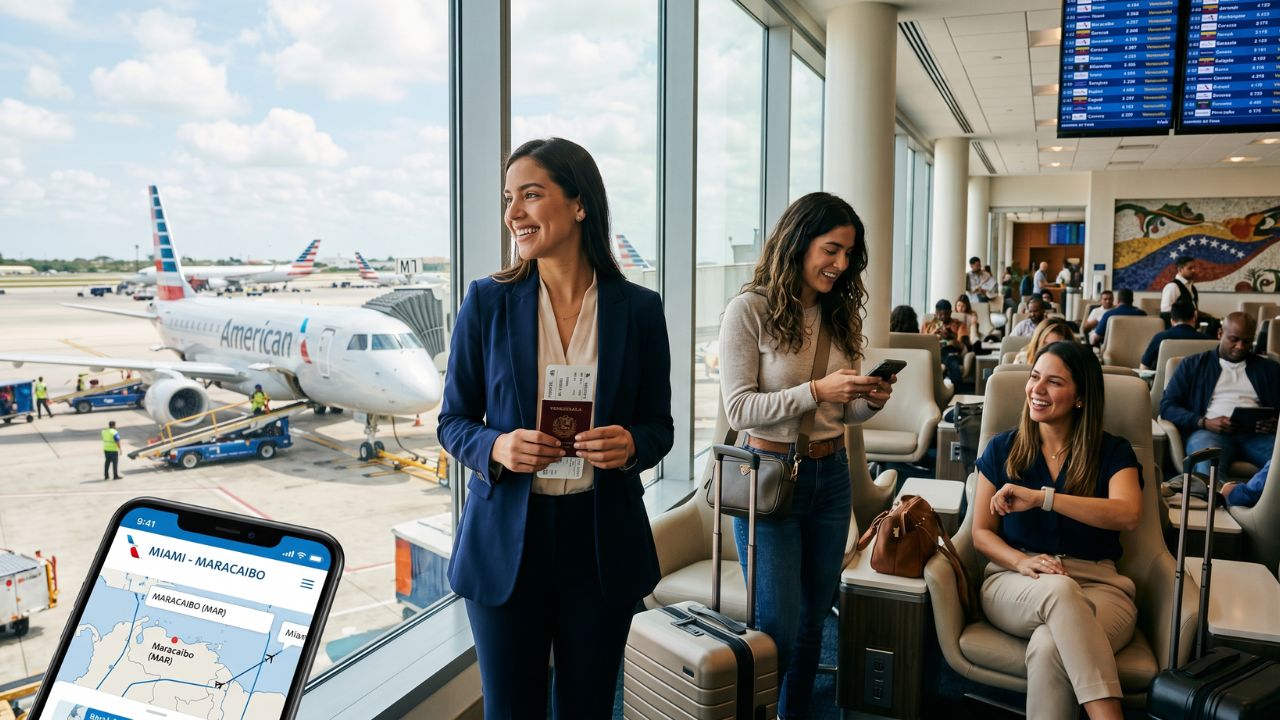
Image generated by AI
In a massive, highly strategic network maneuver designed to aggressively capture recovering Latin American travel demand, American Airlines has officially announced a sweeping expansion of its Venezuela route network, adding Maracaibo as a highly critical second destination. Following years of severe regulatory suppression and paralyzing travel chaos, this route expansion fundamentally rebuilds the vital aviation bridge between the United States and Venezuela. By deploying highly efficient regional jets out of its massive Miami mega-hub, American Airlines is actively decentralizing passenger flow, physically shielding travelers from the brutal airport disruptions and chronic flight cancellations that historically plagued the Caracas-only corridor. This cautious but steady restoration of bilateral connectivity represents the premier headline in today's breaking airline news and global aviation updates.
By introducing direct passenger coordination and dynamic scheduling backups, the regional aviation hubs target growing passenger demand across vital commerce sectors. The choice to coordinate flight departures in phases helps to manage gate capacity, supporting the country's broader regional transportation network.
Context: Rebuilding the Bilateral Aviation Bridge
For years, commercial aviation between the United States and Venezuela operated under a severe blackout, characterized by intense regulatory constraints, safety advisories, and total operational suspensions.
This diplomatic deep-freeze forced desperate travelers and diaspora communities into exhausting, multi-stop itineraries through third-party nations like Panama or the Dominican Republic, generating extreme ticketing friction and massive travel costs. Recently, as regulatory approvals have cautiously eased, American Airlines forcefully re-entered the market, rapidly establishing a daily lifeline between Miami and Caracas. However, forcing all international traffic through a single, highly congested capital airport creates severe structural vulnerabilities. The announcement to expand directly into Maracaibo—Venezuela’s massive western economic center—signals a highly calculated shift from a basic "survival route" to a fully structured, multi-city operational network designed to permanently stabilize US-Venezuela mobility.
To view live flight schedules, real-time terminal maps, or check-in rules at the massive Latin American gateway, travelers can consult the official Miami International Airport (MIA) directory. For direct booking access, specific baggage rules, and Venezuela travel waivers, passengers can check the official American Airlines portal. To explore live flight tracking, check delay maps, or monitor exact regional jet fleet routing, passengers can consult the official FlightAware tracking service.
Section-Wise Breakdown of the Venezuelan Expansion
The Miami Latin American Mega-Hub
The foundation of this entire expansion rests on the absolute dominance of Miami International Airport. MIA serves as American Airlines' premier gateway to Latin America and the Caribbean. By funneling massive volumes of domestic US connecting traffic directly into Miami, the airline can ensure that its daily, narrow-body flights into Venezuela remain highly profitable, capturing both corporate oil executives and high-volume family visitation traffic.
Stabilizing the Caracas Core
The primary lifeline remains the Miami to Caracas (CCS) sector. Operating daily flights directly into Simón Bolívar International Airport, American Airlines utilizes its regional subsidiary, Envoy Air. By deploying the Embraer 175—a highly efficient, 76-seat regional jet—the airline maintains incredible scheduling flexibility. Rather than risking half-empty widebody aircraft, the airline can dynamically add multiple daily E175 rotations to match sudden spikes in demand without absorbing massive financial risk.
The Maracaibo Strategic Bypass
The impending launch of the Maracaibo (MAR) route is a massive geopolitical and economic victory for western Venezuela. As the nation's premier oil-producing region, Maracaibo requires direct, frictionless access to the US corporate sector. By launching flights directly into La Chinita International Airport, American Airlines successfully diverts thousands of transit passengers away from Caracas, massively reducing domestic airport congestion and optimizing the geographic distribution of international traffic.
Technical Roster: American Airlines Venezuela Route Operations
To ensure absolute factual accuracy regarding the structured return of commercial aviation to the Venezuelan market, the following tables detail the exact operational metrics, aircraft deployments, and scheduling data for both the Caracas and Maracaibo sectors:
Route 1: Miami (MIA) to Caracas (CCS) Core Service
| Operational Metric | Confirmed Route Details |
|---|---|
| Origin & Destination | Miami Int'l (MIA) → Simón Bolívar Int'l (CCS) |
| Aircraft Type | Embraer 175 (Operated by Envoy Air) |
| Flight Duration | ~3 hours 15 mins to 3 hours 30 mins |
| Total Distance | Approximately 2,200 km |
| Flight Frequency | Daily service (potential for multiple rotations) |
| MIA Departure Time | ~10:16 AM local time |
| CCS Arrival Time | ~1:30 PM – 1:40 PM local time |
| Return Sector | Afternoon CCS departure; arrives MIA after ~3.5 hrs |
Route 2: Miami (MIA) to Maracaibo (MAR) Expansion
| Operational Metric | Planned Route Details |
|---|---|
| Origin & Destination | Miami Int'l (MIA) → La Chinita Int'l (MAR) |
| Aircraft Type | Expected Embraer 175 (or similar regional jet) |
| Flight Duration | ~3 hours 20 mins to 3 hours 40 mins |
| Total Distance | Approximately 2,100 km |
| Operational Status | Approved for launch (pending final scheduling) |
| Expected Frequency | Planned daily service structure |
Passenger Impact: Eradicating the Domestic Transit Penalty
For travelers residing in western Venezuela or US-based oil executives, the launch of the Maracaibo route eliminates a massive logistical nightmare.
Previously, a passenger attempting to reach Maracaibo from Miami had to endure a multi-leg gauntlet. They would fly into Caracas, physically retrieve their international baggage, clear heavily congested customs, and then attempt to secure a highly unreliable domestic flight (or endure a dangerous, multi-hour ground transfer) westward to Maracaibo. This "domestic transit penalty" added massive financial cost and psychological exhaustion to the journey. By landing an Embraer 175 directly on the tarmac at La Chinita International Airport, American Airlines completely eradicates this friction, allowing passengers to clear local customs and reach their final destination hours faster, fundamentally elevating the standard of cross-border mobility.
Industry Analysis: The Cautious Re-Entry Strategy
Aviation industry analysts view American Airlines' structured deployment in Venezuela as a masterclass in risk-mitigated market re-entry.
Following years of severe operational suspension, airlines are terrified of trapping heavy capital inside volatile markets. By refusing to deploy massive Boeing 737s or Airbus A321s, American Airlines is protecting its core mainline fleet. Instead, they are aggressively utilizing Envoy Air's Embraer 175s. These regional jets provide the exact payload capacity required to test recovering markets while keeping operating costs incredibly low. As diplomatic relations slowly stabilize, this cautious, dual-city expansion secures American Airlines a massive first-mover advantage, completely locking out competitors who lack the regional jet infrastructure to safely probe the fragile Venezuelan market.
Actionable Advice for Venezuela Travelers in 2026
If you are planning to utilize American Airlines’ newly expanded Venezuelan network, execute this highly tactical survival checklist to maximize your travel security:
- Exploit the Maracaibo Bypass: If your final destination is anywhere in western Venezuela, explicitly wait for the final launch of the MIA-MAR route. Do not subject yourself to the grueling domestic transit process through Caracas simply to save a few days on your itinerary.
- Master Regional Jet Luggage Constraints: The Embraer 175 has severely restricted overhead bin space compared to a mainline jet. Aggressively minimize your carry-on luggage. If you attempt to board with an oversized roller bag, you will be forced to gate-check it, destroying your ability to exit the airport rapidly upon arrival.
- Secure Comprehensive Travel Insurance: Despite the resumption of direct flights, the Venezuelan market remains geopolitically volatile. Standard airline delay compensation does not apply to sudden government-mandated airspace closures. You must purchase third-party "Cancel For Any Reason" (CFAR) insurance.
- Prepare for Intense Customs Processing: Upon arrival in Miami from Venezuela, expect highly rigorous US Customs and Border Protection (CBP) screening. Ensure all your documentation is flawless and factor in at least three hours of processing time before booking your onward domestic US connection.
FAQ: American Airlines Venezuela Route Expansion
What new destination is American Airlines adding in Venezuela?
American Airlines is aggressively expanding its Venezuelan footprint by adding highly strategic flights to Maracaibo (MAR), complementing its existing daily service to Caracas (CCS).
What type of aircraft is being used for these flights?
The airline is utilizing its regional subsidiary, Envoy Air, deploying highly efficient Embraer 175 regional jets to service these medium-haul international routes out of Miami.
Why is the addition of Maracaibo so important?
Maracaibo is a massive economic and oil-producing center in western Venezuela. Direct flights bypass the heavy congestion of Caracas, vastly improving travel convenience and eradicating dangerous domestic transit connections.
Securing the Latin American Bridge
The aggressive route expansion by American Airlines proves that the US-Venezuela aviation corridor is officially back online. By strategically deploying regional jets to link Miami directly to both Caracas and Maracaibo, the carrier has systematically dismantled the exhausting travel chaos that previously paralyzed the market. As these daily flights successfully restore the flow of families, corporate executives, and essential cargo, American Airlines is not merely executing a flight schedule; it is actively rebuilding the physical infrastructure necessary to secure the future of bilateral Latin American mobility.
Key Takeaways
- Strategic Market Re-Entry: American Airlines is aggressively expanding its operations in Venezuela, adding Maracaibo as a highly critical second destination.
- Miami Mega-Hub Operations: All flights are seamlessly routed through Miami International Airport (MIA), utilizing it as the absolute anchor for Latin American connectivity.
- Envoy Air Deployment: The routes are operated by Envoy Air utilizing 76-seat Embraer 175 regional jets, minimizing financial risk while maximizing scheduling flexibility.
- Eradicating Domestic Friction: The direct Maracaibo flight completely eliminates the exhausting requirement for passengers to transit through the heavily congested capital of Caracas.
- First-Mover Advantage: By re-establishing a multi-city network during the initial phases of market recovery, American Airlines effectively locks in a massive competitive advantage over rival US carriers.
Related Travel Guides
Air New Zealand and Air India Unleash Massive 16-Route Codeshare
flynas Eradicates Saudi-Jordan Transit Chaos With City Airport Flights
American Airlines Venezuela Route Expansion Discussion on Reddit
Disclaimer
This article is for informational and educational purposes only. It does not constitute legal, financial, or professional advice. While we strive to provide accurate and up-to-date information, travel policies, regulations, and conditions change rapidly. Always verify information with official sources before making travel decisions. Nomad Lawyer makes no representations about the accuracy, reliability, completeness, or suitability of the information provided. Readers should consult qualified professionals for advice specific to their circumstances. The views expressed in this article are those of the author and do not necessarily reflect the views of Nomad Lawyer.
Kunal K Choudhary
Co-Founder & Contributor
A passionate traveller and tech enthusiast. Kunal contributes to the vision and growth of Nomad Lawyer, bringing fresh perspectives and driving the community forward.
Learn more about our team →