
American Airlines Fleet Overhaul: Expanding Flagship Suites and Premium Cabins through 2030
American Airlines is aggressively expanding its high-yield seating capacity, replacing international first class with enclosed Flagship Suites and increasing premium economy density across its 787-9, 777, and A321XLR fleets.

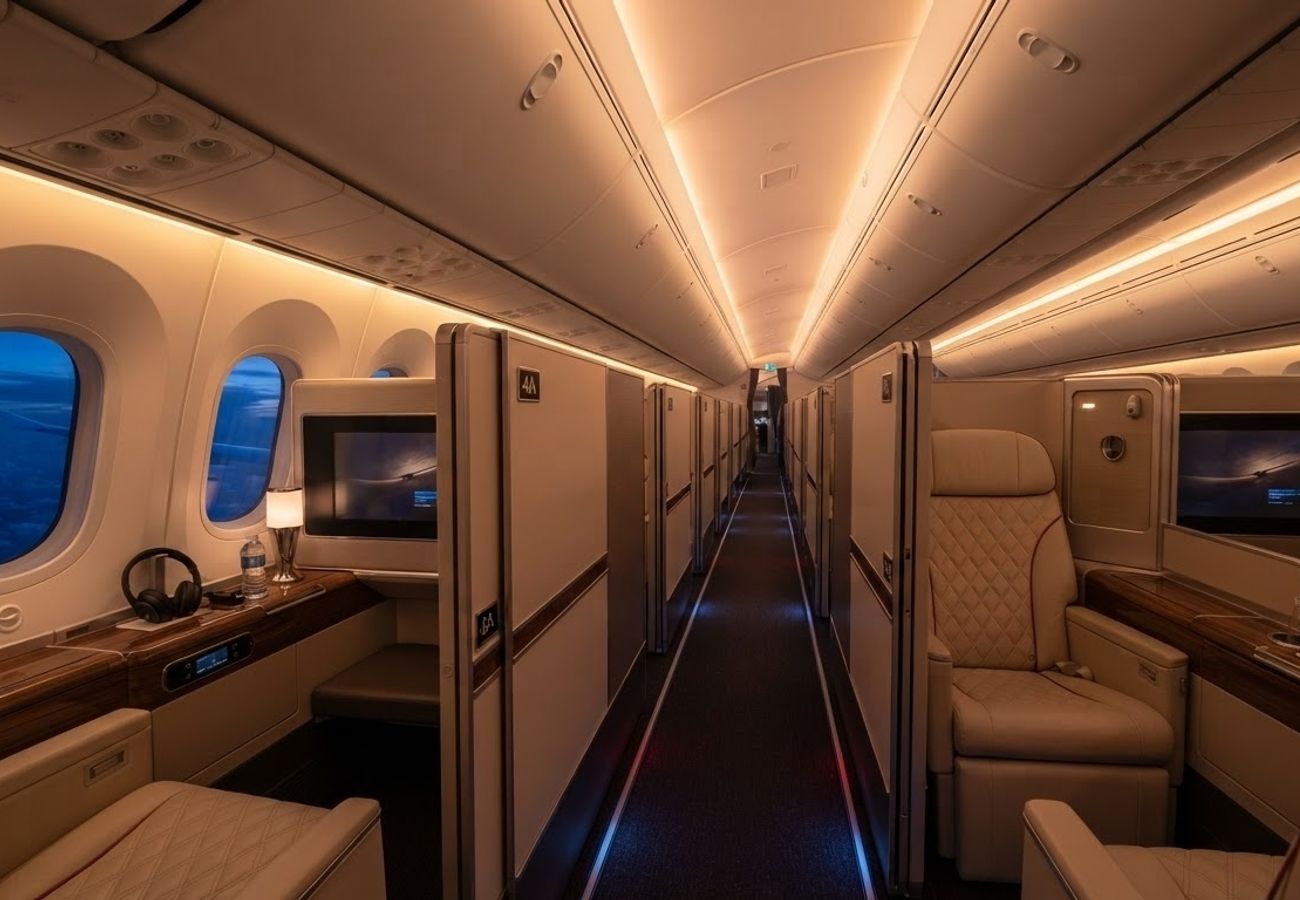
Image generated by AI
American Airlines is executing a massive pivot toward high-yield passenger segments, trading traditional international first class for an expanded inventory of enclosed business suites and premium economy seating.
The carrier is accelerating a sweeping cabin upgrade program to capture lucrative corporate and luxury demand. This strategy centers on the "premiumization" of the fleet, shifting the revenue mix away from high-density economy toward a more sophisticated, tiered premium offering.
The Shift to Flagship Suites and A321XLR Integration
The centerpiece of this overhaul is the Flagship Suite. This fully enclosed business-class product features privacy doors, direct aisle access, and expanded personal storage. The rollout is concentrated on two primary aircraft:
- Boeing 787-9: New deliveries are featuring a higher ratio of premium seats compared to previous iterations, pairing the Flagship Suite with a refreshed Premium Economy section.
- Airbus A321XLR: This long-range narrowbody is being deployed with a three-cabin configuration (Flagship Suite, Premium Economy, and Main Cabin), effectively bringing widebody-style luxury to single-aisle transatlantic and premium domestic routes.
Our analysis of the fleet data indicates a strategic retreat from separate international first class. American is instead enlarging its business cabins. For example, retrofit programs for the Boeing 777-300ER are increasing business seat counts from approximately 50 to around 70 suites per aircraft.
Domestic Fleet Modernization
The premium push is not limited to long-haul routes. Starting in 2025, American is retrofitting Airbus A319 and A320 narrowbodies to increase domestic first class capacity. These updates include:
- Hardware Upgrades: Larger overhead bins and universal power options at every seat.
- IFE Enhancements: 4K resolution seatback screens with Bluetooth connectivity and multiple charging ports on future 787-9, 777-300, and A321XLR deliveries.
- Capacity Shifts: New orders for A321neo and Boeing 737 MAX 10 aircraft will feature layouts optimized for higher proportions of domestic first class and extra-legroom economy.
Premium Capacity and Fleet Specifications
The following table outlines the primary changes in cabin configuration across the affected fleet.
| Aircraft Model | Key Change | Primary Feature | Impact on Capacity |
|---|---|---|---|
| Boeing 787-9 | New Deliveries | Flagship Suite & Refreshed Premium Economy | Increased Premium Real Estate |
| Airbus A321XLR | New Entry | 3-Cabin Layout (Suite/Prem Econ/Main) | Widebody experience on narrowbody |
| Boeing 777-300ER | Retrofit | Business Cabin Expansion | Increase from ~50 to ~70 suites |
| Airbus A319/A320 | 2025 Retrofit | Increased Domestic First Class | Higher premium density on short-haul |
Why This Matters: The Logistics of "Premiumization"
From a logistical perspective, this shift represents a calculated gamble on the "hybrid traveler"—the passenger who blends corporate budgets with luxury leisure preferences. By removing international first class and expanding business suites, American is maximizing the revenue per square inch of the cabin.
For travelers on these routes, the real impact is a standardization of the "high-end" experience. The phase-out of the A321T transcontinental layout in favor of the A321XLR simplifies the product hierarchy. However, this creates a "lottery" effect for passengers during the multi-year retrofit period. A traveler booking a "Business" seat may find themselves in a legacy lie-flat seat on one leg of a journey and a fully enclosed Flagship Suite on the return.
Market trends suggest that the battle for the New York–Los Angeles and New York–San Francisco corridors has moved beyond mere scheduling; it is now a war of "hard products." Wi-Fi reliability and seat privacy are now the primary metrics for high-value corporate contracts.
Industry Outlook
American Airlines aims to increase its long-haul lie-flat inventory by more than 50% by the end of the decade. Expect the carrier to further lean into the A321XLR to open "long-thin" routes—destinations that cannot support a widebody aircraft but can attract high-yield passengers if a suite-style product is offered.
The success of this overhaul depends on the airline's ability to manage passenger expectations during the transition. As legacy interiors are replaced, the gap between the "old" and "new" American Airlines experience will widen, putting pressure on the carrier to accelerate retrofits to avoid brand inconsistency.
The era of the traditional international first-class cabin is ending, replaced by the era of the high-capacity luxury suite.
Related Travel Guides
Disclaimer
This article is for informational and educational purposes only. It does not constitute legal, financial, or professional advice. While we strive to provide accurate and up-to-date information, travel policies, regulations, and conditions change rapidly. Always verify information with official sources before making travel decisions. Nomad Lawyer makes no representations about the accuracy, reliability, completeness, or suitability of the information provided. Readers should consult qualified professionals for advice specific to their circumstances. The views expressed in this article are those of the author and do not necessarily reflect the views of Nomad Lawyer.
Raushan Kumar
Founder & Lead Developer
Full-stack developer with 11+ years of experience and a passionate traveller. Raushan built Nomad Lawyer from the ground up with a vision to create the best travel and law experience on the web.
Learn more about our team →