
American Airlines Plans Return of Seatback Screens for Narrowbody Fleet in 2028
American Airlines is reversing its 'bring your own device' strategy by reintroducing 4K seatback screens to its narrowbody fleet starting in 2028.

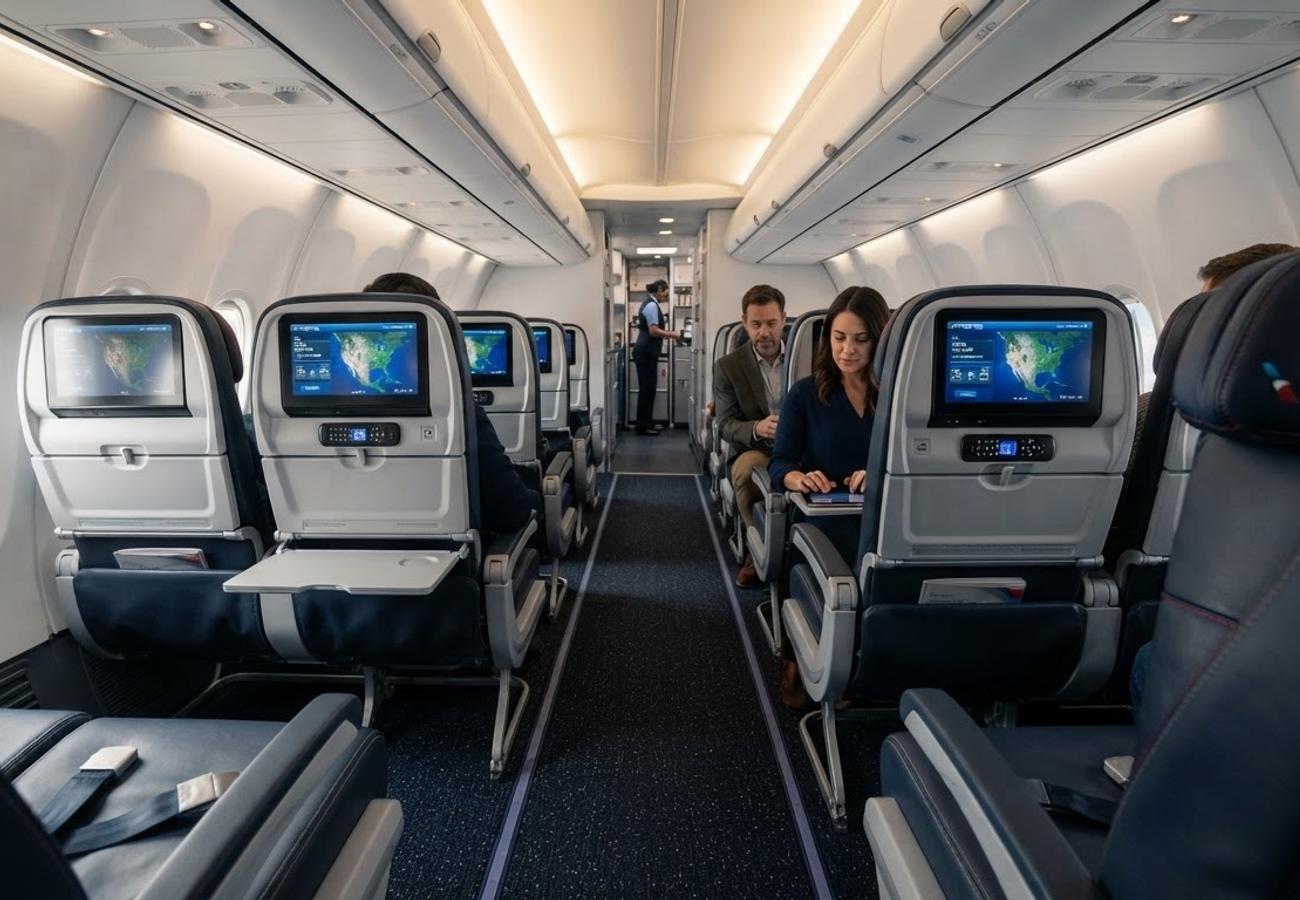
Image generated by AI
American Airlines is pivoting its cabin strategy to reintroduce individual seatback entertainment screens across much of its future narrowbody fleet. This move signals the end of a years-long reliance on personal device streaming to define the domestic passenger experience.
The Shift Toward Blended Entertainment
For the better part of a decade, American Airlines operated on a "bring your own device" (BYOD) philosophy. By removing monitors from many domestic aircraft, the carrier reduced cabin weight and simplified maintenance. However, industry data and passenger feedback indicate that the market is shifting back toward embedded hardware.
Starting around 2028, new Boeing and Airbus narrowbody deliveries are expected to feature modern 4K-capable displays. These units will not exist in a vacuum; they are designed to integrate Bluetooth audio connectivity and dedicated power outlets at every seat. Rather than replacing the current wireless streaming library, these screens will create a "blended" environment where passengers can choose between their own tablets and the built-in hardware.
This realignment follows the success of embedded screens on American's long-haul fleet, specifically the Airbus A321XLR and Boeing 787. The decision to scale this technology down to single-aisle, short-haul jets suggests a broader effort to standardize the product across the network.
Closing the Competitive Gap
The move is a direct response to the domestic landscape. Rivals Delta Air Lines and United Airlines have utilized seatback entertainment as a primary differentiator in the U.S. market, particularly for high-value business travelers and families.
For the traveler, the impact is practical. While streaming to a phone is convenient for short hops, the absence of a screen on a four-hour flight often leads to "device fatigue" and battery drain. By installing embedded displays, American is addressing a frequent point of criticism from its most loyal flyers.
This hardware rollout coincides with a major digital infrastructure upgrade. Beginning in 2026, American is partnering with a major U.S. telecom brand to provide complimentary Wi-Fi on most domestic flights. The synergy between free high-speed connectivity and 4K screens allows the airline to offer dynamic content, including real-time moving maps and integrated buy-on-board menus, without requiring the passenger to lift a finger.
Fleet Implementation and Timelines
The rollout will be gradual, as American manages a massive order book of Boeing and Airbus aircraft alongside regional jets from Embraer.
| Aircraft Category | Technology Status | Expected Implementation |
|---|---|---|
| New Narrowbodies | 4K Screens, Bluetooth, Power | Starting 2028 |
| Existing Narrowbodies | Select Retrofits | During heavy maintenance cycles |
| Long-Haul (787/A321XLR) | Embedded Screens | Already implemented |
| Regional Jets | Streaming/Personal Devices | No embedded screens planned |
Because the fleet is so large, passengers will likely encounter a hybrid experience for several years, with some flights featuring the new screens and others remaining screenless. The airline is expected to integrate these amenity details into booking filters, allowing passengers to select flights based on entertainment hardware.
Visitor Insider Tips for the Modern Flyer
Navigating the transition between "screenless" and "screen-equipped" aircraft requires a bit of strategy to ensure a comfortable journey.
- Check the Equipment Filter: When booking through the American Airlines app or website, look for the specific aircraft type. While not always listed, "New Cabin" or specific aircraft models like the A321XLR are safer bets for embedded screens.
- The Battery Buffer: Until the 2028 rollout is complete, always carry a high-capacity power bank. While new planes will have integrated power, older retrofits may still have inconsistent USB-A port functionality.
- Audio Etiquette: With the introduction of Bluetooth connectivity, avoid using external speakers. To maintain a professional cabin environment, always pair your own noise-canceling headphones to the seatback system.
- Download Offline: Even on flights with screens, the "blended" model means the Wi-Fi may be congested. Download your must-watch content via the American app before boarding to avoid buffering.
Tourism and Aviation Outlook
The return of the seatback screen is more than a nostalgia trip; it is a calculated move to reclaim a revenue premium. By offering a product that matches or exceeds Delta and United, American can better justify higher fares on competitive transcontinental routes.
From a sustainability perspective, the move toward integrated power and high-efficiency 4K panels reduces the reliance on disposable batteries and encourages a more streamlined digital ecosystem. As the airline moves toward 2028, the focus will shift from simply providing "connectivity" to providing a "curated experience."
The era of the stripped-back cabin is ending, making way for a high-tech, screen-centric domestic flight.
Related Travel Guides
Disclaimer
This article is for informational and educational purposes only. It does not constitute legal, financial, or professional advice. While we strive to provide accurate and up-to-date information, travel policies, regulations, and conditions change rapidly. Always verify information with official sources before making travel decisions. Nomad Lawyer makes no representations about the accuracy, reliability, completeness, or suitability of the information provided. Readers should consult qualified professionals for advice specific to their circumstances. The views expressed in this article are those of the author and do not necessarily reflect the views of Nomad Lawyer.
Preeti Gunjan
Contributor & Community Manager
A passionate traveller and community builder. Preeti helps grow the Nomad Lawyer community, fostering engagement and bringing the reader experience to life.
Learn more about our team →