
Northern Lights Forecast Across Eight US States Opens Striking September Aurora Window

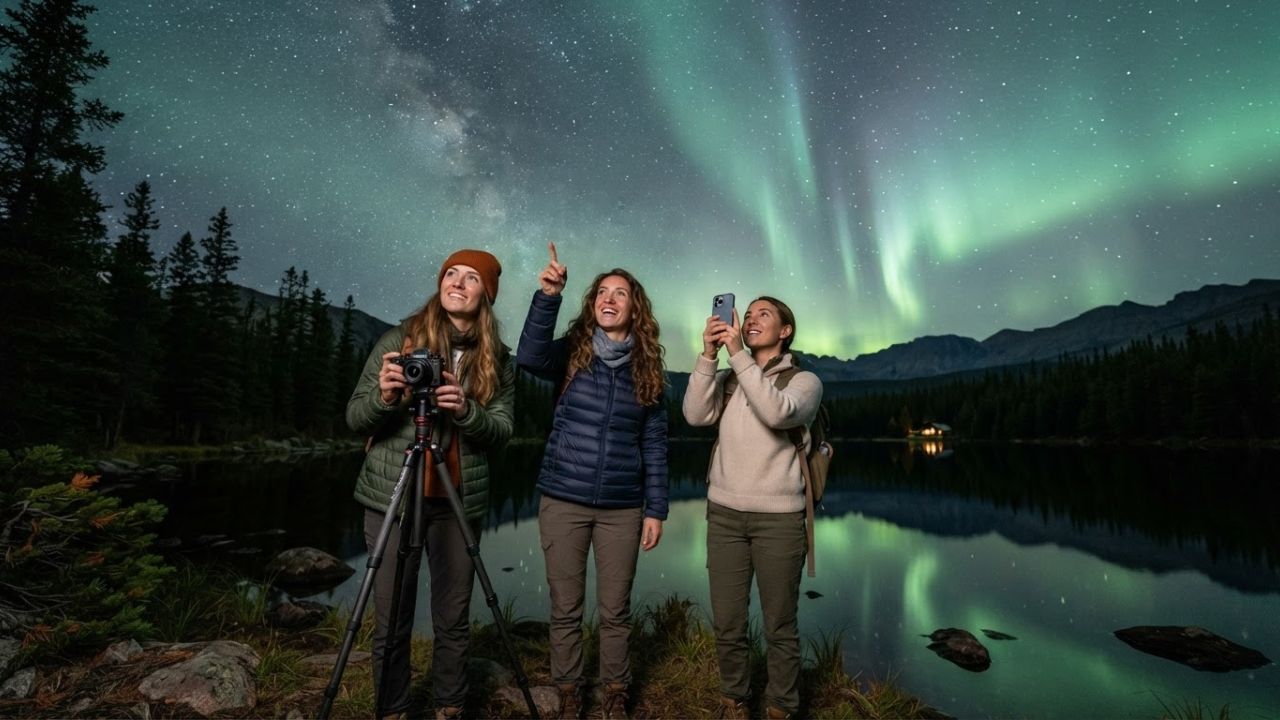
A rare space-weather alignment on September 9, 2026, brings Northern Lights viewing opportunities to eight northern US states, spanning Alaska, Washington, Idaho, Montana, North Dakota, South Dakota, Minnesota, and Wisconsin. Powered by equinox-driven geomagnetic shifts and pitch-black skies from a new moon, travelers across the northern tier have a prime shoulder-season window to witness the aurora borealis.
According to the National Oceanic and Atmospheric Administration (NOAA) Space Weather Prediction Center (SWPC), elevated solar wind activity will make the aurora borealis potentially visible during the evening and overnight hours of September 9, provided local skies remain clear. While northern Alaska holds the highest viewing probability beneath the auroral oval, lower-latitude northern states from the Pacific Northwest to the Upper Midwest have entered the active observation zone.
The convergence of two natural cycles makes this viewing window particularly favorable for dark-sky enthusiasts. First, the lunar calendar delivers a new moon, eliminating ambient moonlight and maximizing optical contrast against faint auroral ribbons. Second, the approaching autumn equinox triggers the Russell-McPherron effect, an astronomical geometry where cracks in Earth's magnetic shield align with the solar wind, substantially amplifying geomagnetic disturbances.
The Eight-State Aurora Outlook
While space weather determines potential visibility, geographical latitude, local weather, and artificial light pollution dictate the on-the-ground reality. The NOAA SWPC forecast categorizes viewing likelihood across eight distinct states:
| US State Destination | Aurora Viewing Outlook | Primary Regional Advantage for Travelers |
|---|---|---|
| Alaska | Highest US likelihood | Far-northern position beneath auroral oval and extensive dark-sky areas |
| Washington | Possible | Rural and mountainous areas offer darker conditions away from Seattle |
| Idaho | Possible | Large rural expanses significantly reduce artificial light pollution |
| Montana | Possible | Open prairies and mountain valleys provide broad, unobstructed horizons |
| North Dakota | Possible | High northern latitude and sparse rural development aid viewing |
| South Dakota | Possible | Remote agricultural and badland settings offer unpolluted night skies |
| Minnesota | Possible | Northern boundary waters provide premier dark-sky preserves |
| Wisconsin | Possible | Northern communities and peninsula parks offer access to dark skies |
In Alaska, NOAA models indicate that the northern interior and Arctic slope have the highest probability of vibrant coronal displays, while regions closer to the southern US/Canada maritime border face lower visibility. For travelers in the contiguous 48 states, the forecast provides a compelling motivation to venture beyond urban perimeters into remote state parks and national forests.
Science of the Equinox: The Russell-McPherron Effect
The timing of this September aurora event is rooted in seasonal solar physics. Aurora watchers frequently observe an uptick in geomagnetic activity during the weeks surrounding the autumn and spring equinoxes.
This phenomenon is governed by the Russell-McPherron effect, named after the geophysicists who demonstrated how Earth's axial tilt influences space-weather interactions. In September, the orientation of Earth's magnetic dipole tilts in a manner that facilitates stronger magnetic reconnection with the south-pointing interplanetary magnetic field (IMF) carried by the solar wind. This alignment allows solar energy to stream directly into the magnetosphere, exciting atmospheric oxygen and nitrogen atoms into brilliant emerald-green and crimson displays.
Coupled with lengthening northern nights following the summer solstice, September offers travelers a strategic shoulder-season bridge: mild daytime hiking conditions paired with hours of true astronomical darkness.
Dark Skies and Community-Led Astrotourism
The rise of spontaneous aurora chasing represents a broader cultural evolution toward nocturnal conservation and dark-sky tourism. Rather than relying on commercial attractions, rural communities in Wisconsin's Northwoods, Minnesota's Iron Range, and Montana's Big Sky country are leveraging pristine night skies as vital ecological assets.
The National Park Service (NPS) actively encourages visitors to protect nocturnal environments. Parks such as Denali National Park in Alaska, Glacier National Park in Montana, and Voyageurs National Park in Minnesota serve as internationally certified dark-sky sanctuaries. In these protected wilderness areas:
- Artificial Light Mitigation: Shielded, low-kelvin amber lighting minimizes light trespass, protecting nocturnal wildlife including migrating birds and hunting boreal owls.
- Indigenous Sky Lore: Cultural tourism initiatives led by Athabascan elders in Alaska and Anishinaabe (Ojibwe) storytellers in Minnesota connect visitors with ancestral star knowledge, interpreting the northern lights (jiibayag niimi'idiwag—the dancing spirits) through oral histories.
- Economic Influx for Remote Lodges: Shoulder-season aurora chasers fill cabins, rustic lodges, and family-run diners during the quiet lull between peak summer vacations and winter ski seasons.
Visitor Insider Tips: Maximizing Aurora Viewing Across the Northern Tier
Capturing the northern lights requires patience, local geographical knowledge, and proper technical preparation:
- Target the Peak Midnight Window: While auroral activity can ignite at dusk, the most intense geomagnetic substorms typically unfold between 10:00 PM and 2:00 AM local solar time. Plan to be on-site well before midnight.
- Seek Elevated, Unobstructed Northern Horizons: In lower-latitude states like Wisconsin, Minnesota, and South Dakota, the aurora will often appear as an ethereal green arc hovering just above the northern horizon. Choose viewing locations on south-facing shores looking north across open water (such as Lake Superior's south shore in Bayfield, Wisconsin, or Knife River, Minnesota) to ensure trees do not block the view.
- Preserve Night Vision with Red Light: It takes 20 to 30 minutes for human eyes to adjust to pitch darkness. Avoid checking smartphone screens at full brightness and use headlamps equipped with red-light modes to maintain scotopic vision.
- Camera and Smartphone Optimization: The human eye is often less sensitive to faint green and purple wavelengths than digital sensors. Mount your camera on a steady tripod, set the lens to manual focus at infinity, use an aperture of f/1.8 to f/2.8, adjust ISO between 1600 and 3200, and expose for 5 to 10 seconds. On modern smartphones, mount the device firmly and enable Night Mode with a 3- to 10-second exposure.
- Layer Against Rapid Thermal Drops: Clear September skies in interior Alaska and northern valleys induce rapid radiational cooling. Temperatures frequently plunge near freezing after twilight. Dress in moisture-wicking thermal baselayers, insulated outerwear, wool socks, and windproof gloves, and carry a hot beverage in a thermos.
- Monitor the 30-Minute NOAA SWPC Dashboard: Rather than guessing, bookmark the NOAA Space Weather Prediction Center's 30-Minute Aurora Forecast on your mobile device to track real-time solar wind speed and interplanetary magnetic field orientation (Bz component).
Nocturnal Tourism Outlook: Natural Phenomena as Travel Catalysts
The September 9 aurora event demonstrates how space weather has become an influential travel catalyst. Modern satellite tracking, mobile alert apps, and real-time magnetometers allow everyday adventurers to make informed, short-notice road trips into remote state parks and boreal forests.
For destination marketing organizations across Alaska, the Pacific Northwest, and the Great Lakes, dark skies represent a sustainable, low-impact economic resource. By promoting responsible night-sky etiquette, supporting International Dark Sky Places, and providing realistic traveler guidance, northern communities can cultivate year-round stewardship while offering travelers unforgettable encounters with the cosmos.
Related Travel Guides
Disclaimer
This article is for informational and educational purposes only. It does not constitute legal, financial, or professional advice. While we strive to provide accurate and up-to-date information, travel policies, regulations, and conditions change rapidly. Always verify information with official sources before making travel decisions. Nomad Lawyer makes no representations about the accuracy, reliability, completeness, or suitability of the information provided. Readers should consult qualified professionals for advice specific to their circumstances. The views expressed in this article are those of the author and do not necessarily reflect the views of Nomad Lawyer.
Raushan Kumar
Founder & Lead Developer
Full-stack developer with 11+ years of experience and a passionate traveller. Raushan built Nomad Lawyer from the ground up with a vision to create the best travel and law experience on the web.
Learn more about our team →