
Austria Leads Finland and Slovenia as Cooler Destinations Replace Spain Amid Extreme Climate Shifts

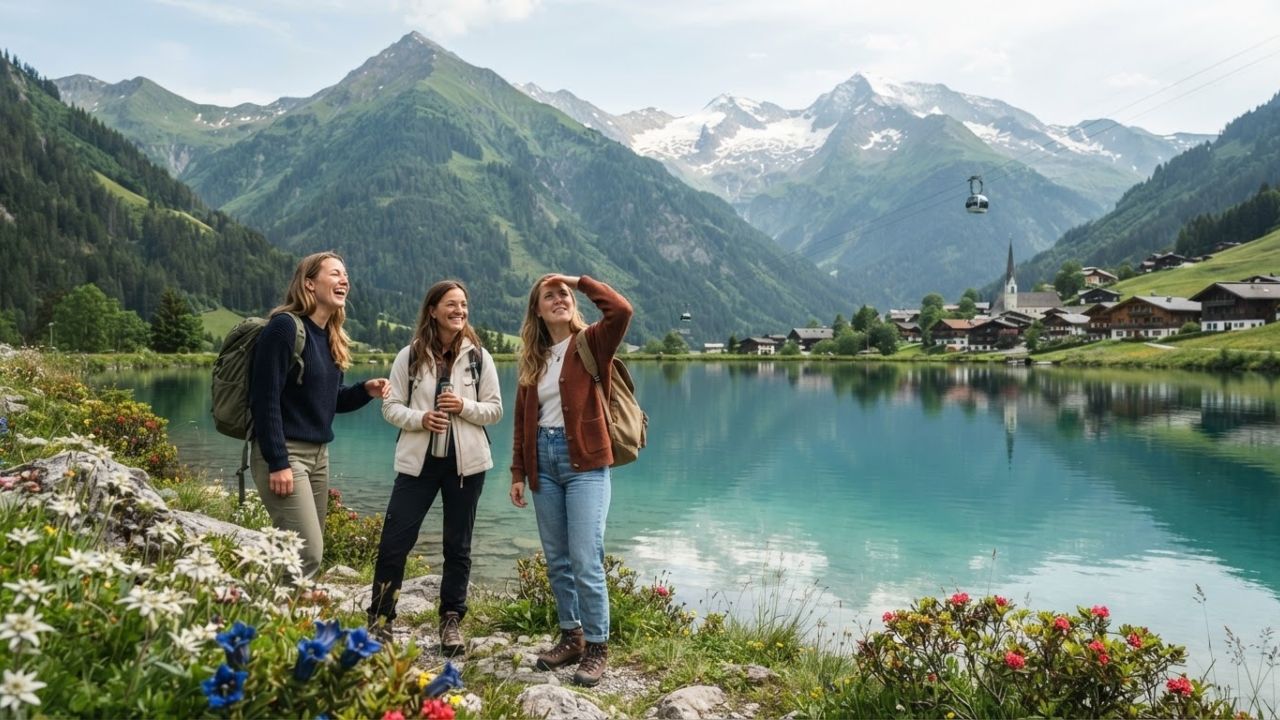
Rising global temperatures and intensified summer heatwaves are fundamentally reorganizing international travel flows, propelling cooler alpine and northern destinations to historic records while traditional sun-and-sea corridors adapt to severe climate pressures. Official arrival telemetry confirms that Austria achieved an all-time record of 157.27 million overnight stays in 2025, while Slovenia welcomed 6.99 million visitors and Finland logged 7.2 million non-resident nights, establishing climate comfort as the defining metric of twenty-first-century itinerary design.
International holiday planning has entered an era of climate accountability. The European Environment Agency (EEA) identifies 36 major climate risks for Europe, highlighting that severe heat stress, wildfire exposure, changing rainfall patterns, water scarcity, and declining snow cover are directly altering tourism viability. Across southern Europe, extreme heat is prompting travelers to rethink summer vacations, while temperate alpine altitudes, Nordic lake districts, and southern hemisphere temperate zones emerge as primary beneficiaries of the "coolcation" movement.
The climate signal is global in scale. Spain’s meteorological agency AEMET recorded an annual average temperature of 15°C in 2025—1.1°C above the 1991–2020 reference normal—marking its third-warmest year on record, tied with 2024. In Japan, the Japan Meteorological Agency (JMA) confirmed that summer 2025 was the hottest since national records began in 1898, recording a summer temperature anomaly of +2.36°C, 9,385 accumulated observations of extremely hot days, and 30 separate monitoring stations exceeding 40°C, including Isesaki in Gunma reaching 41.8°C on 5 August. In North America, Canada endured its second-worst wildfire season on record, with approximately 8.9 million hectares burned. Meanwhile, Greece saw persistent extreme conditions, with Lindos recording an annual mean of 21.9°C, Kastellorizo reaching 21.7°C, and multiple Cretan stations exceeding 21°C.
Rather than deterring exploration, these environmental realities are steering travelers toward four distinct geographic alternatives that offer pristine natural settings, rich cultural heritage, and refreshing summer temperatures.
| Country or Region | Recent Climate & Performance Signal | Travel Relevance & Planning Shift |
|---|---|---|
| Spain | 2025 average temperature 15°C, 1.1°C above 1991–2020 normal | Elevated summer heat risks; movement toward shoulder seasons |
| Japan | 2025 summer anomaly +2.36°C; 30 stations >40°C | Severe heat stress during urban sightseeing; shift to northern regions |
| Canada | 8.9 million hectares burned in 2025 wildfire season | Wildfire smoke awareness and flexible routing |
| Europe (EEA) | 36 climate risks identified by European Environment Agency | Systematic heat, wildfire, water scarcity, and flood planning |
| Australia | National Climate Risk Assessment & 2025 Climate Change Statement | Fire season awareness and adaptation planning |
| Greece | Lindos mean 21.9°C; Kastellorizo 21.7°C; Crete >21°C | Heat mitigation, hydration protocols, and coastal wildfire vigilance |
| Norway | 40.6 million commercial guest nights recorded in 2025 | Accelerated demand for cool-climate nature and fjord tourism |
The Local Trend Revealed: Four Climate-Resilient Destination Shifts
Travelers seeking respite from extreme temperatures are not abandoning culture or culinary adventure; they are reorienting their journeys toward regions where geographic elevation, forest cover, and northern latitudes provide natural thermal buffers.
1. Spain to Slovenia: Alpine Basins and Emerald Rivers Replace Scorching Plains
Spain experienced three major summer heatwaves across the mainland and Balearic Islands in 2025, with southern locations exceeding 45°C. For travelers desiring Mediterranean flair paired with refreshing mountain breezes, Slovenia has emerged as the premier Central European haven. Positioned between the Julian Alps, emerald rivers, and a short Adriatic coastline, Slovenia provides immediate access to cooler microclimates.
The Slovenian Tourist Board and national statistical registries report unbroken post-pandemic growth:
| Year | Slovenia Tourist Arrivals | Slovenia Overnight Stays | Market Context & Milestone |
|---|---|---|---|
| 2021 | ~4.00 million | ~11.25 million | Pandemic border restrictions |
| 2022 | 5.87 million | 15.58 million | Robust international reopening |
| 2023 | ~6.20 million | 16.10 million | Sustained European leisure demand |
| 2024 | 6.58 million | 16.85 million | Mountain and lake regional expansion |
| 2025 | 6.99 million | 17.84 million | Record foreign arrivals (5.47M, +8.3% YoY) |
Foreign visitors accounted for approximately three-quarters of all overnight stays in 2025, with capital city Ljubljana registering 1.39 million arrivals and 2.84 million overnight stays. From Ljubljana, travelers easily transition to Lake Bled, Lake Bohinj, Kranjska Gora, the subterranean passages of the Karst region, and the turquoise waters of the Soča Valley.
2. Greece to Austria: Alpine Heights and Lake Basins Surpass Historic Milestones
While Greek island centers like Lindos and Kastellorizo faced intense heat regimes exceeding 21°C annual averages, Austria capitalized on its vast Alpine topography and sophisticated cultural infrastructure. Travelers who historically spent July and August on Mediterranean beaches are opting for Vienna's grand palaces, Salzburg’s baroque quarters, and high-altitude valleys in the Salzkammergut and Tyrol.
Statistics Austria recorded unprecedented arrivals and occupancy figures for 2025:
| Year | Accommodation Arrivals | Tourism Development Signal |
|---|---|---|
| 2021 | ~22.8 million | Pandemic-restricted regional travel |
| 2022 | ~39.8 million | Rebound across alpine and urban centers |
| 2023 | ~46.7 million | Broad-based European recovery |
| 2024 | ~46.7 million | Record overnight stays in mountain districts |
| 2025 | 48.17 million | All-time arrival record (+3.1% YoY); 157.27M stays (+1.9%) |
Austria's 157.27 million overnight stays in 2025 represent the highest volume since digital records began in 1974. International guests generated 116.81 million nights (74.3% of total overnight volume), while Vienna exceeded 20 million overnight stays for the first time in municipal history.
3. Japan to Finland: Midnight Sun and Arctic Serenity Outpace Urban Heat Islands
Japan’s historic summer 2025 heat anomaly (+2.36°C above the 30-year baseline) and Gunma's 41.8°C spike underscored the physical toll of midsummer sightseeing across Tokyo and Kyoto. In contrast, Finland provides extensive boreal forests, pristine lake districts, and Arctic breezes that offer total thermal relief.
Statistics Finland tracked an impressive rebound driven by foreign travelers seeking cool nature escapes:
| Year | Total Accommodation Nights | Non-Resident Guest Nights | Growth Trajectory |
|---|---|---|---|
| 2021 | 17.49 million | 2.08 million | Pandemic border constraints |
| 2022 | ~22.0 million | ~5.0 million | Resumption of European flights |
| 2023 | 23.0 million | 6.0 million | Expanding lake and city tourism |
| 2024 | 22.7 million | 6.4 million | Stable domestic demand; growing foreign visits |
| 2025 | 23.3 million | 7.2 million | Non-resident nights expand 13% YoY |
Non-resident nights expanded by 13% in 2025 to 7.2 million, demonstrating how Helsinki, Tampere, Turku, Finnish Lakeland, and Finnish Lapland have transitioned from seasonal winter novelties into summer cooling sanctuaries.
4. Australia to New Zealand: Glacial Valleys and Southern Hemispheric Balance
While Australia’s National Climate Risk Assessment outlines increasing heatwave hazards and fire planning requirements across the interior, New Zealand offers an adjacent southern hemisphere journey characterized by snow-capped ranges, deep fjords, and oceanic moderation.
Official records released by the New Zealand government confirm substantial financial and visitor rebounds:
- Year Ending December 2024: 3.31 million international visitors, representing a 12% rise over the 2.96 million recorded in 2023.
- Year Ending June 2025: International arrivals climbed 5% to 3.38 million (up from 3.21 million).
- Economic Value: International visitor spending generated NZ$12.1 billion during the year ending June 2025.
From Auckland and Wellington to Rotorua's geothermal vents and Queenstown's southern alpine passes, travelers experience varied geography without navigating blistering heatwaves.
Cultural & Environmental Value: Relieving Ecological Stress Through Climate Dispersion
The transition toward cooler destinations provides vital environmental and cultural benefits for host nations and source communities alike.
When millions of holidaymakers redirect their travel away from drought-vulnerable Mediterranean coastlines, they reduce severe seasonal strain on local municipal water utilities, power grids overwhelmed by air conditioning, and fragile coastal marine systems. In destinations such as the Balearic Islands or the Aegean archipelago, peak summer water consumption frequently outstrips renewable aquifers, necessitating energy-intensive desalination.
Conversely, cooler host countries emphasize low-impact infrastructure:
- Renewable Rail Networks: Austria’s national rail network (ÖBB) connects Vienna, Salzburg, and Innsbruck via high-speed Railjet and Nightjet services powered by 100% renewable traction electricity. This allows travelers to traverse alpine valleys without contributing to highway congestion.
- Community Agritourism: In Slovenia, staying in traditional farm stays (turistične kmetije) throughout the Julian Alps channels tourism expenditure directly to smallholder cheesemakers and beekeepers, preserving centuries-old transhumance pasturing practices.
- Statutory Conservation Codes: In Finland, the legal framework of Everyman’s Right (Jokamiehenoikeus) grants public access to forests and waterways while mandating strict environmental preservation, fostering sustainable foraging of bilberries and lingonberries.
- Indigenous Heritage Stewardship: In New Zealand, international travel actively engages with the Tiaki Promise—a commitment grounded in Māori values of kaitiakitanga (guardianship), ensuring visitors honor sacred ancestral sites (wāhi tapu) across Fiordland and the central volcanic plateau.
Visitor Insider Tips: Practical Coolcation Strategies
Maximizing comfort and cultural immersion across cooler destinations requires thoughtful seasonal and daily planning:
Slovenia Insider Strategies
- Subterranean Thermal Relief: When valley temperatures climb in July, explore the Škocjan Caves (a UNESCO World Heritage site) or Postojna Cave, where underground chambers remain at a constant, refreshing 8°C to 12°C year-round.
- Lake Bohinj Alternative: While Lake Bled experiences heavy midday parking congestion, continue 25 kilometers west to Lake Bohinj inside Triglav National Park. Its glacial waters offer superior swimming, strict non-motorized boating rules, and uncrowded walking circuits.
- Gastronomy: Sample traditional štruklji (rolled dough with cottage cheese or tarragon), savory jota (cured pork, turnip, and bean stew), warm potica nut roll, and Carniolan sausage (Kranjska klobasa) paired with crisp Goriška Brda rebula white wine.
- Recommended Itinerary Structure: Allocate two nights to Ljubljana's pedestrian old town, two nights around Bohinj, two nights in the Soča Valley near Kobarid, and conclude with two nights on the Adriatic coast in Venetian-gothic Piran.
Austria Alpine Etiquette
- Mountain Hut Hospitality: In the Tyrolean and Salzkammergut Alps, stay in serviced mountain huts (Schutzhütten) operated by the Austrian Alpine Club (ÖAV). Carry cash for hut payments and a lightweight sleeping bag liner (Hüttenschlafsack), which is mandatory in communal sleeping dorms.
- Early Sightseeing Windows: In Vienna, schedule indoor cultural visits to Schönbrunn Palace and the Kunsthistorisches Museum before 10:30 AM to bypass tour buses, reserving afternoons for shaded walks in the Vienna Woods (Wienerwald) or swimming in the clean waters of the Old Danube (Alte Donau).
- Culinary Specialties: Savor authentic pan-fried Wiener Schnitzel accompanied by warm potato-corn salad, delicate boiled beef Tafelspitz with horseradish, skillet-baked Käsespätzle layered with mountain cheese, and warm apple Strudel.
Finland Boreal Living
- Sauna Protocol: Authentic Finnish sauna culture is egalitarian and mindful. Wash thoroughly before entering, sit on a provided linen towel (pefletti), and add water (löyly) to the hot stones in measured splashes. Follow the heat with a plunge directly into an adjacent freshwater lake.
- Midsummer Light Optimization: During June and July, daylight extends across 24 hours in Lapland. Plan hikes during twilight hours between 10:00 PM and 1:00 AM, when temperatures hover near a crisp 12°C and forest trails are empty.
- Local Dishes: Order creamy Atlantic salmon soup (lohikeitto) with fresh dill, hearty dark sourdough rye bread (ruisleipä), sautéed reindeer (poronkäristys) paired with lingonberries, and cardamom-infused cinnamon buns (korvapuusti).
Adapting Southern Sun Journeys
- Shift the Calendar: If your heart is set on Spain, Greece, or southern Italy, schedule visits during May or late September through October, when Mediterranean sea temperatures remain warm but air temperatures drop to a comfortable 22°C to 26°C.
- Regional Wildfire and Smoke Verification: In Australia and Canada, monitor provincial emergency portals (such as Emergency Info BC or state rural fire services) before entering remote national parks, maintaining travel insurance policies that specifically cover environmental disruptions.
Tourism Outlook: The Rise of Climate-Conscious Seasonality
The global tourism geography is not disappearing; it is maturing into a more balanced, seasonally flexible paradigm. Spain, Greece, Italy, Japan, Australia, and Canada will always rank among the world’s great cultural destinations, but traveler behavior is evolving to reflect climate reality.
Cooler alternatives—anchored by Austria’s 48.17 million arrivals, Slovenia’s 6.99 million visitors, Finland’s 7.2 million international guest nights, and Norway’s 40.6 million commercial overnight stays—prove that temperate climates and alpine territories provide exceptional cultural depth and physical rejuvenation.
For the modern traveler, destination selection is no longer simply about famous landmarks. True luxury and authentic leisure now belong to those who match their wanderlust with seasonal climate intelligence, choosing destinations that offer breathable air, sustainable infrastructure, and cool serenity.
Related Travel Guides
Disclaimer
This article is for informational and educational purposes only. It does not constitute legal, financial, or professional advice. While we strive to provide accurate and up-to-date information, travel policies, regulations, and conditions change rapidly. Always verify information with official sources before making travel decisions. Nomad Lawyer makes no representations about the accuracy, reliability, completeness, or suitability of the information provided. Readers should consult qualified professionals for advice specific to their circumstances. The views expressed in this article are those of the author and do not necessarily reflect the views of Nomad Lawyer.
Raushan Kumar
Founder & Lead Developer
Full-stack developer with 11+ years of experience and a passionate traveller. Raushan built Nomad Lawyer from the ground up with a vision to create the best travel and law experience on the web.
Learn more about our team →