
Alaska Airlines Flight Attendants Challenge Boeing 787 Staffing Levels on Long-Haul Routes in 2026
Flight attendants at Alaska Airlines are contesting lean staffing models on new Boeing 787 long-haul international routes, citing safety risks and service degradation.

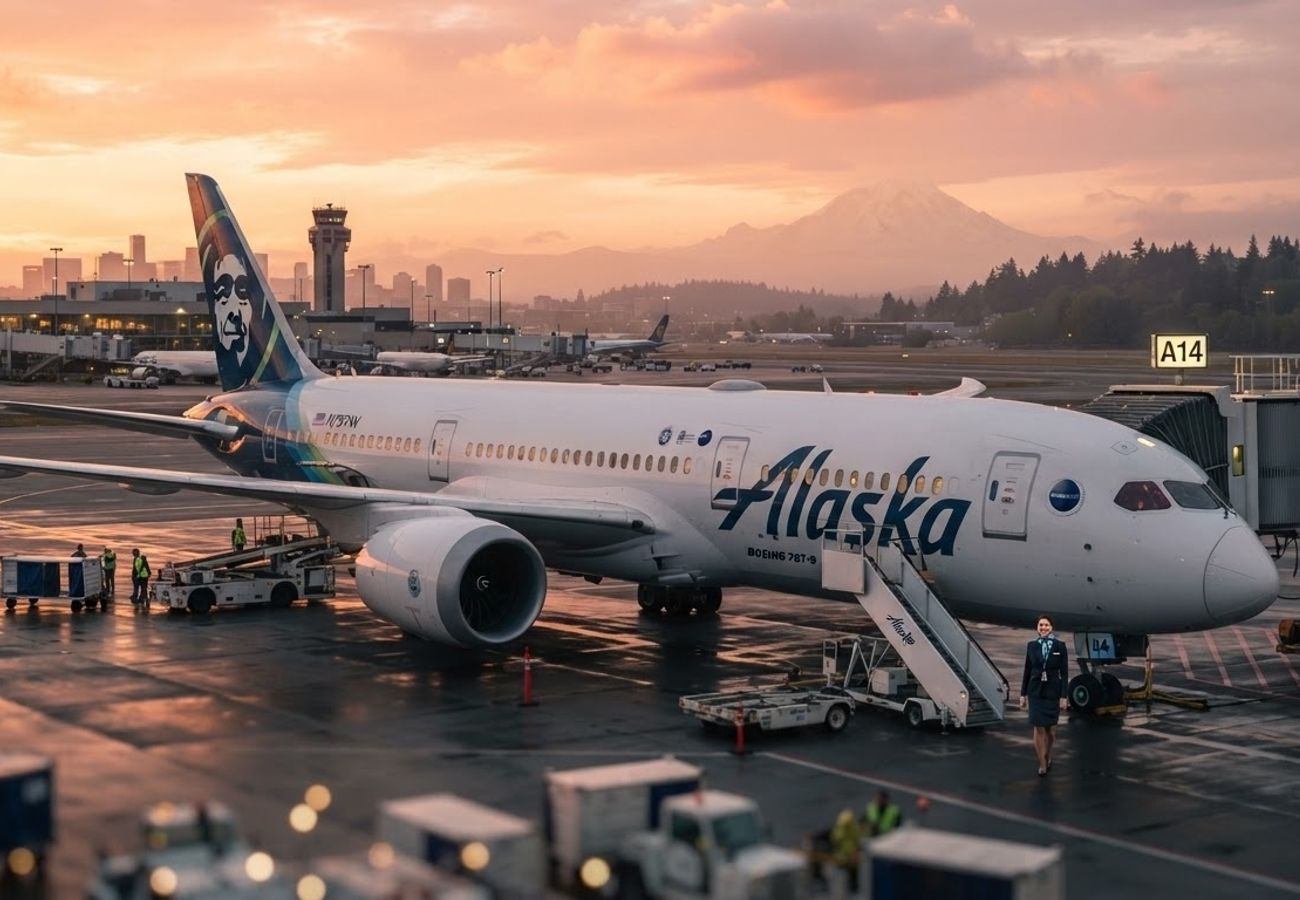
Image generated by AI
Alaska Airlines is facing a labor confrontation as cabin crews challenge the staffing levels assigned to its new Boeing 787 long-haul international network.
The dispute centers on the Association of Flight Attendants' claim that current crew complements are insufficient for the complexity of overseas operations, potentially compromising both safety margins and the premium service promised to passengers.
Labor Tension Over Widebody Operations
The conflict has intensified as Alaska Airlines integrates with Hawaiian Airlines and aggressively expands its transpacific footprint. The carrier is increasingly relying on widebody Boeing 787 aircraft for flights that frequently exceed 10 hours in duration.
Flight attendants argue that the airline's crewing model is calibrated too closely to minimum regulatory requirements. This "lean" approach is viewed by crew members as inadequate for the heightened demands of long-haul service, which includes complex multi-course meal delivery, increased safety responsibilities, and the management of larger passenger cabins.
Primary Points of Contention
- Contractual Interpretation: The union asserts that current staffing levels conflict with work rules established during the 2025 contract negotiations.
- Safety and Fatigue: Crews report that longer duty days and disrupted circadian rhythms are exacerbated by having fewer colleagues to share emergency and routine responsibilities.
- Service Quality: Flight attendants claim they are expected to deliver international-grade service with headcounts only slightly higher than those used on short-haul domestic flights.
- Operational Flow: The adoption of a "train service" model—where carts move linearly from front to back—is criticized for reducing flexibility and slowing response times to passenger needs.
Strategic Expansion vs. Labor Stability
Alaska Airlines has positioned its international growth as a core strategic priority, utilizing Seattle as a global gateway to major Asian hubs, specifically Tokyo and Seoul. However, this expansion is colliding with a broader trend in the U.S. aviation industry where crews are securing higher pay and improved work rules.
Market trends suggest that the transition from a narrowbody domestic operator to a widebody international carrier involves a steep learning curve. Our analysis indicates that the combination of new aircraft types, revised galley layouts, and unfamiliar catering regimes creates a high-pressure environment that necessitates robust staffing during the stabilization phase.
Impact on Passenger Experience
While no immediate work stoppage is indicated, the staffing gap is manifesting in the cabin. Analysis of passenger feedback reveals a dichotomy:
- Positive: Novelty and excitement regarding Alaska's entry into the long-haul market.
- Negative: Reports of inconsistent service, delays, and the perception of "stretched" crews.
Passengers may experience a more compressed service routine, with fewer cabin passes and limited individualized attention during peak flight phases.
Why This Matters
From a logistical perspective, this dispute highlights a critical friction point in aviation: the gap between corporate growth narratives and operational reality. For travelers on these routes, the real impact is a potential degradation of the "premium" experience. When an airline markets a high-end international product but staffs it to regulatory minimums, the burden falls entirely on the frontline crew.
For the industry, this is a symbolic test of the "lean" operational model. If Alaska cannot resolve these staffing concerns, it risks permanent damage to its brand equity in the competitive transpacific market. Furthermore, it signals that the 2025 labor agreements may have left ambiguities regarding widebody operations that could trigger further disputes across other U.S. carriers expanding their long-haul fleets.
Industry Outlook
The resolution of the Boeing 787 staffing issue will likely depend on the performance data Alaska collects over the coming quarters. We expect the carrier to face pressure to increase crew complements if customer satisfaction scores dip or if fatigue-related safety reports increase.
As Alaska continues to harmonize its operations post-Hawaiian Airlines merger, the company must balance cost-containment with the labor requirements of a global network. Failure to do so may lead to increased union militancy, including potential strike authorizations if the "more crew or less service" ultimatum remains unaddressed.
The tension between aggressive network scaling and crew sustainability remains the primary risk to Alaska's global ambitions.
Related Travel Guides
Disclaimer
This article is for informational and educational purposes only. It does not constitute legal, financial, or professional advice. While we strive to provide accurate and up-to-date information, travel policies, regulations, and conditions change rapidly. Always verify information with official sources before making travel decisions. Nomad Lawyer makes no representations about the accuracy, reliability, completeness, or suitability of the information provided. Readers should consult qualified professionals for advice specific to their circumstances. The views expressed in this article are those of the author and do not necessarily reflect the views of Nomad Lawyer.
Kunal K Choudhary
Co-Founder & Contributor
A passionate traveller and tech enthusiast. Kunal contributes to the vision and growth of Nomad Lawyer, bringing fresh perspectives and driving the community forward.
Learn more about our team →