
Alaska Airlines Flight ASA34 Boeing 737MAX 9 Seattle to New York Forced into Emergency Diversion at Los Angeles Amid Travel Chaos and Alaska Regional Disruptions
Alaska Airlines flight ASA34, a Boeing 737MAX 9 from Seattle to New York, was forced into an emergency diversion at LAX following a sudden midday disruption.

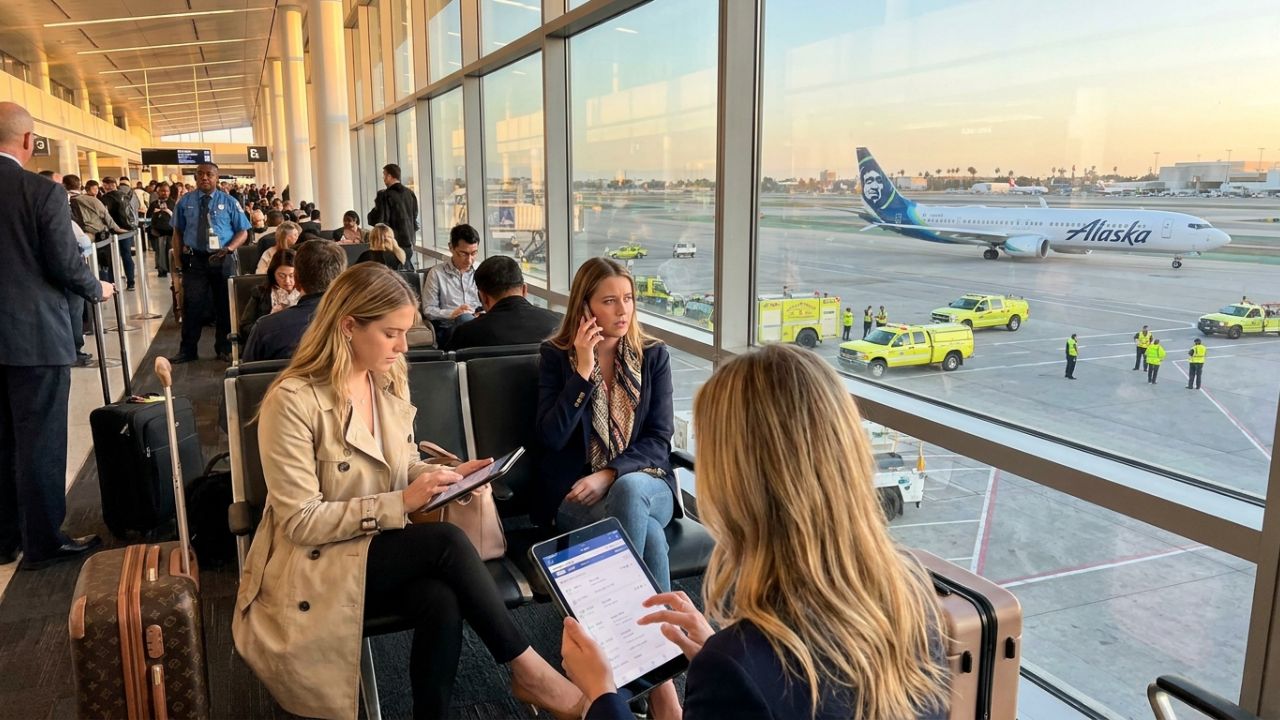
Image generated by AI
In a dramatic turn of events for transcontinental travelers, Alaska Airlines flight ASA34, a Boeing 737MAX 9 scheduled from Seattle to New York, was forced into an emergency diversion at Los Angeles International Airport (LAX). The midday disruption, which occurred shortly after take-off from Seattle-Tacoma International Airport (SEA), has sparked fresh concerns within the airline news sector. While the aircraft landed safely without reported injuries, the sudden course change from its planned path to John F. Kennedy International Airport (JFK) highlights the ongoing operational sensitivity surrounding major domestic corridors. This incident adds another layer of complexity to a day already marked by localized flight cancellations and travel chaos across the airline's broader network.
Breaking: Emergency Rerouting Interrupts Major Cross-Country Service
The disruption began when the flight crew of ASA34 unexpectedly abandoned their transcontinental route, redirecting the high-capacity jet toward the Southern California coast. The service had originally departed Seattle slightly behind schedule at 9:24 a.m. PDT, but never made it past the initial stages of its journey toward New York. Instead of the planned evening arrival at JFK's Terminal 6, Gate 67, the aircraft was listed as “Diverted to LAX,” touching down at approximately 12:47 p.m. EDT.
While Alaska Airlines has yet to confirm the technical or operational nature of the disruption, the emergency landing rapidly drew the attention of aviation tracking communities. The diversion is being treated as a high-priority event, particularly given the aircraft type's history of scrutiny. For the passengers onboard, the experience was defined by uncertainty as the jet banked away from its New York-bound trajectory, ending a cross-country mission just minutes after it had begun.
Expanded Overview: Alaska’s Network Under Simultaneous Strain
The diversion of flight ASA34 did not occur in a vacuum. Simultaneously, the airline was managing significant airport disruptions in its namesake state. Operational data indicates that Alaska Airlines was forced to ground 9 flights and delay another 59 services across Anchorage, Nome, and Bethel. This regional instability, combined with the transcontinental emergency, suggests a day of intense pressure for the carrier's operations control center.
Industry analysts note that while diversions are a standard safety protocol, the concentration of irregularities across both long-haul and regional routes creates a massive "reaccommodation bottleneck." With hundreds of travelers stranded from the Pacific Northwest to the Arctic Circle, the carrier is now working around the clock to restore its schedule and maintain passenger trust in its aviation updates.
Section-Wise Breakdown: Hub-by-Hub Impact
Seattle-Tacoma (SEA): The Origin of Instability
The disruption began at one of Alaska Airlines' largest hubs. Flight ASA34’s departure was already under scrutiny as it left 23 minutes late. The sudden loss of a transcontinental rotation from Seattle leaves a significant gap in the day's capacity toward the East Coast, forcing ground staff to manage a full manifest of displaced JFK-bound travelers.
Los Angeles (LAX): The Diversion Sanctuary
Los Angeles was chosen as the diversion point due to its extensive runway infrastructure and high density of maintenance support. As a primary diversion hub for West Coast traffic, LAX is uniquely equipped to handle sudden arrivals of large narrow-body aircraft like the 737MAX 9. The aircraft remains on the ground at LAX while technicians and investigators assess the underlying cause of the midday disruption.
New York (JFK): The Ghost Terminal Arrival
In New York, the planned arrival at Gate 67 and Baggage Carousel 63 never materialized. The systemic delay of ASA34 has a "cascading" effect on JFK's afternoon rotation, as the aircraft would typically be scheduled for a quick turnaround and return service. This absence creates further flight cancellations and schedule slippage on the return leg of the rotation.
Regional Disruptions: Anchorage, Nome, and Bethel
Beyond the high-profile diversion, the carrier's regional network faced its own travel chaos. The 68 total irregularities in Anchorage and surrounding outposts have isolated several remote communities, highlighting the fragile nature of Arctic aviation logistics during periods of operational strain.
Flight Details and Operational Metrics
The following table summarizes the key performance data for the diverted flight, as recorded by Live Flight Tracking systems on May 15, 2026.
Alaska Airlines ASA34: Operational Performance Matrix
| Metric | Detail |
|---|---|
| Flight Number | ASA34 |
| Carrier | Alaska Airlines |
| Aircraft Type | Boeing 737MAX 9 |
| Origin Hub | Seattle-Tacoma (SEA) |
| Destination Hub | New York (JFK) |
| Scheduled Departure | 9:01 a.m. PDT |
| Actual Departure | 9:24 a.m. PDT |
| Scheduled Arrival (JFK) | 5:35 p.m. EDT |
| Actual Arrival (LAX - Diverted) | 12:47 p.m. EDT |
| Arrival Terminal/Gate (Original) | Terminal 6, Gate 67 |
| Status | Diverted to LAX |
Passenger Impact: Reaccommodation and Logistical Friction
For the passengers of ASA34, the diversion to Los Angeles marks the beginning of a long journey toward their original destination.
- Missed Connections: Many travelers on the transcontinental service were likely connecting to European or Caribbean flights from JFK, all of which are now severely compromised.
- Logistical Complexity: Alaska Airlines has advised passengers to contact the airline directly for reaccommodation. While some may resume their journey on a later service or a different aircraft, others face potential overnight stays in Los Angeles.
- Baggage Delays: With the aircraft grounded at LAX, the transfer of checked luggage to alternative JFK-bound flights remains a primary concern for ground handlers.
- System Notices: The airline's operational status system indicated that "usually the airline will depart at a later time to get to the original destination," but this depends heavily on the outcome of maintenance inspections in Los Angeles.
Industry Analysis: Why Diversions Matter (H2)
Aviation experts emphasize that diversions involving the Boeing 737MAX 9 are always treated with an abundance of caution. While a rerouting can be triggered by anything from a medical emergency to adverse weather, technical warnings are often the primary cause for such sudden "mid-route" course changes.
- Safety First Culture: Airlines prioritize passenger safety above scheduling. If a cockpit alert or operational anomaly occurs over the Western United States, LAX is the most logical and safe harbor for a transcontinental flight.
- Regulatory Compliance: Any unscheduled landing must be thoroughly documented and reported to federal aviation authorities, especially when it involves "New-Gen" aircraft.
- Operational Resilience: The carrier's ability to handle 68 regional irregularities alongside a major transcontinental diversion is a major test of its fleet management and crew duty limitations.
Conclusion: Awaiting Clarification in a High-Stakes Environment
As of Friday afternoon, Alaska Airlines has not released a detailed explanation for the diversion of flight ASA34. The lack of immediate disclosure is typical for developing operational events as internal reviews and maintenance assessments proceed. However, the safe landing at LAX is a testament to the flight crew's rapid response to whatever onboard risk or technical alert forced the change in plans. For now, the transcontinental air bridge remains sensitive as the carrier works to stabilize its broader network and restore passenger confidence.
Key Takeaways
- Emergency Event: Alaska Airlines ASA34 diverted to LAX shortly after departing Seattle for New York.
- Aircraft Factor: The incident involved a Boeing 737MAX 9, adding to the day's airline news significance.
- Safe Landing: The aircraft touched down safely at 12:47 p.m. EDT; no injuries were reported.
- Network Chaos: Concurrently, Alaska Airlines faced 68 irregularities in Anchorage, Nome, and Bethel.
- Passenger Warning: JFK arrivals for ASA34 are cancelled, with reaccommodation efforts ongoing at LAX.
- Outlook: Aviation investigators are currently assessing the cause of the midday disruption.
Related Travel Guides
Disclaimer
This article is for informational and educational purposes only. It does not constitute legal, financial, or professional advice. While we strive to provide accurate and up-to-date information, travel policies, regulations, and conditions change rapidly. Always verify information with official sources before making travel decisions. Nomad Lawyer makes no representations about the accuracy, reliability, completeness, or suitability of the information provided. Readers should consult qualified professionals for advice specific to their circumstances. The views expressed in this article are those of the author and do not necessarily reflect the views of Nomad Lawyer.
Kunal K Choudhary
Co-Founder & Contributor
A passionate traveller and tech enthusiast. Kunal contributes to the vision and growth of Nomad Lawyer, bringing fresh perspectives and driving the community forward.
Learn more about our team →