
Alaska Airlines Launches Sustainability Initiative Linking Frequent Flyer Status to Sustainable Aviation Fuel Contributions
Breaking airline news and aviation industry updates for 2026.

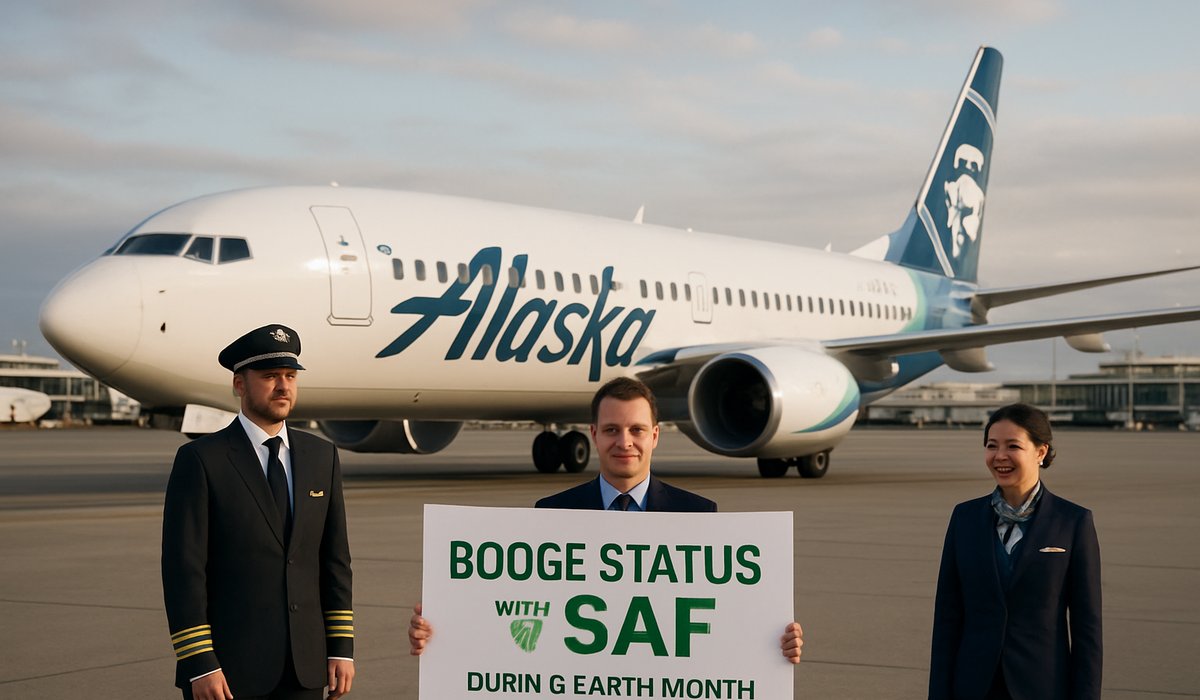
Image generated by AI
Alaska Airlines Launches Sustainability Initiative Linking Frequent Flyer Status to Sustainable Aviation Fuel Contributions
Carrier embraces environmental commitments during Earth Month while reshaping loyalty program incentives
Alaska Airlines is reshaping how travelers can advance their frequent flyer status by tying membership progression directly to sustainability efforts, introducing a novel contribution-based model centered on sustainable aviation fuel (SAF) investments during Earth Month 2026.
Breaking: Status Acceleration Through Environmental Action
The Seattle-based carrier unveiled a limited-time program allowing Mileage Plan members to expedite elite tier advancement by financially contributing toward sustainable aviation fuel initiatives. The move represents a significant pivot in how the aviation industry gamifies environmental responsibility among its customer base, merging loyalty rewards with carbon-reduction objectives during the month-long sustainability awareness campaign.
How the Program Works
Rather than exclusively accumulating flight miles or premium cabin purchases—traditional metrics for status advancement—Alaska Airlines now permits passengers to convert monetary contributions directly into status progress. The initiative targets environmentally conscious travelers willing to financially support the airline's SAF procurement while simultaneously accelerating their journey through the Mileage Plan hierarchy.
The program runs through April, capitalizing on heightened public focus on environmental stewardship. Participants contribute funds designated explicitly for sustainable aviation fuel acquisition, addressing one of the aviation industry's most pressing challenges: reducing carbon emissions from jet fuel consumption.
Industry Context: Aviation's Sustainability Crossroads
The announcement arrives amid intensifying pressure on global carriers to demonstrate tangible environmental commitments. Sustainable aviation fuel—derived from renewable resources like agricultural waste and algae—burns significantly cleaner than conventional jet fuel, potentially reducing lifecycle carbon emissions by up to 80 percent. However, SAF remains expensive, typically costing 2-3 times more than traditional aviation fuel.
Alaska Airlines' approach acknowledges this economic reality while incentivizing passenger participation in cost-sharing solutions. The strategy signals broader industry recognition that meeting climate targets requires collaborative funding models extending beyond operational changes alone.
Market Implications
The initiative reflects shifting consumer expectations, particularly among younger demographics prioritizing environmental credentials when selecting carriers. By integrating sustainability into its most coveted program—frequent flyer status—Alaska Airlines positions itself as an industry leader in climate-conscious innovation rather than merely implementing incremental operational improvements.
The move also differentiates Alaska Airlines in a competitive market where traditional airline fees and baggage charges increasingly dominate customer complaints. Offering status advancement through environmental contribution creates positive brand associations while generating alternative revenue streams beyond conventional ancillary fees.
Looking Forward
Though limited to Earth Month, the program's reception may influence Alaska Airlines' broader loyalty strategy. Industry observers suggest similar carriers could adopt comparable models, fundamentally transforming how frequent flyer programs function while addressing aviation's decarbonization imperative.
Frequently Asked Questions
Q: How much does contributing to SAF cost compared to traditional status advancement methods? Alaska Airlines has not disclosed specific contribution amounts, but industry benchmarks suggest SAF initiatives typically require $500-$2,000+ for meaningful tier progression equivalent.
Q: Which other airlines offer SAF-based loyalty programs? Alaska Airlines pioneered this specific model during Earth Month 2026, though competitors including United Airlines and Delta have explored separate SAF sustainability initiatives.
Q: Does SAF reduce airline ticket prices or baggage fees? SAF currently increases operational costs rather than lowering them. Airlines typically pass expenses to consumers through fuel surcharges rather than reducing ancillary charges like baggage fees.
Q: Is sustainable aviation fuel widely available for commercial flights? SAF comprises less than 0.1% of global jet fuel supply, though production capacity is expanding. Major carriers have committed to increasing SAF usage through 2030.
Q: Can I earn status through SAF contributions year-round? The program launches specifically during Earth Month; permanent expansion hasn't been announced.
Related Travel Guides
Flight Delay Compensation Guide 2026
Understanding Airline Route Changes
Airport Security Process Updated (2026)
External Resources
Disclaimer
This article is for informational and educational purposes only. It does not constitute legal, financial, or professional advice. While we strive to provide accurate and up-to-date information, travel policies, regulations, and conditions change rapidly. Always verify information with official sources before making travel decisions. Nomad Lawyer makes no representations about the accuracy, reliability, completeness, or suitability of the information provided. Readers should consult qualified professionals for advice specific to their circumstances. The views expressed in this article are those of the author and do not necessarily reflect the views of Nomad Lawyer.
Raushan Kumar
Founder & Lead Developer
Full-stack developer with 11+ years of experience and a passionate traveller. Raushan built Nomad Lawyer from the ground up with a vision to create the best travel and law experience on the web.
Learn more about our team →