
Airspace Modern Closures Disrupt Global Aviation Routes in 2026
Geopolitical tensions have forced airspace modern closures over Russia, Ukraine, and Iran in 2026, quietly reshuffled global flight networks and increased operational costs. Airlines now navigate restricted zones, bypassing traditional routes that defined decades of predictable air travel.

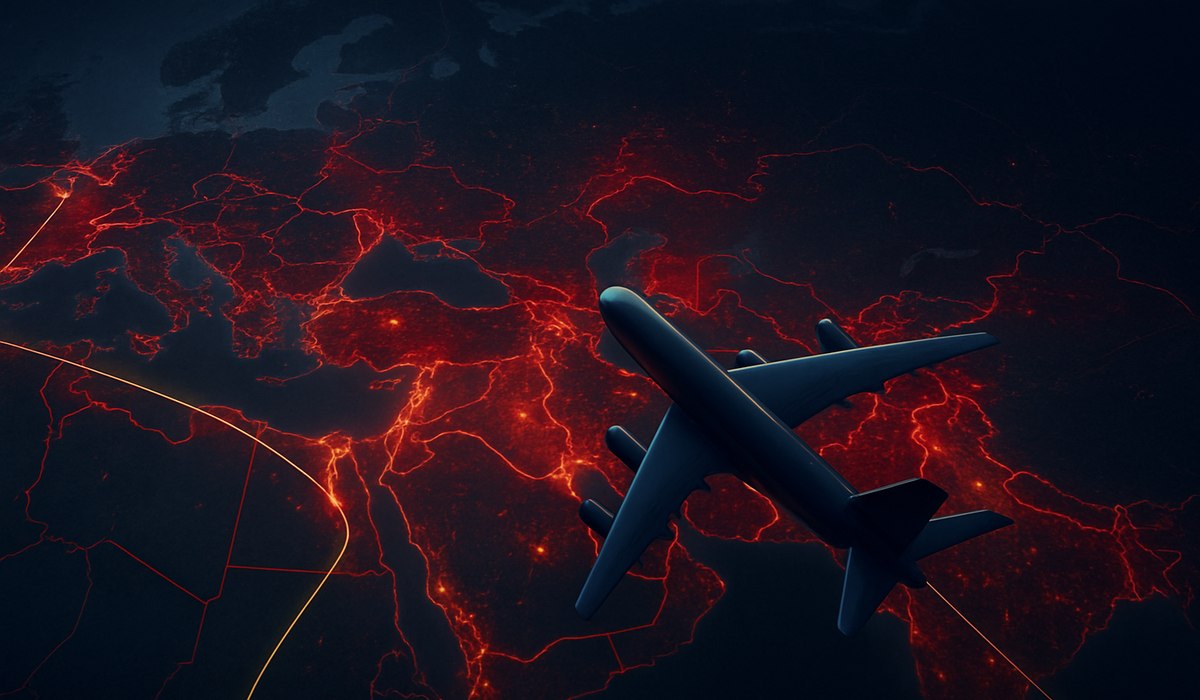
Image generated by AI
The Collapse of Predictable Skies
The global aviation network has quietly experienced a seismic shift in 2026, as geopolitical tensions have translated into hard airspace restrictions over Russia, Ukraine, and Iran. For decades, airlines engineered flight paths around stable overflight agreements, optimizing routes to minimize fuel consumption, flight duration, and operational strain. Today, that predictability has dissolved. Airspace modern closures now force carriers to navigate complex detours across multiple continents, fundamentally altering how the world connects by air.
The End of Predictable Routes: How Airspace Closures Disrupted Route Planning
The closure of major flight corridors represents one of aviation's most disruptive shifts since deregulation. Airlines historically filed flight plans months in advance, banking on consistent access to key airspace zones. Overflight fees and predictable routing protocols enabled carriers to maintain lean operations and competitive fares.
The airspace modern closures reshuffled this entire calculus. Flights bound for Asia now detour southward, avoiding restricted Russian airspace that once provided direct northern passages. European carriers rerouting around Ukraine must add 90 minutes to transatlantic crossings. Meanwhile, Iran's expanding restrictions force Middle Eastern operations to shift westward, creating bottlenecks over the Persian Gulf and Arabian Peninsula. Airlines operating hubs in Frankfurt, Amsterdam, and Istanbul have been quietly implementing contingency protocols. The cumulative effect: longer flight times, increased fuel consumption, higher crew expenses, and elevated operational complexity across the industry.
Russia, Ukraine, and Iran: A Map of Modern Aviation Restrictions
Russia's airspace closure remains the most consequential global aviation restriction. Commercial flights once transited Russian airspace daily, connecting Europe to Asia via the shortest available routes. Since early 2022, that corridor has been entirely unavailable, forcing carriers to circumnavigate via Scandinavia, the Caucasus, or Indian Ocean passages. Flights from London to Tokyo now add four to six hours to journey times.
Ukraine's war zone created a secondary layer of complexity. The entire Ukrainian airspace remains restricted to commercial traffic. Airlines serving Eastern Europe must coordinate landings with military authorities, introducing unpredictability into schedule management.
Iran's expanding restrictions represent the newest challenge. Tightening rules over Iranian airspace force Gulf-based carriers to reroute flights, creating congestion over friendly airspace zones. The combination of these three closure zones has forced a fundamental reimagining of Asian and Middle Eastern connectivity.
The Hidden Costs: Fuel Burn, Delays, and Operational Complexity
The financial impact of airspace modern closures extends far beyond simple route additions. Extended flight paths demand significantly higher fuel consumption—a critical cost driver when jet fuel prices fluctuate. A Boeing 777 rerouted around Russia instead of transiting directly burns approximately 15-20% additional fuel on transcontinental flights.
Airlines have absorbed some costs to remain competitive, but ticket prices have incrementally risen. Crew scheduling has become exponentially more complex. Flight attendants and pilots require additional rest periods on extended routes, necessitating larger crew bases and backup staffing protocols.
Maintenance schedules have shifted. Aircraft spending more hours aloft accumulate wear faster, increasing unscheduled maintenance events. Airport slot availability has become contested as carriers compete for landing windows at alternative hubs. Ground handling services at secondary airports have become bottlenecks. Catering and passenger services face strain during longer connection times.
Airlines Adapting to the New Normal: Strategic Rerouting and Future Outlook
Major carriers have responded with varied strategies. Lufthansa and Air France have invested in updated flight planning software, modeling thousands of alternative routes simultaneously. United Airlines and American Airlines have shifted some Asian services to alternative hubs. Middle Eastern carriers like Emirates and Qatar Airways have gained competitive advantage, offering smoother connectivity through neutral airspace.
Technology companies providing flight optimization software report unprecedented demand. Airlines now employ dedicated teams monitoring geopolitical developments, ready to adjust routes within hours if airspace restrictions change. Some carriers have negotiated overflight agreements with smaller nations, establishing backup corridors. Others have voluntarily reduced capacity on severely impacted routes, accepting lower profitability to maintain operational stability.
The airspace modern closures have indirectly accelerated investment in alternative aircraft. Some airlines are purchasing smaller, more fuel-efficient jets for regional routes, hedging against further disruption. Hybrid-electric aircraft development has gained urgency, driven partly by fuel cost pressures from extended routing.
Live Route Tracking and Real-Time Impact Monitoring
Travelers can monitor how airspace modern closures affect their specific flights using real-time tracking tools. FlightAware displays actual flight paths, revealing detours and extended routing. Check the "altitude replay" feature to see whether your aircraft transited restricted zones or followed alternative corridors.
The FAA maintains an official Notice to Airmen (NOTAM) database. While technical in nature, NOTAMs published for foreign airspace provide authoritative information about closures and restrictions affecting your departure airport. Airlines are legally required to comply with all active NOTAMs.
Key Data: Airspace Closures Impact Summary
| Restriction Zone | Primary Impact | Average Time Addition | Fuel Increase | Affected Routes |
|---|---|---|---|---|
| Russian Airspace | Europe-Asia connectivity | 4-6 hours | 15-20% | London-Tokyo, Frankfurt-Beijing |
| Ukrainian Airspace | Eastern European operations | 1.5-2.5 hours | 10-15% | Paris-Kiev, Warsaw-Southern Europe |
| Iranian Airspace | Gulf and Middle East routes | 1-3 hours | 8-12% | Dubai-Doha, Baghdad-Tehran |
| Northern Corridor | Polar route elimination | 3-5 hours | 12-18% | Seattle-Frankfurt, Chicago-Hong Kong |
| Turkish Airspace Bottleneck | Secondary hub congestion | 0.5-2 hours | 5-8% | Istanbul-Athens, Istanbul-Cairo |
| Arabian Peninsula Congestion | Alternative routing overflow | 1-2 hours | 6-10% | Doha-Bahrain, Abu Dhabi-Muscat |
What This Means for Travelers: Actionable Steps
Airspace modern closures affect your travel experience in subtle but measurable ways. Flight times are longer. Ticket prices reflect increased operational costs. Connections require more buffer time due to unpredictability.
Traveler Action Checklist
-
Book flights with extended connection buffers. Add two to three hours between connections on routes affected by detours (Europe-Asia, Middle East-Europe). Check your itinerary and verify routing before purchase.
-
Verify alternative routings with your airline. Call or contact customer service to understand which corridor your specific flight uses. Some carriers offer faster routes via different hubs.
-
Monitor real-time flight tracking via FlightAware. Track your flight 24 hours before departure to see actual routing. Unusual diversions may indicate airspace closures or congestion.
-
Review passenger rights under US DOT regulations. Extended delays entitle you to compensation under specific circumstances. Understand your airline's policies regarding schedule changes.
-
Purchase travel insurance with delay coverage. Extended flight times increase the likelihood of missed connections. Comprehensive coverage protects against cascading delays.
-
Expect higher fuel surcharges. Budget additional cost for tickets on routes using extended corridors. Compare prices across carriers serving different hubs.
-
Request frequent flyer upgrades strategically. Premium seating becomes more valuable on extended flights. Use miles on routes with longest time additions (
Kunal K Choudhary
Co-Founder & Contributor
A passionate traveller and tech enthusiast. Kunal contributes to the vision and growth of Nomad Lawyer, bringing fresh perspectives and driving the community forward.
Learn more about our team →