
Airbus Achieves Aviation Milestone With Record-Breaking Cargo Door for Next-Generation A350F Freighter
Breaking airline news and aviation industry updates for 2026.

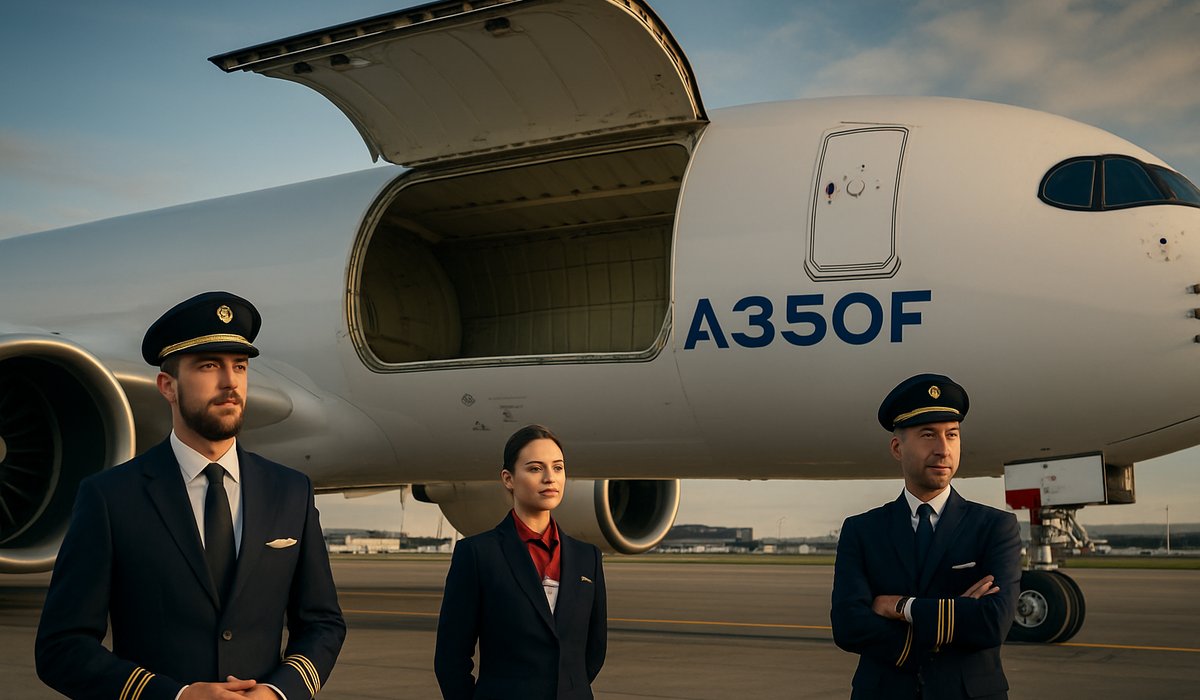
Image generated by AI
Airbus Achieves Aviation Milestone With Record-Breaking Cargo Door for Next-Generation A350F Freighter
European aerospace giant completes industry's largest aircraft cargo door, signaling major advancement in dedicated freight aircraft capabilities
Historic Engineering Feat Reshapes Air Cargo Operations
Airbus has successfully manufactured and assembled what industry experts confirm is the largest cargo door ever built for a commercial aircraft, marking a significant engineering milestone ahead of the A350F freighter variant's entry into service. The completion of this oversized main deck door represents a critical breakthrough in the aerospace manufacturer's ambitious plans to capture a larger share of the booming global air cargo market.
The unprecedented scale of the cargo aperture underscores Airbus's strategy to maximize freight-carrying capacity on its wide-body A350F platform, positioning the aircraft to compete directly with Boeing's established 777F freighter and other long-range cargo specialists currently dominating international logistics networks.
Strategic Implications for Global Air Cargo Market
The A350F's enhanced cargo accessibility addresses a critical pain point in modern air freight operations. Industry analysts note that larger cargo doors significantly reduce aircraft turnaround times at distribution hubs, enabling carriers to load bulky freight—from automotive components to pharmaceutical shipments—without requiring complex external handling procedures.
The development comes as global cargo aviation experiences sustained demand growth following pandemic-driven e-commerce acceleration. Airlines and freight operators worldwide have prioritized fleet modernization investments, seeking aircraft that balance operational efficiency with environmental compliance standards.
Manufacturing Excellence and Timeline Advancement
The successful completion of the cargo door assembly demonstrates Airbus's manufacturing prowess and supply chain coordination across its European production facilities. This achievement accelerates the A350F's production roadmap, bringing commercial deliveries closer to previously announced timelines.
Airbus continues developing supporting systems and certifications required for the aircraft variant, with aviation regulatory authorities monitoring technical specifications to ensure compliance with international airworthiness standards.
Market Positioning and Competitive Landscape
The A350F enters an increasingly competitive dedicated freighter segment where payload capacity and fuel efficiency directly impact carrier profitability. Modern cargo airlines face mounting pressure to reduce per-kilogram operating costs while meeting sustainability targets—pressure that next-generation aircraft designs directly address.
Industry observers anticipate the A350F will appeal particularly to legacy carriers modernizing aging 747 and 767 freighter fleets, as well as emerging express delivery operators expanding international networks.
FAQ: Airbus A350F Cargo Aircraft Questions
What makes the A350F cargo door larger than competitors? The newly completed door represents the industry's largest main deck cargo aperture, enabling superior loading efficiency compared to existing freighter variants and maximizing revenue per flight hour.
When will the Airbus A350F enter commercial service? While Airbus has not announced a definitive service entry date, successful cargo door completion indicates production advancement toward near-term deliveries to launch customers.
How does the A350F compare to Boeing's 777F freighter? The A350F targets similar long-range, high-capacity operations but incorporates modern aerodynamics and fuel efficiency improvements, positioning it as a next-generation alternative to established platforms.
What airlines are expected to order the A350F? Major international carriers and dedicated cargo operators have expressed interest, though formal order announcements remain pending final certifications.
Why is cargo door size critical for airline operations? Larger doors reduce ground handling complexity, accelerate aircraft turnaround times, and enable transportation of oversized cargo without external rigging, directly improving operational economics.
Related Travel Guides
Flight Delay Compensation Guide 2026
Understanding Airline Route Changes
Airport Security Process Updated (2026)
External Resources
Disclaimer
This article is for informational and educational purposes only. It does not constitute legal, financial, or professional advice. While we strive to provide accurate and up-to-date information, travel policies, regulations, and conditions change rapidly. Always verify information with official sources before making travel decisions. Nomad Lawyer makes no representations about the accuracy, reliability, completeness, or suitability of the information provided. Readers should consult qualified professionals for advice specific to their circumstances. The views expressed in this article are those of the author and do not necessarily reflect the views of Nomad Lawyer.
Raushan Kumar
Founder & Lead Developer
Full-stack developer with 11+ years of experience and a passionate traveller. Raushan built Nomad Lawyer from the ground up with a vision to create the best travel and law experience on the web.
Learn more about our team →