
Airbus Boeing Cockpit Design: Two Fundamentally Different Flight Philosophies
Airbus and Boeing's contrasting cockpit philosophies reveal opposing approaches to automation and pilot control. In 2026, these design differences continue shaping how aviation's two giants train crews and manage in-flight emergencies.

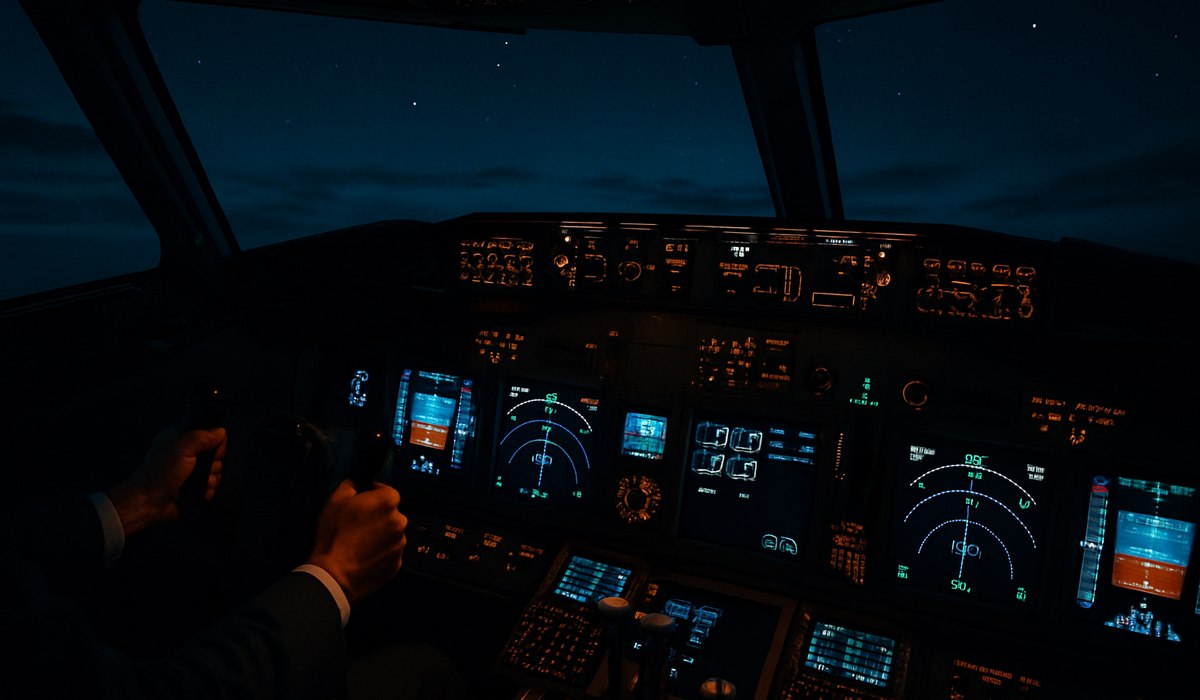
Image generated by AI
When Boeing and Airbus Flight Decks Meet: Understanding Cockpit Philosophy Divides
Airbus and Boeing, aviation's two dominant manufacturers, employ radically different cockpit design philosophies that fundamentally shape how modern pilots interact with aircraft automation during routine operations and emergency scenarios. These distinctions between the airbus boeing cockpit approaches stem from competing engineering philosophies established decades ago, yet remain critical to pilot training, certification, and decision-making protocols in 2026. Understanding these design differences helps frequent flyers appreciate the technological complexity underlying commercial aviation safety.
The flight decks of Boeing and Airbus aircraft represent two completely different visions of human-machine collaboration. Boeing's philosophy emphasizes pilot authority and direct manual control, while Airbus prioritizes automated systems with pilot oversight. This fundamental divergence influences everything from instrument layout to how crews respond when systems fail unexpectedly.
The Core Philosophy Divide: Airbus vs Boeing Design Principles
Boeing's cockpit design traces its roots to the company's belief that experienced pilots should maintain direct authority over aircraft systems. The manufacturer designs control inputs to provide immediate, intuitive responses. Pilots directly manipulate the control yoke, and their inputs have proportional effects on aircraft attitude and flight path. This "pilot-centric" approach means Boeing jets demand active pilot engagement throughout all flight phases.
Airbus adopted a fundamentally opposite stance, implementing a "fly-by-wire" architecture with multiple automated safeguards. Rather than direct mechanical links, Airbus cockpits use electronic systems that interpret pilot inputs through flight envelope protection computers. The airbus boeing cockpit distinction becomes most apparent during emergencies—Boeing expects pilots to override automation and manually recover, while Airbus systems prevent pilots from exceeding aircraft limits, even if deliberately attempting to do so.
These completely different philosophies reflect broader industry debates about automation's role in reducing pilot workload versus potential over-reliance on systems. Boeing emphasizes pilot skill and decision-making authority. Airbus emphasizes system redundancy and automated protection layers. Both approaches have demonstrated strong safety records across millions of flight hours.
How Cockpit Layout Impacts Pilot Training and Decision-Making
Cockpit layout differences between these jets create significant training implications for commercial pilots. A captain transitioning from Boeing to Airbus (or vice versa) requires extensive type-rating certification, involving weeks of simulator training beyond standard conversion courses. The airbus boeing cockpit layouts differ in control placement, instrument grouping, and automation engagement procedures.
Boeing's traditional yoke-based control system means pilots physically sense aircraft response through the control column. Airbus's sidestick controllers (used on newer aircraft) require pilots to trust electronic interpretation of their inputs rather than feeling direct mechanical feedback. This psychological distinction influences how pilots develop intuitive understanding of aircraft behavior.
Instrument displays differ substantially as well. Boeing crews reference multiple independent instruments and cross-check data continuously. Airbus cockpits integrate data more seamlessly through electronic displays with standardized presentations. When systems fail, these layout differences determine which backup instruments become immediately available and how quickly crews access critical information.
Training organizations worldwide emphasize that switching between these completely different cockpit architectures demands renewed competency verification. Pilot muscle memory developed on one manufacturer's jets can become problematic when transitioning to competing equipment, particularly during high-stress emergency scenarios where automatic responses kick in.
Automation and Safety: Which Approach Prevails?
Neither the Airbus nor Boeing philosophy has proven definitively superior in safety metrics. Both manufacturers report comparable accident rates when normalized against flight hours and fleet sizes. However, accident investigations occasionally reveal scenarios where one approach might have prevented specific accidents.
The airbus boeing cockpit debate intensified following incidents where pilots struggled with automation failures. Some crashes involved Boeing aircraft where pilots needed to recognize system degradation and manually recover—scenarios emphasizing the manufacturer's philosophy that pilot skills remain paramount. Conversely, Airbus safety records demonstrate that automated protection systems effectively prevent accidents stemming from pilot error or spatial disorientation.
Modern aviation safety depends less on which philosophy proves universally optimal and more on pilot familiarity with their specific aircraft's operating characteristics. A well-trained Airbus captain and well-trained Boeing captain both achieve excellent safety outcomes. Problems emerge when pilots transition between manufacturers without adequate type-specific training or when crews misunderstand their aircraft's automation limitations.
The industry consensus increasingly supports hybrid approaches. Newer aircraft incorporate lessons from both philosophies—Boeing added more automated systems, while Airbus provided pilots greater manual override capabilities. This convergence reflects recognition that completely different design approaches each offer valid safety advantages.
The Future of Cockpit Design in Modern Aviation
Modern cockpit design continues evolving as manufacturers integrate new technologies while respecting proven safety principles. The airbus boeing cockpit distinctions that seemed profound twenty years ago gradually diminish as both companies adopt industry-standard glass displays and common automation frameworks.
Electric aircraft entering service around 2026 and beyond will introduce new design challenges requiring coordinated international standards. Manufacturers must balance automation benefits with pilot authority requirements while accommodating the completely different expectations various regulatory bodies maintain. The International Civil Aviation Organization increasingly develops performance-based standards rather than prescriptive design mandates, allowing manufacturers flexibility while ensuring safety equivalence.
Future cockpit design likely emphasizes intuitive human-machine interfaces accommodating diverse pilot experience levels. Artificial intelligence systems may provide decision support without automating critical functions. However, the fundamental tension between automation and pilot authority—which divides Boeing and Airbus philosophies—will remain relevant as long as humans operate complex aircraft systems.
Key Data: Cockpit Philosophy Comparison
| Characteristic | Boeing Philosophy | Airbus Philosophy |
|---|---|---|
| Control Interface | Mechanical yoke with direct feedback | Electronic sidestick with abstracted input |
| Automation Role | Supportive; pilots retain override authority | Protective; systems prevent unsafe operations |
| Emergency Response | Manual recovery expected from pilots | Automated protection attempts intervention first |
| Instrument Philosophy | Independent instruments cross-checked manually | Integrated electronic displays standardized |
| Pilot Workload Distribution | Higher during normal ops; explicit during emergencies | Lower during normal ops; protected during emergencies |
| Type-Rating Requirements | Extensive cockpit differences demand separate certification | Completely different from Boeing requiring full retraining |
| Failure Management | Pilots diagnose and manually compensate for failures | Systems alert pilots while maintaining protection |
What This Means for Travelers
Understanding airbus boeing cockpit design differences provides reassurance about aviation safety. Both approaches have proven effective across decades and millions of flights. Your safety depends more on crew training, maintenance standards, and airline safety culture than on which manufacturer built your aircraft.
Traveler Action Checklist:
-
Recognize that both Boeing and Airbus maintain comparable safety records—neither manufacturer demonstrates systematic superiority in accident prevention.
-
Trust that your crew completed manufacturer-specific type rating training, ensuring competency with their aircraft's completely different systems and philosophies.
-
Review airline safety records on FAA safety databases rather than focusing on aircraft manufacturer as a safety indicator.
-
Monitor FlightAware for real-time flight status when booking—aircraft manufacturer should not influence route or airline selection based on safety concerns.
-
File complaints about service issues (mechanical delays, crew performance) with the U.S. Department of Transportation if airlines fail to resolve problems internally.
-
Request specific aircraft type when booking only if you have documented anxiety about particular aircraft—most passengers experience identical comfort and safety regardless of cockpit design philosophy.
Frequently Asked Questions
Why do Airbus and Boeing design completely different cockpits?
The companies developed different visions of human-machine interaction starting in the 1980s. Boeing emphasized pilot authority and manual control; Airbus prioritized automated systems with protective layers. These philosophies, once established, became embedded in certification standards, training infrastructure,
Disclaimer
This article is for informational and educational purposes only. It does not constitute legal, financial, or professional advice. While we strive to provide accurate and up-to-date information, travel policies, regulations, and conditions change rapidly. Always verify information with official sources before making travel decisions. Nomad Lawyer makes no representations about the accuracy, reliability, completeness, or suitability of the information provided. Readers should consult qualified professionals for advice specific to their circumstances. The views expressed in this article are those of the author and do not necessarily reflect the views of Nomad Lawyer.
Preeti Gunjan
Contributor & Community Manager
A passionate traveller and community builder. Preeti helps grow the Nomad Lawyer community, fostering engagement and bringing the reader experience to life.
Learn more about our team →