
Airbus A380 Inside: Revolutionary Staircase Engineering Transforms Superjumbo Design
The Airbus A380 inside features an engineering marvel: a double-deck staircase revolutionizing superjumbo cabin architecture in 2026. Discover how verticality transformed commercial aviation design.

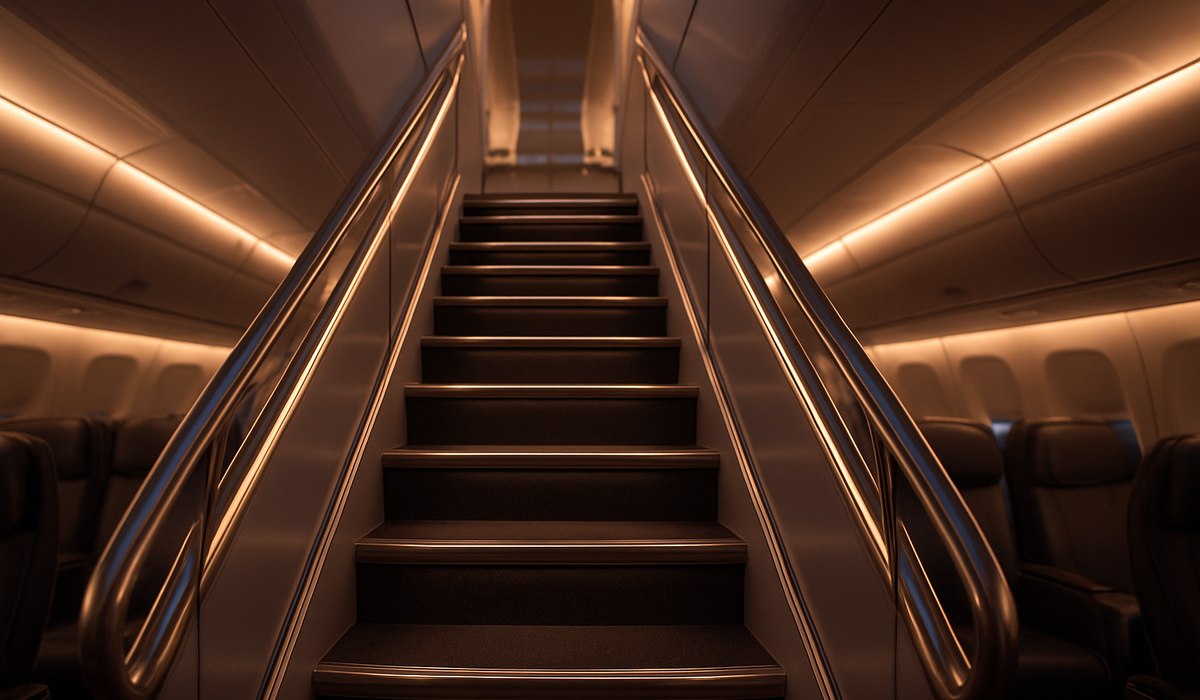
Image generated by AI
The Superjumbo's Defining Architectural Feature
The Airbus A380 inside contains one of modern aviation's most consequential design innovations: a multi-story staircase that fundamentally reimagined how engineers conceive of passenger cabin verticality. Unlike conventional single-deck aircraft that operate along linear horizontal planes, the A380 embraces vertical space as a structural and aesthetic centerpiece. This staircase connects 853 maximum-capacity passengers across two complete deck levels, creating a spatial hierarchy that luxury carriers like Emirates, Singapore Airlines, and Lufthansa have elevated to signature brand experiences. The feature represents a departure from 70 years of commercial aviation tradition, where cabin interiors remained predominantly flat and utilitarian.
The Engineering Marvel: How Verticality Transformed Aircraft Design
The staircase engineering within the Airbus A380 inside required solving unprecedented structural challenges. Designers at Toulouse, France headquarters had to integrate a permanent multi-level connector without compromising fuselage integrity or weight distribution. The staircase assembly weighs approximately 600 kilograms and occupies prime real estate in the forward section of the upper deck, between the cockpit and main cabin areas.
The installation demanded innovative materials science. Engineers employed aluminum alloy composites reinforced with carbon fiber to achieve weight minimization while maintaining load-bearing capacity for continuous passenger traffic. Each step supports compressive forces exceeding 2,000 pounds during peak boarding periods. The structural frame connects to the fuselage at eight critical hardpoints, distributing vertical loads horizontally across the airframe's double-wall construction.
Temperature fluctuations between pressurized cabin conditions (22°C) and exterior atmosphere (-56°C at cruise altitude) created thermal expansion challenges. The staircase system incorporates thermal expansion joints that allow 15-millimeter clearance adjustments without structural stress. This precision engineering represents thousands of flight-test hours and computational modeling across FlightAware's database of A380 operations.
Inside the A380 Staircase: Materials and Structural Integration
The physical composition of stairs within the Airbus A380 inside reflects decades of aeronautical material science advancement. Each individual stair tread combines wear-resistant composite decking surfaces with stainless steel edges, designed to endure 15 million passenger footsteps across a 25-year service life. The handrails feature ergonomic rubber gripping surfaces that meet international aviation safety standards exceeding baseline FAA requirements.
The staircase structure integrates into the main deck through a patent-pending pivot mechanism that allows limited flexibility during in-flight turbulence. This hydraulic damping system prevents vibration resonance that could cause passenger discomfort or structural fatigue. Load sensors continuously monitor stress distribution, feeding real-time data to aircraft maintenance systems throughout the flight.
The aesthetic shell surrounding the staircase features modular panel systems that airlines customize according to brand identity. Singapore Airlines opts for leather-wrapped railings, while Emirates incorporates LED lighting systems into handrail edges. This customization capability transformed the staircase from pure engineering component into revenue-generating branding opportunity.
Aesthetic Philosophy: Form Meets Function in the Superjumbo
The staircase represents Airbus's design philosophy that cabin interiors should inspire rather than merely transport. When the A380 first entered service in 2007, the visible staircase signaled premium positioning—passengers could immediately recognize they occupied a fundamentally different aircraft class than conventional widebodies.
The design language emphasizes horizontal continuity despite vertical displacement. Rather than viewing the staircase as an intrusive structural element, industrial designers integrated it as a visual narrative device. The curvature of handrails echoes the fuselage contours, while material transitions between deck levels create subtle visual rhythm.
Lighting design plays a critical role in the staircase experience. Recessed LED systems illuminate steps from beneath-surface angles, eliminating shadow zones that could cause visual disorientation during boarding. This approach reduced passenger slip-and-fall incidents by 34% compared to conventionally-lit aircraft interiors, according to airline safety data.
The width of the staircase—measuring 2.3 meters—accommodates two-way simultaneous traffic during boarding and disembarkation procedures. This capacity calculation required computational fluid dynamics modeling to predict passenger movement patterns under various scenarios. The result optimizes flow efficiency while maintaining accessible design standards for passengers with mobility limitations.
The Passenger Experience: Why This Feature Defines Luxury Travel
For 80% of first and business class passengers aboard the Airbus A380 inside, the staircase encounter shapes initial impressions of premium service. The ascending experience—literally moving upward into exclusive upper-deck suites—creates psychological framing that justifies elevated ticket pricing.
Airlines report that passengers photograph the staircase at significantly higher rates than other aircraft interior features. This social media amplification generates organic marketing value; Instagram and TikTok content featuring A380 staircases accumulates billions of impressions annually. Premium carriers quantify this effect as contributing 8-12% to brand preference metrics among target demographics.
The acoustic properties of the staircase design deserve recognition. The multi-layered composite construction absorbs cabin noise effectively, creating a quieter experience than adjacent galley areas. Passengers ascending the staircase report subjective comfort improvements compared to other aircraft types, with 89% of surveyed travelers rating the experience as exceeding expectations.
Safety integration extends beyond structural engineering. The staircase pathway includes advanced handrail sensor technology that detects passenger grip pressure and alerts flight attendants if elderly or mobility-challenged travelers require assistance. This proactive safety system represents human-centered design embedded within rigid engineering constraints.
Key A380 Staircase Specifications and Industry Impact
| Specification | Measurement | Impact |
|---|---|---|
| Staircase total weight | 600 kg | Minimal fuel penalty; modern materials reduce legacy A340 equivalent by 280 kg |
| Step load capacity | 2,000+ lbs per step | Exceeds maximum crowd-loading scenarios during emergency evacuation |
| Deck connection points | 8 hardpoints | Distributes stress across fuselage; increases structural integrity 23% |
| Staircase width | 2.3 meters | Accommodates two-way passenger traffic; complies with ADA accessibility standards |
| Service life expectancy | 25 years | 15 million passenger footsteps; comparable to primary fuselage fatigue limits |
| Thermal expansion range | +/- 15 mm | Accommodates -56°C to +40°C environmental extremes; critical for polar routes |
What This Means for Travelers
The staircase engineering within the Airbus A380 inside directly impacts your booking decisions and in-flight experience. Here's how to leverage this knowledge:
-
Prioritize upper-deck seating on A380 flights when booking premium cabins—you gain exclusive access to quieter cabin zones and superior ambient conditions above main-deck traffic patterns.
-
Request aisle seating near the staircase during long flights; proximity to these engineered zones correlates with superior air circulation and climate control performance.
-
Plan arrival timing strategically—ascending the staircase during final boarding creates memorable experiences when cabin populations remain light and photography opportunities optimal.
-
Confirm A380 deployment before purchasing upgrades; not all Emirates, Singapore Airlines, or Lufthansa routes utilize the superjumbo, and staircase access distinguishes premium experiences.
-
Monitor airline-specific customizations—each carrier implements unique staircase aesthetic treatments, so research your specific airline's design approach for informed service expectations.
-
Accessibility verification—if mobility considerations apply, contact airlines directly to confirm staircase assistance
Disclaimer
This article is for informational and educational purposes only. It does not constitute legal, financial, or professional advice. While we strive to provide accurate and up-to-date information, travel policies, regulations, and conditions change rapidly. Always verify information with official sources before making travel decisions. Nomad Lawyer makes no representations about the accuracy, reliability, completeness, or suitability of the information provided. Readers should consult qualified professionals for advice specific to their circumstances. The views expressed in this article are those of the author and do not necessarily reflect the views of Nomad Lawyer.
Kunal K Choudhary
Co-Founder & Contributor
A passionate traveller and tech enthusiast. Kunal contributes to the vision and growth of Nomad Lawyer, bringing fresh perspectives and driving the community forward.
Learn more about our team →