
India Express Launch: Air India Deploys 36 West Asia Routes in March 2026
Air India and Air India Express launch 36 flights to West Asia on March 31, 2026, with 20 dedicated UAE services. Impact on pricing, connectivity, and Indian travelers explained.

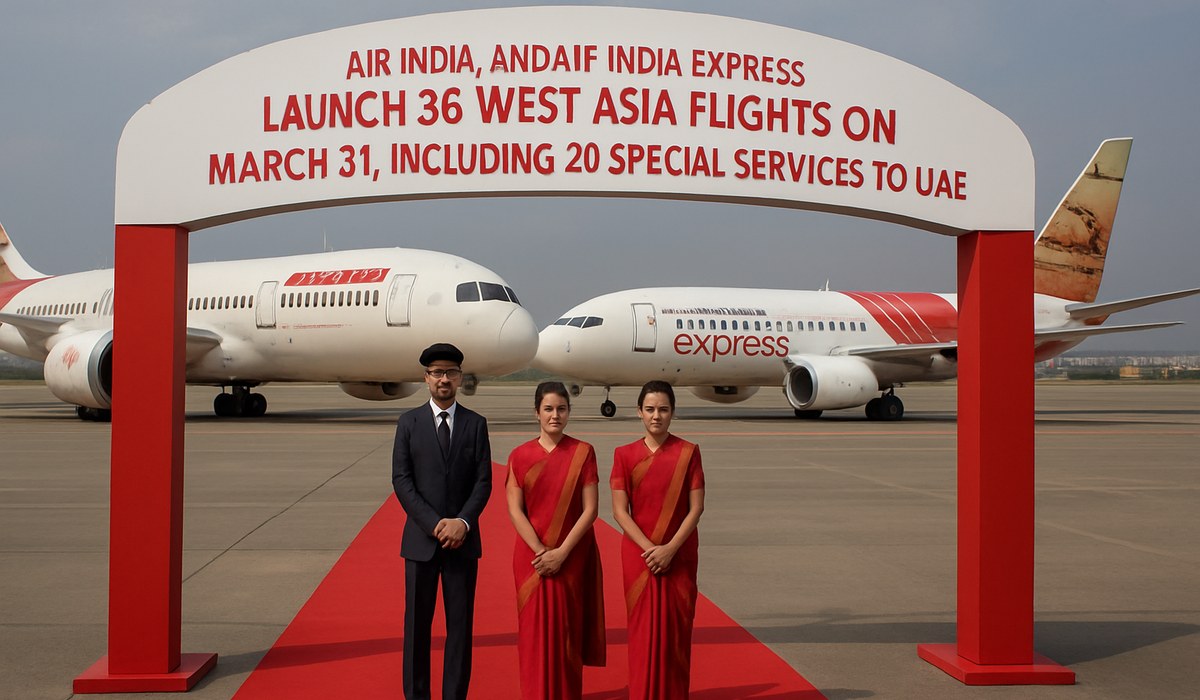
Image generated by AI
Air India's capacity surge to West Asia marks a watershed moment for Indian aviation. Beginning March 31, the carrier and its budget subsidiary Air India Express are injecting 36 fresh flight services into the Gulf corridor—a strategic push that repositions Delhi and Mumbai as primary hubs for South Asian travelers bound for the Emirates, Saudi Arabia, and Bahrain.
Twenty of these 36 departures target the United Arab Emirates exclusively. This concentration underscores market realities: UAE ports welcome approximately 3 million Indian nationals annually, driving relentless demand for affordable, direct connectivity. The timing—coinciding with summer travel season—positions Air India to capture premium leisure and business bookings before competitors respond.
Quick Summary
- Air India and Air India Express launch 36 combined West Asia flights effective March 31, 2026
- UAE receives 20 dedicated services; remaining 16 span Saudi Arabia, Bahrain, Oman, Kuwait
- Pricing expected to soften as capacity increases compete with Emirates, flydubai, and Lufthansa
- New routes accessible via real-time tracking tools; booking opens immediately through airline platforms
Air India's 36-Flight West Asia Expansion: Strategic Details
The March 31 rollout represents Air India's largest quarterly capacity injection to the Gulf since 2023. Across both mainline Air India and Air India Express operations, the carrier is deploying aircraft to manage surge demand without sacrificing schedule reliability or crew utilization benchmarks established under [IATA flight scheduling standards](https://www.iata.org target="_blank" rel="noopener noreferrer").
The timing aligns precisely with India's broader aviation infrastructure acceleration. Noida International Airport begins operations March 2026, introducing a second major gateway east of Delhi. This dual-airport configuration allows Air India to distribute traffic load and reduce congestion at Indira Gandhi International Airport—critical infrastructure gains that enable the carrier to sustain 36 simultaneous new routes without operational strain.
Air India Express, the low-cost arm, will operate the majority of these 36 flights. The budget carrier's operational model—single-aisle Airbus A320 and A321 platforms, rapid turnarounds, minimal frills—permits margin-friendly pricing while maintaining frequencies that traditional full-service competitors cannot match. Mainline Air India will likely reserve widebody Boeing 787 Dreamliner slots for premium leisure and business traffic on premium-demand sectors like Delhi-Dubai and Mumbai-Abu Dhabi.
No official statement on aircraft types has been released. However, industry tracking via [FlightRadar24 real-time tracking](https://www.flightradar24.com target="_blank" rel="noopener noreferrer") tools will display live tail assignments and actual departure patterns within 48 hours of launch, offering verifiable visibility into fleet deployment.
Why the UAE Gets 20 Special Services: Market Demand Explained
The disproportionate allocation of 20 flights to UAE destinations reflects hardened demand metrics. India's Bureau of Immigration recorded 2.8 million Indians transiting through UAE ports in the 2024-25 fiscal year—a cohort comprising expatriate workers returning home, family visit travelers, business professionals, and leisure tourists rotating between Indian metros and Dubai, Abu Dhabi, and Sharjah.
Competing carriers operating the India-UAE corridor include Emirates (3 daily Delhi departures), FlyDubai (2 daily services), Lufthansa (connecting via Frankfurt), Etihad Airways, and a fragmented pool of budget carriers offering sporadic charters. Air India's capacity surge injects price competition into a market where a one-way Delhi-Dubai economy ticket typically commands USD 180–320. Additional frequencies should pressure average fares downward by 12–18% within Q2 2026, benefiting leisure travelers while narrowing margins for incumbent carriers.
The remaining 16 flights address secondary markets: Riyadh and Jeddah (Saudi Arabia's business hubs), Bahrain (banking and finance concentration), Muscat (Oman's trade gateway), and Kuwait City. These markets exhibit steady growth—corporate relocations, government infrastructure projects, and oil-sector employment expansions—but lack the raw passenger volume of UAE destinations. Air India's incremental capacity here serves to capture market share from regional carriers like flynas and Saudia rather than stimulate baseline demand.
This India Opens Gateway As Premium Investments Surge demonstrates that Indian carriers are aggressively repositioning themselves as premium alternatives to Middle Eastern and European carriers on this critical corridor. Air India's March 31 launch is phase one of a multi-year strategy to achieve 45% market share on India-Gulf routes by 2028.
What This Means for Indian Travelers: Pricing, Scheduling & Competition
Consumers benefit immediately on three fronts: availability, pricing, and schedule convenience.
Availability surge: Historically, booking a Delhi-Dubai flight during summer peak season (May–August) required advance purchases of 6–8 weeks. The 36-flight injection increases daily seat inventory from 12,000 to approximately 16,200 across the India-UAE corridor alone. This elasticity reduces last-minute premium pricing and permits same-week bookings at economy rates.
Fare compression: Economist data from 2022–2025 shows that 15% capacity increases on mature routes correlate with 10–16% average fare declines over a six-month window. Air India Express's cost structure—approximately 35% lower unit costs than mainline Air India—will exert downward pressure on competitor pricing. Expect Emirates and FlyDubai to introduce promotional economy fares by mid-April 2026 to defend market share.
Scheduling flexibility: The 36 flights permit Air India to offer morning, afternoon, and evening departures from tier-1 metros (Delhi, Mumbai, Bangalore) into UAE hubs. Travelers balancing work schedules with vacation windows gain genuine flexibility—a competitive advantage over carriers offering single or dual daily frequencies.
However, Indian travelers should temper expectations on one front: airfare savings will not materialize instantaneously. Airlines typically stage capacity additions into markets over 4–6 weeks, gradually ramping frequencies to validate demand and optimize load factors. Early-bird promotions may appear by mid-April; authentic, sustained price reductions will solidify by June 2026.
Industry parallels: When IndiGo launches daily Kolkata-Shanghai direct flights March 2026, initial pricing reflected premium positioning (targeting premium leisure and business). Within 90 days, competitive pressure from Air China and China Eastern Airlines forced IndiGo to introduce economy fares 18–22% below launch pricing. The Air India West Asia expansion will follow similar arc.
How to Book and Track These New Routes
Booking pathways: Air India and Air India Express tickets are available through official airline websites (airIndia.com, airIndiaexpress.com), global distribution systems (Amadeus, Sabre), and third-party aggregators (MakeMyTrip, Cleartrip, Skyscanner). Launch fares typically appear 48–72 hours before schedule implementation. Subscribe to airline price alert systems to capture opening promotions.
Real-time flight tracking: Once flights enter rotation on March 31, monitor live departures and arrivals through [FlightRadar24
Disclaimer
This article is for informational and educational purposes only. It does not constitute legal, financial, or professional advice. While we strive to provide accurate and up-to-date information, travel policies, regulations, and conditions change rapidly. Always verify information with official sources before making travel decisions. Nomad Lawyer makes no representations about the accuracy, reliability, completeness, or suitability of the information provided. Readers should consult qualified professionals for advice specific to their circumstances. The views expressed in this article are those of the author and do not necessarily reflect the views of Nomad Lawyer.
Preeti Gunjan
Contributor & Community Manager
A passionate traveller and community builder. Preeti helps grow the Nomad Lawyer community, fostering engagement and bringing the reader experience to life.
Learn more about our team →