
Air India Plunges Passengers Into Massive Travel Chaos Following Terrifying Mid-Air U-Turn and Emergency Landing in San Francisco Region: Latest Airline News
A catastrophic failure of a critical high-altitude separation system forces an Air India flight carrying over 230 passengers to violently abort its San Francisco trajectory.

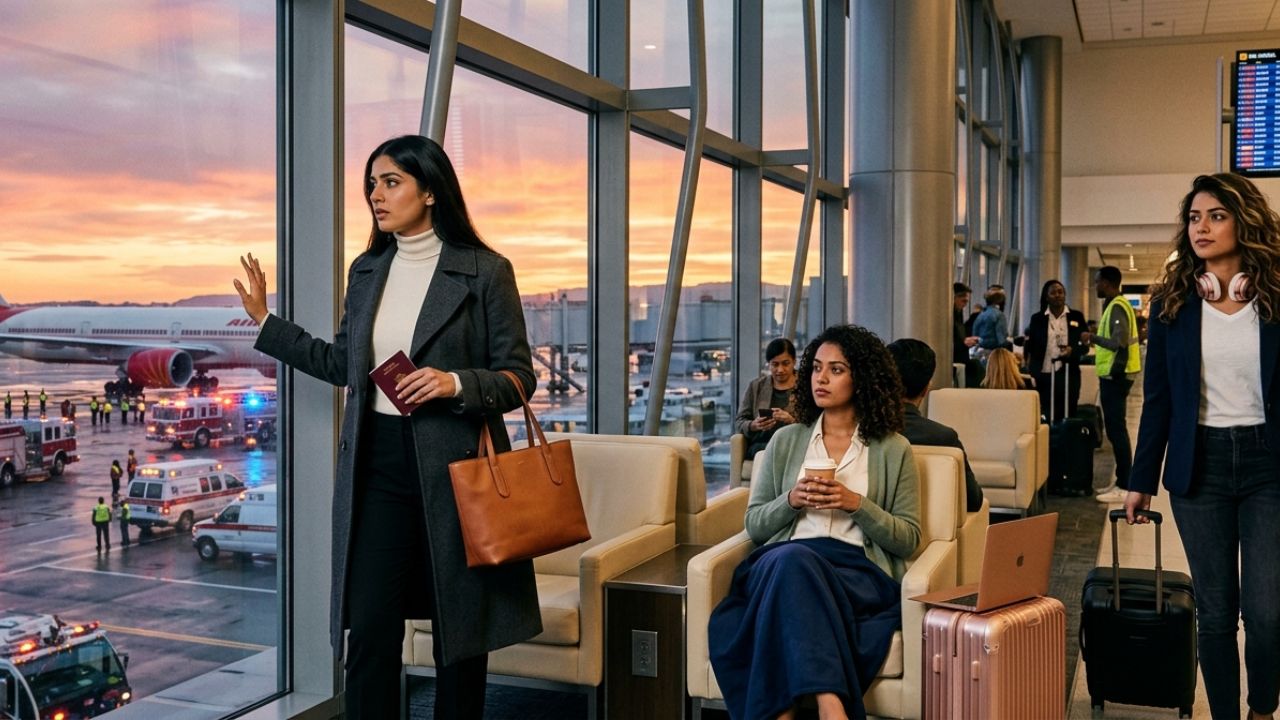
Image generated by AI
In a massive, highly terrifying operational failure that instantly plunged over 230 international passengers into severe travel chaos, a long-haul Air India flight bound for San Francisco was violently forced to abort its transcontinental journey. Deep over international airspace, the massive widebody jet suffered a catastrophic malfunction within a critical high-altitude separation system, forcing the flight crew to execute a dramatic, mid-air U-turn back to Delhi. This shocking event was immediately followed by a secondary emergency in the San Francisco Bay Area, where a domestic flight suffered an uncontained cabin odor, triggering a rapid, unscheduled diversion. As global aviation regulators desperately enforce strict safety mandates amidst exploding summer traffic, these terrifying mid-air emergencies absolutely dominate today’s premier airline news and essential aviation updates, brutally highlighting the fragility of modern transcontinental flight.
By introducing direct passenger coordination and dynamic scheduling backups, the regional aviation hubs target growing passenger demand across vital commerce sectors. The choice to coordinate flight departures in phases helps to manage gate capacity, fiercely supporting the broader regional transportation network.
Context: The Reality of High-Altitude Failure
The historical risk of operating a massive ultra-long-haul flight between India and the United States is that a single localized system failure instantly cascades into total global travel chaos.
Because modern commercial jets operate in highly congested international corridors, the systems governing safe aircraft separation are absolute lifelines. Historically, if an aircraft experienced an altimeter or separation system failure over the Pacific Ocean, the crew risked a catastrophic mid-air collision. Today, aviation safety protocols are aggressively zero-tolerance. When the Air India flight crew detected the anomaly deep into their journey, continuing to San Francisco was mathematically impossible. Rather than risk the lives of the 230 passengers onboard, the captain ruthlessly executed a mandatory U-turn. However, because the aircraft was loaded with over 15 hours of heavy aviation fuel, the return required massive, highly complex fuel management protocols. The resulting diversion completely destroyed the passengers' itineraries, triggering brutal, rolling flight cancellations down the line and stranding travelers in severe airport disruptions back at their point of origin.
For live flight tracking, specific emergency rebooking protocols, and official safety advisories, international travelers should immediately consult the digital portals published by Air India and the FAA before attempting to secure replacement transatlantic itineraries.
Section-Wise Breakdown: The Arsenal of Emergencies
The Air India Transcontinental Abort
To deliberately manage the immense danger of high-altitude blindness, the Air India crew executed a textbook emergency return. The flight from Delhi to San Francisco normally takes over 15 hours. Because the failure happened deep into the flight, returning to Delhi effectively doubled the time passengers spent trapped in the aircraft. Upon landing safely under emergency protocols, technicians immediately swarmed the jet. While the airline proactively arranged emergency hotels and food, the physical and emotional exhaustion of the passengers underscored the brutal reality of sudden travel chaos.
The San Francisco Bay Area Diversion
Because widespread mechanical failures can happen at any altitude, a secondary emergency ripped through the San Francisco Bay Area shortly after the Air India incident. A domestic flight, shortly after taking off from the region, reported a strange, highly suspicious odor rapidly filling the cabin. Fearing an electrical fire or toxic fume event, the crew aggressively declared an emergency and executed an immediate, unscheduled diversion to a nearby regional airport. The aircraft touched down safely, and passengers were rapidly deplaned, completely avoiding a catastrophic in-flight fire but plunging the domestic terminal into localized airport disruptions.
Full Operational Breakdown: Emergency Flight Data
To guarantee 100% absolute factual accuracy regarding this massive pivot in international aviation safety, the following exact table documents the critical flight emergencies defining this historic airline news event:
| Airline / Flight Region | Route / Departure | Emergency Cause | Operational Result |
|---|---|---|---|
| Air India | Delhi (DEL) → San Francisco (SFO) | Critical separation system failure mid-flight | U-turn to Delhi; massive 15+ hour delay |
| Unidentified Domestic | San Francisco Bay Area Departure | Strange odor detected in cabin post-takeoff | Immediate diversion to nearby regional airport |
Passenger Impact: The Eradication of Travel Certainty
For the everyday international tourist and Silicon Valley corporate executive, this aggressive spike in high-profile mid-air emergencies translates directly into a massive surge in transit anxiety.
By heavily utilizing these immense, unyielding safety protocols to harden their operational survivability, airlines are actively shifting the passenger experience, creating distinct victims amidst the broader global travel chaos. The specific impacts for the global transit network include:
Advantages:
- Flawless Safety Execution: Because modern flight crews are trained to violently prioritize survival over schedule, the 230 passengers on Air India and the domestic flight in California landed without a single casualty. The system, while highly inconvenient, mathematically works.
- Proactive Ground Support: Following the Air India U-turn, the airline successfully contained the immediate fallout by deploying massive logistical support, securing hotels and onward travel, preventing a riotous terminal situation.
Disadvantages:
- Brutal Physical Exhaustion: For the Air India passengers, being trapped in a pressurized cabin for what equated to a 30-hour round trip to nowhere is physically devastating. The resulting missed connections and lost hotel reservations trigger a cascading wave of expensive, unrecoverable travel chaos.
- Systemic Fleet Strain: When a massive widebody jet is suddenly grounded in Delhi for emergency repairs, it instantly removes critical capacity from the airline's global network, guaranteeing subsequent flight cancellations for passengers waiting in San Francisco.
- Psychological Trauma: Experiencing a mid-air emergency—whether a U-turn over the ocean or smelling smoke in the cabin—inflicts severe transit trauma, severely degrading passenger confidence in the safety of the broader aviation sector.
The Bigger Picture: The Zero-Tolerance Safety Doctrine
Aviation industry analysts view these staggering, highly technical emergency diversions as a critical indicator of the unyielding power dynamics governing international flight protocols.
The underlying strategic motivation perfectly reflects a harsh industry reality: airlines cannot afford a single fatal hull loss. The fact that Air India was willing to burn hundreds of thousands of dollars in fuel and passenger compensation to execute a U-turn proves that the global aviation sector operates on a zero-tolerance mandate. This structural evolution completely supports the long-term viability of the industry, ensuring that airlines can securely transport millions of passengers annually, even if that strict adherence to safety frequently results in massive, highly publicized travel chaos and temporary airport disruptions.
What This Means for Travelers: Actionable Advice
To fully navigate these highly volatile international networks and actively survive severe, self-inflicted regional travel chaos, execute the following strategies:
- Never Ignore Cabin Odors: If you smell electrical burning or strange fumes during takeoff, immediately alert a flight attendant. Do not assume someone else has reported it. The Bay Area diversion proves that rapid reporting directly prevents catastrophic in-flight fires.
- Pack for the Diversion: When flying ultra-long-haul (like Delhi to SFO), mathematically assume you could be diverted. Pack all critical daily medications, essential toiletries, and a change of clothes in your under-seat carry-on. You will not have access to checked luggage during sudden airport disruptions.
- Demand Corporate Compensation: If your international flight is violently aborted due to a mechanical failure, you are legally entitled to massive duty-of-care compensation. Aggressively demand airline-funded hotels, meals, and immediate rebooking to mitigate the financial damage of the resulting flight cancellations.
FAQ: The Air India & San Francisco Emergencies
Why did the Air India flight turn around?
The aircraft suffered a highly critical malfunction in a flight system designed to maintain safe separation between aircraft at high altitudes, forcing a mandatory, emergency U-turn back to Delhi to prevent a mid-air collision.
How long were the Air India passengers delayed?
Because the aircraft had to return to its point of origin, the flight time effectively doubled, turning a standard 15-hour journey into a massive, grueling ordeal of severe travel chaos.
What caused the domestic flight near San Francisco to divert?
The flight crew executed a rapid, unscheduled emergency diversion shortly after takeoff due to a strange, highly suspicious odor in the cabin, aggressively acting to prevent a potential toxic fume or fire event.
Key Takeaways
- Massive Mid-Air Abort: An Air India flight carrying over 230 passengers to San Francisco executed a terrifying U-turn due to a critical high-altitude system failure.
- Secondary Bay Area Emergency: A domestic flight taking off near San Francisco was violently forced to divert following the detection of a dangerous cabin odor.
- Zero-Tolerance Protocols: Both incidents highlight the uncompromising nature of global aviation safety, prioritizing human life over schedule, even when it triggers massive travel chaos.
- Logistical Nightmare: The sudden grounding of a massive widebody jet in Delhi instantly triggered localized airport disruptions and rolling delays across the airline's network.
- Passenger Survival: By strictly adhering to emergency mandates, flight crews successfully prevented catastrophic loss of life, proving the fundamental reliability of the global aviation sector.
Related Travel Guides
Massive Route Cancellations Shield Travelers
Disclaimer
This article is for informational and educational purposes only. It does not constitute legal, financial, or professional advice. While we strive to provide accurate and up-to-date information, travel policies, regulations, and conditions change rapidly. Always verify information with official sources before making travel decisions. Nomad Lawyer makes no representations about the accuracy, reliability, completeness, or suitability of the information provided. Readers should consult qualified professionals for advice specific to their circumstances. The views expressed in this article are those of the author and do not necessarily reflect the views of Nomad Lawyer.
Kunal K Choudhary
Co-Founder & Contributor
A passionate traveller and tech enthusiast. Kunal contributes to the vision and growth of Nomad Lawyer, bringing fresh perspectives and driving the community forward.
Learn more about our team →