
Air India AI1886 Bhopal to Delhi Diverts to Jaipur: Passenger Rights, Precautionary Protocols, and Fleet Safety Inspections

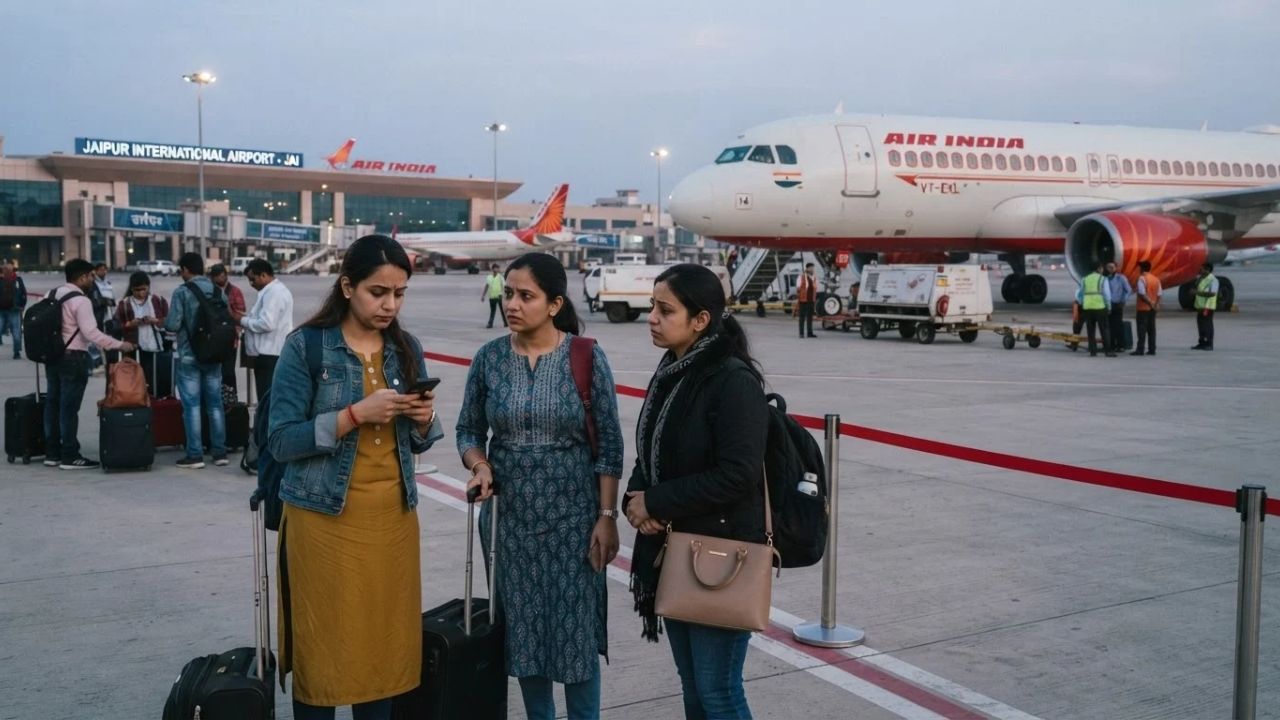
Air India flight AI1886 operating from Bhopal to Delhi executed a precautionary diversion to Jaipur International Airport on Sunday, 13 September 2026, after flight crew received an in-flight technical alert. In strict compliance with standard aviation safety protocols, the aircraft touched down safely at Jaipur, where all passengers and crew members disembarked smoothly while ground engineering teams initiated comprehensive diagnostic inspections before clearing the airframe to re-enter commercial service.
The diversion caused temporary schedule disruptions for travelers booked into Delhi's Indira Gandhi International Airport (DEL). Air India's ground handling teams and airport customer care personnel at Jaipur Airport (JAI) mobilized immediately, providing refreshments, managing onward flight re-accommodation, and offering alternative ground and air transit options. The operational response underscores the airline's rigorous, non-negotiable safety-first mandate, which prioritizes mechanical integrity over on-time performance metrics.
The Operational Incident: AI1886's Precautionary Diversion to Jaipur
Flight AI1886 was on its scheduled domestic routing connecting Raja Bhoj Airport (BHO) in Bhopal, Madhya Pradesh, with the national capital at Delhi. During the mid-flight cruise phase, cockpit instrumentation signaled a technical concern that prompted the operating flight crew to execute standard abnormal checklists.
Following standard operating procedures governed by the Directorate General of Civil Aviation (DGCA) and airline manuals, the pilot-in-command elected to divert to Jaipur International Airport rather than continue into the congested airspace of the Delhi National Capital Region. Jaipur serves as the primary designated alternate airport for flights bound for Delhi within the Northern Flight Information Region (FIR), offering ample runway length, modern air traffic control support, and certified maintenance handling facilities.
The aircraft completed a routine touchdown at Jaipur without declaring a full emergency. Passengers exited the cabin through standard airstairs, allowing technical maintenance personnel to commence thorough inspections of engine subsystems, avionics sensors, and hydraulic pressures to isolate the underlying trigger.
Understanding Precautionary Diversions in Commercial Aviation
In modern airline operations, precautionary diversions represent a fundamental layer of systemic safety rather than an indicator of catastrophic failure. Commercial airliners are built with multiple redundant backups for every flight-critical component. When a cockpit warning light or sensor anomaly occurs:
- Cockpit Decision Matrix: Pilots assess the alert using Quick Reference Handbooks (QRH) and Electronic Centralized Aircraft Monitoring (ECAM) or Engine Indicating and Crew Alerting Systems (EICAS).
- Conservative Safety Buffer: Rather than pushing toward a destination where adverse weather or holding patterns might compound minor technical anomalies, crews divert to certified diversion fields with clear weather and available ground support.
- Engineering Review Protocols: Aviation regulations strictly mandate that once an aircraft diverts due to an unresolved technical alert, it cannot depart with revenue passengers until licensed Aircraft Maintenance Engineers (AME) perform required structural and electronic diagnostics, clear error logs, and sign off on an official Certificate of Release to Service (CRS).
For passengers, while an unscheduled landing causes itinerary delays, it represents an operating crew exercising professional vigilance to guarantee that mechanical risk remains zero.
Passenger Assistance and DGCA Rights Framework
Following the unscheduled arrival at Jaipur, Air India ground personnel implemented passenger facilitation procedures under the regulatory guidelines established by India’s civil aviation authority.
Under the Directorate General of Civil Aviation (DGCA) Civil Aviation Requirements (CAR), Section 3, Series M, Part IV, passengers affected by operational flight diversions, extensive delays, or cancellations are entitled to specific consumer protections:
- Refreshments and Meals: Airlines must provide complimentary food and beverages to stranded passengers during operational delays extending beyond two hours.
- Alternative Routing: The carrier is obligated to arrange alternate air transportation to the ticketed final destination at no additional cost, or provide a full refund of the unutilized flight coupon if the traveler chooses not to complete the journey.
- Overnight Accommodation: If technical rectifications or replacement flights necessitate an overnight stay, the airline must provide complimentary hotel accommodation and airport transfers.
- Ground Alternatives for Short Corridors: Given that Jaipur is situated roughly 260 kilometers southwest of Delhi—connected via the modern Delhi-Jaipur expressway corridor and express railway links—airlines frequently organize dedicated air-conditioned coach transfers or coordinate high-speed Vande Bharat and Shatabdi rail seats for travelers requiring immediate arrival in the capital.
Broader Network Disruptions: The Mumbai-London Zurich Diversion
The domestic diversion of AI1886 came during a complex operational period for international aviation networks. In a separate incident highlighted across global flight tracking channels, an Air India long-haul service operating from Mumbai Chhatrapati Shivaji Maharaj International Airport (BOM) to London Heathrow Airport (LHR) was diverted to Zurich Airport (ZRH) in Switzerland.
The Mumbai-to-London flight, carrying more than 290 passengers, was forced to divert due to widespread air traffic management restrictions affecting London Heathrow. The disruption stemmed from technical system failures within the United Kingdom’s National Air Traffic Services (NATS), which severely throttled inbound landing flow rates across London airspace and forced dozens of international long-haul flights into holding patterns or continental diversions.
After touching down safely at Zurich, passengers initially remained onboard while flight dispatchers evaluated whether slots into Heathrow would open. However, due to crew duty-time limitations (Flight Duty Period regulations designed to prevent pilot fatigue) and prolonged airspace flow control restrictions in Britain, the flight was ultimately cancelled in Zurich. Air India’s European ground teams assisted all 290 passengers with Swiss transit visas, local hotel accommodations, and onward rerouting across partner European carriers.
These synchronized events illustrate the operational vulnerabilities that commercial carriers manage daily. Whether addressing isolated on-board mechanical sensor alerts or navigating continent-wide air traffic control computing breakdowns, airlines must deploy agile contingency plans to safeguard human life.
Traveler Insider Guide: Navigating Regional Flight Disruptions
For domestic and international travelers navigating Indian airspace, unexpected flight diversions demand strategic awareness and practical preparation:
- Download Airline Mobile Applications: Keep the official Air India mobile app installed with push notifications enabled. Digital boarding passes automatically update with revised flight departure gates, aircraft changes, and baggage carousel assignments during irregular operations.
- Know Your Transit Rights: Familiarize yourself with the DGCA Passenger Charter. In the event of a prolonged delay or diversion, approach the airline’s customer service desk calmly and request written confirmation of delay reasons, meal vouchers, and immediate re-accommodation onto the earliest available flight.
- Alternative Transit from Jaipur to Delhi: If stranded in Jaipur following a flight diversion and facing lengthy aircraft maintenance delays, consider the rapid ground alternatives:
- Rail Connections: High-speed Vande Bharat Express and Shatabdi Express services connect Jaipur Junction (JP) directly to New Delhi Railway Station (NDLS) in approximately 3 hours and 45 minutes to 4 hours and 15 minutes.
- Highway Travel: The Delhi-Mumbai Expressway and NH-48 provide smooth highway connectivity between Jaipur and Delhi, with private chauffeured cars or intercity cabs completing the journey in 4 to 5 hours.
- Essential Carry-On Packing: Always keep critical prescription medications, mobile device power banks, charging cables, essential toiletries, and infant food inside your personal cabin bag rather than checked luggage. In the event of an unscheduled diversion where checked bags remain sealed in the aircraft cargo hold, having these items prevents medical and personal emergencies.
- Travel Insurance Vigilance: Ensure comprehensive domestic and international travel insurance policies include robust "trip delay" and "missed connection" coverage clauses, which reimburse incidental meal costs, local transport, and independent hotel bookings incurred during technical diversions.
Cultural and Destination Context: Bhopal and Jaipur Gateways
The airports anchoring this operational event connect two of India's most culturally significant state capitals:
- Bhopal (Raja Bhoj Airport): The capital of Madhya Pradesh, celebrated as the "City of Lakes." Beyond its administrative importance, Bhopal serves as the premier gateway to two UNESCO World Heritage Sites: the monumental Great Stupa at Sanchi—dating back to Emperor Ashoka in the 3rd century BCE—and the prehistoric Bhimbetka Rock Shelters, featuring rock art spanning 30,000 years of human creative expression.
- Jaipur (Jaipur International Airport): The legendary "Pink City" and capital of Rajasthan, celebrated for its 18th-century grid architecture, the wind-catching facade of the Hawa Mahal, the astronomical instruments of Jantar Mantar (a UNESCO World Heritage site), and the imposing ramparts of Amer Fort overlooking Maota Lake.
Aviation Industry Outlook: Prioritizing Safety in Expanding Skies
India’s commercial aviation market is currently the third-largest and fastest-growing domestic flying territory in the world. As passenger volumes climb and fleet numbers expand under modernization programs, the operational discipline exhibited during flight diversions remains the bedrock of passenger trust.
Air India’s decisive action on flight AI1886 illustrates that modern airline culture prioritizes safety over schedule adherence. By diverting promptly, following technical inspection protocols to the letter, and providing structured care for affected travelers, the carrier demonstrates that rigorous aviation safety standards continue to govern Indian skies.
Related Travel Guides
- South Africa Launches Digital ETA System: How Visa Modernization Across Africa Is Reshaping Safari Travel
- Spain and EU Join Luzon Economic Corridor: Infrastructure Leap to Transform Philippines Travel Across Subic, Clark, Manila, and Batangas
- Malaysia Airlines Signs Seven Asia-Pacific Tourism Pacts at MATTA Fair 2026 to Boost Regional Travel
Disclaimer
This article is for informational and educational purposes only. It does not constitute legal, financial, or professional advice. While we strive to provide accurate and up-to-date information, travel policies, regulations, and conditions change rapidly. Always verify information with official sources before making travel decisions. Nomad Lawyer makes no representations about the accuracy, reliability, completeness, or suitability of the information provided. Readers should consult qualified professionals for advice specific to their circumstances. The views expressed in this article are those of the author and do not necessarily reflect the views of Nomad Lawyer.
Raushan Kumar
Founder & Lead Developer
Full-stack developer with 11+ years of experience and a passionate traveller. Raushan built Nomad Lawyer from the ground up with a vision to create the best travel and law experience on the web.
Learn more about our team →