
Air Canada Vietnam Flights Ho Chi Minh City Travel Guide 2027

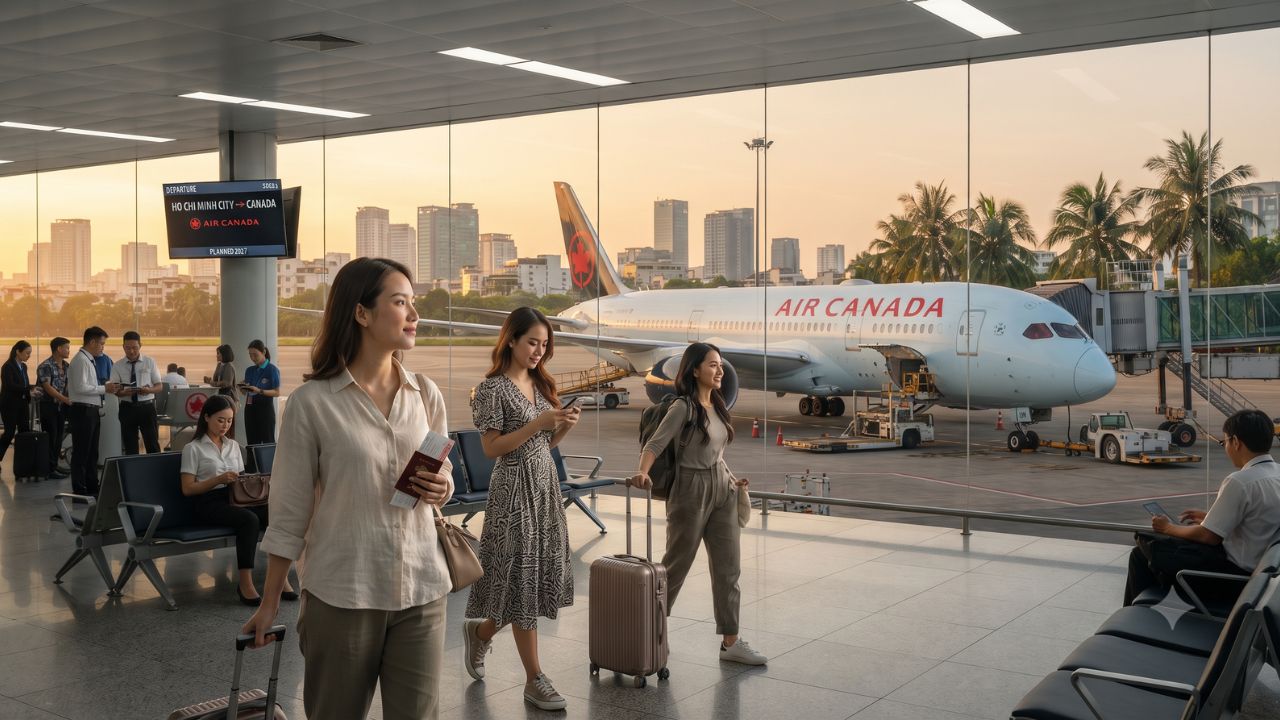
Direct transpacific travel between Canada and Vietnam is set for a historic transformation as Air Canada positions to launch scheduled passenger flights connecting Canadian hubs directly with Ho Chi Minh City in 2027. Enabled by the recently modernized bilateral Air Transport Agreement between the two nations, this planned transpacific link eliminates arduous multi-stop layovers across East Asia, opening direct skyways between North American gateways and southern Vietnam’s economic engine.
Subject to final regulatory approvals and operational scheduling, the proposed route represents a major milestone in Pacific Rim connectivity. For Canadian leisure adventurers, business executives, and the extensive Vietnamese-Canadian diaspora, the nonstop service will reduce travel times significantly while opening fresh pathways to discover the southern metropolis and its surrounding river delta.
Expanding Transpacific Gateways: The Canada-Vietnam Bilateral Pact
The catalyst for Air Canada’s 2027 route announcement is an expanded Air Transport Agreement negotiated between Canadian civil aviation authorities and the Civil Aviation Authority of Vietnam. By modernizing traffic rights and capacity allocations, the pact creates a robust bilateral framework that encourages scheduled carriers to operate point-to-point services between major population centers.
Historically, passengers traveling between Vancouver, Toronto, or Montreal and southern Vietnam navigated itineraries involving layovers in Tokyo, Seoul, Taipei, or Hong Kong. A direct scheduled service to Tan Son Nhat International Airport in Ho Chi Minh City transforms long-haul logistics. The route allows Air Canada to capture high-yield corporate travel, burgeoning eco-tourism demand, and belly-hold air cargo traffic supporting trade corridors between the two Asia-Pacific Economic Cooperation (APEC) partners.
Government ministries on both sides have highlighted that direct air services act as critical infrastructure for foreign direct investment, educational exchanges, and cultural preservation. With trade volumes climbing and Canadian enterprise expanding into Southeast Asian manufacturing and tech hubs, direct aviation links provide the physical backbone required for sustainable economic cooperation.
What Makes Ho Chi Minh City Different
Ho Chi Minh City, known locally and historically as Saigon, pulses with an electric energy distinct from any other metropolis in Southeast Asia. While Hanoi retains a serene, lakeside rhythm framed by ancient temples and French colonial villas, Ho Chi Minh City operates as an unrelenting dynamo of commerce, creative design, and culinary innovation.
The city’s urban character is defined by dramatic architectural contrasts. Towering glass skyscrapers and sleek rooftop cocktail lounges stand alongside century-old French colonial landmarks such as the Saigon Central Post Office and Notre Dame Cathedral of Saigon. At street level, millions of scooters navigate wide boulevards shaded by heritage tamarind trees, while narrow alleyways known as hem conceal multi-generational family eateries, artisanal ceramic studios, and third-wave coffee roasteries.
Beyond its urban core, Ho Chi Minh City serves as the primary springboard for exploring the ecological wonders of southern Vietnam. Travelers can transition within hours from high-energy commercial districts to the serene waterways of the Mekong Delta or the mangrove reserves of Can Gio, recognized as a UNESCO Biosphere Reserve. This duality of hyper-modern momentum and deep riverine heritage makes the southern capital an intoxicating entry point for overseas visitors.
Visitor Insider Tips
Navigating southern Vietnam’s premier metropolis requires practical awareness of local rhythms, seasonal climates, and neighborhood dynamics. These field-tested tips ensure a seamless journey:
- Timing and Seasonal Strategy: Ho Chi Minh City experiences two distinct seasons: the dry season from December to April and the monsoon season from May to November. For optimal walking weather and clear skies, plan your visit between December and February when humidity levels dip and daytime temperatures hover comfortably around 28 degrees Celsius.
- Neighborhood Bases: Skip generic hotel rows in the central core and base yourself in vibrant enclave districts. District 1 offers proximity to major historical landmarks, but District 3 provides leafy residential charm with preserved colonial villas and quiet cafes. For creative dining, art galleries, and riverside boutique hotels, explore the cosmopolitan Thao Dien quarter in Thu Duc City.
- Transport and Ride-Hailing Navigation: Traditional street taxis can be variable in pricing. Download local transport apps such as Grab or Be upon arrival at Tan Son Nhat Airport for upfront, metered pricing on air-conditioned cars and scooter rides. When crossing pedestrian streets, walk at a steady, predictable pace so oncoming scooters can navigate smoothly around you.
- Culinary Etiquette and Hidden Alleys: Venture off the main streets into the hem alleys of District 4 and District 10 to taste authentic southern specialties. Sample banh xeo (crispy turmeric crepes filled with pork and shrimp) wrapped in fresh mustard leaves and herbs, and order iced milk coffee (ca phe sua da) at neighborhood street carts. Always wait for the eldest person at the table to begin eating before taking your first bite.
- Official Travel Resources and Visa Prep: Most international travelers require an electronic visa (e-Visa) before boarding flights to Vietnam. Apply exclusively through official government channels via the Vietnam National Authority of Tourism portal well in advance of departure, ensuring passport validity extends at least six months past your arrival date.
Cultural and Environmental Context
As tourism numbers expand across Southeast Asia, Ho Chi Minh City is navigating the balance between rapid economic modernization and the preservation of its tangible cultural heritage. Historic French-era shophouses and traditional market structures have faced redevelopment pressures, prompting local architect collectives and community groups to advocate for adaptive reuse projects that turn vintage warehouse spaces into creative hubs and independent craft venues.
Environmental sustainability is also taking center stage in southern Vietnam's tourism strategy. The low-lying Mekong basin and coastal mangrove belts surrounding the city are acutely vulnerable to climate changes and seasonal tidal flooding. Tour operators and community organizations are increasingly promoting low-impact excursions, such as guided cycling routes through rural orchards, electric riverboat transport along the Saigon River, and conservation visits to protected wetlands registered under UNESCO World Heritage and Biosphere programmes. Supporting community-led tourism initiatives ensures that visitor revenue flows directly to local families and conservation stewards working to protect regional ecosystems.
FAQ: Visiting Ho Chi Minh City 2027
When is the best time of year to visit Ho Chi Minh City?
The best time to visit is during the dry season between December and March, when rainfall is minimal, humidity is moderate, and cultural celebrations like Tet create vibrant citywide festivities.
Do Canadian citizens need a visa to enter Vietnam?
Yes. Canadian passport holders require an approved electronic visa (e-Visa) before travel, which permits stays up to 90 days for single or multiple entries when applied through official government portals.
How far is Tan Son Nhat Airport from central District 1?
Tan Son Nhat Airport sits roughly seven kilometers north of District 1. Travel times range from 30 to 50 minutes depending on peak traffic conditions via metered taxi or ride-hailing app.
Is Ho Chi Minh City safe for independent solo travelers?
Yes. The city is welcoming and safe for solo travelers, though standard precautions against opportunistic bag snatching in crowded night markets or while walking along curbsides should be observed.
Related Travel Guides
Disclaimer
This article is for informational and educational purposes only. It does not constitute legal, financial, or professional advice. While we strive to provide accurate and up-to-date information, travel policies, regulations, and conditions change rapidly. Always verify information with official sources before making travel decisions. Nomad Lawyer makes no representations about the accuracy, reliability, completeness, or suitability of the information provided. Readers should consult qualified professionals for advice specific to their circumstances. The views expressed in this article are those of the author and do not necessarily reflect the views of Nomad Lawyer.
Raushan Kumar
Founder & Lead Developer
Full-stack developer with 11+ years of experience and a passionate traveller. Raushan built Nomad Lawyer from the ground up with a vision to create the best travel and law experience on the web.
Learn more about our team →